 English
 العربية
 Français
 Deutsch
 Italiano
 Polski
 Português
 Русский
 Español
 Українська


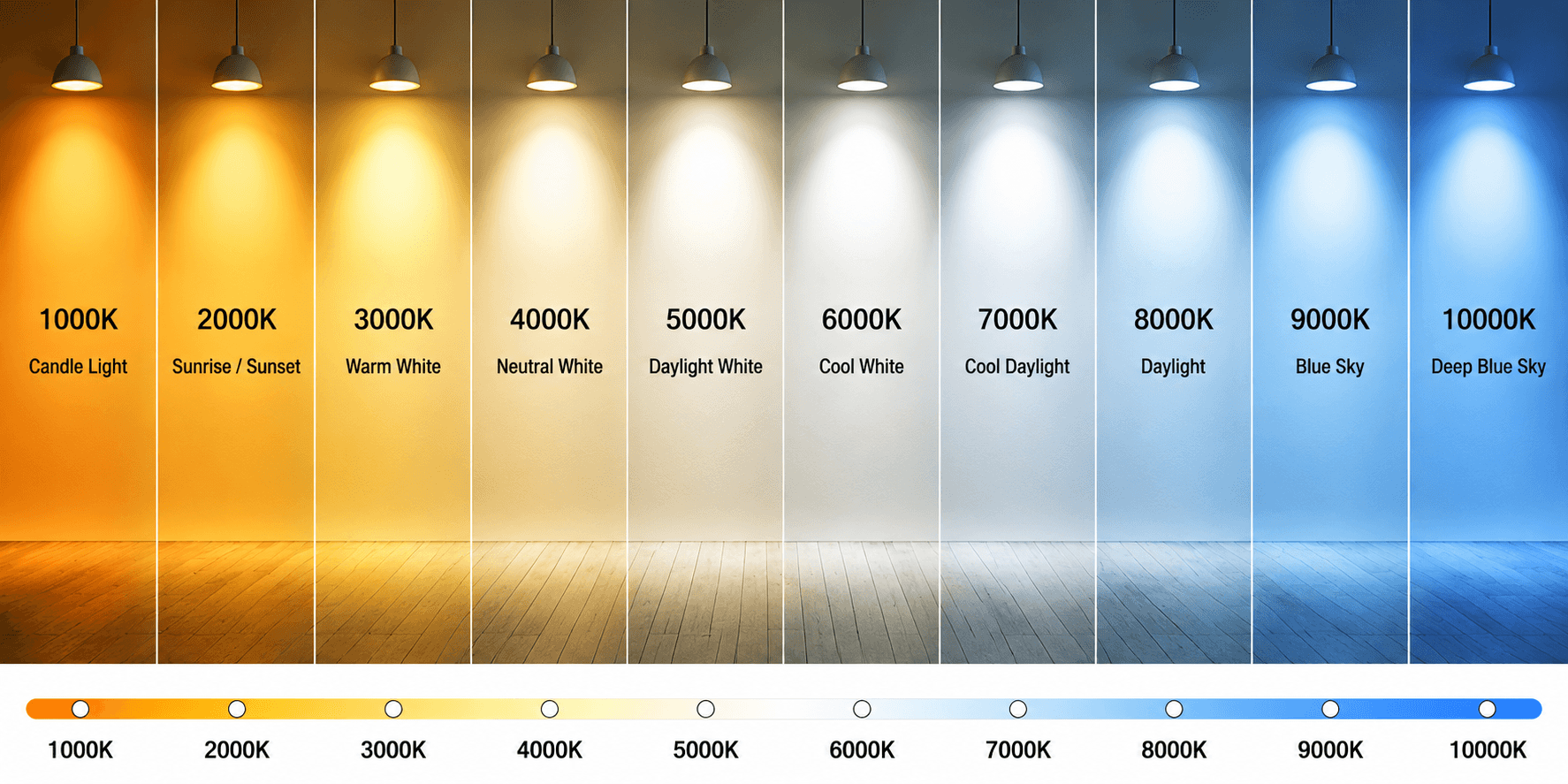
10 Questions courantes sur la température de couleur des ampoules LED
When buying Ampoules LED in bulk, distributeurs, grossistes, détaillants, and lighting project buyers most often ask about color temperature.
The right température de couleur affects an LED bulb’s appearance, atmosphère, et candidature. Donc, buyers need to understand what 2200K, 2700K, 3000K, 4000K, 5000K, and 6000K mean before placing a wholesale order.
Below are 10 common questions about LED bulb color temperature, covering color temperature basics, application, luminosité, Cri, atténuation, prix, and wholesale purchasing.
1. What Is LED Bulb Color Temperature?
LED bulb color temperature describes how warm or cool the light looks and is measured in Kelvin (K).
En général, a lower Kelvin value produces warmer, plus de lumière jaune, while a higher Kelvin value produces cooler, lumière plus blanche.
Par exemple:
- 2200K–2400K: Extra warm or amber light
- 2700K: Warm yellow light
- 3000K: Lumière blanche et chaude
- 3500K: Neutral warm white
- 4000K: Blanc neutre
- 5000K: Daylight white
- 6000K: Lumière blanche et froide
Donc, color temperature is mainly about the appearance of light, not the amount of light produced.
Pour les acheteurs en gros, it is important to specify CCT together with wattage, lumens, Cri, tension, and bulb base when requesting an RFQ.
2. What Are the Most Common LED Bulb Color Temperatures?
The most common color temperatures for Ampoules LED are 2700K, 3000K, 4000K, 5000K, et 6000K.
Cependant, decorative lighting may also use 2200K and 2400K to create a warmer vintage atmosphere.
| Température de couleur | Apparence légère | Applications courantes |
|---|---|---|
| 2200K | Ambre / Extra Warm | Bars, restaurants, hôtels, éclairage décoratif |
| 2400K | Very Warm | Vintage interiors, chambres à coucher, hospitalité |
| 2700K | Jaune chaud | Chambres, salons, hôtels |
| 3000K | Blanc chaud | Maisons, restaurants, hôtels, vente au détail |
| 3500K | Neutral Warm White | Cuisines, salles de bains, vente au détail |
| 4000K | Blanc neutre | Bureaux, magasins, cuisines, écoles |
| 5000K | Blanc lumière du jour | Garage, ateliers, entrepôts |
| 6000K | Blanc froid | Industrial areas, espaces de travail, utility areas |
Par conséquent, wholesalers can cover more customer requirements by offering a combination of warm, neutre, and cool CCT options.
3. What Are the Main Differences Between LED Bulb Color Temperatures?
The main difference is the visual appearance of the light, ranging from warm yellow to neutral white and cool white.
2200K–3000K: Lumière chaude
Lower color temperatures produce a warm, jaune, or amber appearance.
These temperatures are commonly used for:
- Chambres
- Salons
- Restaurants
- Hôtels
- Bars
- Éclairage décoratif
Par exemple, ampoules blanches douces et soft light bulbs are often selected when customers want a comfortable and relaxing atmosphere.
3500K–4000K: Neutral Light
Suivant, neutral temperatures provide a balance between warm and cool tones.
Ils conviennent pour:
- Cuisines
- Salles de bains
- Bureaux
- Magasins de détail
- Écoles
- Espaces commerciaux
En particulier, 4000K is a versatile option for both residential and commercial applications.
5000K–6000K: Cool Light
Higher color temperatures create a clean, bright-looking white appearance.
They are commonly used for:
- Garage
- Ateliers
- Entrepôts
- Usines
- Utility areas
- Éclairage de travail
Donc, lumière blanche et froide et blanc froid LED bulbs are generally selected when customers prefer a daylight-style appearance.
En termes simples:
Lower K = warmer-looking light
Higher K = cooler-looking light
4. What Applications Are Suitable for LED Bulbs from 2200K to 6000K?
Different color temperatures are suitable for different environments, so buyers should select CCT according to the application.
2200K – Extra Warm Light
2200K produces a deep amber and cozy appearance.
It is suitable for restaurants, barres, hôtels, vintage interiors, pendentifs décoratifs, and mood lighting.
2400K – Vintage Warm Light
2400K provides a soft and warm appearance and works well for cafés, restaurants, chambres à coucher, hôtels, et luminaires décoratifs.
2700K – Traditional Warm Light
2700K is commonly used in bedrooms, salons, salles à manger, hôtels, and residential lighting.
It is a practical choice for customers who prefer traditional lumière chaude.
3000K – Warm White Light
3000K provides comfortable lumière blanche et chaude with a cleaner appearance than 2700K.
It works well in living rooms, salles à manger, chambres à coucher, cuisines, hôtels, restaurants, et magasins de détail.
3500K – Neutral Warm White
3500K sits between warm and neutral white.
It is suitable for kitchens, salles de bains, restaurants, bureaux, et environnements de vente au détail.
It can also provide a comfortable warm and light appearance without looking strongly yellow.
4000K – Blanc Neutre
4000K provides a balanced and clean appearance.
It is widely suitable for offices, cuisines, salles de bains, écoles, magasins de détail, et bâtiments commerciaux.
5000K – Daylight White
5000K creates a daylight-style appearance.
It is suitable for garages, ateliers, entrepôts, usines, bureaux, and utility rooms.
6000K – Blanc froid
6000K provides a noticeably cool white appearance.
It can be used in workshops, industrial areas, entrepôts, garages, utility spaces, and task-lighting applications.
Donc, when building a wholesale product range, offering several CCT options can help serve different end-user applications. For customized special CCT, s'il vous plaît Contactez-nous directement!
5. Does Higher Color Temperature Mean a Brighter LED Bulb?
Non. Color temperature and brightness are different specifications.
Color temperature describes whether the light looks warm or cool, alors que lumens indicate the amount of visible light produced.
Par exemple, a 3000K LED bulb and a 5000K LED bulb can have the same lumen output while producing very different-looking light.
Donc, when purchasing an LED lamp or LED light bulb, buyers should check:
- Température de couleur
- Lumens
- Puissance
- Cri
- Tension
- Bulb base
- Angle de faisceau
- Compatibilité de gradation
- Rated lifetime
This is particularly important for wholesale buyers because customers may have specific requirements for both light appearance and output.
6. Does Color Temperature Affect CRI and Color Rendering?
Color temperature and CRI are different specifications, but both are important when evaluating lighting quality.
Cri, ou Indice de Rendu des Couleurs, indicates how accurately a light source reveals the colors of objects.
Par exemple, magasins de détail, hôtels, restaurants, and residential projects may require good color rendering so that products, nourriture, meubles, and interior colors appear more natural.
Donc, buyers should specify both CCT and CRI when sourcing LED bulbs.
For B2B products, a clear specification might include:
3000K + Cri 90+ + dimmable + Culot E27
This provides much more useful information than specifying color temperature alone.
7. Can One LED Bulb Have Different Color Temperatures?
Oui. Some LED bulbs can provide three different color temperatures in one bulb.
Par exemple, a multi-CCT ampoule LED à intensité variable can switch between:
- Blanc chaud
- Blanc neutre
- Blanc froid
When combined with a compatible dimmer or control system, users can adjust the lighting according to different needs.
Pour les grossistes, this type of product can reduce the need to stock several separate CCT versions.
Les options courantes incluent:
- E27 bulb dimmable LED
- Ampoules LED E26
- Multi-CCT decorative bulbs
- Dimmable LED lamp produits
Cependant, buyers should confirm the dimmer type, méthode de contrôle, tension, and compatibility before placing an order.
8. Are LED Bulbs with Different Color Temperatures the Same Price?
In standard production, LED bulbs with different color temperatures are generally priced similarly.
Par exemple, common CCT options such as 2700K, 3000K, 4000K, 5000K, and 6000K normally do not create a significant price difference when the other specifications are the same.
Cependant, pricing may change when buyers request:
- Special color temperatures
- Custom CCT ranges
- Special LED chips
- Advanced dimming functions
- Low-MOQ customization
- Special certifications
- Custom packaging
- Private-label production
Donc, when requesting a quotation, wholesalers should provide complete specifications, including CCT, puissance, tension, base, Cri, dimming function, conditionnement, et la quantité.
9. How Should Wholesalers Choose the Right LED Bulb Color Temperature?
The best approach is to match color temperature with the intended application and target customer.
| Application | Température de couleur recommandée |
|---|---|
| Restaurants & Bars | 2200K–2700K |
| Chambres | 2700K–3000K |
| Salons | 2700K–3000K |
| Hôtels | 2700K–3000K |
| Cuisines | 3000K–4000K |
| Salles de bains | 3000K–4000K |
| Magasins de détail | 3000K–4000K |
| Bureaux | 4000K–5000K |
| Garage | 4000K–5000K |
| Ateliers | 4000K–6000K |
| Entrepôts | 5000K–6000K |
| Industrial Areas | 5000K–6000K |
Par exemple, residential customers may prefer warm white products, while commercial and industrial buyers may require more neutral or cool options.
Par conséquent, distributors can consider stocking several popular CCTs instead of relying on only one color temperature.
10. What Should Buyers Check Besides Color Temperature?
Color temperature is only one of several specifications that wholesale buyers should confirm before ordering LED bulbs.
Culot d'ampoule
D'abord, confirm the correct bulb base for the target market.
Par exemple, Ampoules LED E26 are commonly used in North American applications, while E27 bulbs are widely used in many international markets.
Atténuation
If customers require adjustable brightness, select compatible dimmable bulbs ou ampoules à intensité variable.
Par exemple, un ampoule LED E27 à intensité variable can be suitable for residential, hospitalité, and decorative applications.
Tension
Suivant, confirm whether the product is designed for 120V, 220–240V, or another voltage requirement.
Puissance et lumens
Wattage indicates power consumption, while lumens indicate light output. Both specifications should be confirmed before production.
Cri
For applications where accurate color appearance is important, buyers should confirm the required CRI level.
Certifications
Selon le marché cible, buyers may need CE, RoHS, ETL, UL, or other applicable certifications.
Conditionnement
Enfin, packaging should be considered carefully for bulk shipments. Individual boxes, protective materials, inner cartons, and master cartons can help reduce transportation damage.
Dimmable LED Bulbs and Color Temperature
It is important to understand that dimming and color temperature are not the same function.
A standard dimmable bulb usually changes brightness without changing its CCT. Cependant, specially designed products can combine brightness adjustment with color-temperature control.
Par exemple, un dimmable LED lamp may support both brightness adjustment and three CCT settings.
En même temps, buyers should check compatibility with the intended dimmer. UN dimmable lamp bulb is not automatically compatible with every dimmer system.
Donc, product specifications should clearly state:
- Dimmable or non-dimmable
- Compatible dimmer type
- Dimming range
- Input voltage
- Color-temperature options
- Control method
Clear specifications can help reduce compatibility issues and after-sales problems.
Wholesale LED Bulb Color Temperature Guide
For distributors and importers, the right product mix depends on the target market and sales channel.
| Type de produit | CCT recommandé | Applications typiques |
|---|---|---|
| Decorative LED Bulb | 2200K–2700K | Restaurants, hôtels, home décor |
| Residential LED Bulb | 2700K–3000K | Maisons, appartements, hôtels |
| General LED Bulb | 3000K–4000K | Résidentiel & commercial |
| Commercial LED Bulb | 4000K–5000K | Bureaux, magasins, écoles |
| Industrial LED Bulb | 5000K–6000K | Garage, entrepôts, usines |
| Ampoule LED à intensité variable | 2700K–4000K | Maisons & hospitalité |
| Multi-CCT LED Bulb | 3 Options CCT | Vente au détail & flexible applications |
Par conséquent, wholesalers can build a more flexible product portfolio by combining warm, neutre, and cool color temperatures.
En même temps, the exact product mix should be based on customer demand, target-market standards, et les exigences du projet.
Frequently Asked Questions About LED Bulb Color Temperature
What color temperature is warm white?
Warm white generally refers to approximately 2700K–3000K and produces a comfortable, yellowish-white appearance.
Est-ce que 3000K ou 4000K est mieux?
They serve different applications. 3000K produces warmer-looking light, alors que 4000K provides a more neutral white appearance. The appropriate option depends on the intended application.
Is 5000K too cool for home lighting?
Pas nécessairement. 5000K can be suitable for garages, ateliers, buanderies, and some kitchens. Warmer CCTs are commonly considered for bedrooms and relaxing areas.
Are dimmable LED bulbs more expensive?
Pas nécessairement. Pricing depends on the LED driver, dimming technology, specifications, order quantity, and customization requirements.
Can one LED bulb provide warm and cool light?
Oui. Some multi-CCT ampoules LED à intensité variable can switch between warm white, blanc neutre, and cool white settings.
What is the difference between soft white and warm white?
The terms can overlap. Soft white light bulbs commonly refer to bulbs around 2700K–3000K, while warm white is also generally used for a similar color-temperature range.
What are color light bulbs?
Color light bulbs usually produce colored light such as red, bleu, vert, or RGB effects. They are different from standard white LED bulbs, which are normally specified by their color temperature.
Final Buying Tips for LED Bulb Wholesalers
When sourcing Ampoules LED in bulk, color temperature should be considered together with the complete product specification.
D'abord, determine the intended application. Then select the appropriate CCT range. Après cela, confirm Cri, lumens, puissance, tension, bulb base, compatibilité de gradation, attestations, conditionnement, and MOQ.
For residential and decorative applications, warm CCT options such as 2700K and 3000K can be included. Entre-temps, 4000K is useful for many general and commercial applications, while 5000K–6000K can be considered for work, utility, and industrial environments.
Whether you are sourcing Ampoules LED, Ampoules LED E26, dimmable bulbs, soft light bulbs, or decorative LED products, a well-planned color-temperature range can help your product portfolio serve different customer and project requirements.