 English
 العربية
 Français
 Deutsch
 Italiano
 Polski
 Português
 Русский
 Español
 Українська


Farbtemperatur – Was bedeutet das??
Beim Kauf einer Glühbirne, Sie werden oft auf Begriffe stoßen wie Farbtemperatur, warmweiß, kühles Weiß, Und Tageslicht. Wenn Sie nicht sicher sind, was sie bedeuten, Du bist sicherlich nicht allein.
In der Vergangenheit, Die Wahl einer Glühbirne war einfach, da in den meisten Häusern herkömmliche Glühlampen verwendet wurden, die alle ein ähnlich warmes Licht erzeugten. Heute, Jedoch, LED, Halogen, und CFL-Glühbirnen sind in einer Vielzahl von Farbtemperaturen erhältlich. Infolge, Die Wahl der richtigen Lichtfarbe ist ebenso wichtig wie die Wahl des richtigen Lampensockels oder der richtigen Helligkeit.
Wenn Sie die Farbtemperatur kennen, können Sie die richtige Atmosphäre schaffen, die Sichtbarkeit verbessern, und stellen Sie sicher, dass die Ersatzlampen zu Ihrer vorhandenen Beleuchtung passen.
Was ist Farbtemperatur??
In einfachen Worten, Farbtemperatur beschreibt die Erscheinung von weißem Licht, das von einer Lichtquelle erzeugt wird. Anstatt die Helligkeit zu messen, Es zeigt an, ob das Licht erscheint warm (Gelb), neutral, oder Cool (Blau).
Die Farbtemperatur wird in gemessen Kelvin (K).
- 2700K–3000K: Warmweiß
- 3500K: Neutralweiß
- 4000K: Kühles Weiß
- 5000K–6500K: Tageslicht
Denken Sie einfach daran:
- Niedrigeres Kelvin = wärmeres Licht
- Höheres Kelvin = kühleres Licht
Es ist wichtig, das zu beachten Die Farbtemperatur bestimmt nicht die Helligkeit. Die Helligkeit wird separat gemessen Lumen (lm).
Warum ist die Farbtemperatur wichtig??
Die Farbtemperatur hat einen erheblichen Einfluss auf das Erscheinungsbild und die Atmosphäre eines Raumes.
Zum Beispiel, Stellen Sie sich vor, eine der drei Glühbirnen in Ihrer Küche geht durch. Sie kaufen einen Ersatz mit der gleichen Basis, Form, Wattzahl, und Helligkeit. Nach der Installation, Jedoch, Die neue Glühbirne sieht deutlich anders aus als die anderen – eine erscheint warm und gelb, während das neue strahlend weiß aussieht.
Der Grund ist einfach: Die Lampen haben unterschiedliche Farbtemperaturen.
Auch wenn Glühbirnen die gleiche Anzahl an Lumen produzieren, Nicht übereinstimmende Kelvin-Werte können dazu führen, dass ein Raum inkonsistent und optisch weniger ansprechend wirkt. daher, passend zum Kelvin (K) Die Bewertung ist eine der einfachsten Möglichkeiten, eine gleichmäßige Beleuchtung im gesamten Zuhause zu erreichen.
Farbtemperaturdiagramm (Kelvin-Skala)
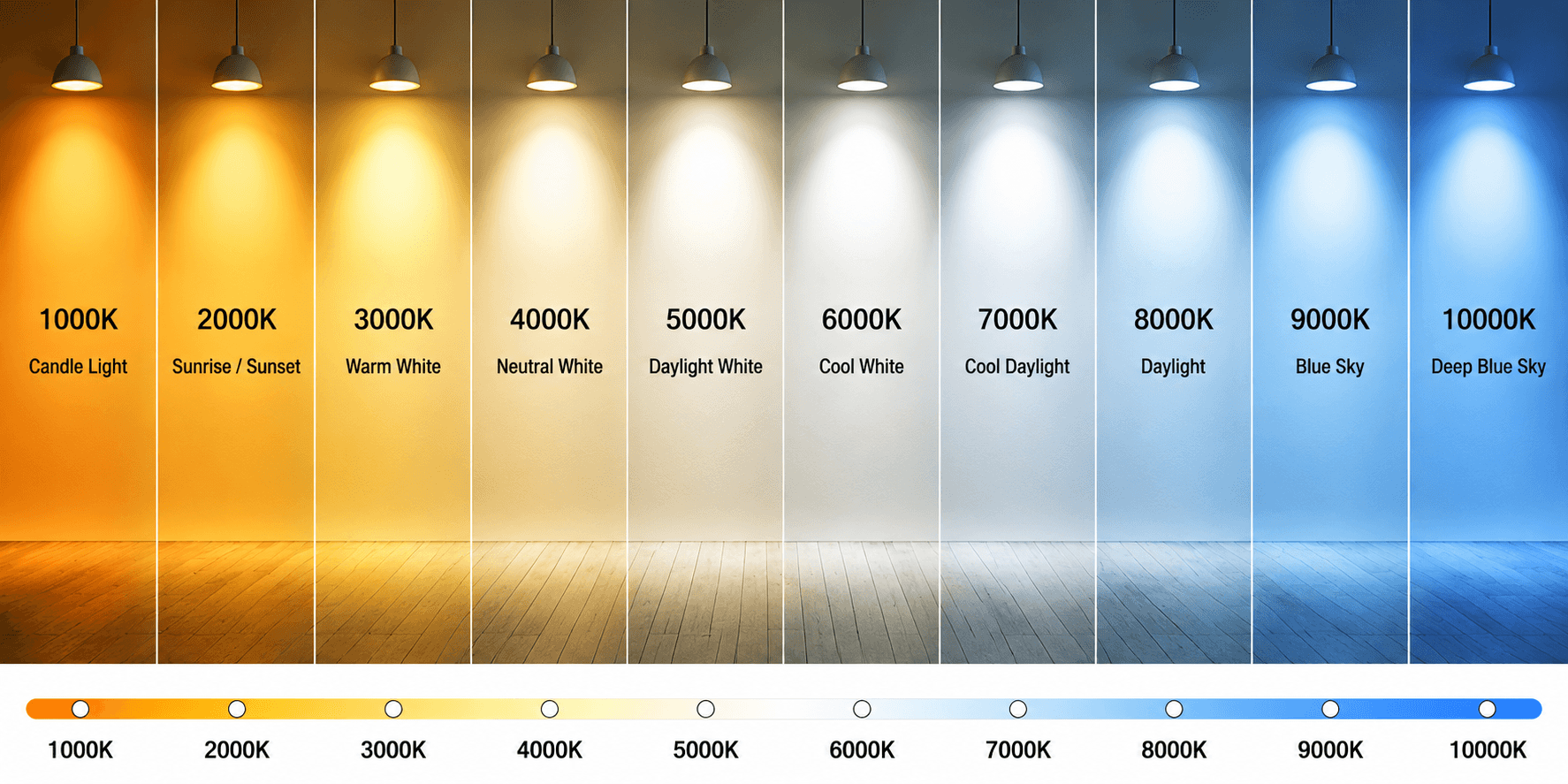
Glücklicherweise, Der Vergleich heller Farben ist einfach. Der Kelvin (K) Skala zeigt an, wie warm oder kühl eine Lichtquelle erscheint.
| Farbtemperatur | Aussehen | Typische Verwendung |
|---|---|---|
| 1000K | Kerzenlicht | Dekoratives Ambiente |
| 2700K–3000K | Warmweiß | Häuser, Hotels, Restaurants |
| 3500K | Neutralweiß | Büros, Schulen |
| 4000K | Kühles Weiß | Küchen, Badezimmer |
| 5000K–6500K | Tageslicht | Workshops, Einzelhandel, Büros |
| 9000K | Klarer blauer Himmel | Natürliche Referenz |
Die meisten Hersteller drucken das deutlich aus Kelvin-Bewertung sowohl auf der Verpackung als auch auf den Produktspezifikationen, Dies erleichtert die Auswahl der richtigen Ersatzlampe.
Was passiert, wenn ich die Farbtemperatur meiner vorhandenen Glühbirnen nicht kenne??
Wenn Ihre aktuelle Glühbirne ihren Kelvin-Wert nicht anzeigt, Mach dir keine Sorgen.
Die meisten Wohnraumbeleuchtungen fallen in eine dieser gängigen Farbtemperaturen:
- 2700K–3000K – Warmweiß
- 3500K - Weiß
- 4000K – Kaltes Weiß
- 6500K – Tageslicht
Indem Sie Ihre vorhandene Beleuchtung mit diesen Standardsortimenten vergleichen, Normalerweise können Sie die ähnlichste Übereinstimmung finden.
Glücklicherweise, beim Online-Einkauf, Der Kelvin-Wert ist fast immer in den Produktspezifikationen aufgeführt, was den Austausch erheblich erleichtert.
2700K–3000K – Warmweiß
Unter allen Farbtemperaturen, Warmweiß ist die beliebteste Wahl für die Wohnraumbeleuchtung. Es ähnelt stark dem sanften Leuchten traditioneller Glühbirnen und sorgt für eine einladende Atmosphäre, entspannte Atmosphäre.
Am besten für
- Wohnzimmer
- Schlafzimmer
- Esszimmer
- Hotels
- Restaurants
- Dekorative Beleuchtung
Vorteile
- Erzeugt eine warme, gemütliche Atmosphäre
- Bequem für den abendlichen Gebrauch
- Ideal für LED-Glühlampen im Vintage- und Edison-Stil
- Verschönert Holzmöbel und warme Innenfarben
Gesamt, Warmweiß ist überall dort die beste Wahl, wo Komfort und Entspannung im Vordergrund stehen.
3500K – Neutralweiß
Wenn Sie ein Gleichgewicht zwischen warmer und kühler Beleuchtung suchen, 3500K Neutralweiß ist eine ausgezeichnete Wahl. Es sorgt für Sauberkeit, natürlich wirkende Ausleuchtung, ohne übermäßig gelb oder blau zu wirken.
Am besten für
- Büros
- Schulen
- Empfangsbereiche
- Wartezimmer
- Einzelhandelsflächen
- Flure
Vorteile
- Bequem für den täglichen Gebrauch
- Natürliches Farbbild
- Geeignet sowohl für Wohn- als auch Gewerbeflächen
- Reduziert die Belastung der Augen bei längerem Gebrauch
Infolge, 3500K ist eine beliebte Option für Räume, die mehreren Zwecken dienen.
4000K – Kaltes Weiß
Für eine hellere Alltagsbeleuchtung, 4000K Kaltes Weiß ist eine der vielseitigsten verfügbaren Optionen. Es entsteht Knusprigkeit, saubere Ausleuchtung mit sehr geringem Gelbstich, wodurch Details leichter erkennbar sind.
Am besten für
- Küchen
- Badezimmer
- Waschküchen
- Workshops
- Garagen
- Sicherheitsbeleuchtung für den Außenbereich
Vorteile
- Hell, sauberes Aussehen
- Hervorragende Farbgenauigkeit
- Ideal zum Kochen, Reinigung, und Pflege
- Beliebt sowohl in Wohnhäusern als auch in Gewerbegebäuden
Folglich, 4000K ist eine der am häufigsten empfohlenen Farbtemperaturen für die Arbeitsplatzbeleuchtung.
6500K – Tageslicht
Wenn maximale Helligkeit und Sichtbarkeit erforderlich sind, 6500K Tageslicht ist oft die bevorzugte Wahl. Es ähnelt stark dem natürlichen Tageslicht und erzeugt ein helles weißes Licht mit einem auffälligen Blaustich.
Am besten für
- Büros
- Workshops
- Einzelhandelsdisplays
- Fotostudios
- Lagerhäuser
- Außenbeleuchtung
Vorteile
- Maximale Sichtbarkeit
- Hervorragende Farbwiedergabe
- Hilft, die Konzentration zu verbessern
- Ideal, wenn eine genaue Farberkennung unerlässlich ist
Tipp: Vermeiden Sie die Verwendung von 6500K-Glühbirnen in Schlafzimmern oder Wohnzimmern, wenn Sie eine warme und entspannte Atmosphäre bevorzugen.
Tageslicht vs. Vollspektrum-Tageslichtbirnen
Obwohl diese Begriffe oft synonym verwendet werden, Tageslicht-LED-Lampen Und Vollspektrum-Tageslichtlampen sind nicht dasselbe.
A 6500K Tageslichtlampe ahmt einfach die Farbe des natürlichen Tageslichts nach.
A Vollspektrum-Glühbirne, Jedoch, wurde entwickelt, um einen größeren Bereich sichtbarer Wellenlängen zu erzeugen, die dem natürlichen Sonnenlicht ähnlicher sind. Diese Speziallampen werden häufig für die Fotografie verwendet, Pflanzenwachstum, und Lichttherapie, einschließlich Anwendungen, die Betroffenen helfen können Saisonale affektive Störung (TRAURIG).
So wählen Sie die richtige Farbtemperatur
Die ideale Farbtemperatur hängt von der Raumnutzung ab. Als allgemeiner Leitfaden, Die folgenden Empfehlungen funktionieren für die meisten Anwendungen gut.
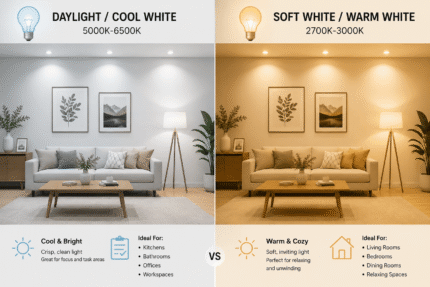
| Zimmer | Empfohlene Farbtemperatur |
|---|---|
| Schlafzimmer | 2700K–3000K |
| Wohnzimmer | 2700K–3000K |
| Esszimmer | 2700K–3000K |
| Küche | 4000K |
| Badezimmer | 4000K |
| Innenministerium | 4000K–5000K |
| Werkstatt | 5000K–6500K |
| Einzelhandelsdisplay | 5000K–6500K |
| Sicherheit im Freien | 4000K–6500K |
Häufig gestellte Fragen
Bedeutet ein höherer Kelvinwert eine hellere Glühbirne??
NEIN. Kelvin misst die Farbe des Lichts, während die Helligkeit in gemessen wird Lumen (lm). Zwei Glühbirnen mit der gleichen Lichtleistung können völlig unterschiedliche Farbtemperaturen haben.
Ist 3000K oder 4000K besser??
Keines von beiden ist allgemein besser. 3000K schafft eine warme und entspannende Atmosphäre, die sich ideal für Wohnräume eignet, während 4000K sorgt für mehr Helligkeit, Sauberere Beleuchtung, die besser für Küchen geeignet ist, Badezimmer, und Arbeitsbereiche.
Ist 2700K dasselbe wie Soft White?
Ja. Die meisten Hersteller verwenden Weiches Weiß Und Warmweiß austauschbar für Glühbirnen herum 2700K. Allerdings kann der Wortlaut zwischen den Marken leicht variieren, Sie erzeugen im Allgemeinen die gleiche Wärme, angenehmes Licht.
Welche Farbtemperatur ist für LED-Lampen am besten??
Es gibt keine einzige beste Option. Die ideale Farbtemperatur hängt davon ab, wo die Glühbirne verwendet wird. Warmweiß (2700K–3000K) eignet sich am besten für entspannende Räume, während Cool White (4000K) und Tageslicht (5000K–6500K) eignen sich besser für die Arbeitsplatzbeleuchtung und Arbeitsumgebungen.
Welche Farbtemperatur eignet sich am besten für ein Schlafzimmer??
Die meisten Beleuchtungsexperten empfehlen 2700K–3000K, denn das warme Licht schafft eine gemütliche Atmosphäre und trägt zur Entspannung bei.
Kann ich verschiedene Farbtemperaturen mischen??
Du kannst, Im Allgemeinen ist es jedoch am besten, in einem einzigen Raum die gleiche Farbtemperatur beizubehalten. Eine gleichmäßige Beleuchtung sorgt für eine sauberere Atmosphäre, professionelleres Erscheinungsbild.
Welche Farbtemperatur kommt dem natürlichen Tageslicht am nächsten??
6500K ähnelt am ehesten dem natürlichen Tageslicht und wird häufig in Werkstätten eingesetzt, Büros, Einzelhandelsdisplays, und andere Bereiche, in denen maximale Sicht erforderlich ist.
Letzte Gedanken
Das Richtige wählen Farbtemperatur ist ebenso wichtig wie die Auswahl des richtigen Lampensockels oder der richtigen Helligkeit. Egal, ob Sie das warme Leuchten von bevorzugen 2700K, das ausgewogene Erscheinungsbild von 3500K, die klare Klarheit von 4000K, oder die helle Beleuchtung von 6500K Tageslicht, Verständnis der Kelvin-Skala macht es einfacher, für jeden Raum die perfekte Beleuchtung zu schaffen.
Vor dem Kauf von Ersatzlampen, Überprüfen Sie immer die Kelvin (K) Bewertung neben dem Basistyp Und Lumenleistung. Die Übereinstimmung aller drei Spezifikationen trägt dazu bei, die Konsistenz sicherzustellen, Für eine angenehme Beleuchtung in Ihrem Zuhause oder am Arbeitsplatz.
Huiyee Lighting ist seit mehr als in diesem Bereich tätig 10 Jahre. klicken Sie hier Weitere Optionen zur Farbtemperatur der LED-Lampen finden Sie hier.