 English
 العربية
 Français
 Deutsch
 Italiano
 Polski
 Português
 Русский
 Español
 Українська


Häufige Probleme mit Glühbirnenfassungen
Glühbirnenfassungen sind einer der wichtigsten Teile jeder Beleuchtungseinrichtung. Während Glühbirnen oft ausgetauscht werden, Die Steckdose selbst wird meist vergessen, bis etwas schiefgeht. Eine beschädigte oder abgenutzte Steckdose kann flackerndes Licht verursachen, häufige Lampenausfälle, oder sogar eine Brandgefahr darstellen.
In diesem Ratgeber werden die häufigsten Probleme mit Glühbirnenfassungen erläutert, ihre Ursachen, einfache Methoden zur Fehlerbehebung, und wenn es Zeit ist, die Steckdose auszutauschen oder einen Elektriker zu rufen.
Glühbirnenfassungen verstehen
Vor der Fehlerbehebung, Es ist hilfreich, die verschiedenen Steckdosentypen und ihre Funktionsweise zu verstehen.
Gängige Arten von Glühbirnenfassungen
Verschiedene Beleuchtungskörper verwenden unterschiedliche Sockel.
- E26/E27 (Edison-Schraube): Die Standard-Glühbirnenfassung für den Haushalt, die in den meisten Deckenleuchten verwendet wird, Tischlampen, und Wandbefestigungen.
- E12 (Kandelaber): Kleinere Fassungen, die üblicherweise in Kronleuchtern verwendet werden, Wandleuchten, dekorative Lampen, und Nachtlichter.
- B22 (Bajonettverschluss): In Großbritannien weit verbreitet, Australien, und mehrere Commonwealth-Länder.
- GU10 und G4 (Bi-Pin): Wird häufig in Scheinwerfern gefunden, Einbauleuchten, Schrankleuchten, und Schienenbeleuchtung.
- Leuchtstoffröhrenfassungen: Speziell für Leuchtstoff- und lineare LED-Ersatzröhren entwickelt.
Wenn Sie Ihren Fassungstyp kennen, ist es viel einfacher, die richtige Ersatzlampe auszuwählen oder ein Problem zu diagnostizieren.
So funktioniert eine Glühbirnenfassung
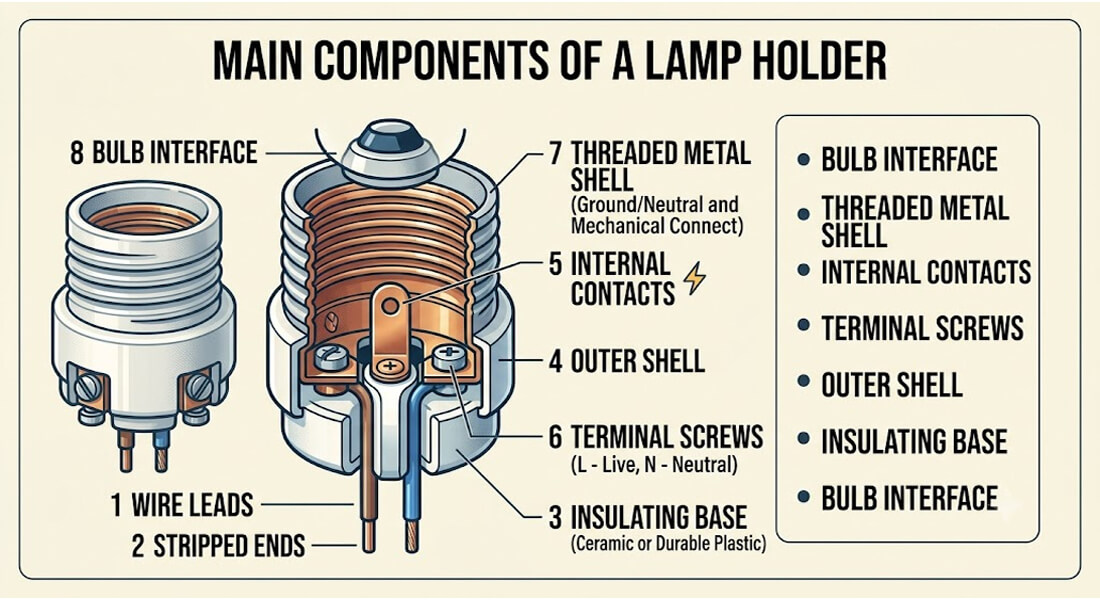
Obwohl die Designs variieren, Die meisten Lampenfassungen bestehen aus vier Grundkomponenten:
- Sockelschale – Hält die Glühbirne sicher.
- Zentrumskontakt – Überträgt Strom an die Glühbirne.
- Isolator – Trennt elektrische Kontakte, um Kurzschlüsse zu verhindern.
- Terminalanschlüsse – Schließen Sie die Steckdose an die Hausverkabelung an.
Wenn die Glühbirne installiert ist, Der Mittelkontakt und die Hülle vervollständigen den Stromkreis, Dadurch kann Strom fließen und die Glühbirne aufleuchten. Wenn sich eine Komponente löst, beschädigt, oder korrodiert, Das Licht funktioniert möglicherweise nicht mehr richtig.
Häufige Probleme mit Glühbirnenfassungen
Die meisten Steckdosenprobleme entwickeln sich schleichend. Durch frühzeitiges Erkennen können größere elektrische Probleme verhindert werden.
Flackernde Lichter: Ursachen und einfache Lösungen
Ein flackerndes Licht ist eines der häufigsten Beleuchtungsprobleme.
Mögliche Ursachen
- Lose Glühbirne
- Abgenutzte oder lose Buchsenkontakte
- Lose Kabelverbindungen
- Spannungsschwankungen
- Defekter Schalter oder Dimmer
- In die Jahre gekommene Lampenfassung
DIY-Lösung
Beginnen Sie mit den einfachsten Prüfungen:
- Schalten Sie den Strom aus.
- Ziehen Sie die Glühlampe fest an.
- Überprüfen Sie die Steckdose auf Korrosion oder Beschädigung.
- Überprüfen Sie die sichtbaren Kabelverbindungen.
- Prüfen Sie die Spannung bei Bedarf mit einem Multimeter.
Wenn das Flackern nach dem Auswechseln der Glühbirne weiterhin besteht, Möglicherweise muss die Steckdose ausgetauscht oder professionell überprüft werden.
Glühbirnen brennen zu oft durch
Wenn Glühbirnen viel früher als erwartet ausfallen, Die Steckdose könnte das eigentliche Problem sein.
Häufige Ursachen
- Die Wattleistung der Glühbirne übersteigt die Nennleistung der Fassung
- Lose elektrische Kontakte verursachen Lichtbogenbildung
- Überhitzung in geschlossenen Geräten
- Hohe Haushaltsspannung
- Alternder oder beschädigter Sockel
DIY-Lösung
- Verwenden Sie immer Glühbirnen mit der maximalen Wattzahl der Leuchte.
- Wechseln Sie zu LED-Leuchtmitteln, die viel weniger Wärme erzeugen.
- Überprüfen Sie die Steckdose auf lose oder verbrannte Kontakte.
- Ersetzen Sie abgenutzte Steckdosen, wenn Anzeichen einer Überhitzung auftreten.
Wenn mehrere Glühbirnen wiederholt durchbrennen, Lassen Sie den Stromkreis überprüfen.
Brandflecken, Funken, oder summende Geräusche
Diese Warnzeichen sollten niemals ignoriert werden.
Häufige Warnzeichen
- Beim Einbau einer Glühbirne entstehen Funken
- Summende oder knisternde Geräusche
- Brandspuren rund um die Steckdose
- Geschmolzener Kunststoff
- Rauch oder ungewöhnlicher Geruch
- Braune oder schwarze Verfärbung
Diese Symptome deuten normalerweise auf eine Überhitzung hin, lose elektrische Verbindungen, oder elektrische Lichtbögen.
DIY-Lösung
- Schalten Sie die Stromversorgung sofort am Leistungsschalter aus.
- Benutzen Sie das Gerät nicht weiter.
- Ersetzen Sie beschädigte Fassungen, bevor Sie eine andere Glühbirne einbauen.
- Wenn die Verkabelung verbrannt oder geschmolzen erscheint, Wenden Sie sich umgehend an einen zugelassenen Elektriker.
Fehlerbehebung bei Lampensteckdosenproblemen
Viele kleinere Steckdosenprobleme können mit ein paar einfachen Werkzeugen diagnostiziert werden.
Schritt-für-Schritt-Anleitung zur Fehlerbehebung
Schritt 1: Schalten Sie den Strom aus
Schalten Sie immer den Schutzschalter aus, bevor Sie an einer Leuchte arbeiten.
Schritt 2: Entfernen Sie die Glühbirne
Überprüfen Sie die Glühbirne auf Glassplitter, beschädigte Gewinde, oder schwarze Flecken.
Schritt 3: Untersuchen Sie den Sockel
Suchen:
- Korrosion
- Wackelkontakt in der Mitte
- Brandflecken
- Gebogene Metalllaschen
- Rissige Isolierung
Schritt 4: Testen Sie den Sockel
Verwenden Sie zur Überprüfung ein Multimeter:
- Stromspannung
- Kontinuität
- Korrekter elektrischer Anschluss
Schritt 5: Reparieren oder ersetzen
Abhängig vom Schaden:
- Lockere Verbindungen festziehen.
- Ersetzen Sie verschlissene Kontakte.
- Bei schwerwiegenden Schäden eine neue Steckdose einbauen.
Der Austausch einer preiswerten Steckdose ist oft sicherer als der Versuch einer umfangreichen Reparatur.
Werkzeuge, die Sie benötigen
Für die grundlegende Fehlerbehebung sind nur wenige gängige Tools erforderlich:
- Multimeter
- Isolierte Schraubendreher
- Abisolierzange
- Spitzzange
- Isolierband
- Ersatz-Lampenfassung
- Berührungsloser Spannungsprüfer
Die Verwendung der richtigen Werkzeuge macht die Arbeit sicherer und einfacher.
Wann Sie einen professionellen Elektriker anrufen sollten
Manche Beleuchtungsprobleme gehen über einfache Heimwerkerreparaturen hinaus.
Anzeichen dafür, dass Sie professionelle Hilfe benötigen
Wenden Sie sich an einen Elektriker, wenn Sie es bemerken:
- Flackern in mehreren Räumen
- Immer wieder lösen Leistungsschalter aus
- Geschmolzene Verkabelung
- Anhaltender Brandgeruch
- Stromschläge beim Berühren von Vorrichtungen
- Aluminiumkabel oder veraltete elektrische Systeme
- Wasserschaden in der Nähe von Beleuchtungskörpern
Diese Probleme können auf ein größeres elektrisches Problem und nicht nur auf eine defekte Steckdose hinweisen.
Warum elektrische Sicherheit wichtig ist
Strom kann bei unsachgemäßer Handhabung gefährlich sein.
Ein zugelassener Elektriker kann:
- Diagnostizieren Sie versteckte Verkabelungsprobleme
- Ersetzen Sie beschädigte Geräte sicher
- Stellen Sie sicher, dass die Installation den örtlichen Elektrovorschriften entspricht
- Reduzieren Sie die Gefahr von Elektrobränden
Wenn Sie sich jemals unsicher sind, Es ist immer sicherer, einen Fachmann zu beauftragen.
Zukünftige Probleme mit Lampenfassungen verhindern
Regelmäßige Wartung trägt dazu bei, die Lebensdauer von Fassungen und Glühbirnen zu verlängern.
Einfache Wartungstipps
Damit Ihre Lampensteckdosen ordnungsgemäß funktionieren:
- Überprüfen Sie die Vorrichtungen ein- bis zweimal im Jahr.
- Ersetzen Sie lose oder beschädigte Steckdosen umgehend.
- Verwenden Sie Glühbirnen mit dem richtigen Sockel und der richtigen Wattzahl.
- Halten Sie Steckdosen frei von Staub und Feuchtigkeit.
- Schalten Sie den Strom aus, bevor Sie die Glühbirnen austauschen.
- Vermeiden Sie es, die Glühbirnen zu fest anzuziehen, Dadurch können die Buchsenkontakte beschädigt werden.
Eine routinemäßige Wartung kann später teure Reparaturen verhindern.
Rüsten Sie auf moderne Lampenfassungen um
Wenn Ihre Armaturen alt sind, Durch die Aufrüstung der Steckdosen können sowohl die Sicherheit als auch die Leistung verbessert werden.
Zu den beliebten Upgrades gehören::
- Hitzebeständige Keramikfassungen für Hochtemperaturvorrichtungen
- LED-kompatible Fassungen Entwickelt für moderne LED-Leuchtmittel
- Dimmbare Steckdosen für eine stufenlose Helligkeitsregelung
- Intelligente Steckdosen mit App- oder Sprachsteuerung
- Wetterfeste Steckdosen für die Außenbeleuchtung
Moderne Steckdosen sind langlebiger, energieeffizient, und kompatibel mit der heutigen Lichttechnik.
Abschluss
Eine defekte Glühbirnenfassung kann flackerndes Licht verursachen, Durchgebrannte Glühbirnen, schlechte Leistung, und sogar ernsthafte elektrische Gefahren. Glücklicherweise, Viele häufige Probleme lassen sich mit einer einfachen Inspektion leicht identifizieren.
Regelmäßige Wartung, Verwenden Sie die richtigen Glühbirnen, Durch den Austausch abgenutzter Steckdosen bei Bedarf bleibt Ihr Beleuchtungssystem über Jahre hinweg sicher und zuverlässig.
Wenn Sie Brandflecken bemerken, summende Geräusche, wiederholter Lampenausfall, oder beschädigte Verkabelung, Benutzen Sie das Gerät nicht mehr und lassen Sie es von einem qualifizierten Elektriker überprüfen. Eine kleine Reparatur heute kann morgen ein viel größeres Problem verhindern.
Häufig gestellte Fragen
Warum funktioniert meine Glühbirnenfassung nicht, aber die Glühbirne ist in Ordnung??
Die Buchse hat möglicherweise einen losen Mittelkontakt, beschädigte Verkabelung, Korrosion, oder eine fehlerhafte elektrische Verbindung. Testen Sie die Steckdose mit einem Multimeter, um das Problem zu identifizieren.
Kann eine defekte Glühbirnenfassung Flackern verursachen??
Ja. Wackelkontakte, abgenutzte Anschlüsse, oder schlechte elektrische Verbindungen innerhalb der Steckdose sind häufige Ursachen für flackerndes Licht.
Ist es sicher, eine Glühbirnenfassung selbst auszutauschen??
Ja, wenn Sie den Strom am Leistungsschalter ausschalten und die ordnungsgemäßen elektrischen Sicherheitsmaßnahmen befolgen. Wenn die Verkabelung beschädigt ist oder Sie unsicher sind, wenden Sie sich an einen zugelassenen Elektriker.
Wie lange hält eine Glühbirnenfassung??
Die meisten hochwertigen Steckdosen halten 15–30 Jahre, je nach Nutzung, Hitzeeinwirkung, und Umweltbedingungen.
Wann sollte ich eine Glühbirnenfassung austauschen??
Ersetzen Sie die Steckdose, wenn Sie Brandflecken bemerken, Risse, Korrosion, geschmolzener Kunststoff, Wackelkontakte, summende Geräusche, oder wiederholte Lampenausfälle.
Können LED-Lampen in alten Lampenfassungen verwendet werden??
In den meisten Fällen, Ja. Solange der Basistyp (wie E26 oder E27) passt zur Steckdose und die Leuchte ist kompatibel, LED-Lampen sind ein hervorragender Ersatz, da sie weniger Wärme erzeugen und viel weniger Energie verbrauchen.