 English
 العربية
 Français
 Deutsch
 Italiano
 Polski
 Português
 Русский
 Español
 Українська


Verbot von CFL-Glühbirnen
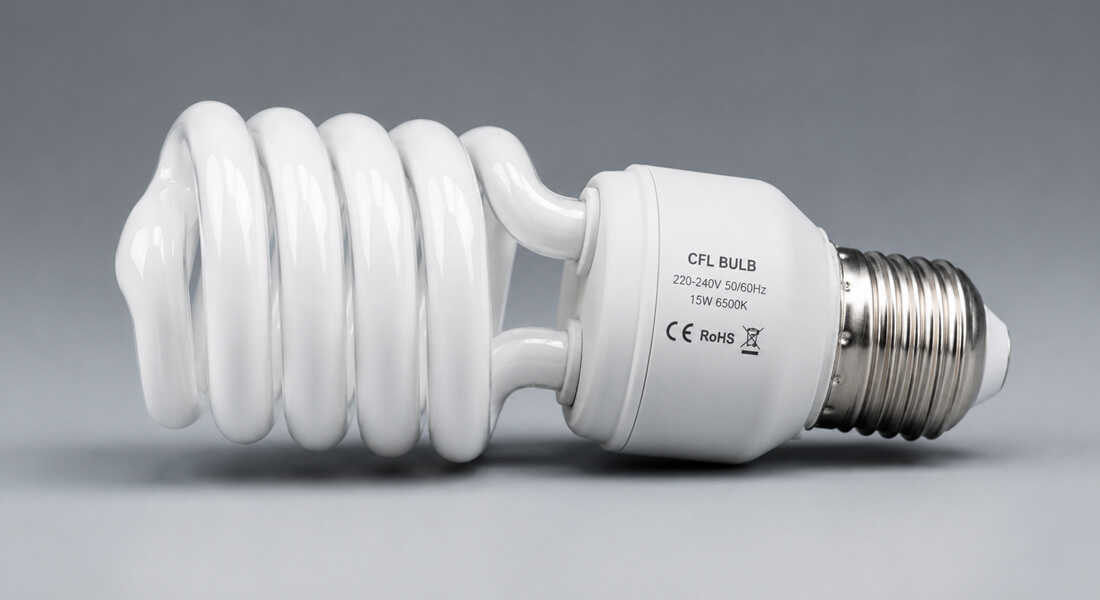
Seit vielen Jahren, CFL-Glühbirnen (Kompaktleuchtstofflampen) waren eine der beliebtesten energiesparenden Beleuchtungslösungen für Privathaushalte und Unternehmen. Jedoch, Die Lichttechnik hat sich weiterentwickelt, Und CFL-Glühbirnen verschwinden nun nach und nach vom Markt.
Obwohl Sie vorhandene weiterhin verwenden können CFL-Glühbirnen, Hersteller haben in vielen Regionen die Produktion eingestellt, Das bedeutet, dass es immer schwieriger wird, Ersatzlampen zu finden. daher, verstehen, warum CFL-Glühbirnen auslaufen – und welche Alternativen es gibt – ist wichtiger denn je.
In diesem Ratgeber, Sie werden erfahren, warum CFL-Glühbirnen werden verboten, ob sie noch verfügbar sind, wie man sie sicher recycelt, und warum LED-Lampen zum bevorzugten Ersatz geworden sind.
Was genau ist eine CFL-Glühbirne??
A Kompakte Leuchtstofflampe (CFL-Glühbirne) ist eine energieeffiziente Glühbirne, die mit einer geringen Menge Quecksilberdampf Licht erzeugt.
Im Gegensatz zu herkömmlichen Glühbirnen, CFL-Glühbirnen erzeugen Licht durch eine chemische Reaktion und nicht durch einen leuchtenden Glühfaden. In jedem CFL-Glühbirne, Elektrizität fließt durch Quecksilber- und Argongas, unsichtbares Ultraviolett erzeugen (UV) Licht. Das UV-Licht reagiert dann mit der Phosphorbeschichtung im Inneren der Glasröhre, Es erzeugt das sichtbare weiße Licht, das wir sehen.
Infolge, CFL-Glühbirnen benötigen eine kurze Aufwärmphase, bevor sie die volle Helligkeit erreichen. Ihr charakteristisches Spiral- oder Faltrohrdesign ermöglicht dies ebenfalls CFL-Glühbirnen Passt in Standard-Haushaltsleuchten und nimmt dabei viel weniger Platz ein als herkömmliche Leuchtstoffröhren.
Zu den Hauptmerkmalen von Kompaktleuchtstofflampen gehören::
- Verbrauchen Sie deutlich weniger Strom als Glühbirnen
- Halten viel länger als herkömmliche Glühlampen
- Erhältlich in mehreren Wattagen und Farbtemperaturen
- Kompatibel mit gängigen Lampensockeln wie E26, E27, E14, und B22
Warum verwenden wir Kompaktleuchtstofflampen??
Bevor die LED-Technologie zum Mainstream wurde, CFL-Glühbirnen stellte einen Durchbruch in der energieeffizienten Beleuchtung dar.
Im Vergleich zu Glühlampen, CFL-Glühbirnen typischerweise:
- Verbrauchen Sie herum 70–80 % weniger Strom
- Zuletzt 6–10-mal länger
- Produzieren Sie weniger Wärme
- Bieten Sie eine große Auswahl an Helligkeitsstufen und Farbtemperaturen
Aufgrund dieser Vorteile, CFL-Glühbirnen wurde schnell zur Standardwahl für Wohn- und Gewerbebeleuchtung.
Zum Beispiel, CFL-Glühbirnen sind weit verbreitet in:
- Häuser
- Büros
- Hotels
- Schulen
- Einzelhandelsgeschäfte
- Deckenbefestigungen
- Tischlampen
- Flure
- Badezimmerbeleuchtung
- Dekorative Regal- und Spiegelbeleuchtung
Jedoch, Fortschritte in der LED-Technologie wurden nach und nach ersetzt CFL-Glühbirnen in den meisten Anwendungen. Heute, LED-Lampen bieten eine noch höhere Effizienz und machen gleichzeitig den Einsatz von Quecksilber überflüssig.
Warum werden Kompaktleuchtstofflampen verboten??
Der Ausstieg aus CFL-Glühbirnen wird in erster Linie durch die Umweltgesetzgebung bestimmt.
Speziell, Die RoHS-Richtlinie (Beschränkung gefährlicher Stoffe) schränkt die Verwendung gefährlicher Materialien in elektrischen und elektronischen Produkten ein. Seit CFL-Glühbirnen enthalten Quecksilber, Die Ausnahmeregelung, die es Herstellern erlaubt, viele Leuchtstofflampen herzustellen, ist abgelaufen.
Folglich, Die Produktion mehrerer Leuchtstofflampenprodukte wurde eingestellt.
Zu den wichtigsten Ausstiegsterminen gehören::
- Kompaktleuchtstofflampen (CFL-Glühbirnen): 1 Februar 2024
- T5- und T8-Leuchtstoffröhren: 1 Februar 2024
- T9 kreisförmige Leuchtstofflampen: 24 Februar 2025
Wichtig, Die Gesetzgebung betrifft nur die Herstellung und den Verkauf neuer Produkte CFL-Glühbirnen. Vorhanden CFL-Glühbirnen können noch bis zum Ende ihrer Lebensdauer genutzt werden.
In der Zwischenzeit, Mehrere spezielle Beleuchtungsanwendungen bleiben weiterhin ausgenommen, einschließlich:
- Notbeleuchtung
- Medizinische Geräte
- Batteriebetriebene Beleuchtung
- Bestimmte Industriebeleuchtung
- Einige künstlerische und wissenschaftliche Anwendungen
Letztlich, Ziel ist es, die Quecksilberbelastung zu reduzieren und gleichzeitig die Verbraucher zum Umstieg zu ermutigen CFL-Glühbirnen um sicherer zu werden, energieeffizientere LED-Beleuchtung.
Sind CFL-Glühbirnen noch verfügbar??
Ja – aber nur solange der aktuelle Vorrat verfügbar ist.
Obwohl die Hersteller die Produktion vieler Produkte eingestellt haben CFL-Glühbirnen, Einzelhändler können vorhandene Lagerbestände weiter verkaufen, bis die Vorräte erschöpft sind.
daher, wenn Sie derzeit verwenden CFL-Glühbirnen, Sie können diese uneingeschränkt weiter nutzen. Jedoch, Ersetzen ist fehlgeschlagen CFL-Glühbirnen wird immer schwieriger, da die Bestände verschwinden.
Aus diesem Grund, Viele Hausbesitzer und Unternehmen rüsten bereits auf CFL-Glühbirnen zu LED-Leuchtmitteln.
Sind Kompaktleuchtstofflampen gefährlich??
Unter normalen Bedingungen, CFL-Glühbirnen gelten als sicher.
Jede CFL-Glühbirne enthält nur eine sehr geringe Menge Quecksilber, die bei normalem Gebrauch im Glasrohr versiegelt bleibt. Folglich, intakt CFL-Glühbirnen stellen praktisch kein Gesundheitsrisiko dar.
Jedoch, wenn a CFL-Glühbirne bricht, Es kann eine kleine Menge Quecksilberdampf freigesetzt werden. Glücklicherweise, Der Quecksilbergehalt ist äußerst niedrig, und die Einhaltung ordnungsgemäßer Reinigungsverfahren minimiert potenzielle Risiken.
Was soll ich tun, wenn eine Kompaktleuchtstofflampe kaputt geht??
Wenn ein CFL-Glühbirne bricht, Bleiben Sie ruhig und befolgen Sie diese einfachen Sicherheitsmaßnahmen:
- Erste, Halten Sie Menschen und Haustiere von der Umgebung fern.
- Nächste, Öffnen Sie die Fenster und lüften Sie den Raum mindestens 10–15 Minuten lang.
- Dann, Schalten Sie alle Heizungs- oder Klimaanlagen aus, die Luft zirkulieren lassen.
- Tragen Sie Einweghandschuhe, bevor Sie mit Bruchstücken hantieren.
- Sammeln Sie große Fragmente vorsichtig mit festem Papier oder Pappe ein.
- Nachher, Verwenden Sie Klebeband, um kleinere Glasstücke und Leuchtstoffpulver zu entfernen.
- Vermeiden Sie sofort die Verwendung eines Staubsaugers, da dadurch Quecksilberpartikel verteilt werden können.
- Endlich, Verschließen Sie den gesamten Abfall in einer Plastiktüte oder einem luftdichten Behälter, bevor Sie ihn gemäß den örtlichen Recyclingvorschriften entsorgen.
Indem Sie diese Vorsichtsmaßnahmen befolgen, gebrochen CFL-Glühbirnen kann sicher und verantwortungsvoll gereinigt werden.
Wie funktioniert das Recycling von Kompaktleuchtstofflampen??
Weil CFL-Glühbirnen enthalten Quecksilber, Kompaktleuchtstofflampen sollten niemals in den Hausmüll geworfen werden.
Stattdessen, CFL-Glühbirnen sollten zu zugelassenen Recyclinganlagen gebracht werden, wo das Glas, Metall, Plastik, und Quecksilber können alle sicher zurückgewonnen werden.
Je nachdem, wo Sie wohnen, Recycling von Kompaktleuchtstofflampen möglicherweise über verfügbar:
- Haushaltsrecyclingzentren
- Rücknahmeprogramme für den Einzelhandel
- Sammelstellen für gefährliche Abfälle
- WEEE-Recyclingprogramme
Richtiges Recycling trägt dazu bei, Quecksilberverschmutzung zu verhindern und gleichzeitig wertvolle Materialien für die zukünftige Fertigung zu schonen.
Was ist die Alternative zur Kompaktleuchtstofflampe??
Heute, LED-Lampen gelten allgemein als der beste Ersatz für Kompaktleuchtstofflampen.
Gegenüber CFL-Glühbirnen, Moderne LED-Lampen bieten in fast jeder Kategorie eine bessere Leistung. Zusätzlich, LED-Lampen verbrauchen weniger Strom, deutlich länger halten, und enthalten kein Quecksilber.
| Besonderheit | CFL-Glühbirnen | LED-Lampen |
|---|---|---|
| Energieeffizienz | Hoch | Sehr hoch |
| Lebensdauer | 8,000–15.000 Stunden | 25,000–50.000 Stunden |
| Quecksilber | Ja | NEIN |
| Sofort an | NEIN | Ja |
| Häufiges Wechseln | Gerecht | Exzellent |
| Dimmbare Optionen | Beschränkt | Weit verbreitet |
| Umweltauswirkungen | Mäßig | Niedrig |
Vor dem Austausch CFL-Glühbirnen, Stellen Sie sicher, dass Sie das Richtige auswählen:
- Lampensockel (E26, E27, E14, B22, usw.)
- Glühbirnenform
- Helligkeit (Lumen)
- Farbtemperatur
- Dimmbare oder nicht dimmbare Version
Infolge, Wechsel von CFL-Glühbirnen Der Einsatz von LED-Lampen kann die Energiekosten senken, geringere Wartungskosten, und die Lichtqualität verbessern. Auf unserer Website, Sie können Arten von LED-Lampen für verschiedene Funktionen finden. Für weitere Artikel, Bitte überprüfen Huiyee-Beleuchtung.
Häufig gestellte Fragen
Can I still use my existing CFL bulbs?
Ja. Vorhanden CFL-Glühbirnen remain completely legal to use until they stop working naturally.
Why are CFL bulbs being phased out?
Weil CFL-Glühbirnen enthalten Quecksilber, environmental regulations such as the RoHS Directive have ended exemptions that previously allowed their manufacture.
Can I throw CFL bulbs in the trash?
NEIN. Weil CFL-Glühbirnen enthalten Quecksilber, they should always be recycled through approved recycling or hazardous waste collection programs.
Are LED bulbs brighter than CFL bulbs?
Nicht unbedingt. Helligkeit hängt davon ab Lumen, not bulb technology. Jedoch, LED bulbs produce the same brightness while using less electricity than CFL-Glühbirnen.
Are LED bulbs better than CFL bulbs?
Ja. Gesamt, LED bulbs outperform CFL-Glühbirnen by offering longer lifespans, höhere Energieeffizienz, instant illumination, lower maintenance, and mercury-free operation.
Abschluss
Gesamt, CFL-Glühbirnen played an important role in improving energy efficiency and reducing electricity consumption for many years. Jedoch, because CFL-Glühbirnen enthalten Quecksilber und neuere Beleuchtungstechnologien sind jetzt verfügbar, Regierungen auf der ganzen Welt lassen sie schrittweise auslaufen.
Glücklicherweise, modern LED-Lampen bieten eine sicherere, effizienter, und langlebigere Alternative. Wenn Sie alte ersetzen CFL-Glühbirnen, Die Wahl hochwertiger LED-Lampen ist die beste Möglichkeit, die Energiekosten zu senken und gleichzeitig über Jahre hinweg eine bessere Lichtleistung zu erzielen.