 English
 العربية
 Français
 Deutsch
 Italiano
 Polski
 Português
 Русский
 Español
 Українська


LED bulbs have become the default choice in residential, hospitality, and commercial projects across the UK, EU, Australia, and New Zealand. This is mainly because LEDs are energy-efficient, long-lasting, and capable of producing high-quality ambient lighting.
However, despite these advantages, one issue still appears quite often in real-world installations: visible flicker.
In practice, this can show up as a slight shimmer, intermittent pulsing, or unstable brightness. At first glance, it may seem minor, but over time, it can seriously affect user experience. For example, it may make interiors feel less comfortable, distract guests in hospitality spaces, and, in some cases, even contribute to eye fatigue.
The important point is this: LED flicker is not random. In most cases, it has a clear technical cause—and once you understand it, it can usually be fixed quite easily.
Click here for Visible Flicker Bulbs
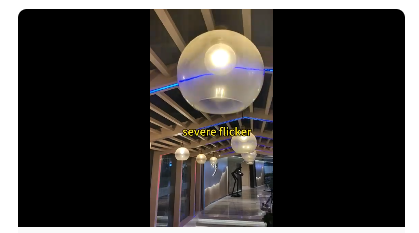
Main Causes of LED Bulbs Flickering
To begin with, it’s helpful to understand what typically causes LED flicker. In most cases, the issue comes from a mismatch between components or unstable electrical conditions.
1) Incompatible dimmer switches
First of all, older leading-edge (triac) dimmers were designed for halogen loads. As a result, when they are used with low-wattage LEDs, flickering often occurs, especially at low dimming levels. The European Union is gradually phasing out inefficient lighting products under the Ecodesign Directive and EU Regulation 2019/2015/EU. So it’s time to replace your older-style dimmers, as halogen bulbs have been phased out of the market.
2) Low-quality LED drivers
In addition, budget LED products often use simplified drivers that cannot regulate current smoothly, which leads to unstable light output.
3) Transformer mismatch in low-voltage systems
Similarly, 12V MR16 downlights using older electronic transformers may flicker because the LED load is too low for the transformer’s operating range.
4) Loose wiring or poor connections
Another common reason is poor electrical contact. Over time, loose terminals or worn sockets can cause intermittent flickering, particularly when the fixture is moved or vibrated.
5) Voltage fluctuations
Moreover, high-power appliances such as air conditioners or refrigerators can temporarily reduce voltage on shared circuits, which leads to visible LED flicker.
6) Ripple control interference (AU/NZ only)
In Australia and New Zealand, utility companies sometimes inject control signals into the grid. Unfortunately, some LED drivers interpret these signals as noise, resulting in periodic flickering.
7) Ghost current or off-state flicker
In some cases, a small residual current from a smart switch or illuminated switch can cause LEDs to glow or pulse even when turned off.
8) Overheating of LED drivers
In addition, poor ventilation in ceiling spaces can cause drivers to overheat. When this happens, protection circuits may trigger flickering behavior.
9) End-of-life component degradation
Over time, internal components such as capacitors degrade, which reduces the stability of the driver and leads to flickering.
10) Mixing incompatible lighting components
Finally, using different brands or driver types on the same circuit can create inconsistent electrical responses, which often results in visible flicker.
How to Diagnose LED Bulbs Flicker
Once a flicker appears, the next step is to identify the source. Fortunately, there are several simple checks you can perform.
1) Test at full brightness
To start with, set the dimmer to maximum. If the flicker disappears, the issue is very likely dimmer-related.
2) Identify the dimmer type
Next, check the dimmer specification. If it is labeled as leading-edge or halogen-compatible only, it is probably not suitable for LEDs.
3) Swap the bulb
After that, try moving the bulb to another fixture. If the flicker follows the bulb, the LED is the issue; if not, the circuit is responsible.
4) Observe timing patterns
In some cases, flicker appears at the same time each day. If this happens, especially in AU/NZ, ripple control interference is a strong possibility.
5) Check physical connections
In addition, gently tapping or moving the fixture can reveal loose wiring issues if the flicker responds to movement.
6) Review circuit load
Finally, make sure the total LED load matches the dimmer or transformer requirement. Underloading or overloading can both cause instability.
How to Stop LED Bulbs Flickering
Once the root cause is identified, the solution is usually straightforward.
1) Upgrade to LED-compatible dimmers
First and foremost, replace old dimmers with trailing-edge LED-rated versions. These are specifically designed for modern LED loads and provide smoother control.
2) Use high-quality dimmable LED Bulbs
In addition, choose LED bulbs designed with low-flicker drivers. This significantly improves stability across different environments.
We also supply high-quality LED bulbs with no flicker, no shade,1~100% dimmable on our website. Pls check the LED Filament Bulbs for more information.
3) Replace outdated transformers
For MR16 systems, it is often best to replace old electronic transformers with LED drivers or switch to integrated mains-voltage LED downlights.
4) Repair wiring and connections
Moreover, have a licensed electrician inspect and tighten all connections, especially in older installations.
5) Install ripple control filters (AU/NZ only)
Where applicable, a ripple filter can block utility signals that interfere with LED drivers.
6) Standardize lighting components
Finally, try to use consistent LED brands and compatible drivers within the same circuit to ensure uniform performance.
Safety Considerations
While many flicker issues are simple to fix, electrical safety should always come first.
- Do not attempt to repair fixed wiring yourself. Always use a licensed electrician.
- If flicker is accompanied by buzzing, burning smell, or heat, immediately switch off the power.
- Avoid overloading dimmers or mixing incompatible electrical components, as this may create safety risks.
Conclusion
In summary, LED flicker is a common but highly solvable issue in modern lighting systems. Most problems are not caused by the LED itself, but rather by mismatched dimmers, outdated transformers, wiring issues, or electrical interference.
Therefore, by carefully matching components, upgrading to LED-compatible controls, and ensuring proper installation, flicker can usually be eliminated.
Ultimately, when everything is correctly configured, LED lighting delivers what it is designed for: stable, efficient, and comfortable illumination without visual distractions.
The LED bulbs that you should buy are like the one in the video.
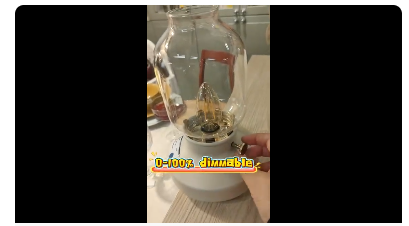
For no flicker bulbs, pls check our Edison Bulb Collection.