 English
 العربية
 Français
 Deutsch
 Italiano
 Polski
 Português
 Русский
 Español
 Українська


Wafer Lights vs. Can Lights: What’s the Difference and Which Should You Choose?
When planning a lighting upgrade, choosing the right recessed lighting can make a big difference in both the look and performance of your space. Today, two of the most common options are wafer lights and can lights.
Although both provide clean, built-in ceiling lighting, they are built differently and serve slightly different purposes. So, to help you make a confident decision, we’ll break down their definitions, features, advantages, installation methods, and key differences in a simple, easy-to-understand way.
1. What Are Wafer Lights and Can Lights?
To begin with, it’s important to know what each lighting type actually is.
What Are Wafer Lights?
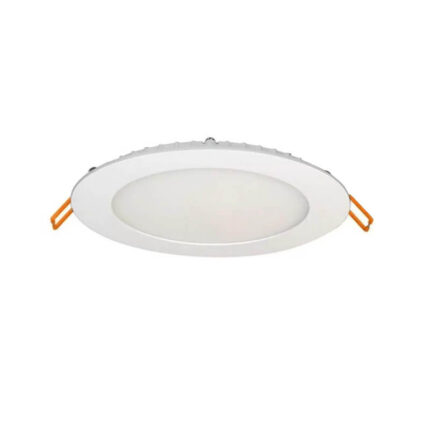
Wafer lights, often called canless recessed lights, are ultra-thin LED fixtures designed to sit almost flush with the ceiling. Unlike traditional recessed systems, they do not require a metal housing (can).
Instead, they connect directly to a junction box and are installed into a small ceiling cutout. Because of this simplified structure, wafer lights are especially useful in spaces with limited ceiling depth or in retrofit projects where installing a full housing would be difficult.
What Are Can Lights?
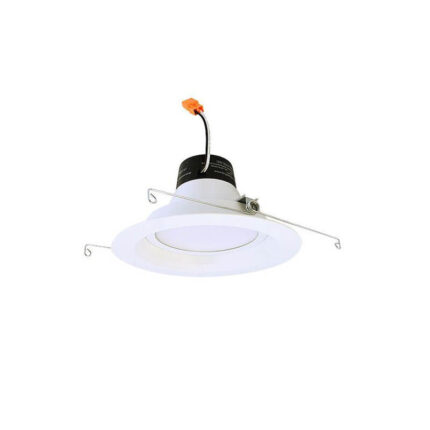
In contrast, can lights (also known as recessed lights or downlights) use a cylindrical metal housing installed within the ceiling structure.
The bulb sits inside this housing and is covered with a trim. Unlike wafer lights, can lights allow users to replace bulbs and choose from a wide variety of trims and lighting effects.
2. Key Features of Wafer Lights and Can Lights
Now that we understand the basics, let’s look at how each type of lighting performs in real use.
Wafer Light Features
Wafer lights are designed with simplicity and modern efficiency in mind. In particular, they offer:
- Ultra-thin, space-saving design
- No need for recessed housing
- Integrated LED technology
- High energy efficiency
- Easy retrofit installation
- Clean, minimal ceiling appearance
- Long lifespan (up to 50,000 hours)
Can Light Features
On the other hand, can lights are built for flexibility and long-term customization. Their key features include:
- Traditional recessed housing system
- Replaceable bulbs (LED, halogen, CFL)
- Wide range of trim styles
- Adjustable and directional lighting options
- Strong compatibility with new construction
- Easy bulb upgrades over time
3. Advantages and Disadvantages Comparison
At this point, it’s helpful to compare the two options side by side to better understand their strengths and limitations.
| Feature | Wafer Lights | Can Lights |
|---|---|---|
| Installation | Simple and fast | More complex |
| Ceiling space required | Minimal | More depth needed |
| Initial cost | Lower | Higher |
| Energy efficiency | Excellent | Good to very good |
| Design flexibility | Limited | Highly flexible |
| Maintenance | Low | Moderate |
| Bulb replacement | Entire fixture replaced | Bulb only |
| Lifespan | Up to 50,000 hours | Varies by bulb |
| Retrofit suitability | Excellent | Moderate |
| New construction use | Good | Excellent |
Wafer Lights – Pros and Cons
To summarize, wafer lights offer strong advantages in modern installations. First of all, they are extremely easy to install. In addition, they are highly energy-efficient and ideal for tight ceiling spaces.
However, on the downside, the entire fixture must be replaced when the LED reaches the end of its lifespan. Moreover, design customization options are more limited compared to can lights.
Can Lights – Pros and Cons
By comparison, can lights provide greater flexibility. For example, you can easily replace bulbs and choose from multiple trim styles. In addition, they are widely used in new construction projects.
However, they require more installation effort. Furthermore, they need more ceiling depth, which can lead to higher upfront installation costs.
4. Installation Methods and Key Differences
Next, let’s take a closer look at how each lighting type is installed, since this is often a deciding factor for many homeowners and contractors.
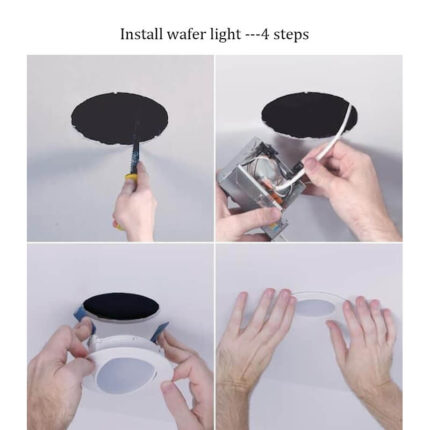
Installing Wafer Lights
To start with, wafer lights are designed for quick and simple installation. Typically, the process includes:
- Cutting a small hole in the ceiling
- Connecting the wiring to a junction box
- Securing the light with spring clips
Because no housing is required, installation is much faster and cleaner. As a result, wafer lights are especially popular in remodeling projects, basements, and finished ceilings.
Installing Can Lights
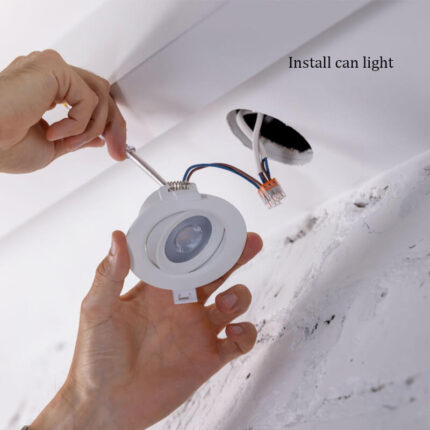
In contrast, can lights require a more traditional installation process. Generally, this includes:
- Installing the recessed housing between ceiling joists
- Running electrical wiring through the structure
- Installing drywall around the housing
- Adding trim and inserting the bulb
Therefore, can lights are typically installed during new construction when the ceiling structure is still open and accessible.
Quick Installation Comparison
| Installation Factor | Wafer Lights | Can Lights |
|---|---|---|
| Housing required | No | Yes |
| Installation speed | Fast | Slower |
| Retrofit friendly | Yes | Limited |
| Labor cost | Lower | Higher |
| Ceiling access needed | Minimal | Significant |
5. Final Summary
In conclusion, both wafer lights and can lights are excellent recessed lighting solutions, but they are designed for different needs.
On one hand, wafer lights are ideal if you want a modern, low-profile design, easier installation, and high energy efficiency—especially in renovation projects or spaces with limited ceiling depth.
On the other hand, can lights are a better fit if you prefer long-term flexibility, replaceable bulbs, and more lighting customization options, particularly in new construction.
Ultimately, there is no single “best” option. Instead, the right choice depends on your ceiling structure, budget, installation conditions, and design preferences. By understanding these differences, you can confidently choose the recessed lighting solution that best fits your space and long-term needs.