 English
 العربية
 Français
 Deutsch
 Italiano
 Polski
 Português
 Русский
 Español
 Українська


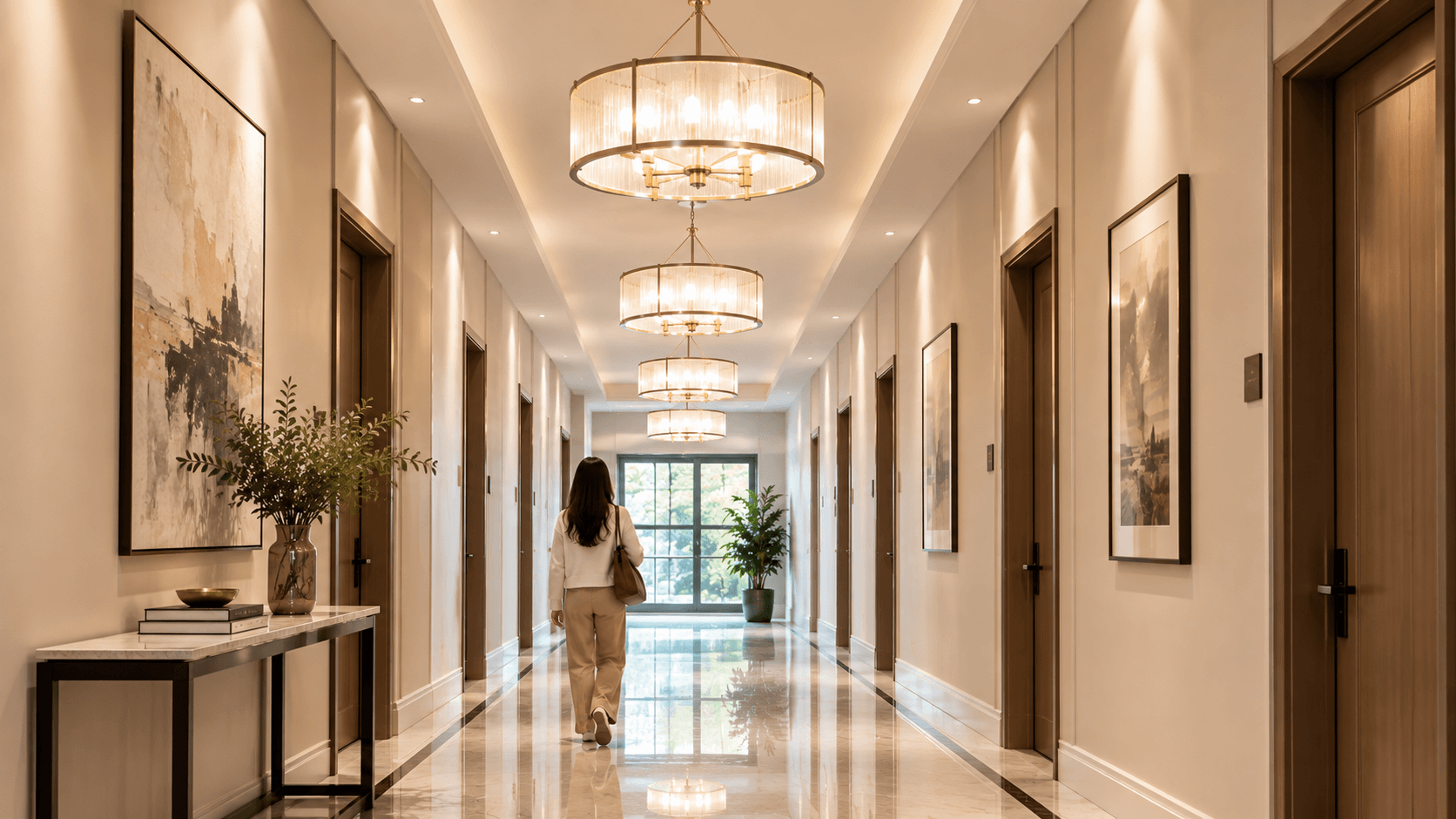
Choosing the right lumen output is essential when sourcing lighting products for residential and commercial projects. The right brightness improves visual comfort, enhances a space’s appearance, and helps control energy costs. Однако, different applications require different lighting levels.
For lighting wholesalers, дистрибьюторы, импортеры, и покупатели проектов, understanding how to calculate room lumens also makes product selection easier. It helps you recommend suitable LED bulbs, подвесные светильники, потолочные светильники, and wall sconces for different customers and markets.
В этом руководстве, we explain how lumens work, how to estimate the brightness different rooms need, and how to calculate how many bulbs or fixtures you need. We also share practical advice from a lighting manufacturer’s perspective to help you compare product specifications and make more informed purchasing decisions.
What Are Lumens and Why Do They Matter?
Люмены (лм) measure the total visible light output of a light source. Проще говоря, a higher lumen rating generally means that a bulb or fixture produces more light.
Однако, люмены, ватты, and lux measure different things.
- Люмены (лм): The total visible light output of a light source.
- Уоттс (W.): The electrical power consumed by the light source.
- Lux (lx): The amount of light reaching a surface. One lux equals one lumen per square meter.
Например, two LED bulbs may consume the same amount of electricity but produce different amounts of light. The difference depends on their luminous efficacy, measured in lumens per watt (лм/Вт).
Поэтому, when comparing lighting products for wholesale purchasing, do not focus on wattage alone. Вместо, evaluate lumen output, энергоэффективность, light distribution, цветовая температура, and the intended application.
For manufacturers and B2B buyers, these specifications help determine whether a product is suitable for a particular market, customer requirement, or lighting project.
How Many Watts Are Needed for 100 Люмены?
The wattage required to produce 100 lumens depends on the efficiency of the LED light source.
Use this formula to estimate power consumption:
Watts = Lumens ÷ Luminous efficacy (лм/Вт)
Например, an LED light with an efficacy of 100 lm/W consumes approximately 1 watt to produce 100 люмены.
The following table shows the estimated wattage at this efficiency level.
| Световой поток | Approximate Wattage at 100 лм/Вт |
|---|---|
| 100 люмены | 1W. |
| 200 люмены | 2W. |
| 400 люмены | 4W. |
| 600 люмены | 6W. |
| 800 люмены | 8W. |
| 1,000 люмены | 10W. |
| 1,500 люмены | 15W. |
| 2,000 люмены | 20W. |
| 3,000 люмены | 30W. |
| 5,000 люмены | 50W. |
These values are estimates, not fixed industry standards. Например, an LED light producing 120 lumens per watt requires approximately 8.3 watts to deliver 1,000 люмены.
Actual performance varies by LED chips, driver efficiency, дизайн светильника, and operating conditions.
What should wholesalers look for?
When comparing suppliers, check the actual lumen output and rated wattage of each product. A higher lm/W value can indicate better energy efficiency, but it should not be the only purchasing criterion.
Also consider product consistency, цветовая температура, ЦНИИ, совместимость с затемнением, certification requirements, and the intended retail price point. These details help you compare products fairly and avoid selecting a light source that meets the wattage target but fails to meet the customer’s lighting expectations.
How Many Lumens Does Each Room Need?
The required lumen output depends on room size, функция, высота потолка, дизайн светильника, and the desired lighting effect.
The following tables provide preliminary planning ranges for residential and commercial applications. They are intended to help buyers estimate product requirements, not to replace professional lighting design or local illumination standards.
Recommended Lumens for Residential Rooms
| Room or Area | Approximate Lumens per Square Foot | Typical Lighting Requirement |
|---|---|---|
| Гостиная | 10–20 lm | Comfortable ambient lighting |
| Спальня | 10–20 lm | Расслабляющий, flexible illumination |
| Кухня | 30–40 lm | General cooking and preparation |
| Столовая | 20–40 lm | Dining and decorative lighting |
| Study room or home office | 30–50 lm | Reading, writing, and working |
| Ванная комната | 20–50 lm | General lighting and personal care |
| Hallway and entrance | 5–15 lm | Navigation and general visibility |
| Closet or wardrobe | 10–20 lm | Finding clothes and personal items |
| Garage or workshop | 30–70 lm | General illumination and practical tasks |
These values estimate total light output relative to floor area. Actual lighting performance depends on how efficiently the fixtures direct light onto the surfaces that need illumination.
Living rooms and bedrooms usually require comfortable ambient lighting rather than intense, uniform brightness.
Например, a 200-square-foot living room may need approximately 2,000–4,000 lumens as an initial estimate. A 150-square-foot bedroom may need around 1,500–3,000 lumens.
Suitable product combinations include ceiling lights, подвесные светильники, люстры, настенные бра, прикроватные лампы, and dimmable fixtures.
From a wholesale perspective, offering several fixture styles and lumen options helps retailers serve customers with different room sizes, interior designs, and budgets. Warm white light around 2700K–3000K is also popular for bedrooms and relaxing living spaces.
Kitchens and Dining Rooms
Kitchens generally require more light than bedrooms because users need to see clearly when preparing food, washing dishes, and working at countertops.
As a starting point, a 150-square-foot kitchen may need approximately 4,500–6,000 lumens for general lighting.
Однако, ceiling lights alone may leave shadows on work surfaces. Under-cabinet lights and task lighting can improve visibility in these areas.
Dining rooms have a different priority. For a 120-square-foot dining room, an initial estimate of 2,400–4,800 lumens may be suitable, depending on the desired atmosphere and lighting arrangement.
Pendant lights and chandeliers are popular choices above dining tables. Dimmable options also allow users to adjust the brightness for everyday meals and special occasions.
Для дистрибьюторов и импортеров, these applications create opportunities to supply coordinated lighting products rather than individual fixtures alone.
Study Rooms and Home Offices
Study rooms and offices require sufficient illumination for reading, writing, and computer work. A 120-square-foot room may need approximately 3,600–6,000 lumens as an initial planning estimate.
Однако, total room lumens do not guarantee adequate light on a desk. Рабочее освещение, glare control, and fixture positioning are also important.
When sourcing office lighting, buyers should consider light distribution, цветопередача, flicker performance, and compatibility with the intended installation.
Ванные комнаты, Коридоры, and Wardrobes
These areas often require more targeted lighting than large living spaces.
Bathrooms may need general ceiling lighting combined with mirror or vanity lighting. Hallways and entrances can use ceiling lights, настенные бра, or motion-sensor night lights. Wardrobes may benefit from compact LED lights that improve visibility without taking up much space.
For these product categories, buyers should pay attention to mounting methods, размеры, требования к установке, и, where relevant, moisture protection and IP ratings.
Recommended Lighting for Gardens and Outdoor Areas
Outdoor lighting needs depend on whether the goal is decoration, pathway visibility, столовая, or security.
| Outdoor Application | Suitable Product Types | Key Purchasing Considerations |
|---|---|---|
| Garden decoration | Decorative lights, прожекторы | Beam direction and visual effect |
| Патио | Струнные светильники, outdoor pendants | Weather resistance and ambiance |
| Обед на открытом воздухе | Подвесные светильники, настенные бра | Light distribution around tables |
| Пути | Bollard lights, low-level lights | Safe movement and glare control |
| Entrances | Outdoor wall lights, потолочные светильники | Visibility and installation conditions |
| Зоны безопасности | Прожекторы, фонари с датчиком движения | Coverage, яркость, and sensor performance |
For outdoor lighting, lumen output alone is not enough. Buyers should also verify the IP rating, material durability, mounting method, and suitability for the local climate.
If you supply products to different markets, make sure the electrical specifications and required certifications match the destination country’s regulations.
Recommended Lumens for Commercial Projects
Отели, рестораны, кафе, розничные магазины, and homestays have different lighting requirements. In addition to brightness, commercial buyers must consider customer experience, дизайн интерьера, operating costs, и обслуживание.
The following ranges are preliminary estimates for general lighting.
| Commercial Application | Approximate Planning Range | Main Requirement |
|---|---|---|
| Hotel guest room | 10–20 lm/sq. футы. | Comfort and flexible lighting |
| Hotel lobby | 15–30 lm/sq. футы. | Welcoming atmosphere |
| Restaurant dining area | 10–25 lm/sq. футы. | Comfortable dining environment |
| Restaurant kitchen | 30–70 lm/sq. футы. | Task visibility and safe working |
| Кафе | 15–30 lm/sq. футы. | Ambiance and customer comfort |
| Retail store | 30–50 lm/sq. футы. | Product visibility and presentation |
| Офис | 30–50 lm/sq. футы. | Visual comfort and productivity |
| Homestay or vacation rental | 10–30 lm/sq. футы. | Flexible lighting for different rooms |
These ranges are not substitutes for project-specific lighting standards. Commercial projects may require defined illuminance levels in lux, uniformity, glare limits, emergency lighting, and other requirements under local regulations.
Например, a hotel guest room may combine a ceiling fixture with bedside lamps and wall sconces. A restaurant may use pendant lights above tables while keeping kitchen work areas brighter.
For project buyers, selecting the right combination of fixtures can improve the overall result while supporting budget and maintenance targets.
How to Calculate How Many Lumens a Room Needs
Once you know the room size and its intended use, you can estimate the required light output with a simple formula.
Total lumens needed = Room area × Recommended lumens per square foot
For metric measurements, use the relationship between area and illuminance:
Lumens reaching the target area = Room area in square meters × Target illuminance in lux
Например, a 20-square-meter room designed for an average illuminance of 200 lux requires 4,000 lumens reaching the relevant surfaces under this simplified calculation.
In a real installation, the total initial output from the fixtures may need to be higher because some light does not reach the target surfaces. A professional lighting design accounts for fixture performance, room geometry, reflectance, и другие факторы.
Measure the Room Area
Первый, measure the room’s length and width.
Room area = Length × Width
Например, a room measuring 12 feet long and 10 feet wide has an area of 120 квадратные футы.
Select the Appropriate Lighting Level
Следующий, choose a preliminary lighting target based on the room’s purpose.
For this example, assume the room is a bedroom with a target of 15 lumens per square foot.
Calculate the Total Lumens
Multiply the room area by the selected lighting target.
120 square feet × 15 lumens per square foot = 1,800 люмены.
Поэтому, the estimated total light output for this bedroom is 1,800 люмены.
Estimate the Number of Bulbs or Fixtures
Окончательно, divide the total required lumens by the rated lumen output of each bulb or fixture.
Number of lights = Total required lumens ÷ Lumens per light
If each LED bulb produces 900 люмены:
1,800 ÷ 900 = 2 лампочки.
In this simplified example, two 900-lumen bulbs provide a combined nominal output of 1,800 люмены.
Однако, this calculation assumes that the rated light output is suitable for the intended installation. На практике, fixture efficiency, shade design, угол луча, mounting height, and room layout can change the amount of useful light reaching the target surfaces.
For larger projects, a lighting layout or professional calculation is more reliable than selecting fixtures by lumen output alone.
What Should Buyers Consider When Selecting Lighting Products?
For wholesalers and project buyers, the correct lumen output is only one part of a successful purchasing decision. Product specifications, quality consistency, compliance, and supply capability are equally important.
Lumen Output and Energy Efficiency
Compare rated lumens with wattage to understand product efficacy. Make sure the selected light output is appropriate for the target application rather than choosing the highest possible brightness.
Color Temperature and CRI
Color temperature affects the appearance of a space. Warm white is often preferred for bedrooms and hospitality settings, while neutral white is frequently used in kitchens and work areas.
CRI is also important when accurate color appearance matters, such as in retail displays and decorative applications.
Beam Angle and Fixture Design
The same lumen output can produce different lighting effects depending on the fixture. Glass pendants, enclosed ceiling lights, directional downlights, and wall sconces distribute light differently.
Поэтому, evaluate the complete fixture rather than relying on the bulb specification alone.
Product Quality and Consistency
For bulk purchasing, consistent performance across production batches helps reduce customer complaints and product returns.
Before placing an order, ask the manufacturer about product specifications, quality inspection procedures, aging or testing processes where applicable, packaging protection, and warranty terms.
Certifications and Market Requirements
Different countries and product categories may require different safety or compliance certifications. Confirm the applicable requirements before placing a bulk order, and request the relevant documentation for the exact product model.
минимальный заказ, Время выполнения, and Customization
For wholesalers and importers, purchasing conditions can be just as important as technical specifications.
Before confirming an order, clarify the minimum order quantity, production lead time, packaging options, logo requirements, and whether OEM/ODM customization is available.
These details help buyers plan inventory, manage costs, and supply products that match their local market.
Frequently Asked Questions About Room Lumens
How many lumens are enough for a room?
The answer depends on the room size and purpose. Bedrooms and living rooms may start at 10–20 lumens per square foot, while kitchens and offices may need approximately 30–50 lumens per square foot for preliminary planning.
Multiply the room area by the selected target to estimate total light output.
Is 800 lumens bright enough for a bedroom?
An 800-lumen bulb may be suitable for a bedside lamp or a small bedroom area. Однако, it may not provide enough general lighting for the entire room.
Например, a 120-square-foot bedroom using a target of 15 lumens per square foot needs approximately 1,800 lumens in total.
Is 1,000 lumens enough for a living room?
A 1,000-lumen light can work as supplementary lighting or in a small space. For a larger living room, multiple fixtures may be needed to provide comfortable and balanced illumination.
How many watts are needed for 1,000 люмены?
At an efficacy of 100 лм/Вт, a 1,000-lumen LED light consumes approximately 10 ватты. В 120 лм/Вт, it consumes approximately 8.3 ватты.
Actual power consumption depends on the product’s rated efficiency and design.
Are more lumens always better?
Нет. Excessive brightness can create glare and discomfort. The best lighting solution provides sufficient illumination with suitable distribution, цветовая температура, and fixture positioning.
What is the difference between lumens and lux?
Lumens measure the total visible light output from a source, while lux measures the amount of light reaching a surface.
По этой причине, professional lighting projects often use lux measurements to evaluate illumination on desks, countertops, floors, and other working surfaces.
How can wholesalers choose the right lumen output?
Start with the intended application, room size, target market, and preferred fixture type. Then compare lumen output, мощность, efficacy, ЦНИИ, угол луча, совместимость с затемнением, сертификаты, and quality requirements.
For bulk orders, also confirm MOQ, Время выполнения, упаковка, гарантия, and customization options with the manufacturer.
Source Lighting Products Directly from Huiyee Lighting
В Huiyee Lighting, we understand that wholesale buyers need lighting products that combine suitable performance, attractive design, reliable specifications, and competitive sourcing conditions.
Our product range includes LED bulbs, подвесные светильники, настенные бра, and other decorative lighting products for residential and commercial applications.
Whether you supply lighting retailers, дистрибьюторы, гостиничные проекты, or online sales channels, choosing the right product specifications is an important step toward meeting your customers’ expectations.
We can discuss your target application, required lumen output, product design, количество заказа, упаковка, and OEM/ODM requirements to help you identify suitable options.
Contact Huiyee Lighting to discuss your wholesale lighting requirements and request a quotation for your next order.