 English
 العربية
 Français
 Deutsch
 Italiano
 Polski
 Português
 Русский
 Español
 Українська


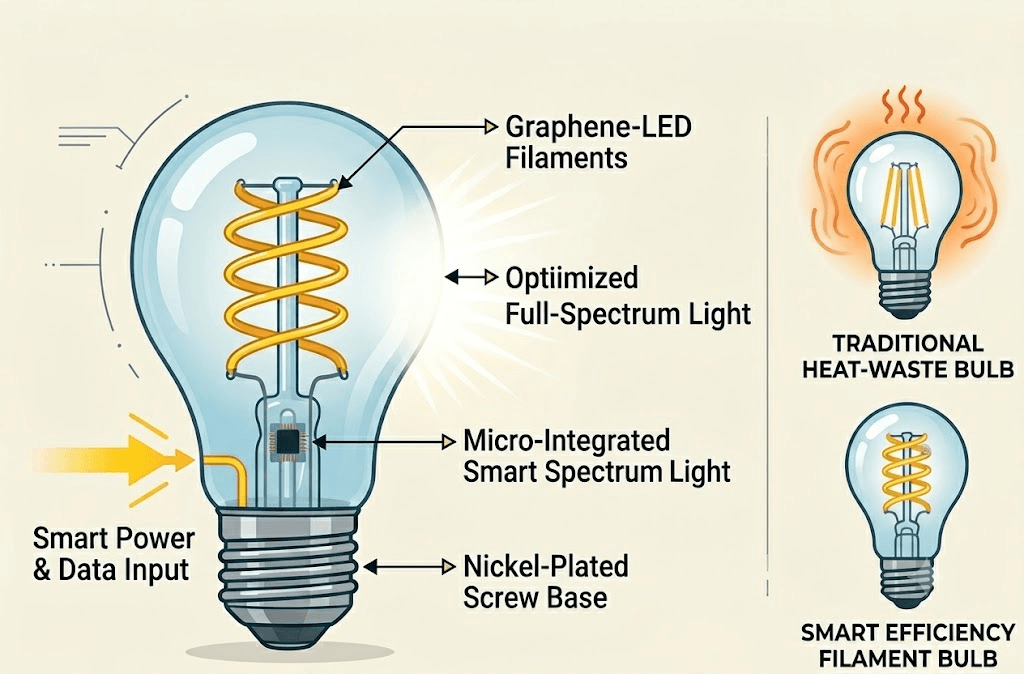
Как работает светодиодное освещение: Наука, лежащая в основе современных энергоэффективных лампочек
Светодиодное освещение полностью изменило способ освещения наших домов., офисы, отели, рестораны, и коммерческих помещений. По сравнению с традиционными лампами накаливания и лампами КЛЛ., Светодиодные фонари обеспечивают лучшую энергоэффективность, более длительный срок службы, улучшенное качество освещения, и более низкие затраты на техническое обслуживание.
Однако, многие люди используют светодиодные лампы каждый день, не зная, что на самом деле происходит внутри них.. Когда вы включаете светодиодную лампу, как электричество становится ярким, комфортное освещение?
Ответ кроется в крошечном, но мощном компоненте внутри лампочки.: полупроводниковый чип.
Когда электрический ток проходит через этот чип, он производит видимый свет посредством процесса, называемого электролюминесценция. В отличие от ламп накаливания, которые нагревают нить до тех пор, пока она не засветится, Светодиодная технология преобразует электричество непосредственно в свет.. Как результат, гораздо меньше энергии тратится в виде тепла.
Благодаря этому эффективному преобразованию энергии, Светодиодные лампы могут снизить потребление электроэнергии до 80% по сравнению с традиционным освещением. Кроме того, их длительный срок службы помогает снизить частоту замены и затраты на техническое обслуживание..
Сегодня, Светодиодные технологии используются повсюду — от декоративных лампочек Эдисона и лампочек-свеч в люстрах до встраиваемых светильников., умные системы освещения, и решения для коммерческого освещения.
В этом полном руководстве, мы объясним как работает светодиодное освещение, какие компоненты находятся внутри светодиодной лампы, почему светодиоды более энергоэффективны, чем традиционные лампы, и как такие факторы, как яркость, цветовая температура, и CRI влияют на качество освещения. Изображение ниже может помочь вам лучше понять, как работает лампочка..
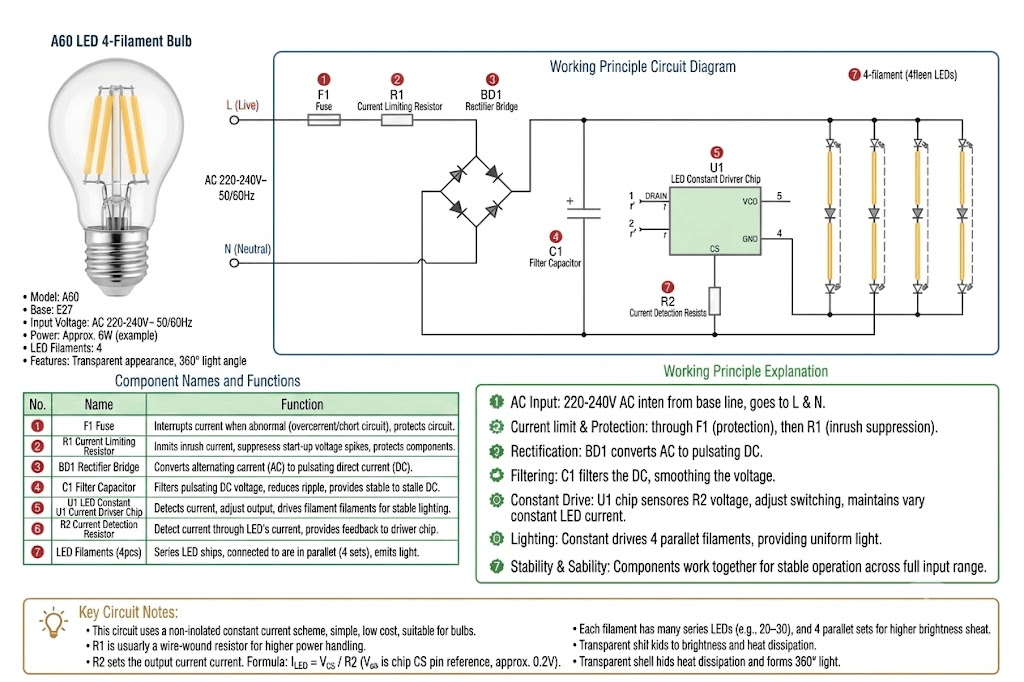
Заменяете ли вы одну лампочку, модернизация освещения вашего дома, или планирование проекта коммерческого освещения, понимание светодиодной технологии поможет вам выбрать правильное осветительное решение..
Что такое светодиод?
Прежде чем изучать, как работает светодиодное освещение, важно понимать, что означает термин «LED».
Светодиод означает Светоизлучающий диод. Это полупроводниковое устройство, преобразующее электрическую энергию в видимый свет..
В отличие от ламп накаливания, которые создают свет путем нагревания вольфрамовой нити., Светодиоды производят свет посредством процесса, называемого электролюминесценция.
Просто объяснено:
Поступает электричество → Электроны движутся внутри полупроводника → Энергия выделяется в виде света.
Потому что светодиодам не нужно нагревать нить накала., они используют энергию гораздо эффективнее и выделяют значительно меньше тепла.
Эта простая, но передовая технология является причиной того, что светодиодные лампы:
- Более энергоэффективный
- Более длительный срок службы
- Охладитель во время работы
- Более гибкий дизайн
- Доступен во многих цветах и стилях освещения.
Поскольку светодиодные технологии продолжают совершенствоваться, производители теперь могут создавать лампы с большей яркостью, более высокая точность цветопередачи, и более умные функции управления.
Краткая история светодиодной технологии
Хотя светодиодное освещение считается современной технологией., его разработка заняла много лет.
Первые светодиоды не были предназначены для домашнего освещения.. Вместо, в основном они использовались в качестве небольших индикаторных лампочек в электронных устройствах..
Через некоторое время, усовершенствования в области полупроводниковых материалов превратили светодиоды в современные передовые осветительные решения..
1962 – Первый практичный светодиод
Ник Холоньяк младший. разработал первый практический видимый красный светодиод, создание основы для будущих светодиодных технологий.
19701980-е годы – было разработано больше цветов светодиодов.
В течение этого периода, производители представили желтый цвет, апельсин, и зеленые светодиоды, расширение применения светодиодов за пределы простых индикаторов.
1990s – Синий светодиод изменил индустрию освещения
Разработка синих светодиодов высокой яркости стала прорывом.. Комбинируя синие светодиодные чипы с люминофорными материалами, производители наконец-то смогли создать эффективное белое светодиодное освещение.
2000s – Светодиодные лампы вошли в дома
Поскольку производственные затраты снизились, а производительность улучшилась, Светодиодные лампы стали практичной заменой ламп накаливания и КЛЛ..
Сегодня – светодиодное освещение доминирует на рынке
Современные светодиоды сейчас широко используются в:
- Жилое освещение
- Коммерческие здания
- Отели и рестораны
- Наружное освещение
- Умные системы освещения
- Промышленное применение
Самое главное, Изобретение технологии синих светодиодов сделало возможным современное белое светодиодное освещение и полностью изменило мировую индустрию освещения..
Светодиоды, лампы накаливания и лампы КЛЛ: Какой из них лучше?
Чтобы лучше понять, почему светодиоды стали такими популярными, это помогает сравнить их со старыми технологиями освещения.
| Особенность | Лампа накаливания | КФЛ | ВЕЛ |
|---|---|---|---|
| Источник света | Нагреваемая нить | Ртутный газ | Полупроводниковый чип |
| Энергоэффективность | Низкий | Середина | Высокий |
| Типичная эффективность | Вокруг 15 лм/Вт | Вокруг 60 лм/Вт | 80–120 лм/Вт |
| Продолжительность жизни | О 1,000 часы | О 8,000 часы | 25,000–50 000+ часов |
| Тепловая мощность | Очень высокий | Умеренный | Низкий |
| Содержание ртути | Нет | Да | Нет |
| Энергопотребление | Самый высокий | Середина | Самый низкий |
Как показывает сравнение, Светодиодные лампы обеспечивают преимущества практически во всех категориях..
Например, замена традиционной лампы накаливания мощностью 60 Вт на светодиодную лампу мощностью 9 Вт может обеспечить аналогичную яркость, потребляя при этом гораздо меньше электроэнергии..
Поэтому, Светодиоды теперь являются предпочтительным выбором для домовладельцев., предприятия, и профессионалы в области освещения по всему миру.
Анатомия современной светодиодной лампы
Хотя светодиодная лампа снаружи может выглядеть похожей на традиционную лампочку., его внутренняя структура гораздо более совершенна.
Внутри каждой светодиодной лампы, несколько ключевых компонентов работают вместе, чтобы создать стабильную, эффективный, и качественное освещение.
Понимание этих частей также объясняет, почему некоторые светодиодные лампы работают намного лучше, чем другие., даже если они имеют одинаковую мощность.
Светодиодный чип: Сердце лампочки
Светодиодный чип – самая важная часть всей системы освещения..
Это компонент, который излучает свет, когда через него проходит электричество..
Современные светодиодные чипы обычно изготавливаются из полупроводниковых материалов, таких как:
- Нитрид галлия (ГаН)
- Нитрид индия-галлия (ИнГаН)
Эти материалы эффективно преобразуют электрическую энергию в видимый свет..
Сегодня, Светодиодные чипы обычно доступны в трех основных типах.:
SMD светодиод (Устройство для поверхностного монтажа)
Светодиоды SMD широко используются в бытовой светотехнике..
Преимущества:
- Высокая эффективность
- Равномерное распределение света
- Надежная работа
- Экономически эффективное производство
Они обычно встречаются в светодиодных лампах., панели, и светильники.
COB-светодиод (Чип на плате)
Светодиоды COB объединяют несколько светодиодных чипов на одной плате..
Преимущества включают в себя:
- Более высокая яркость
- Лучшее управление температурным режимом
- Более сильный световой поток
Они часто используются в коммерческом освещении и устройствах с высокой мощностью..
Светодиодный чип накаливания
Технология светодиодных нитей накаливания разработана для имитации внешнего вида традиционных ламп накаливания..
Эти лампы особенно популярны:
- Лампы Эдисона
- Винтажное освещение
- Декоративные люстры
- Подвесные светильники
Поскольку технология светодиодных чипов продолжает совершенствоваться, производители могут создавать более яркие световые решения с меньшим энергопотреблением.
Светодиодный драйвер: Мозг светодиодной лампы
Хотя светодиодный чип — это часть, создающая свет, он не может работать напрямую с электричеством из вашего дома.
Именно здесь Светодиодный драйвер становится необходимым.
Светодиодный драйвер работает как небольшая система управления питанием внутри лампы.. Его основная задача – преобразование переменного тока высокого напряжения. (переменного тока) из вашей электрической системы в постоянный ток низкого напряжения (округ Колумбия) что светодиодный чип нуждается.
Проще говоря:
Домашнее электричество → Светодиодный драйвер → Стабильная мощность → Светодиодный чип излучает свет
Помимо преобразования энергии, высококачественный светодиодный драйвер также контролирует ток и защищает лампочку от электрических колебаний.
Хороший светодиодный драйвер выполняет несколько важных функций.:
- Преобразование переменного тока в постоянный
- Регулирование постоянного тока
- Защита по напряжению
- Защита от перенапряжения
- Уменьшение мерцания
- Совместимость с затемнением
Поэтому, качество светодиодного драйвера напрямую влияет на работу лампы., стабильность яркости, и продолжительность жизни.
С другой стороны, некачественные светодиодные драйверы могут вызвать распространенные проблемы, такие как:
- Видимое мерцание
- Жужжащие звуки
- Пониженная яркость
- Более короткий срок службы
- Плохая производительность затемнения
По этой причине, важно выбирать светодиодные лампы от надежных производителей, особенно для применений, где качество освещения имеет значение, такие как дома, отели, рестораны, и розничные магазины.
Радиатор: Сохранение светодиодных ламп прохладными и надежными
Хотя светодиодные лампы выделяют гораздо меньше тепла, чем лампы накаливания., они не совсем без тепла.
Во время работы, светодиодный чип по-прежнему выделяет небольшое количество тепла. Если это тепло не может уйти должным образом, это может привести к повреждению внутренних компонентов и сокращению срока службы лампы..
Чтобы решить эту проблему, производители добавляют радиатор к конструкциям светодиодных лампочек.
Радиатор работает, поглощая тепло от светодиодного чипа и передавая его в окружающую среду..
Общие материалы радиатора включают в себя:
- Алюминий
- Керамика
- Графитовые композиционные материалы
Среди этих материалов, Алюминий широко используется, поскольку он обеспечивает превосходное рассеивание тепла, оставаясь при этом легким и доступным по цене..
Как результат, эффективное управление температурным режимом помогает светодиодным лампам:
- Поддерживайте стабильную яркость
- Предотвращение перегрева
- Повышение надежности
- Достичь номинального срока службы
Именно поэтому две светодиодные лампы одинаковой мощности могут иметь разный срок службы.. Внутренний дизайн и система управления теплом имеют существенное значение..
Фосфорное покрытие и диффузор: Создание комфортного белого света
Один интересный факт о светодиодной технологии заключается в том, что большинство светодиодных чипов естественным образом не излучают белый свет..
Вместо, многие светодиодные чипы излучают синий свет.
Так как же производители создают теплое белое или холодное белое освещение, которое мы видим каждый день??
Ответ – специальный материал под названием люминофорное покрытие.
Поверх светодиодного чипа нанесен слой люминофора.. Когда синий свет проходит через это покрытие, часть энергии преобразуется в другие длины волн, включая желтый, апельсин, и красный свет.
Сочетание этих цветов создает для человеческого глаза вид белого света..
Эта технология позволяет производителям производить различные цвета освещения., включая:
| Цветовая температура | Появление | Общие приложения |
|---|---|---|
| 2700K | Теплый белый | Спальни, гостиные |
| 3000K | Мягкий теплый белый | Отели, рестораны, обеденные зоны |
| 4000K | Нейтральный Белый | Кухни, ванные комнаты, офисы |
| 5000K | Холодный белый | Рабочие пространства, коммерческие площади |
| 6500K | Дневной свет Белый | Гаражи, семинары |
Кроме того, Светодиодные лампы обычно включают рассеиватель или оптическую крышку..
Диффузор в помощь:
- Распределяйте свет равномерно
- Уменьшите блики
- Устранение жестких горячих точек
- Создайте более комфортный визуальный опыт
Поэтому, качественные светодиодные лампы — это не только яркость, но и создание комфортного и сбалансированного освещения..
Цоколь лампы и корпус: Упрощение установки светодиодных лампочек
После сборки внутренних компонентов, они защищены внутри корпуса лампы и соединены с цоколем лампы..
Цоколь — это часть, которая соединяет лампочку с светильником и подает электроэнергию..
Распространенные типы цоколей светодиодных ламп включают в себя:
- Е26
- Е27
- Е12
- Е14
- ГУ10
- МР16
- Б22
Выбор правильного цоколя лампы имеет важное значение, поскольку несовместимый цоколь может помешать установке или повлиять на безопасность..
Например:
- E26 и E27 широко используются в бытовых винтовых головках.
- E12 обычно используется для декоративных лампочек-свеч и люстр.
- GU10 часто встречается в точечных светильниках и встраиваемых светильниках.
Понимая цоколи лампочек, Вы можете быстро выбрать подходящую сменную светодиодную лампу для вашего светильника..
Наука, лежащая в основе светодиодного освещения: Как электричество становится светом
Теперь, когда мы понимаем основные части внутри светодиодной лампы., давайте глубже взглянем на реальную науку о том, как светодиоды создают свет..
Хотя процесс происходит на микроскопическом уровне, основная идея удивительно проста.
П-Н-переход: Где генерируется свет
Внутри каждого светодиодного чипа имеется особая структура, называемая PN-переход.
Он содержит два полупроводниковых слоя.:
Полупроводник N-типа
Этот слой содержит дополнительные электроны.
Полупроводник P-типа
Этот слой содержит области, называемые «дырками».,” которые представляют собой пространства, в которых могут двигаться электроны.
Когда электричество течет через светодиод, электроны движутся из слоя N-типа в сторону слоя P-типа.
Когда электроны соединяются с дырками, энергия высвобождается.
Этот процесс называется электронно-дырочная рекомбинация.
Высвободившаяся энергия выглядит как крошечные частицы света, называемые фотоны.
Проще говоря:
Электричество → Движение электронов → Высвобождение фотонов → Видимый свет
В отличие от ламп накаливания, Светодиодам не нужно ничего нагревать, чтобы создавать свет..
Из-за этого, гораздо больше электрической энергии становится полезным для освещения, а не тратится впустую..
Почему светодиоды воспроизводят разные цвета
Цвет светодиода зависит от полупроводниковых материалов, используемых внутри чипа..
Разные материалы имеют разные уровни энергии., также известный как запрещенная зона.
Разница энергий определяет длину волны излучаемого света..
Например:
| Цвет | Приблизительная длина волны |
|---|---|
| Красный | 620–750 нм |
| Зеленый | 520–560 нм |
| Синий | 460–495 нм |
| Фиолетовый | 400–420 нм |
Путем корректировки полупроводниковых материалов, производители могут создавать светодиоды разных цветов для различных применений..
Эта технология используется в:
- Декоративное освещение
- Умные RGB-лампы
- Экраны дисплея
- Архитектурное освещение
Как белые светодиоды создают белый свет
Интересно, большинство белых светодиодных лампочек не излучают белый свет напрямую..
Вместо, они используют комбинацию:
- Синий светодиодный чип
- Фосфорное покрытие
Синий светодиод излучает синий свет., в то время как люминофорное покрытие преобразует часть этого света в другие цвета..
Когда эти цвета смешиваются, наши глаза воспринимают результат как белый свет.
Этот метод обеспечивает:
- Высокая эффективность
- Лучшая однородность цвета
- Длительный срок службы
- Более низкая стоимость производства
Из-за этих преимуществ, люминофорные светодиоды стали стандартной технологией для современного белого светодиодного освещения..
Почему светодиодное освещение настолько энергоэффективно
Одной из главных причин, по которой люди переходят на светодиодное освещение, является экономия энергии..
Однако, Настоящее преимущество светодиодной технологии не просто в том, что она потребляет меньше ватт.. Ключевое отличие заключается в насколько эффективно светодиоды преобразуют электричество в полезный свет.
Традиционные лампы накаливания работают, нагревая металлическую нить до тех пор, пока она не станет достаточно горячей, чтобы светиться.. Как результат, большая часть электроэнергии выделяется в виде тепла, а не света.
В сравнении, Светодиодные лампы используют полупроводниковую технологию для преобразования электричества непосредственно в свет..
Это означает:
Меньше потерь энергии → Больше энергии преобразуется в свет → Снижение затрат на электроэнергию
Благодаря этой эффективной конструкции, Светодиодные лампы могут обеспечивать ту же яркость, что и традиционные лампы, потребляя при этом значительно меньше энергии..
Для домовладельцев, это означает снижение ежемесячных счетов за электроэнергию.
Для бизнеса, например, отели, рестораны, офисы, и розничные магазины, Светодиодное освещение может значительно снизить долгосрочные эксплуатационные расходы..
Люмены против Ватт: Понимание яркости светодиода
При покупке традиционных лампочек, многие люди использовали ватты для оценки яркости.
Однако, со светодиодной технологией, этот метод уже не точен.
Причина проста:
Ватты измеряют энергопотребление, не яркость.
Люмены измеряют фактическую светоотдачу.
Например:
| Традиционная лампа | Яркость | Светодиодный эквивалент |
|---|---|---|
| 25Вт Лампа накаливания | Вокруг 250 люмены | 2–3Вт светодиод |
| 40Вт Лампа накаливания | Вокруг 450 люмены | 4–6 Вт светодиод |
| 60Вт Лампа накаливания | Вокруг 800 люмены | 7–10 Вт светодиод |
| 75Вт Лампа накаливания | Вокруг 1,100 люмены | 10–13 Вт светодиод |
| 100Вт Лампа накаливания | Вокруг 1,600 люмены | 14–18 Вт светодиод |
Поэтому, при выборе светодиодной лампы, лучше ориентироваться на люмены, а не на ватты.
Например, если вам нужна такая же яркость, как у старой лампы накаливания мощностью 60 Вт, ищите светодиодную лампочку вокруг 800 люмены.
Это простое изменение покупательских привычек поможет вам легче выбрать подходящую светодиодную лампу..
Меньше тепла — больше преимуществ
Еще одним важным преимуществом светодиодного освещения является снижение тепловыделения..
Традиционные лампы накаливания выделяют большое количество энергии в виде тепла.. Фактически, примерно 90% часть их энергии может быть потеряна в виде тепла, а не в виде полезного света..
Светодиодные лампы работают по-другому.
Потому что они преобразуют электроэнергию более эффективно, они производят гораздо меньше тепла.
Как результат:
- В комнатах становится прохладнее
- Системы кондиционирования работают меньше
- Светильники остаются безопаснее
- Лампы служат дольше
- Энергетические потери сокращаются
Это особенно ценно в теплом климате., Коммерческие здания, и закрытые светильники, где чрезмерное тепло может повлиять на производительность.
Более того, более низкое потребление энергии помогает сократить выбросы углекислого газа, сделать светодиодное освещение более экологически чистым выбором.
Качество цвета: Почему хорошее освещение — это больше, чем просто яркость
Хотя яркость важна, это не единственный фактор, определяющий качество освещения.
Комфортное освещение также зависит от:
- Цветовая температура
- Индекс цветопередачи (ЦНИИ)
- Затемнение производительности
- Контроль мерцания
Эти факторы влияют на то, как пространство выглядит и ощущается..
Например, ресторану может понадобиться тепло, манящий свет, в то время как офис может потребовать более светлого, более прохладное освещение для улучшения концентрации.
Понимание этих деталей поможет вам выбрать светодиодные лампы, соответствующие назначению каждого помещения..
Понимание цветовой температуры (СКИт)
Цветовая температура описывает, как свет воспринимается человеческим глазом..
Измеряется в Кельвинах (K).
Более низкие значения Кельвина создают более теплую атмосферу., больше желтого света, в то время как более высокие значения Кельвина создают более прохладное, более синий оттенок света.
| Цветовая температура | Появление | Рекомендуемое использование |
|---|---|---|
| 2700K | Теплый белый | Спальни, гостиные |
| 3000K | Мягкий белый | Столовые, отели, рестораны |
| 4000K | Нейтральный Белый | Кухни, ванные комнаты, офисы |
| 5000K | Холодный белый | Рабочие пространства, коммерческие площади |
| 6500K | Дневной свет | Гаражи, семинары |
Например:
Светодиодная лампа 2700К создает уютную атмосферу., что делает его идеальным для зон отдыха.
Тем временем, Лампа с температурой 4000К или 5000К обеспечивает более четкое и энергичное освещение., что лучше подходит для рабочих сред.
Поэтому, Выбор правильной цветовой температуры так же важен, как и выбор правильной яркости..
Почему CRI имеет значение в светодиодном освещении
Еще одним важным фактором, влияющим на качество освещения, является ЦНИИ, или индекс цветопередачи.
CRI измеряет, насколько точно источник света передает истинные цвета объектов по сравнению с естественным солнечным светом..
Чем выше значение CRI, тем более естественны цвета. Вы можете увидеть разницу между различными рейтингами CRI на рисунке ниже..
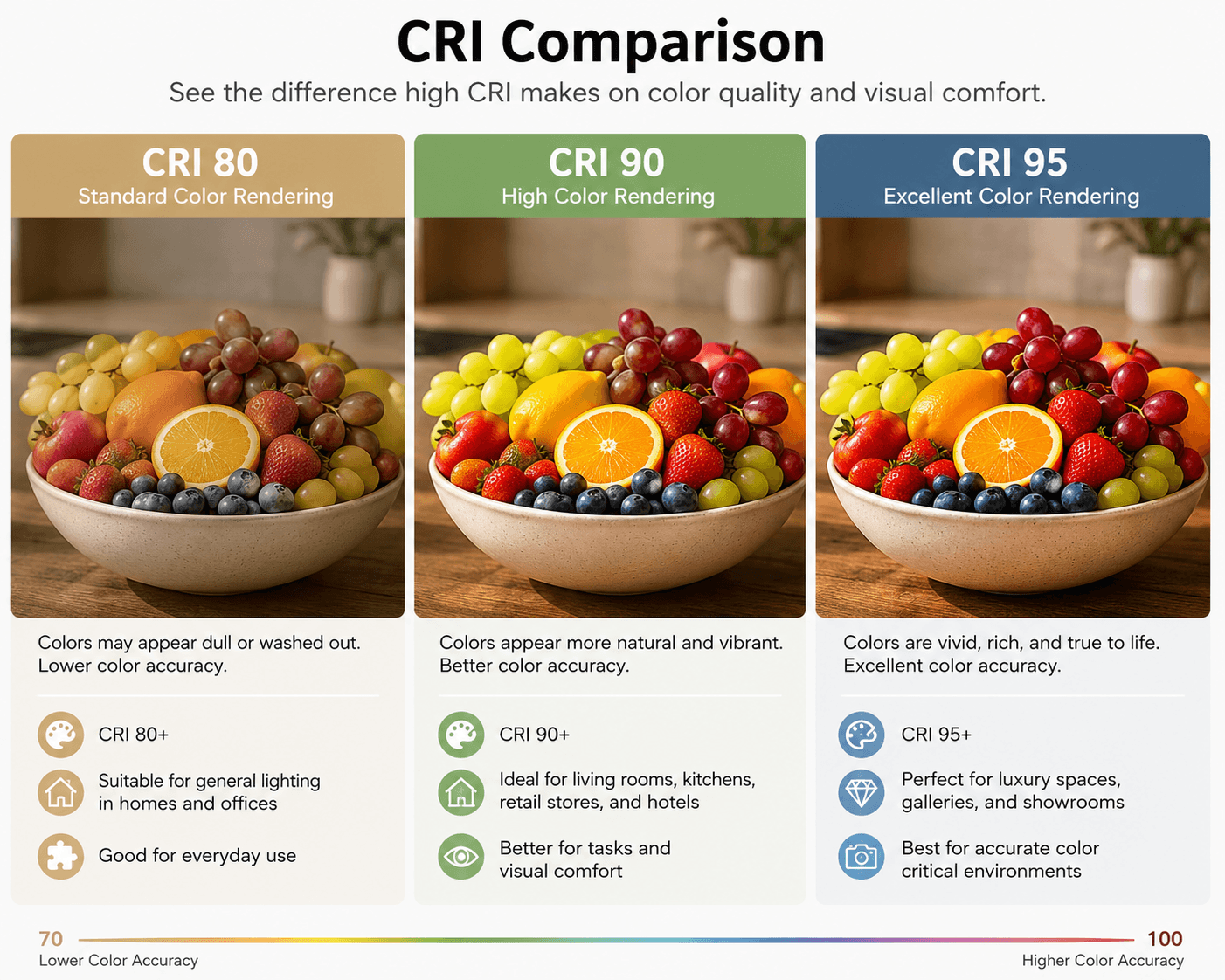
Для повседневного домашнего освещения, ЦНИИ 80+ обычно приемлемо.
Однако, для помещений, где внешний вид цвета имеет значение, такой как:
- Рестораны
- Магазины одежды
- Художественные галереи
- Отели
- Зоны макияжа
ЦНИИ 90+ Светодиодные лампы часто рекомендуются.
Освещение с высоким CRI может сделать:
- Еда выглядит свежее
- Тон кожи выглядит более естественным
- Цвета интерьера выглядят богаче
- Товары кажутся более привлекательными
Поэтому, сама по себе яркость не определяет качественную светодиодную лампу.
Технология затемнения светодиодов: Создание правильной атмосферы
Одним из преимуществ современного светодиодного освещения является возможность регулировки яркости..
Однако, Светодиодные лампы работают иначе, чем традиционные лампы накаливания..
Лампы накаливания можно затемнить, просто уменьшив электрическую мощность..
Светодиодные лампы требуют специальных электронных систем управления..
Общие технологии затемнения светодиодов включают в себя:
Передовое затемнение
Традиционный метод затемнения, который часто используется в старых системах..
Затемнение по заднему краю
Новая технология, которая обычно обеспечивает более плавное и тихое затемнение светодиодов..
Умное затемнение
Позволяет пользователям контролировать яркость с помощью:
- Мобильные приложения
- Голосовые помощники
- Системы умного дома
При установке диммируемых светодиодных ламп, всегда проверяйте совместимость лампы и диммера.
Использование несовместимого диммера может привести к:
- Мерцающий
- Жужжание
- Ограниченный диапазон затемнения
- Сокращение срока службы лампы
Что такое мерцание светодиода
Хотя светодиодные лампы очень эффективны., у некачественных товаров может возникнуть мерцание.
Мерцание светодиода обычно происходит, когда драйвер не может обеспечить стабильный электрический ток..
Общие причины включают в себя:
- Некачественные драйверы
- Неправильная совместимость диммера
- Плохая схема
Видимое мерцание может привести к:
- Дискомфорт глаз
- Головные боли
- Проблемы с записью камеры
- Снижение зрительного комфорта
К счастью, высококачественные светодиодные лампы с надежными драйверами позволяют значительно уменьшить или устранить проблемы с мерцанием.
Для мест, где люди проводят много часов, например офисы, спальни, и коммерческих помещений, особенно важен выбор светодиодного освещения без мерцания..
Почему светодиодные лампы служат так долго
Одним из наиболее впечатляющих преимуществ светодиодной технологии является ее чрезвычайно длительный срок службы..
В отличие от ламп накаливания, которые обычно выходят из строя внезапно, когда перегорает нить накала, Светодиодные лампы работают совершенно по-другому..
Вместо того, чтобы внезапно остановиться, Светодиоды со временем постепенно теряют яркость. Этот процесс называется обесценение люмена.
Другими словами, качественная светодиодная лампа обычно не «перегорает», как традиционные лампочки. Вместо, его светоотдача медленно уменьшается, пока не достигнет конца срока службы.
Большинство качественных светодиодных ламп рассчитаны на:
- 15,000 часы
- 25,000 часы
- 35,000 часы
- 50,000+ часы
Для средней семьи, Светодиодная лампа со сроком службы 25 000 часов может прослужить более 10 годы, в зависимости от ежедневного использования.
Однако, Фактический срок службы светодиодной лампы зависит от нескольких важных факторов.:
Управление теплом
Хорошая тепловая конструкция помогает защитить светодиодный чип и электронные компоненты от перегрева..
Качество драйвера
Надежный драйвер обеспечивает стабильную подачу мощности и снижает нагрузку на внутренние детали..
Электрическая стабильность
Стабильное напряжение помогает предотвратить преждевременное повреждение.
Крепление Вентиляция
Правильный поток воздуха позволяет отводить тепло и повышает долгосрочную производительность..
Поэтому, в то время как сама светодиодная технология рассчитана на долгие годы эксплуатации., качество продукции и внутренний дизайн по-прежнему играют важную роль.
Общие применения светодиодного освещения
Потому что светодиодная технология эффективна, прочный, и очень гибкий, теперь он используется практически во всех типах осветительных приборов..
От простых бытовых лампочек до современных интеллектуальных систем освещения, Светодиоды стали неотъемлемой частью современного светодизайна..
Жилое светодиодное освещение
В домах, Светодиодные лампы обычно используются для:
- Потолочные светильники
- Подвесные светильники
- Люстры
- Настольные лампы
- Торшеры
- Встраиваемые светильники
- Уличные светильники
Например, декоративные светодиодные лампы накаливания популярны в гостиных., обеденные зоны, и рестораны, потому что они сочетают в себе энергоэффективность и классический винтажный внешний вид..
Тем временем, Светодиодные потолочные светильники и потолочные светильники обеспечивают яркий свет., чистое освещение на кухне, ванные комнаты, и рабочие зоны.
Декоративное светодиодное освещение
Светодиодные технологии также изменили декоративное освещение..
Популярные декоративные светодиодные продукты включают в себя:
- Светодиодные лампы Эдисона
- Свечи светодиодные лампы
- Винтажные лампы накаливания
- Глобусы лампочки
- Умные RGB-лампы
Эти продукты позволяют дизайнерам и домовладельцам создавать различную атмосферу, сохраняя при этом низкое энергопотребление..
Например:
- Теплые белые свечи создают эффект элегантной люстры.
- Лампы Эдисона добавляют винтажный индустриальный стиль
- Умные лампы RGB создают настраиваемые цвета и настроение.
Коммерческое светодиодное освещение
Предприятия все чаще выбирают светодиодное освещение, поскольку оно снижает эксплуатационные расходы и улучшает качество обслуживания клиентов..
Общие приложения включают в себя:
- Отели
- Рестораны
- Розничные магазины
- Офисы
- Склады
- Торговые центры
В коммерческих средах, качество освещения особенно важно, поскольку оно влияет:
- Комфорт клиента
- Внешний вид продукта
- Атмосфера бренда
- Производительность сотрудников
Как результат, во многих коммерческих проектах теперь используются высококачественные светодиодные системы вместо традиционных световых решений..
Специальные светодиодные приложения
Помимо повседневного освещения, Светодиоды также используются в специализированных областях, таких как:
- Уличное освещение
- Архитектурное освещение
- Ландшафтное освещение
- Садовое освещение
- УФ-приложения
- Автомобильное освещение
Потому что светодиоды маленькие, эффективный, и легко контролировать, они продолжают создавать новые возможности в различных отраслях.
Как выбрать лучшую светодиодную лампу
Узнав, как работает светодиодное освещение, выбрать подходящую светодиодную лампу становится намного проще.
Однако, многие покупатели по-прежнему ориентируются только на мощность или цену. На самом деле, несколько факторов определяют, обеспечит ли светодиодная лампа нужную яркость, комфорт, и продолжительность жизни.
Перед покупкой, учтите следующие моменты.
1. Проверить яркость (Люмены)
Первый шаг — выбор правильной яркости.
Помнить:
Ватт = Потребление энергии
Люмены = Световой поток
Например:
- 400–500 люмен → Маленькие светильники и акцентное освещение
- 800 люмены → Замена традиционной лампочки мощностью 60 Вт.
- 1,100+ люмен → Большие комнаты или более светлые помещения
Выбор правильного светового потока не позволит комнатам стать слишком темными или излишне яркими..
2. Выберите правильную цветовую температуру
Лучшая цветовая температура зависит от атмосферы, которую вы хотите создать..
Для расслабляющих пространств:
Выбирать:
- 2700K
- 3000K
Подходит для:
- Спальни
- Гостиные
- Рестораны
- Отели
Для рабочей среды:
Выбирать:
- 4000K
- 5000K
Подходит для:
- Офисы
- Кухни
- Мастер-классы
Правильная цветовая температура может значительно улучшить комфорт и визуальное восприятие..
3. Рассмотрите CRI для лучшего качества цветопередачи
Если точные цвета имеют значение, выберите светодиодную лампу с более высоким CRI.
Для общего освещения:
- ЦНИИ 80+ приемлемо
Для премиум-приложений:
- ЦНИИ 90+ рекомендуется
Освещение с высоким CRI особенно полезно для:
- Обеденные зоны
- Розничные дисплеи
- произведение искусства
- Косметические помещения
- Гостиничные проекты
4. Подтвердите тип цоколя лампы
Всегда проверяйте, соответствует ли цоколь лампы вашему светильнику..
Общие варианты включают в себя:
- Е26
- Е27
- Е12
- Е14
- ГУ10
- МР16
- Б22
Например:
Винтовые основания E26 и E27. обычно используются в бытовой технике.
Е12 и Е14 часто используются для декоративных люстр и лампочки в виде свечей.
Выбор правильного основания обеспечивает простоту установки и безопасную эксплуатацию..
5. Проверьте совместимость затемнения
Если вам нужна регулируемая яркость, убедитесь, что на лампочке указано, что она регулируется по яркости.
Также проверьте это:
- Диммер поддерживает светодиодную технологию.
- Диапазон мощности совместим
- Лампа и диммер предназначены для совместной работы.
В противном случае, вы можете столкнуться с мерцанием или плохой регулировкой яркости.
6. Учитывайте среду крепления
Не каждая светодиодная лампа подходит для каждого светильника..
Например:
- Для закрытых светильников необходимы лампы, предназначенные для контроля тепла.
- Уличные светильники требуют конструкции, устойчивой к атмосферным воздействиям.
- Высокотемпературные среды требуют более строгого управления температурным режимом.
Выбор правильной светодиодной лампы для окружающей среды помогает увеличить срок службы и производительность.. Здесь вы найдете больше высококачественных светодиодных лампочек. Хуийитек.
Часто задаваемые вопросы о светодиодном освещении
Как работают светодиодные светильники простыми словами?
Светодиодные фонари создают освещение, когда электричество проходит через полупроводниковый чип.. Движение электронов высвобождает энергию в виде фотонов., который мы видим как видимый свет.
В отличие от традиционных лампочек, Светодиоды не нагревают нить накала, поэтому они тратят гораздо меньше энергии.
Можно ли заменить любую лампочку на светодиодную??
В большинстве случаев, да.
Однако, тебе следует проверить:
- Тип цоколя лампы
- Напряжение
- Требования к яркости
- Совместимость с затемнением
- Ограничения крепления
Выбор совместимой светодиодной лампы обеспечивает безопасную установку и надежную работу..
Почему светодиодные лампы дороже традиционных лампочек?
Светодиодные лампы обычно стоят дороже, поскольку они содержат современные компоненты, такие как:
- Полупроводниковые чипы
- Светодиодные драйверы
- Системы управления теплом
- Оптические компоненты
Однако, более высокие первоначальные затраты обычно компенсируются:
- Меньшее потребление электроэнергии
- Более длительный срок службы
- Меньше замен
Через некоторое время, Светодиоды часто становятся более экономичным выбором..
Светодиодные фонари потребляют много электроэнергии?
Нет.
Светодиодные светильники являются одной из самых энергоэффективных технологий освещения, доступных сегодня..
Они обеспечивают одинаковую яркость, потребляя при этом гораздо меньше электроэнергии по сравнению с лампами накаливания и КЛЛ..
Светодиодные лампы лучше ламп накаливания?
Для большинства приложений, да.
Предлагаем светодиодные лампы:
- Низкое энергопотребление
- Более длительный срок службы
- Меньше тепла
- Повышенная долговечность
- Больше вариантов дизайна
Вот почему светодиоды стали стандартной заменой традиционному освещению..
Заключительные мысли: Почему за светодиодным освещением будущее?
Светодиодное освещение полностью изменило то, как мы используем и понимаем свет..
Путем преобразования электричества непосредственно в видимый свет, Светодиоды обеспечивают выдающуюся энергоэффективность, более длительный срок службы, более низкие затраты на техническое обслуживание, и лучшее освещение.
Более того, постоянное совершенствование полупроводниковых технологий, Светодиодные драйверы, управление температурным режимом, качество цвета, а интеллектуальное управление продолжает делать светодиодное освещение еще более мощным и универсальным..
Заменяете ли вы одну бытовую лампочку, модернизация коммерческого помещения, или разработать полный проект освещения, понимание того, как работает светодиодное освещение, позволяет принимать более правильные решения.
От экономии энергии к повышению комфорта, Светодиодная технология предлагает более разумное, чище, и более устойчивый способ осветить мир.
Будущее освещения — за светодиодами, и это будущее уже здесь..