 English
 العربية
 Français
 Deutsch
 Italiano
 Polski
 Português
 Русский
 Español
 Українська


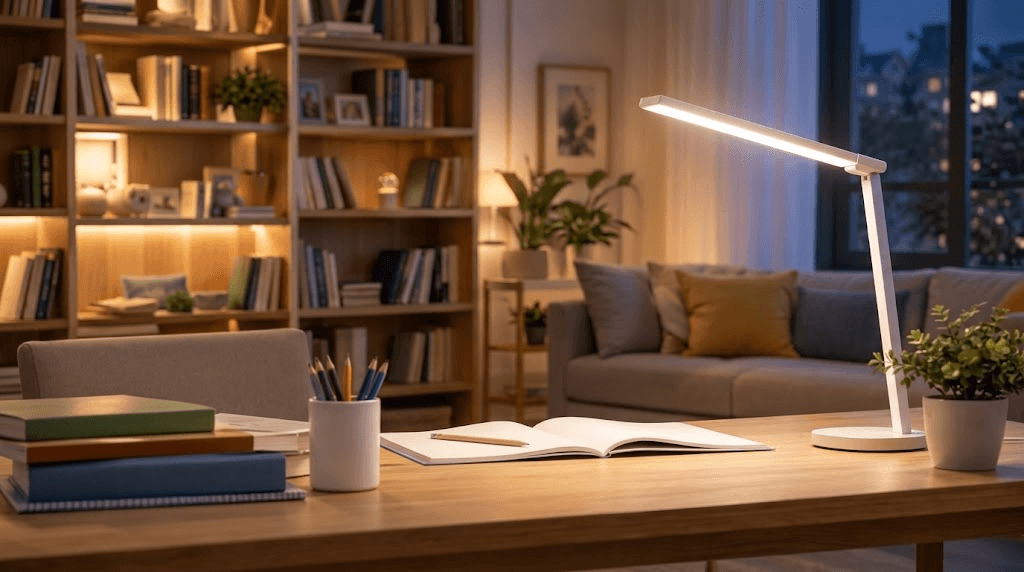
Are LED Lights Safe for Eyes and Human Health?
LED lighting has become an essential part of modern homes, офисы, магазины, заводы, и открытые пространства. Сегодня, Светодиодные лампочки, лампы, потолочные светильники, встроенное освещение, и приспособления are widely used because they offer high energy efficiency, long service life, and flexible lighting options.
Однако, as LED technology becomes more common, many consumers and buyers have an important question: Are LED lights safe for eyes and human health?
В общем, properly designed and correctly used LED lighting is considered suitable for normal general lighting applications. Однако, a light source’s effect depends on factors such as brightness, exposure time, цветовая температура, viewing distance, блики, and the time of day.
Поэтому, rather than simply asking whether an LED bulb is safe or unsafe, it is more useful to understand how LED lighting works, what blue light means, and how to choose the right lighting for different applications.
1. Optical Radiation Hazards
Прежде всего, it is important to understand that light is a form of optical radiation. It includes ultraviolet (УФ), visible light, and infrared (IR) radiation. When exposure is excessive, certain wavelengths or very high light intensity may cause biological effects on the eyes or skin.
For lighting products, potential optical risks can include:
- UV-related effects
- Retinal thermal effects
- Blue-light photochemical effects
- Infrared-related effects
- Excessive brightness and glare
Однако, this does not mean that LED lighting is inherently dangerous. Вместо, the potential risk depends on the wavelength, intensity, exposure time, and viewing conditions.
Например, whether you are using светодиодные светильники для магазинов, светодиодные потолочные светильники, или LED recessed lighting, the product should provide sufficient illumination without creating unnecessary glare. Кроме того, users should avoid looking directly into a high-intensity light source for extended periods, regardless of whether the source is an LED, fluorescent, галоген, or another type of lamp.
Поэтому, product design and correct application are just as important as the light source itself.
2. Why Is LED Technology Closely Discussed in Relation to Human Health?
One reason LED lighting receives so much attention is that many white LEDs use a blue LED source to create white light.
Обычно, a blue LED works together with phosphor materials to produce the white light that we see. Как результат, the spectral distribution of many LED products includes a blue component.
Однако, it is important to avoid a common misunderstanding: the presence of blue light does not automatically mean that an LED light bulb is harmful to your eyes.
Фактически, the U.S. Department of Energy notes that white-light LEDs do not have more blue-light content than other light sources with the same correlated color temperature (СКИт).
Поэтому, при выборе светодиодные лампы, E26 LED light bulbs, or complete LED bulb light fixtures, buyers should look beyond the word “ВЕЛ” and consider the complete product specification.
В частности, обратите внимание на:
- Цветовая температура
- Яркость
- Угол луча
- Optical design
- Diffuser and glare control
- Flicker performance
- Совместимость с затемнением
- Intended application
Как результат, choosing the right LED product for the right environment is more meaningful than simply avoiding LED technology.
3. What Are Blue-Pump LEDs?
Следующий, let’s look at how most white LED products produce light.
Many white LEDs use a blue LED source combined with phosphor conversion technology. The blue LED excites the phosphor, and together they produce light that appears white to the human eye.
Because this technology is efficient and flexible, it is widely used in many modern lighting products, включая:
- Светодиодные лампочки
- E26 LED light bulbs
- светодиодные светильники для магазинов
- светодиодные потолочные светильники
- LED recessed lighting
- LED outdoor lights
- светодиодные лампы
- Коммерческий Светодиодные светильники
Тем не менее, not all LED products have the same optical characteristics. Product design, цветовая температура, яркость, beam angle, and exposure conditions can all affect the overall lighting experience.
Поэтому, buyers should evaluate the complete specification of an LED product rather than judging safety based only on its LED technology.
4. Lamp Safety Groups
To further evaluate potential optical risks, photobiological safety standards classify lamps and lighting products into different risk groups.
The commonly discussed groups include RG0, RG1, RG2, and RG3.
Risk Group 0 — RG0
RG0 is the exempt group. Under the specified assessment conditions, products in this category are not expected to present a photobiological hazard.
Risk Group 1 — RG1
RG1 represents a low-risk category under normal behavioral limitations. Some general lighting products may fall into this category depending on their optical output and design.
Risk Group 2 — RG2
RG2 products require more consideration because a bright light source may trigger a natural aversion response, such as blinking, pupil constriction, or turning the head away.
Risk Group 3 — RG3
RG3 represents a higher optical radiation risk and may require additional safety controls because exposure can present a hazard within a relatively short period.
Самое главное, the risk group should be determined by the actual product and its testing conditions. It should not be assumed simply because a product uses LED technology.
Для производителей, оптовики, and distributors, this is why relevant testing and compliance documents are important when purchasing Светодиодные светильники, светодиодные лампы, and other lighting products.
5. What Is Blue Light Hazard?
Blue light is simply one part of the visible light spectrum. It is naturally present in sunlight and is also produced by many artificial light sources.
Термин blue-light hazard specifically refers to the potential for photochemical retinal injury caused by sufficient exposure to short-wavelength visible light under certain conditions.
Однако, the potential risk depends on several factors:
Wavelength + light intensity + exposure duration + viewing conditions
Поэтому, simply identifying a blue peak in an LED’s spectrum does not mean that an светодиодная лампа produces a dangerous level of blue-light exposure.
For normal general lighting, it is much more practical to consider the overall lighting environment. Например, choosing an appropriate color temperature and brightness can help create a more comfortable space.
This is especially important when selecting LED lights for room приложения, спальни, офисы, children’s rooms, and other frequently occupied spaces.
6. Do LEDs Emit More Blue Light?
Простой ответ: not necessarily.
A common misconception is that LED lighting automatically produces more blue light because many white LEDs contain a noticeable blue spectral peak.
Однако, the amount of blue light should be considered together with the overall spectrum and color temperature. According to the U.S. Department of Energy, white-light LED products do not have more blue-light content than other light sources with the same CCT.
Например, a warm-white LED bulb at approximately 2700K generally appears warmer than a 5000K daylight product. Следовательно, the two products can provide very different visual environments.
The following table provides a simple reference:
| Цветовая температура | Легкий внешний вид | Общие приложения |
|---|---|---|
| 2200–2700K | Warm and yellowish | Спальни, рестораны, декоративное освещение |
| 3000K | Теплый белый | Гостиные, спальни, отели |
| 3500K | Нейтральный белый | Offices and retail spaces |
| 4000K | Cool-neutral white | Кухни, рабочие места, коммерческие площади |
| 5000–6500K | Daylight white | Гаражи, семинары, рабочее освещение |
Поэтому, при выборе LED lights for a room, do not simply focus on whether the product has a higher or lower CCT. Вместо, select a color temperature that matches the space, activity, and time of use.
7. Is the Concern About LED Blue Light Exaggerated?
Blue light deserves attention, but the statement that all LED lights are harmful to your eyes is too broad.
Properly designed LED lighting is widely used for general illumination, and current lighting standards provide methods for evaluating photobiological safety.
В то же время, однако, very bright light can cause discomfort or glare when viewed directly from a short distance. This issue is not unique to LED technology.
Например, a bright, exposed светодиодная лампа may be uncomfortable to look at, while a similar light source covered by a diffuser may provide a much more comfortable experience.
Поэтому, good lighting design should consider:
- Соответствующая яркость
- Диффузоры
- Углы луча
- Непрямое освещение
- Подходящая цветовая температура
- Glare control
- Возможность затемнения
This approach is particularly useful for bedrooms, гостиные, офисы, торговые помещения, and hospitality environments.
8. Blue Light Is Also Important
В то же время, blue light should not be considered completely negative.
Blue wavelengths naturally occur in daylight and are involved in the body’s response to the light-dark cycle. Поэтому, the goal is not to eliminate blue light from our environment.
Вместо, the key question is how much light we receive, when we receive it, and for how long.
Например, brighter and cooler light may be useful during daytime work or study. В отличие, lower-level and warmer lighting may be more comfortable in the evening.
Как результат, modern lighting systems increasingly provide greater control over brightness and color temperature.
Например, светодиодные лампы с регулируемой яркостью allow users to adjust brightness according to different activities. Сходным образом, smart LED systems can provide different lighting settings throughout the day.
This flexibility makes LED technology particularly useful for modern residential and commercial lighting.
9. Artificial Lighting and Circadian Disruption
Another important topic is the relationship between artificial lighting and the body’s circadian rhythm.
The human body responds to the natural daily light-dark cycle. Следовательно, exposure to bright light at night may affect circadian rhythms, particularly when the light is intense and contains more short-wavelength energy.
Однако, CCT alone does not determine the biological effect of light.
Other factors also matter, включая:
- Light intensity
- Exposure duration
- Time of exposure
- Distance from the light source
- Spectral distribution
- Direction of light entering the eye
Поэтому, a 4000K Светодиодный потолочный светильник used for a short period during the daytime should not be viewed in exactly the same way as prolonged exposure to bright light late at night.
По этой причине, good lighting design considers the entire environment rather than focusing on one specification alone.
10. LED Lighting Should Not Be the Scapegoat for Circadian Disruption
It is also important to remember that LED technology is not the only source of artificial light.
Fluorescent, галоген, and other lighting technologies can also affect the visual environment and circadian system depending on their brightness, spectrum, timing, and duration of exposure.
Фактически, one advantage of LED technology is its flexibility.
Modern LED products can provide:
- Светодиодные лампы с регулируемой яркостью
- Tunable-white lighting
- Warm-dim lighting
- Smart LED lighting
- Adjustable-color светодиодные потолочные светильники
- Коммерческий светодиодные светильники для магазинов
- LED outdoor lights
- LED recessed lighting
Поэтому, instead of treating LED as the problem, lighting designers and buyers can take advantage of LED’s controllability to create lighting that better matches different environments.
Например, a commercial space may require bright светодиодные светильники для магазинов during working hours, while a residential space may benefit from dimmer and warmer lighting in the evening.
11. Simulating Natural Lighting Dynamics With LED Lighting
Окончательно, one of the major advantages of modern LED lighting is the ability to adjust brightness and color temperature according to different activities and times of day.
Instead of maintaining the same lighting level throughout the day, a well-designed LED lighting system can create different lighting conditions for different needs.
Morning
Use comfortable neutral or cool-neutral lighting to support visual tasks and daily activities.
Daytime
Provide sufficient brightness for working, изучение, shopping, and other activities.
Evening
Reduce brightness and consider warmer light to create a more relaxing environment.
Night
Use lower-level and warmer lighting for basic movement and navigation.
This approach can be applied to many products, включая LED lights for rooms, светодиодные потолочные светильники, LED recessed lighting, Светодиодные светильники, and smart lighting systems.
For outdoor applications, LED outdoor lights и exterior LED lights should also be carefully selected. Яркость, блики, light direction, СКИт, IP protection, and operating conditions should all match the environment.
What Should Buyers Look for When Purchasing LED Lighting?
Whether you are purchasing a single Светодиодная лампочка for a residential project or sourcing thousands of светодиодные лампы for wholesale distribution, several specifications deserve attention.
1. Цветовая температура (СКИт)
Choose a CCT that matches the application and desired atmosphere.
2. Яркость
Select sufficient light output without creating unnecessary glare.
3. Glare control
Диффузоры, beam angles, and optical designs can improve visual comfort.
4. Совместимость с затемнением
When using светодиодные лампы с регулируемой яркостью, make sure the bulb and dimmer are compatible.
5. Flicker performance
For offices, торговые помещения, and other frequently occupied areas, ask suppliers about flicker performance when necessary.
6. Color quality
Consider CRI and other relevant color-quality specifications.
7. Совместимость светильников
Make sure the LED bulb matches the correct LED bulb light fixtures, розетка, и электрические требования.
8. Electrical compatibility
Check voltage, базовый тип, driver requirements, and installation conditions.
9. Outdoor protection
For outdoor applications, check the appropriate IP rating and environmental requirements.
10. Safety and compliance
For wholesale and project purchases, request relevant safety certifications and test reports from the supplier.
Например, а E26 LED light bulb should be matched with a compatible E26 socket and fixture. Сходным образом, exterior outdoor LED lights should be selected according to the actual outdoor environment rather than brightness alone.
Часто задаваемые вопросы: Are LED Lights Safe for Eyes?
Are LED light bulbs safe for everyday use?
В целом, properly designed and correctly installed LED light bulbs are suitable for everyday general lighting. Однако, users should avoid staring directly into high-intensity light sources for extended periods.
Are LED bulbs worse for your eyes than incandescent bulbs?
Не обязательно. LED bulbs are not automatically more harmful to the eyes than incandescent bulbs. At the same CCT, LED products do not necessarily contain more blue light than other common light sources.
Are 4000K LED lights safe?
4000K LED lighting is widely used for kitchens, офисы, торговые помещения, and other work environments. Safety depends on the complete product design, яркость, exposure conditions, and application rather than CCT alone.
Are dimmable LED bulbs better for bedrooms?
Светодиодные лампы с регулируемой яркостью provide greater control over brightness. When used with a compatible dimmer, they allow users to reduce the light level when less illumination is needed.
Are LED outdoor lights safe?
Properly designed and installed LED outdoor lights can be used for outdoor illumination. Однако, buyers should also consider glare, яркость, light direction, СКИт, IP-рейтинг, and the surrounding environment.
Are LED recessed lighting and LED ceiling lights safe?
Да, properly designed LED recessed lighting и светодиодные потолочные светильники are widely used in residential and commercial environments. Correct installation, suitable brightness, and good optical design are important for visual comfort.
Заключение
Так, are LED lights safe for eyes and human health?
В общем, properly designed and correctly used LED lighting is suitable for normal general illumination. Однако, the lighting experience depends on much more than simply choosing an LED product.
Вместо, покупатели должны рассмотреть яркость, цветовая температура, exposure duration, блики, мерцать, optical design, and the timing of light exposure.
Для оптовиков, дистрибьюторы, импортеры, lighting retailers, и покупатели проектов, this means choosing the right product for the right application.
Whether you are sourcing светодиодные лампы, а Светодиодная лампочка, а E26 LED light bulb, светодиодные светильники для магазинов, светодиодные потолочные светильники, LED recessed lighting, Светодиодные светильники, светодиодные лампы с регулируемой яркостью, или exterior outdoor LED lights, the complete product specification should be considered before making a purchasing decision.
В конечном счете, LED technology provides manufacturers and buyers with greater control over brightness, цветовая температура, затемнение, and lighting design. With the right product specifications and proper application, LED lighting can provide efficient, гибкий, and comfortable illumination for both indoor and outdoor environments.