 English
 العربية
 Français
 Deutsch
 Italiano
 Polski
 Português
 Русский
 Español
 Українська


Compreendendo o poder de um chip LED
Introdução
À medida que a iluminação LED continua a substituir as tradicionais lâmpadas incandescentes e CFL, mais compradores estão prestando atenção a um componente pequeno, mas crítico: o chip LED. Quer você esteja comprando lâmpadas LED, lâmpadas de filamento, iluminação comercial, ou luminárias decorativas, a qualidade do chip LED determina diretamente o brilho, eficiência, vida útil, e desempenho geral do produto.
Para começar, compreender como funciona um chip LED pode ajudá-lo a comparar produtos de iluminação de forma mais eficaz. Em vez de focar apenas no preço, você poderá avaliar a eficiência energética, confiabilidade, e valor a longo prazo.
Então, o que exatamente é um chip LED? Mais importante, por que os compradores deveriam se preocupar com o tipo de chip LED usado em uma lâmpada?
Vamos explorar tudo o que você precisa saber da perspectiva do comprador.
O coração da iluminação LED
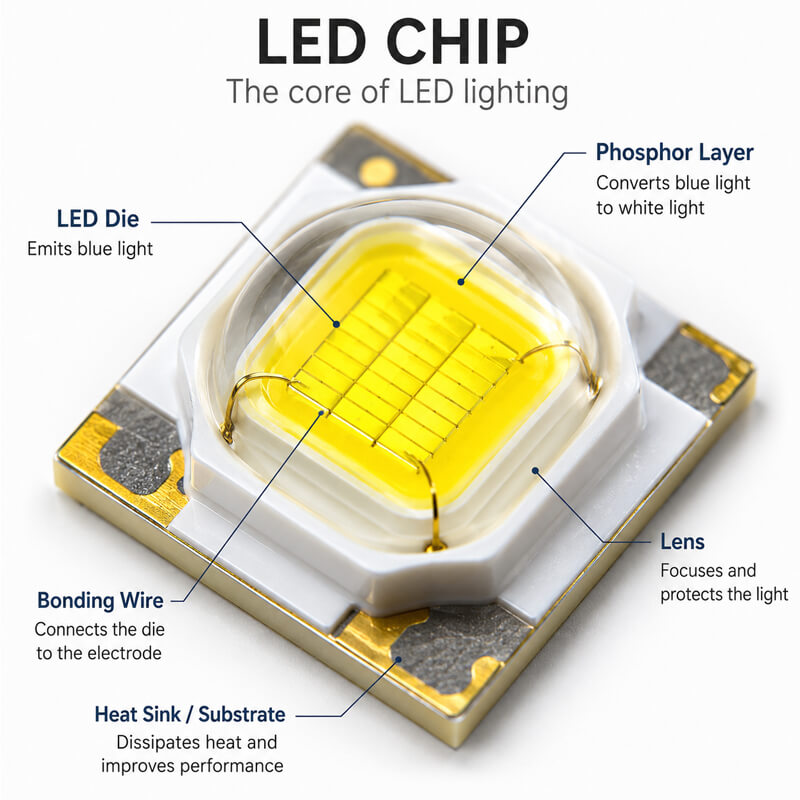
Em sua essência, um chip LED (Chip de diodo emissor de luz) é o componente produtor de luz dentro de cada lâmpada LED. É um minúsculo semicondutor que converte energia elétrica diretamente em luz visível através de um processo conhecido como eletroluminescência.
Diferente lâmpadas incandescentes tradicionais, que geram luz aquecendo um filamento de tungstênio, Os chips LED produzem luz com muito mais eficiência e geram muito pouco calor.
Como resultado, A iluminação LED oferece várias vantagens significativas, incluindo:
- Menor consumo de energia
- Maior brilho
- Vida útil mais longa
- Menos geração de calor
- Custos de manutenção reduzidos
- Desempenho ecologicamente correto
Por causa desses benefícios, Os chips LED tornaram-se a base da moderna tecnologia de iluminação. Esteja você comprando lâmpadas domésticas ou luminárias comerciais, a qualidade do chip LED influenciará diretamente o desempenho geral.
Um vislumbre da composição
Embora um chip LED seja incrivelmente pequeno, consiste em várias camadas projetadas com precisão que trabalham juntas para fornecer desempenho de iluminação confiável.
Tipicamente, um chip LED inclui:
- Material semicondutor (geralmente nitreto de gálio ou arsenieto de gálio)
- Eletrodos condutores
- Substrato condutor de calor
- Encapsulamento protetor
- Lente óptica ou revestimento de fósforo
Entre esses componentes, o substrato condutor de calor desempenha um papel particularmente importante. Como o calor excessivo pode reduzir o brilho e a vida útil, gerenciamento térmico eficiente é essencial.
Além disso, muitos fabricantes de LED premium usam materiais de alta qualidade, como:
- Substratos cerâmicos
- Placas de circuito de cobre
- Dissipadores de calor de alumínio
- Lentes de silicone de alta transmitância
Consequentemente, esses materiais melhoram a dissipação de calor, permitindo que os chips LED mantenham o brilho estável e operem com eficiência por dezenas de milhares de horas.
Para compradores, perguntar sobre o design térmico é tão importante quanto verificar a potência ou a saída de lúmen.
A maravilha da miniaturização
Uma das características mais notáveis da tecnologia LED é o seu tamanho compacto.
Na verdade, os chips LED modernos medem apenas alguns milímetros de diâmetro. Apesar de suas pequenas dimensões, eles podem gerar uma quantidade impressionante de luz.
Dependendo da aplicação de iluminação, um produto pode conter:
- Um chip LED de alta potência
- Vários chips LED SMD
- Módulos LED COB
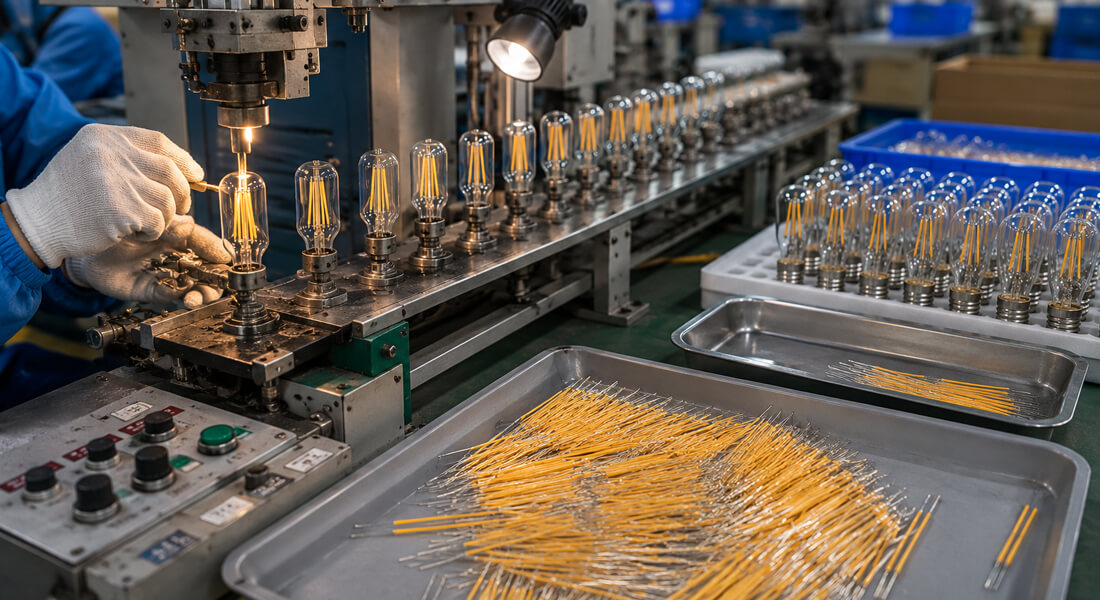
- Centenas de chips de filamento de LED
Graças a esta miniaturização, os fabricantes podem projetar mais finos, isqueiro, e luminárias mais atraentes sem comprometer o brilho.
Hoje, Chips de LED são amplamente utilizados em:
- Lâmpadas LED
- Lâmpadas de filamento LED
- Luzes pendentes
- Lustres
- Luzes de parede
- Holofotes
- Iluminação de jardim
- Iluminação pública
- Iluminação automotiva
- Iluminação comercial
Portanto, A tecnologia LED proporciona aos designers maior flexibilidade, ao mesmo tempo que satisfaz a crescente procura por soluções de iluminação modernas.
Mais brilhante, Menor, Mais duradouro
Na última década, A tecnologia de chip LED evoluiu rapidamente.
À medida que a tecnologia continua a avançar, fabricantes estão produzindo chips LED que são:
- Mais brilhante
- Menor
- Mais eficiência energética
- Melhor na dissipação de calor
- Mais duradouro
Hoje, muitos chips LED premium oferecem eficiências superiores 150 lúmens por watt, enquanto produtos comerciais avançados podem alcançar mais 200 lúmens por watt em condições ideais.
Para compradores, isso significa custos operacionais mais baixos e melhor desempenho de iluminação.
Maior brilho
Os chips LED modernos produzem significativamente mais lúmens enquanto consomem menos eletricidade.
Por exemplo:
- Lâmpada incandescente tradicional de 60W → aproximadamente 800 lúmens
- Lâmpada LED moderna de 8W → aproximadamente 800 lúmens
Como resultado, os usuários desfrutam do mesmo brilho enquanto reduzem o consumo de eletricidade em até 85%.
Vida útil mais longa
Outra grande vantagem é a durabilidade.
Chips LED de alta qualidade geralmente duram:
- 25,000 horas
- 35,000 horas
- 50,000 horas ou mais
Consequentemente, empresas e proprietários gastam menos com substituição de lâmpadas e manutenção.
Melhor qualidade de cor
Além disso, chips LED premium fornecem excelente reprodução de cores.
Para a maioria das aplicações, os compradores devem considerar:
- Cri 80+ para iluminação residencial
- Cri 90+ para varejo, hospitalidade, galerias, e interiores premium
Isso significa as cores parecem mais naturais, vibrante, e confortável ao olho humano.
Confiabilidade aprimorada
Igualmente importante, tecnologia de fabricação avançada minimiza:
- Decadência de luz
- Mudança de cor
- Cintilante
- Falha precoce do chip
Portanto, a iluminação permanece estável e consistente durante toda a sua vida útil.
O futuro é brilhante
A tecnologia de chip LED continua a evoluir a cada ano.
Olhando para frente, várias tendências importantes estão moldando o futuro da indústria de iluminação.
Maior eficiência energética
Os fabricantes estão desenvolvendo chips LED que produzem mais luz e consomem ainda menos eletricidade.
Como resultado, as empresas podem reduzir significativamente os custos operacionais e reduzir as emissões de carbono.
Integração de iluminação inteligente
Enquanto isso, Os chips LED estão se tornando cada vez mais compatíveis com sistemas de iluminação inteligentes.
As soluções de iluminação inteligente atuais suportam:
- Controle Wi-Fi
- Conectividade Bluetooth
- Assistentes de voz
- Sensores de movimento
- Escurecimento automático
- Temperaturas de cor ajustáveis
Consequentemente, os usuários desfrutam de maior conveniência, conforto, e economia de energia.
Iluminação Centrada no Ser Humano
Além disso, chips LED brancos ajustáveis permitem que a iluminação imite a luz natural durante todo o dia.
Isso ajuda a melhorar o conforto, concentração, e bem-estar geral nas casas, escritórios, escolas, e ambientes de saúde.
Fabricação Sustentável
Ao mesmo tempo, os fabricantes estão adotando métodos de produção mais ecológicos, reduzindo materiais perigosos, melhorando a reciclagem, e aumentando a eficiência da fabricação.
Portanto, A tecnologia de chip LED continua a apoiar as metas globais de sustentabilidade.
Abrace a Revolução LED
Embora o chip LED seja um dos menores componentes dentro de um produto de iluminação, tem o maior impacto no desempenho geral.
Em última análise, a qualidade do chip LED determina o quão brilhante, eficiente, confiável, e durável, uma luz LED será.
Ao comparar produtos de iluminação LED, os compradores devem avaliar mais do que apenas o preço.
Em vez de, preste atenção a fatores como:
- Qualidade e marca do chip
- Saída de lúmen
- Eficácia luminosa (lm/W)
- Índice de reprodução de cores (Cri)
- Temperatura da cor (CCT)
- Projeto de dissipação de calor
- Vida útil avaliada
- Garantia do fabricante
Ao considerar esses fatores, os compradores podem selecionar produtos de iluminação que oferecem melhor desempenho, menores custos de manutenção, e maior valor a longo prazo.
Resumindo, investir em tecnologia de chip LED de alta qualidade significa investir em iluminação mais brilhante, contas de energia mais baixas, e um futuro mais sustentável. Quer você esteja adquirindo iluminação para residências, hotéis, escritórios, espaços de varejo, ou projetos comerciais, escolher produtos construídos com chips LED confiáveis é uma decisão inteligente que continuará a dar frutos nos próximos anos.