 English
 العربية
 Français
 Deutsch
 Italiano
 Polski
 Português
 Русский
 Español
 Українська


5 Types of Under-Cabinet Lighting: Prós & Contras
Under-cabinet lighting is a practical way to brighten kitchens, espaços de trabalho, escritórios, and countertops. It helps reduce shadows, melhora a visibilidade, and can also add a warm and modern look to your space.
No entanto, escolhendo o certo iluminação sob o gabinete can be confusing. Several types are available, including xenon fixtures, luzes de disco, fluorescent fixtures, Luminárias LED, and LED strip lights.
Each option has different advantages and disadvantages when it comes to brilho, eficiência energética, produção de calor, renderização de cores, instalação, vida útil, e custo.
Portanto, understanding the differences before you buy can help you choose the right lighting for your space.
What Is Under Cabinet Lighting?
Under-cabinet lighting is lighting installed underneath kitchen cabinets, prateleiras, or other upper storage units to illuminate the surface below. It is commonly used as task lighting for countertops, desks, workbenches, and other work areas.
Unlike ceiling lights, under-cabinet lights are positioned closer to the work surface. Como resultado, they can provide more direct illumination while reducing shadows.
Hoje, buyers can choose from several technologies. No entanto, the five most common options are xenon fixtures, luzes de disco, fluorescent fixtures, Luminárias LED, and LED strip lights.
1. Jogos de xenônio
Primeiro, xenon fixtures are one of the traditional types of under-cabinet lighting. They remain popular because they can produce bright, natural-looking light with excellent color rendering.
For buyers who care about accurate colors, this can be a major advantage. Por exemplo, xenon lighting can make granite, mármore, madeira, comida, and other materials appear more natural.
No entanto, there is an important trade-off. Xenon fixtures produce considerably more heat than LED lighting. Portanto, they may not be the best choice when the lights need to remain on for many hours every day.
Além disso, the high heat output means that heat-sensitive objects should not be placed directly underneath the fixture.
Pros of Xenon Fixtures
- Excelente renderização de cores
- Bright and natural-looking illumination
- Some models offer high-low-off switching
- Dimmable options are available
- Hardwired and plug-in models are available
- Often has a lower initial purchase price
Cons of Xenon Fixtures
- Uses more electricity than LED lighting
- Produces considerable heat
- Can increase long-term operating costs
- Less suitable for extended daily use
Melhor para: Buyers who prioritize excellent color rendering and strong task lighting.
2. Luzes de disco
Próximo, puck lights are another popular type of iluminação sob o gabinete. They get their name from their small, formato redondo, which resembles a hockey puck.
Because of their compact size, puck lights can fit easily underneath cabinets, prateleiras, and other small spaces. Mais importante, they produce a relatively focused beam of light.
Portanto, puck lights are a good choice when you want to highlight a particular countertop, shelf, display area, or workspace.
Puck lights can use xenon, halogênio, or LED technology. Consequentemente, their performance depends on the light source you choose.
Por exemplo, LED puck lights generally provide lower energy consumption, menor produção de calor, and a longer operating life than xenon or halogen versions.
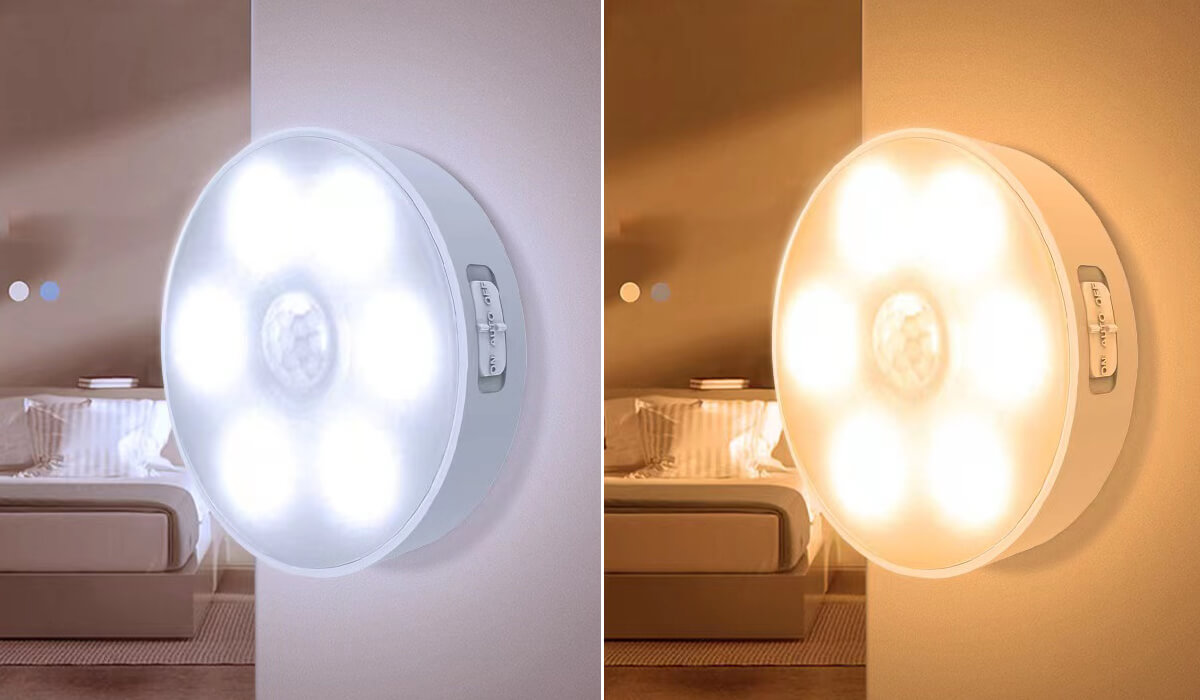
Além disso, some LED puck lights are battery-powered. Como resultado, they can be installed without complicated wiring and are convenient for renters and DIY projects.
No entanto, the focused beam can also be a disadvantage. Instead of creating a completely even layer of light, multiple puck lights may produce visible circles or bright spots.
Pros of Puck Lights
- Compact design
- Fácil de instalar
- Battery-powered LED options are available
- Fornece iluminação de tarefa focada
- Many models are dimmable
- Generally affordable
- Suitable for small spaces
Cons of Puck Lights
- Can create visible circles of light
- May not provide completely uniform illumination
- Xenon and halogen versions can become hot
- Multiple lights may be needed for long countertops
Melhor para: Buyers who need focused lighting or a simple DIY installation.
3. Luminárias Fluorescentes
Moving on, fluorescent fixtures are another traditional option for under-cabinet lighting. Although LED technology has become more popular, fluorescent fixtures are still used in some kitchens, escritórios, oficinas, e espaços comerciais.
Modern fluorescent under-cabinet fixtures commonly use smaller T5 lamps instead of the larger T12 lamps found in older systems.
Compared with xenon and halogen lighting, fluorescent fixtures generally produce less heat while providing broad illumination. Além disso, many models can be connected together.
This makes fluorescent fixtures useful for longer countertops where buyers want more continuous lighting rather than several separate spots.
No entanto, fluorescent lighting has some limitations. Its color rendering may not satisfy buyers who want highly natural-looking colors. Além disso, modern LED lighting can offer advantages in energy efficiency, vida útil, e manutenção.
Portanto, fluorescent fixtures may still be practical in certain applications, but buyers should compare their long-term operating costs with LED alternatives.
Pros of Fluorescent Fixtures
- Provides broad illumination
- Can create relatively even countertop lighting
- Many models can be connected
- Runs cooler than xenon and halogen lighting
- Available in hardwired and plug-in designs
- Suitable for longer countertops
Cons of Fluorescent Fixtures
- Color rendering may be lower than some LED options
- Generally less energy efficient than modern LEDs
- Some fixtures can be relatively bulky
- Replacement lamps may be required
- May offer less long-term value than LED lighting
Melhor para: Buyers who need broad illumination across larger work surfaces.
4. Luminárias LED
For most modern buyers, LED fixtures are one of the most practical choices for under-cabinet lighting.
They offer an attractive combination of energy efficiency, brilho, longa vida útil, low heat output, and flexible installation options.
Unlike traditional lighting technologies, LED fixtures are available in different brightness levels and color temperatures. Portanto, buyers can choose a lighting solution that matches both the space and the intended use.
Por exemplo, luz branca quente can create a comfortable and inviting kitchen atmosphere. Enquanto isso, neutral white or cool white light may be more suitable for workspaces where visibility is the main priority.
Another important advantage is heat control. LED fixtures generally produce much less heat than xenon and halogen lighting. Como resultado, they are more comfortable for everyday use.
Além disso, many LED fixtures and LED light bars can be connected. This makes them particularly useful for long cabinets and countertops because they can provide more consistent illumination.
Finalmente, LED technology offers a long operating life. Consequentemente, buyers may need fewer replacements and less maintenance over time.
Pros of LED Fixtures
- Alta eficiência energética
- Long operating life
- Baixa produção de calor
- Available in different brightness levels
- Available in multiple color temperatures
- Many models can be connected
- Hardwired and plug-in options are available
- Modelos reguláveis estão disponíveis
- Durable design
- Good long-term value
Cons of LED Fixtures
- Higher initial cost than some traditional options
- Some products require a separate power supply or driver
- Color rendering varies by product
- Some fixtures are more visible than LED strip lights
Melhor para: Buyers who want an energy-efficient, brilhante, duradouro, and versatile lighting solution.
5. Luzes de tira LED
Finalmente, LED strip lights are an excellent choice for buyers who want discreet and modern under-cabinet lighting.
Ao contrário dos acessórios tradicionais, LED strips can be installed underneath cabinets so that the light source is difficult to see. Quando instalado corretamente, you mainly see the light rather than the individual LEDs.
Como resultado, LED strip lights can create a clean and seamless appearance.
Além disso, LED strips are flexible and can often be cut to fit different cabinet lengths. Portanto, they work particularly well for long cabinet runs and unusual layouts.
Another advantage is continuous illumination. When properly installed, LED strip lights can reduce visible gaps and dark spots along the countertop.
No entanto, LED strips are generally not as powerful as dedicated under-cabinet fixtures. Consequentemente, they may be better for accent lighting or moderate task lighting rather than demanding work.
Além disso, some installations require an aluminum channel, difusor, or separate power supply. Although these accessories can improve the appearance and performance of the lighting, they can also increase the total installation cost.
Pros of LED Strip Lights
- Clean and discreet appearance
- Can provide continuous lighting
- Helps reduce dark spots
- Flexible installation
- Many models offer peel-and-stick installation
- Waterproof options are available
- Baixo consumo de energia
- Long operating life
- Generally affordable
Cons of LED Strip Lights
- Usually less bright than dedicated fixtures
- Color rendering varies by product
- Some installations require an aluminum channel or diffuser
- A separate power supply may be required
- Additional accessories can increase installation costs
- May not provide enough light for demanding tasks
Melhor para: Buyers who want discreet, continuous, and modern under-cabinet lighting.
Which Type of Under Cabinet Lighting Is Best?
There is no single type of iluminação sob o gabinete that is best for every application. Em vez de, the right choice depends on your lighting needs, orçamento, requisitos de instalação, and how often you use the lights.
If precisão de cores is your main concern, xenon fixtures can be attractive because of their excellent color rendering. No entanto, they also consume more energy and produce more heat.
If you need iluminação focada, puck lights are a practical option. They are compact and easy to install, although they may create visible spots of light.
Para broad countertop illumination, fluorescent fixtures can still work well. No entanto, their advantages are generally less compelling when compared with modern LED products.
For most homeowners, LED fixtures offer the best overall balance of brightness, eficiência energética, vida útil, heat control, e flexibilidade.
Enquanto isso, if appearance is your top priority, LED strip lights can provide a more discreet and seamless solution.
Under Cabinet Lighting Comparison
| Tipo | Eficiência Energética | Saída de calor | Color Rendering | Instalação | Melhor para |
|---|---|---|---|---|---|
| Jogos de xenônio | Baixo | Alto | Excelente | Moderado | Alta precisão de cores |
| Luzes de disco | Medium–High* | Low–High* | Varies | Fácil | Iluminação focada |
| Luminárias Fluorescentes | Médio | Baixo | Bom | Moderado | Broad lighting |
| Luminárias LED | Alto | Baixo | Good–Excellent | Easy–Moderate | Everyday task lighting |
| Luzes de tira LED | Alto | Baixo | Good–Excellent | Fácil | Discreet accent lighting |
*Performance depends on whether the puck light uses LED, xenon, or halogen technology.
What Should You Consider Before Buying Under Cabinet Lighting?
Before choosing a product, don’t focus only on the purchase price. Em vez de, consider how the lighting will perform over the entire time you own it.
1. Brilho
Primeiro, consider how much light you need. If you regularly use the countertop for cooking, food preparation, or detailed work, choose a brighter lighting solution.
Por outro lado, if you mainly want decorative or ambient lighting, LED strip lights may be sufficient.
2. Temperatura de cor
Próximo, consider the color temperature. Warm white lighting can create a comfortable and inviting atmosphere, while neutral or cool white lighting can provide a brighter and more task-oriented appearance.
3. Color Rendering
Além disso, verifique o Cri, ou índice de reprodução de cores, especially if accurate colors are important to you.
A higher CRI generally means that objects appear more natural under the light. Portanto, cozinhas, displays de varejo, and work areas may benefit from higher-CRI lighting.
4. Saída de calor
Além disso, think about how long the lights will operate each day.
If the lights will remain on for several hours, low-heat LED lighting can be a more comfortable and practical choice than xenon or halogen lighting.
5. Instalação
Finalmente, consider how the lights will be installed.
Plug-in and battery-powered models are generally easier for DIY installations. Em contraste, hardwired systems can create a cleaner permanent appearance but may require electrical work.
Considerações Finais
Escolhendo o certo iluminação sob o gabinete becomes much easier once you know what to look for.
Primeiro, determine whether you need task lighting, iluminação de destaque, ou ambos. Então, compare brightness, temperatura de cor, Cri, consumo de energia, produção de calor, installation method, compatibilidade de escurecimento, and expected lifespan.
For most modern applications, LED fixtures are an excellent all-around choice because they provide strong energy efficiency, long operating life, fogo baixo, and flexible lighting options.
Ao mesmo tempo, LED strip lights are ideal when you want a clean and discreet appearance. Enquanto isso, puck lights can work well for focused lighting, while xenon and fluorescent fixtures may still suit specific applications.
Em última análise, the best under cabinet lighting is the one that provides the right amount of light, fits your installation requirements, and delivers good long-term value.
Frequently Asked Questions About Under Cabinet Lighting
What is the best type of under cabinet lighting?
Para a maioria das aplicações, LED fixtures are one of the best types of under-cabinet lighting. They provide high energy efficiency, long operating life, low heat output, and a wide range of brightness and color-temperature options.
Are LED strip lights good for under-cabinet lighting?
Sim. LED strip lights are a good choice for discreet and continuous under-cabinet lighting. No entanto, they are generally less powerful than dedicated LED fixtures, so they may be better for accent lighting or moderate task lighting.
Are puck lights better than LED strip lights?
It depends on your needs. Puck lights provide more focused illumination, while LED strip lights generally create a more continuous and seamless appearance. Portanto, choose puck lights for focused task lighting and LED strips for discreet, uniform-looking illumination.
What color temperature is best for under cabinet lighting?
The best color temperature depends on the application. Branco quente is often preferred for comfortable kitchen lighting, enquanto branco neutro can provide a balanced appearance for everyday tasks. Cooler light may be suitable for workspaces where a brighter, more focused environment is preferred.
Do LED under cabinet lights use a lot of electricity?
Não. LED under-cabinet lighting is generally much more energy efficient than xenon, halogênio, and traditional fluorescent lighting. Portanto, LEDs can help reduce electricity consumption when the lights are used frequently.
Do LED under-cabinet lights get hot?
LED lights produce heat, but generally much less than xenon and halogen lighting. Proper installation and heat management are still important, particularly for high-output LED fixtures.
Do under cabinet lights need to be dimmable?
Dimming is not essential, but it can provide greater flexibility. Por exemplo, you can use brighter lighting when cooking and lower the brightness when you want softer ambient lighting.
Antes de comprar, make sure the LED fixture, motorista, and dimmer are compatible.
Can under cabinet lighting be installed without wiring?
Sim. Battery-powered puck lights and plug-in LED systems can often be installed without hardwiring. Portanto, they can be convenient for renters and DIY projects.
No entanto, hardwired systems may provide a cleaner and more permanent installation.
How long do LED under cabinet lights last?
LED lighting generally offers a much longer operating life than traditional lighting technologies. No entanto, actual lifespan depends on the product design, operating temperature, fonte de energia, and usage.
Portanto, always check the manufacturer’s rated lifespan before purchasing.
Should under-cabinet lights point toward the countertop?
Geralmente, sim. Under-cabinet lighting should be positioned to illuminate the countertop or work surface directly.
Positioning the light toward the front portion of the cabinet can also help reduce shadows caused by your body while working. No entanto, the ideal position depends on the cabinet design and the type of lighting you choose.
Is LED or fluorescent better for under-cabinet lighting?
For most modern residential applications, LED lighting is generally the more pr+6actical choice. LEDs typically offer better energy efficiency, longer operating life, menor produção de calor, and more flexible color-temperature options.
Fluorescent fixtures can still be useful when broad illumination is needed, but buyers should compare the long-term operating and maintenance costs before choosing between the two.
What is the difference between task lighting and accent lighting?
Iluminação de tarefas is designed to provide enough illumination for activities such as cooking, food preparation, leitura, ou trabalhando.
Iluminação de destaque, por outro lado, is mainly used to enhance the appearance or atmosphere of a space.66666
Portanto, if your primary goal is countertop visibility, choose a brighter task-lighting solution. If you mainly want decorative illumination, LED strip lights may be a better fit.
For motion-sensor cabinet lights, por favor confira aqui.