Obtenha consulta gratuita!
Estamos prontos para responder agora! Inscreva -se para uma consulta gratuita.
Eu concordo no processamento de dados pessoais e concordo com o contrato de usuário e a política de privacidade
 English/how-to-choose-led-filament-bulbs-for-restaurant/
 العربية/ar/how-to-choose-led-filament-bulbs-for-restaurant/
 Français/fr/how-to-choose-led-filament-bulbs-for-restaurant/
 Deutsch/de/how-to-choose-led-filament-bulbs-for-restaurant/
 Italiano/it/how-to-choose-led-filament-bulbs-for-restaurant/
 Polski/pl/how-to-choose-led-filament-bulbs-for-restaurant/
 Português/pt/how-to-choose-led-filament-bulbs-for-restaurant/
 Русский/ru/how-to-choose-led-filament-bulbs-for-restaurant/
 Español/es/how-to-choose-led-filament-bulbs-for-restaurant/
 Українська/uk/how-to-choose-led-filament-bulbs-for-restaurant/

Estamos prontos para responder agora! Inscreva -se para uma consulta gratuita.
Eu concordo no processamento de dados pessoais e concordo com o contrato de usuário e a política de privacidade

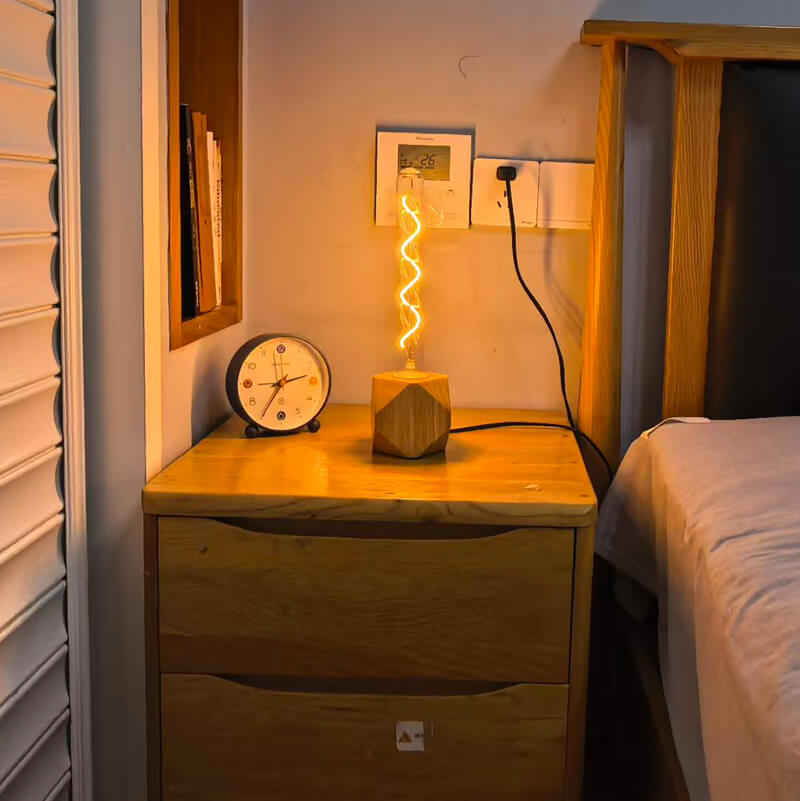
Choosing the right LED filament bulbs is one of the most impactful decisions in any restaurant lighting plan. The bulbs you install shape the atmosphere of the dining area, the way food looks on the table, and how long customers stay. Para atacadistas, empreiteiros, and hospitality brands, understanding how to select the correct bulb saves costly re-orders, project delays, e reclamações de clientes.
As a lighting manufacturer working with B2B buyers around the world, we have supported hundreds of restaurant and cafe projects. This guide explains, passo a passo, how to choose LED filament bulbs for a restaurant project: temperatura de cor, tipo base, formato de bulbo, brilho, compatibilidade de escurecimento, controle de qualidade, and the commercial terms you should confirm before placing a bulk order.
Restaurants need lighting that feels warm and inviting but still performs reliably through long opening hours. LED filament bulbs combine the classic Edison look with modern LED efficiency, which is exactly why they dominate hospitality lighting today.
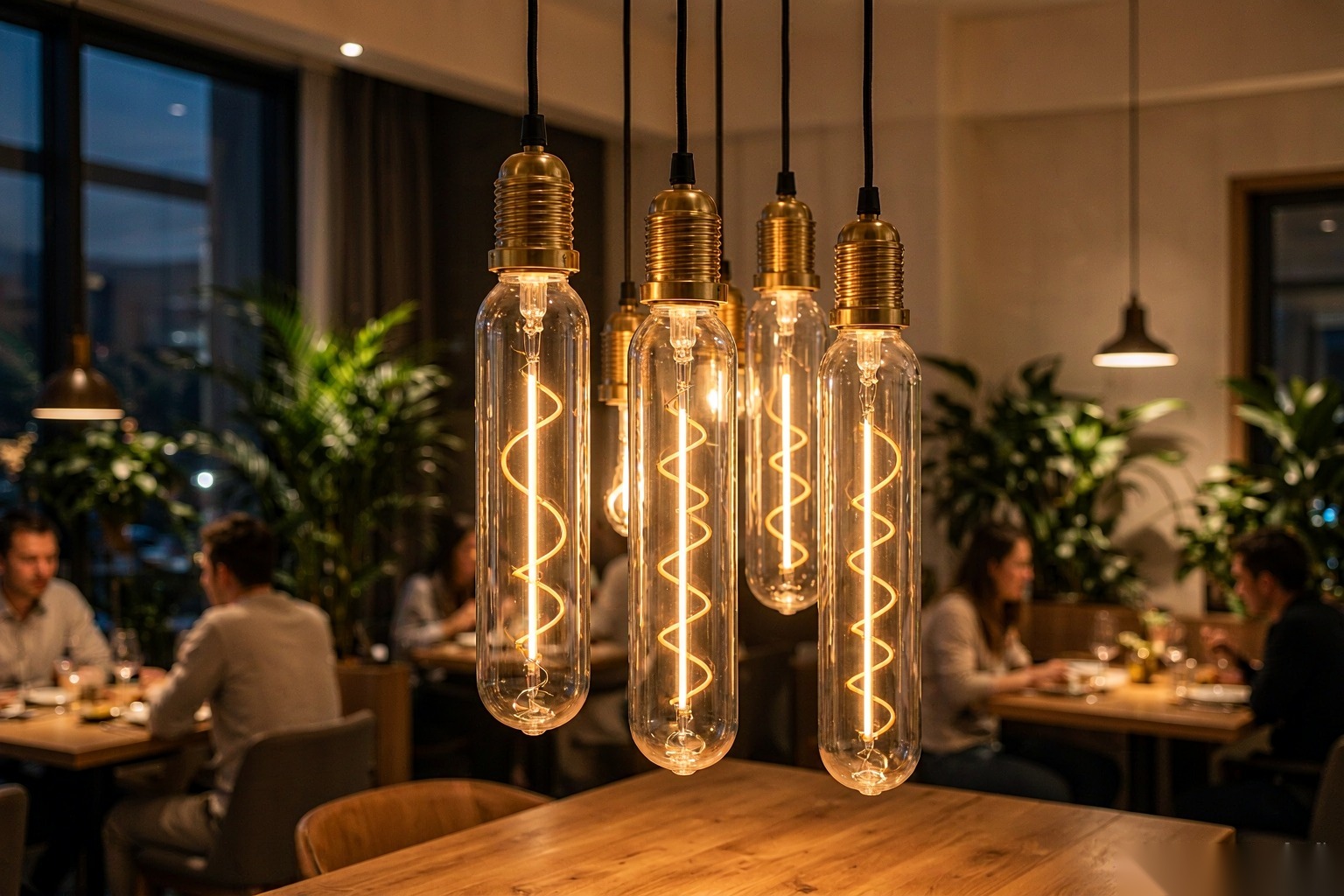
Here is the complete selection process we walk through with project buyers, from color temperature to commercial terms. Follow the seven steps in order and you will avoid the mistakes that cause most re-orders and delays.
Temperatura da cor, measured in Kelvin (K), decides how warm or cool the light looks. For restaurants, warm color temperatures are almost always the right choice because they make food look appetizing and people feel relaxed.
| Recommended Color Temperature for Restaurants | |
|---|---|
| 2200K – Extra warm, vintage amber | Best for bars, lounge areas, and vintage-themed restaurants where atmosphere is the priority |
| 2700K – Warm white | The most common choice for main dining areas; comfortable and versatile |
| 3000K – Soft warm white | Slightly brighter and cleaner feel, suitable for open kitchens, fast-casual spaces and modern interiors |
Many successful restaurant projects mix temperatures across zones: 2200K filament bulbs above the bar for atmosphere, and 2700K in the main dining area for comfort. If you are unsure how 3000K compares with other temperatures, read our detailed guide to 3000K light color temperature.
Pro tip for buyers: ask your supplier for CCT options within the same bulb family. Switching between 2200K, 2700K and 3000K without changing the glass design keeps the visual line consistent while tuning each zone.
The bulb base must match the sockets in your pendant lamps or track fixtures. Getting this wrong is one of the most common – and most avoidable – ordering mistakes in restaurant projects.
When sourcing from a manufacturer in China, confirm the destination market before ordering. A capable supplier offers all three bases in the same bulb design, so one product line can serve different markets without redesigning the fixture.
Filament bulbs come in many shapes, and the shape changes both the visual impact and the light distribution. For restaurant projects, these are the families that matter most:
Tubular bulbs such as our T30 E27 LED filament bulb have become a signature look for modern restaurant projects: the elongated clear glass and visible spiral filament create a strong design feature even when the light is switched off. For daytime openings, that matters more than most buyers expect.
A common mistake is judging brightness by wattage. With LED filament bulbs, the lumen value is the number that matters. As a rule of thumb for restaurant spaces:
| Recommended Lumens by Restaurant Zone | |
|---|---|
| Bar counters and lounge zones | 300–400 lm – low, atmospheric lighting; a 5W LED filament bulb typically delivers about 350 LM |
| Main dining tables | 400–500 lm – enough to read a menu without losing warmth |
| Service counters and open kitchens | 500–700 lm – brighter, more functional light for staff working areas |
| Entrance and corridors | 300–450 lm – welcoming transition light that guides guests in |
For a deeper explanation of how to calculate the light you need, see our guide on how to calculate how many lumens a room needs.
Dimming is where many restaurant projects go wrong. Not every LED filament bulb works with every dimmer, and a mismatched combination causes flickering, buzzing or a limited dimming range. The problem is rarely the bulb alone – it is the pairing.
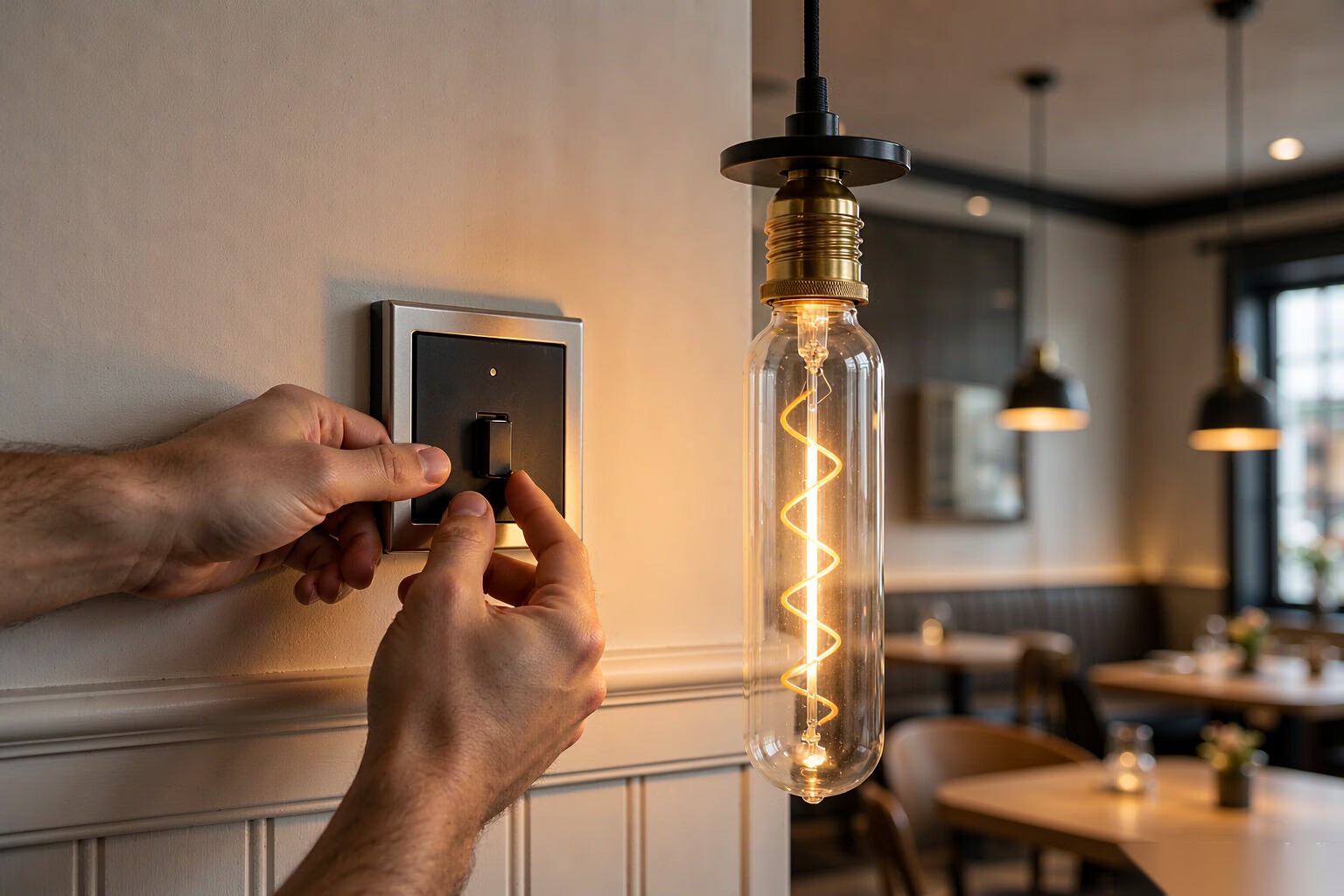
Antes de fazer um pedido em grandes quantidades:
A supplier who offers the same bulb in Dim / Non-Dim versions saves you from stocking two different product lines just to serve one project.
Restaurant bulbs run for many hours every day, so build quality matters more than in residential use. Before confirming a bulk order, ask the manufacturer to describe their inspection process. A reliable factory should be able to confirm the following steps:
If a supplier cannot describe their quality control at this level of detail, treat it as a warning sign. Certification documents such as CE and RoHS should also be available on request, and the factory should willingly send pre-production samples for your own testing.
For project buyers, the commercial terms matter as much as the product itself. Confirm these three points before signing an order:
| Commercial Terms to Confirm | |
|---|---|
| Quantidade mínima | A practical minimum for restaurant projects is around 100 pieces per style, low enough for a trial order; mixed styles within one order help when the project needs several bulb shapes |
| Lead time | Samples in 3–10 days; bulk production in about 25 days – confirm both dates in writing |
| Breakage policy | Glass products carry transport risk; reasonable terms are a credit on the next order or replacement of damaged units |
| Embalagem | Blister inner boxes plus drop-tested brown export cartons protect glass during long sea freight |
Buyers who confirm these terms early avoid the two most common project delays: waiting for samples that were never scheduled, and disputing breakage that was never covered.
2200K to 2700K. Use 2200K for bars and lounge zones where atmosphere matters most, and 2700K for main dining areas. 3000K suits open kitchens and modern, brighter interiors.
Around 400–500 lumens per pendant above a dining table creates a comfortable, readable light without losing warmth. Bar counters can go lower, at 300–400 lumens.
Many are, but compatibility depends on the dimmer model. Choose a supplier offering dimmable and non-dimmable versions of the same bulb, and test samples with the project dimmer before bulk production.
100 pieces per style is a practical minimum, and many manufacturers allow mixed styles within one order so a single project can combine several bulb shapes.
A restaurant lighting project succeeds when the bulbs look right, perform reliably, and arrive on schedule. Define your color temperature by zone, confirm the base type, compare lumens rather than watts, test dimming with real samples, and buy from a manufacturer who can show you a documented quality control process.
At Huiyee Tech, we work with B2B buyers sourcing LED filament bulbs and decorative lighting with OEM & ODM support. Nosso T30 E27 LED filament bulb – 5W, 350 LM, 2200K/2700K/3000K, E27/E26/B22 – is produced on our own line with 9 inspection procedures and 8–10 hours of ageing tests on every batch. If you are planning a restaurant project or expanding your wholesale range, contact our team at sales@huiyeetech.com with your target specifications and estimated order quantity, and we will arrange samples and an accurate quotation.
Solução rápida personalizada,E leva 3-10 dias após a confirmação dos detalhes.
Se você gosta de nossas luzes, Uma amostra grátis pode ser fornecida para referência.
Nós nos concentramos apenas em luzes de alta qualidade. Seus interiores precisam de alta qualidade.
As luzes de alta qualidade têm um valor muito alto. Nós o protegem bem para remessa.
Nossa equipe está disponível 24/7, e você pode esperar uma resposta às suas perguntas dentro 2 horas.
Estamos prontos para responder agora! Inscreva -se para uma consulta gratuita.
Eu concordo no processamento de dados pessoais e concordo com o contrato de usuário e a política de privacidade
