 English
 العربية
 Français
 Deutsch
 Italiano
 Polski
 Português
 Русский
 Español
 Українська


Proibição de lâmpadas CFL
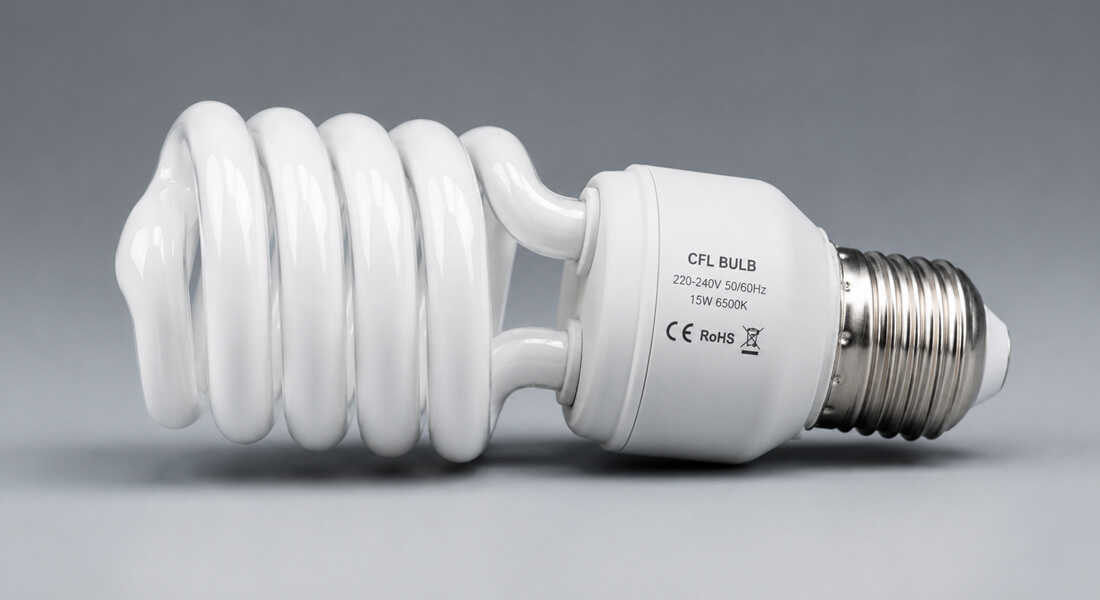
Por muitos anos, Lâmpadas fluorescentes compactas (Lâmpadas Fluorescentes Compactas) foram uma das soluções de iluminação economizadoras de energia mais populares para residências e empresas. No entanto, a tecnologia de iluminação continuou a evoluir, e Lâmpadas fluorescentes compactas estão agora a desaparecer gradualmente do mercado.
Embora você possa continuar usando os existentes Lâmpadas fluorescentes compactas, fabricantes encerraram a produção em muitas regiões, o que significa que as lâmpadas de substituição se tornarão cada vez mais difíceis de encontrar. Portanto, entendendo por que Lâmpadas fluorescentes compactas estão sendo eliminados – e quais alternativas estão disponíveis – é mais importante do que nunca.
Neste guia, você aprenderá por que Lâmpadas fluorescentes compactas estão sendo banidos, se eles ainda estão disponíveis, como reciclá-los com segurança, e por que as lâmpadas LED se tornaram o substituto preferido.
O que exatamente é uma lâmpada CFL?
UM Lâmpada Fluorescente Compacta (Lâmpada fluorescente compacta) é uma lâmpada com baixo consumo de energia que produz luz usando uma pequena quantidade de vapor de mercúrio.
Ao contrário das lâmpadas incandescentes tradicionais, Lâmpadas fluorescentes compactas gerar luz através de uma reação química em vez de um filamento brilhante. Dentro de cada Lâmpada fluorescente compacta, a eletricidade passa através do mercúrio e do gás argônio, criando ultravioleta invisível (ultravioleta) luz. A luz UV reage então com o revestimento de fósforo dentro do tubo de vidro, produzindo a luz branca visível que vemos.
Como resultado, Lâmpadas fluorescentes compactas requerem um curto período de aquecimento antes de atingir o brilho total. Seu design distinto em espiral ou tubo dobrado também permite Lâmpadas fluorescentes compactas para caber em luminárias domésticas padrão, ocupando muito menos espaço do que as lâmpadas fluorescentes tradicionais.
Os principais recursos das lâmpadas CFL incluem:
- Use significativamente menos eletricidade do que lâmpadas incandescentes
- Duram muito mais do que as lâmpadas de filamento tradicionais
- Disponível em múltiplas potências e temperaturas de cor
- Compatível com bases de lâmpadas comuns, como E26, E27, E14, e B22
Por que usamos lâmpadas fluorescentes compactas?
Antes da tecnologia LED se tornar popular, Lâmpadas fluorescentes compactas representou um avanço na iluminação com eficiência energética.
Comparado com lâmpadas incandescentes, Lâmpadas fluorescentes compactas tipicamente:
- Consumir por aí 70–80% menos eletricidade
- Durar 6–10 vezes mais
- Produzir menos calor
- Oferece uma ampla gama de níveis de brilho e temperaturas de cor
Por causa dessas vantagens, Lâmpadas fluorescentes compactas rapidamente se tornou a escolha padrão para iluminação residencial e comercial.
Por exemplo, Lâmpadas fluorescentes compactas têm sido amplamente utilizados em:
- Casas
- Escritórios
- Hotéis
- Escolas
- Lojas de varejo
- Luminárias de teto
- Candeeiros de mesa
- Corredores
- Iluminação do banheiro
- Prateleira decorativa e iluminação de espelho
No entanto, Os avanços na tecnologia LED substituíram gradualmente Lâmpadas fluorescentes compactas na maioria das aplicações. Hoje, As lâmpadas LED proporcionam ainda maior eficiência, eliminando a necessidade de mercúrio.
Por que as lâmpadas fluorescentes compactas estão sendo proibidas?
A eliminação progressiva Lâmpadas fluorescentes compactas é impulsionado principalmente pela legislação ambiental.
Especificamente, o Diretiva RoHS (Restrição de Substâncias Perigosas) limita o uso de materiais perigosos em produtos elétricos e eletrônicos. Desde Lâmpadas fluorescentes compactas contém mercúrio, a isenção que permite aos fabricantes produzir muitas lâmpadas fluorescentes expirou.
Consequentemente, a produção de vários produtos de iluminação fluorescente foi interrompida.
As principais datas de eliminação progressiva incluem:
- Lâmpadas Fluorescentes Compactas (Lâmpadas fluorescentes compactas): 1 Fevereiro 2024
- Tubos fluorescentes T5 e T8: 1 Fevereiro 2024
- Lâmpadas fluorescentes circulares T9: 24 Fevereiro 2025
Importante, a legislação afeta apenas a fabricação e venda de novos Lâmpadas fluorescentes compactas. Existente Lâmpadas fluorescentes compactas ainda podem ser usados até atingirem o fim de sua vida útil.
Enquanto isso, várias aplicações especializadas de iluminação permanecem isentas, incluindo:
- Iluminação de emergência
- Equipamento médico
- Iluminação alimentada por bateria
- Certa iluminação industrial
- Algumas aplicações artísticas e científicas
Em última análise, o objetivo é reduzir a poluição por mercúrio e, ao mesmo tempo, incentivar os consumidores a mudarem de Lâmpadas fluorescentes compactas para mais seguro, iluminação LED mais eficiente em termos energéticos.
As lâmpadas CFL ainda estão disponíveis?
Sim, mas apenas enquanto o estoque atual permanecer disponível.
Embora os fabricantes tenham parado de produzir muitos Lâmpadas fluorescentes compactas, os varejistas podem continuar vendendo o estoque existente até que os suprimentos se esgotem.
Portanto, se você usa atualmente Lâmpadas fluorescentes compactas, você pode continuar usando-os sem restrições. No entanto, substituição falhou Lâmpadas fluorescentes compactas se tornará cada vez mais difícil à medida que o estoque desaparece.
Por esta razão, muitos proprietários de casas e empresas já estão atualizando de Lâmpadas fluorescentes compactas para lâmpadas LED.
As lâmpadas CFL são perigosas?
Em condições normais, Lâmpadas fluorescentes compactas são considerados seguros.
Cada Lâmpada fluorescente compacta contém apenas uma pequena quantidade de mercúrio, que permanece selado dentro do tubo de vidro durante o uso normal. Consequentemente, intacto Lâmpadas fluorescentes compactas praticamente não representam nenhum risco à saúde.
No entanto, se um Lâmpada fluorescente compacta pausas, uma pequena quantidade de vapor de mercúrio pode ser liberada. Felizmente, o teor de mercúrio é extremamente baixo, e seguir os procedimentos de limpeza adequados minimiza qualquer risco potencial.
O que devo fazer se uma lâmpada fluorescente compacta quebrar?
Se um Lâmpada fluorescente compacta pausas, mantenha a calma e siga estas etapas simples de segurança:
- Primeiro, mantenha pessoas e animais de estimação longe da área.
- Próximo, abra as janelas e ventile a sala por pelo menos 10–15 minutos.
- Então, desligue quaisquer sistemas de aquecimento ou ar condicionado que circulem ar.
- Use luvas descartáveis antes de manusear peças quebradas.
- Colete cuidadosamente fragmentos grandes usando papel rígido ou papelão.
- Após, use fita adesiva para remover pedaços menores de vidro e pó de fósforo.
- Evite usar um aspirador de pó imediatamente, pois isso pode espalhar partículas de mercúrio.
- Finalmente, sele todos os resíduos dentro de um saco plástico ou recipiente hermético antes de descartá-los de acordo com os regulamentos locais de reciclagem.
Seguindo estas precauções, quebrado Lâmpadas fluorescentes compactas pode ser limpo com segurança e responsabilidade.
Como funciona a reciclagem de lâmpadas CFL?
Porque Lâmpadas fluorescentes compactas contém mercúrio, As lâmpadas fluorescentes compactas nunca devem ser colocadas em latas de lixo doméstico.
Em vez de, Lâmpadas fluorescentes compactas devem ser levados para instalações de reciclagem aprovadas, onde o vidro, metal, plástico, e o mercúrio podem ser recuperados com segurança.
Dependendo de onde você mora, Reciclagem de lâmpadas CFL pode estar disponível através:
- Centros de reciclagem doméstica
- Programas de devolução no varejo
- Locais de coleta de resíduos perigosos
- Esquemas de reciclagem de REEE
A reciclagem adequada ajuda a prevenir a poluição por mercúrio, ao mesmo tempo que conserva materiais valiosos para fabricação futura.
Qual é a alternativa para CFL?
Hoje, As lâmpadas LED são amplamente reconhecidas como o melhor substituto para as lâmpadas CFL.
Comparado com Lâmpadas fluorescentes compactas, as lâmpadas LED modernas oferecem melhor desempenho em quase todas as categorias. Além disso, Lâmpadas LED consomem menos eletricidade, durar significativamente mais, e não contém mercúrio.
| Recurso | Lâmpadas fluorescentes compactas | Lâmpadas LED |
|---|---|---|
| Eficiência Energética | Alto | Muito alto |
| Vida útil | 8,000–15.000 horas | 25,000–50.000 horas |
| Mercúrio | Sim | Não |
| Ativação instantânea | Não | Sim |
| Troca frequente | Justo | Excelente |
| Opções reguláveis | Limitado | Amplamente disponível |
| Impacto Ambiental | Moderado | Baixo |
Antes de substituir Lâmpadas fluorescentes compactas, certifique-se de escolher o correto:
- Base da lâmpada (E26, E27, E14, B22, etc.)
- Formato do bulbo
- Brilho (lúmens)
- Temperatura de cor
- Versão regulável ou não regulável
Como resultado, mudando de Lâmpadas fluorescentes compactas às lâmpadas LED podem reduzir os custos de energia, menores despesas de manutenção, e melhorar a qualidade da iluminação. Em nosso site, você pode encontrar tipos de lâmpadas LED para diferentes funções. Para mais itens, Pls Verifique Iluminação Huiyee.
Perguntas frequentes
Ainda posso usar minhas lâmpadas CFL existentes?
Sim. Existente Lâmpadas fluorescentes compactas permanecem completamente legais para uso até que parem de funcionar naturalmente.
Por que as lâmpadas CFL estão sendo descontinuadas?
Porque Lâmpadas fluorescentes compactas contém mercúrio, regulamentações ambientais, como a Diretiva RoHS, acabaram com as isenções que anteriormente permitiam sua fabricação.
Posso jogar lâmpadas fluorescentes compactas no lixo?
Não. Porque Lâmpadas fluorescentes compactas contém mercúrio, eles devem sempre ser reciclados por meio de programas aprovados de reciclagem ou coleta de resíduos perigosos.
As lâmpadas LED são mais brilhantes que as lâmpadas CFL??
Não necessariamente. O brilho depende lúmens, não tecnologia de lâmpada. No entanto, As lâmpadas LED produzem o mesmo brilho enquanto usam menos eletricidade do que Lâmpadas fluorescentes compactas.
As lâmpadas LED são melhores do que as lâmpadas CFL?
Sim. Geral, Lâmpadas LED têm desempenho superior Lâmpadas fluorescentes compactas oferecendo vida útil mais longa, maior eficiência energética, iluminação instantânea, menor manutenção, e operação sem mercúrio.
Conclusão
Geral, Lâmpadas fluorescentes compactas desempenhou um papel importante na melhoria da eficiência energética e na redução do consumo de eletricidade durante muitos anos. No entanto, porque Lâmpadas fluorescentes compactas contêm mercúrio e tecnologias de iluminação mais recentes estão agora disponíveis, governos em todo o mundo estão gradualmente eliminando-os.
Felizmente, moderno Lâmpadas LED oferecer um ambiente mais seguro, mais eficiente, alternativa mais duradoura. Se você estiver substituindo o antigo Lâmpadas fluorescentes compactas, escolher lâmpadas LED de alta qualidade é a melhor maneira de reduzir os custos de energia e, ao mesmo tempo, desfrutar de um melhor desempenho de iluminação nos próximos anos.