 English
 العربية
 Français
 Deutsch
 Italiano
 Polski
 Português
 Русский
 Español
 Українська


As luzes LED internas são ruins para os olhos?
Introdução
A iluminação LED tornou-se a escolha padrão para casas modernas, escritórios, hotéis, e espaços comerciais. Graças a sua excelente eficiência energética e longa vida útil, As lâmpadas LED substituíram amplamente a iluminação incandescente e CFL tradicional nos últimos anos.
No entanto, muitos proprietários de casas e compradores comerciais ainda fazem a mesma pergunta:
As luzes LED internas são ruins para os olhos?
A boa notícia é que a resposta é geralmente não. Luzes LED internas de alta qualidade não são prejudiciais aos olhos quando são projetadas adequadamente e usadas em condições normais. Em vez de, a maior parte do desconforto relacionado à iluminação vem de lâmpadas LED de baixa qualidade, brilho excessivo, brilho, piscar, ou design de iluminação incorreto – não a tecnologia LED em si.
Neste guia, separaremos os mitos dos fatos, explique como a iluminação LED afeta sua visão, e ajudá-lo a escolher lâmpadas LED agradáveis aos olhos para sua casa ou empresa.
Por que as pessoas acham que as luzes LED machucam os olhos?
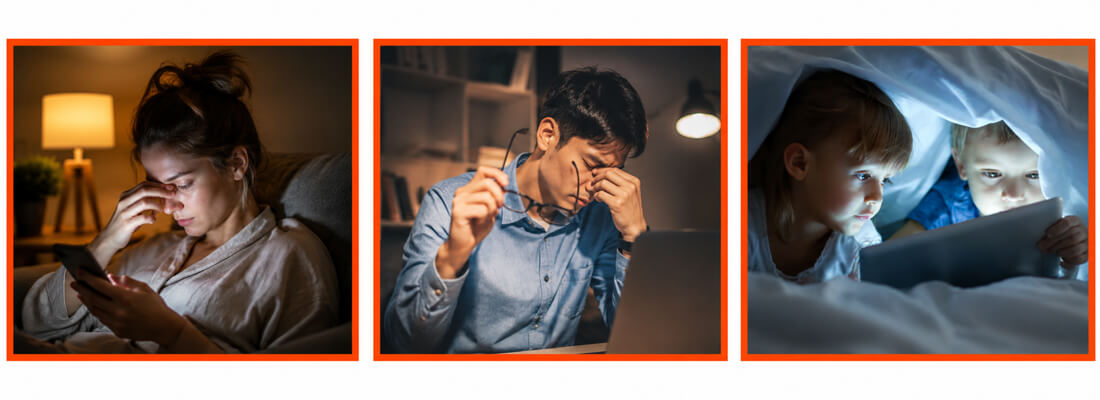
À medida que mais famílias trocaram lâmpadas incandescentes por LEDs na última década, alguns usuários começaram a sentir sintomas como fadiga ocular, dores de cabeça, ou desconforto visual. Consequentemente, muitas pessoas presumiram que as luzes LED estavam prejudicando a visão.
Na realidade, esses sintomas geralmente são causados por um ou mais dos seguintes:
- Lâmpadas LED de baixa qualidade
- Brilho excessivo
- Brilho forte
- Luz bruxuleante
- Temperatura de cor incorreta
- Longas horas de exposição à tela digital
Em outras palavras, o problema geralmente é a qualidade do ambiente de iluminação e não a própria tecnologia LED.
Portanto, escolher luzes LED internas bem projetadas é muito mais importante do que evitar completamente os LEDs.
As luzes LED são realmente perigosas para os seus olhos??
Felizmente, as evidências científicas atuais indicam que a iluminação LED interna normal não não danificar olhos saudáveis sob condições típicas de casa ou local de trabalho.
A maioria dos oftalmologistas concorda que as lâmpadas LED certificadas são seguras quando atendem aos padrões de segurança reconhecidos..
Em vez de se preocupar com os próprios LEDs, os compradores devem prestar atenção à qualidade da iluminação, incluindo:
- Saída de luz estável
- Desempenho sem cintilação
- Baixo brilho
- Brilho apropriado
- Temperatura de cor adequada
- Chips e drivers de LED de alta qualidade
Em última análise, esses fatores têm uma influência muito maior no conforto visual do que a própria tecnologia de iluminação.
Compreendendo a luz azul em lâmpadas LED
Uma das maiores preocupações em torno das luzes LED internas é a luz azul.
Como a luz solar natural, a luz azul também é emitida por muitos dispositivos do dia a dia, incluindo:
- Smartphones
- Comprimidos
- Monitores de computador
- Televisores
- Iluminação LED
Porque os LEDs brancos frios contêm uma proporção maior de comprimentos de onda azuis do que os LEDs brancos quentes, muitos consumidores temem que possam danificar os olhos.
Felizmente, a quantidade de luz azul produzida por lâmpadas LED internas padrão é geralmente muito menor do que a exposição que as pessoas recebem da luz solar ou de passar horas olhando para telas digitais.
Portanto, para a maioria das pessoas, a iluminação LED interna não expõe os olhos a níveis prejudiciais de luz azul durante o uso diário normal.
As luzes LED podem causar fadiga ocular?
Embora os próprios LEDs raramente prejudiquem seus olhos, eles podem contribuir para o cansaço visual sob certas condições.
1. Brilho excessivo
Em primeiro lugar, muitos proprietários instalam lâmpadas que são muito mais brilhantes do que o necessário.
Como resultado, os olhos se ajustam constantemente à luz excessiva, levando à fadiga ao longo do tempo.
Em vez de, selecione lâmpadas LED com saída de lúmen que corresponda ao tamanho da sala e ao uso pretendido.
2. Brilho
Outra causa comum do desconforto ocular é o brilho.
Lâmpadas LED nuas ou luminárias sem difusores podem produzir, luz direta, especialmente em cozinhas, banheiros, escritórios, e espaços de varejo.
Por exemplo, usando lâmpadas foscas, abajures, ou luminárias difusas ajudam a criar uma iluminação mais suave, reduzindo significativamente a fadiga ocular.
3. LEDs piscantes
Além disso, algumas lâmpadas LED de baixo custo usam drivers de baixa qualidade que criam cintilação invisível.
Embora muitas pessoas não consigam ver conscientemente a cintilação, seus olhos e cérebro ainda respondem a isso, o que pode resultar em:
- Dores de cabeça
- Tensão ocular
- Dificuldade de concentração
Portanto, investir em lâmpadas LED sem cintilação é uma das maneiras mais fáceis de melhorar o conforto da iluminação interna.
4. Temperatura de cor incorreta
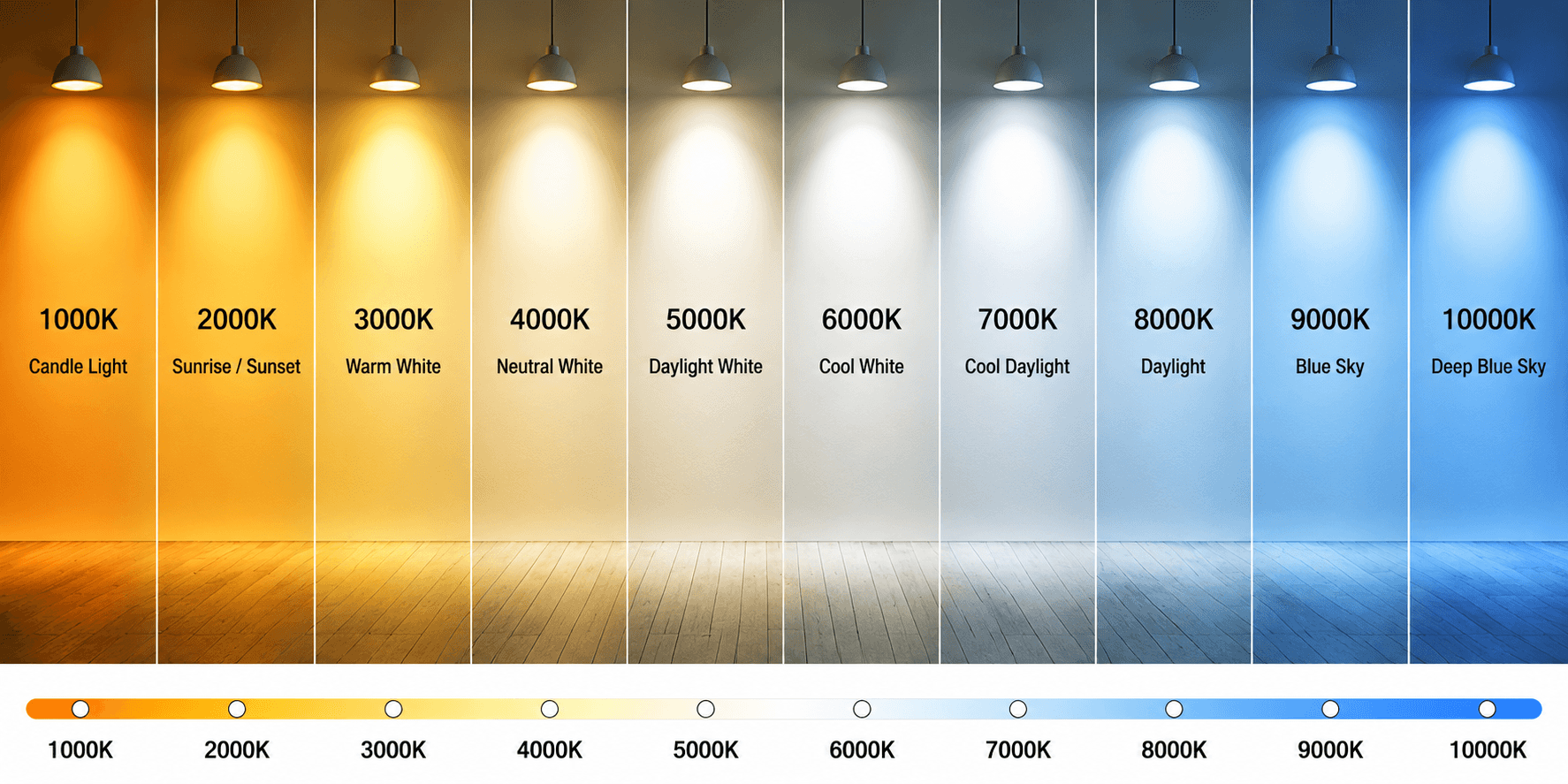
Além do brilho, a temperatura da cor também tem um impacto significativo no conforto visual.
| Temperatura de cor | Aparência | Melhor para |
|---|---|---|
| 2700K | Branco Quente | Quartos, Salas de estar |
| 3000K | Branco suave e quente | Salas de jantar, Hotéis |
| 4000K | Branco Neutro | Cozinhas, Escritórios |
| 5000K–6500K | Luz do dia fresca | Garagens, Oficinas |
De um modo geral, lâmpadas LED brancas quentes entre 2700K e 3000K fornecer a iluminação mais confortável para espaços interiores relaxantes.
Enquanto isso, a iluminação mais fria é mais adequada para ambientes orientados para tarefas onde é necessária maior visibilidade.
As luzes LED afetam o sono?
Embora as luzes LED sejam seguras para os seus olhos, eles podem influenciar seu ciclo de sono se usados incorretamente.
Brilhante, luz rica em azul à noite pode reduzir a produção de melatonina, tornando mais difícil adormecer.
No entanto, este efeito não é exclusivo da iluminação LED.
Na verdade, smartphones, comprimidos, notebooks, e os monitores de computador geralmente emitem significativamente mais luz azul do que as lâmpadas LED internas.
Para minimizar o impacto, considere o seguinte:
- Use lâmpadas LED brancas quentes após o pôr do sol.
- Diminua a iluminação interna à noite.
- Limite o tempo de tela antes de dormir.
- Escolha lâmpadas LED inteligentes com temperaturas de cor ajustáveis.
Como resultado, você criará um ambiente noturno mais relaxante.
Os LEDs brancos quentes são melhores para os seus olhos?
Para a maioria dos espaços internos, a resposta é sim.
A iluminação LED branca quente produz uma iluminação mais suave com menos brilho percebido, tornando-o ideal para:
- Quartos
- Salas de estar
- Hotéis
- Restaurantes
- Cafés
- Áreas de leitura
Por outro lado, a iluminação branca fria continua sendo uma excelente escolha para escritórios, cozinhas, oficinas, e lojas de varejo onde visibilidade e concentração são prioridades.
Em última análise, selecionar a temperatura de cor correta depende de como a sala será usada.
Como escolher luzes LED internas que não agridem os olhos
Se você estiver comprando iluminação LED interna para sua casa ou empresa, considere os seguintes fatores.
Escolher Lâmpadas LED sem cintilação
Em primeiro lugar, procure luzes LED sem cintilação com drivers de alta qualidade.
Isto é particularmente importante para escritórios, salas de aula, e espaços de trabalho onde as luzes permanecem acesas por longos períodos.
Selecione o brilho certo
Próximo, evite presumir que mais brilhante é sempre melhor.
Em vez de, combinar a saída de lúmen com o tamanho da sala e a atividade pretendida.
Escolha a temperatura de cor apropriada
Da mesma maneira, selecionar a temperatura de cor correta melhora o conforto e a produtividade.
- 2700K–3000K: Relaxante
- 4000K: Trabalho diário
- 5000K+: Iluminação detalhada da tarefa
Procure um CRI alto
Adicionalmente, escolha lâmpadas LED com índice de reprodução de cores (Cri) de pelo menos 80; um IRC de 90+ proporciona ainda maior precisão de cores naturais e conforto visual. Em nosso site, você pode encontrar a lâmpada LED que com todos esses recursos; Clique aqui para mais modelos.
Reduza o brilho direto
Finalmente, melhorar a qualidade da iluminação usando:
- Lâmpadas LED foscas
- Difusores
- Abajures
- Iluminação embutida
- Iluminação indireta
Junto, essas soluções criam mais suaves, iluminação interior mais confortável.
Considerações Finais
Geral, luzes LED internas não fazem mal aos olhos quando você escolhe produtos de alta qualidade e os usa corretamente.
Em vez de culpar a própria tecnologia LED, os compradores devem se concentrar na seleção de lâmpadas LED sem cintilação, níveis de brilho apropriados, temperaturas de cores quentes quando adequado, e luminárias que minimizam o brilho.
Esteja você atualizando uma casa, mobiliar um hotel, projetando um escritório, ou adquirir produtos para atacado, investir em iluminação LED interna premium proporciona melhor conforto visual, maior eficiência energética, e reduzir custos de manutenção a longo prazo.
Resumidamente, a iluminação LED certa não apenas economiza energia, mas também cria um ambiente mais saudável, ambiente interno mais confortável, proporcionando ao mesmo tempo o desempenho que os proprietários e empresas de hoje esperam.