 English
 العربية
 Français
 Deutsch
 Italiano
 Polski
 Português
 Русский
 Español
 Українська


Zrozumienie mocy chipa LED
Wstęp
Ponieważ oświetlenie LED w dalszym ciągu zastępuje tradycyjne żarówki i żarówki CFL, więcej kupujących zwraca uwagę na jeden mały, ale kluczowy element – Układ LED. Niezależnie od tego, czy kupujesz żarówki LED, żarówki żarnikowe, oświetlenie komercyjne, lub elementy dekoracyjne, jakość chipa LED bezpośrednio określa jasność, efektywność, żywotność, i ogólną wydajność produktu.
Najpierw, zrozumienie działania chipa LED może pomóc w skuteczniejszym porównywaniu produktów oświetleniowych. Zamiast skupiać się wyłącznie na cenie, będziesz w stanie ocenić efektywność energetyczną, niezawodność, i długoterminową wartość.
Więc, czym właściwie jest chip LED? Co ważniejsze, dlaczego kupujący powinni zwracać uwagę na rodzaj chipa LED zastosowanego w żarówce?
Przyjrzyjmy się wszystkiemu, co musisz wiedzieć z perspektywy kupującego.
Serce oświetlenia LED
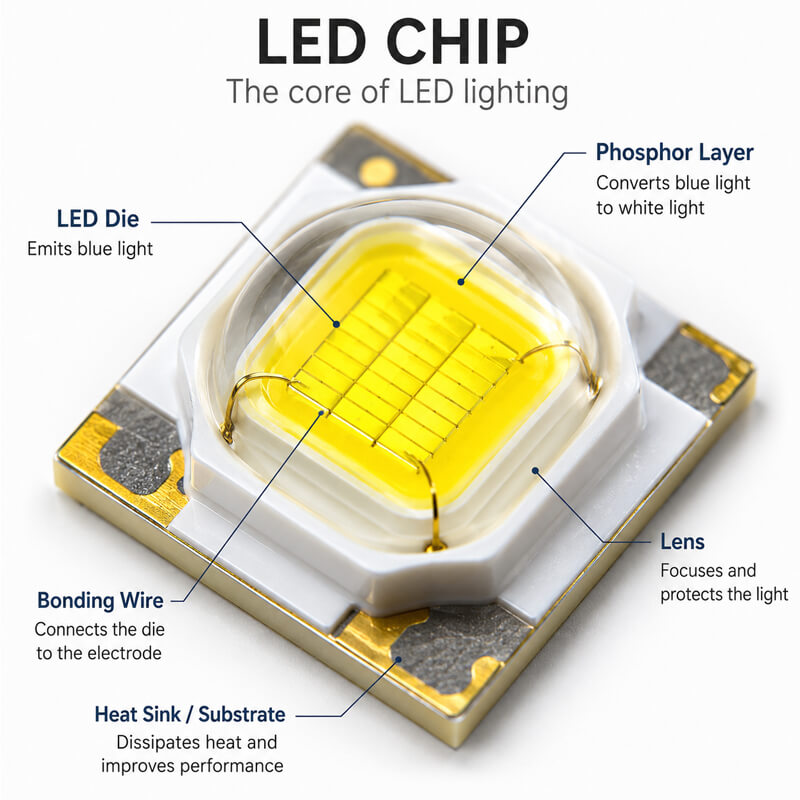
W swoim rdzeniu, jakiś Układ LED (Układ diody elektroluminescencyjnej) to element wytwarzający światło wewnątrz każdej lampy LED. Jest to maleńki półprzewodnik, który przekształca energię elektryczną bezpośrednio w światło widzialne w procesie znanym jako elektroluminescencja.
Inaczej tradycyjne żarówki, które wytwarzają światło poprzez ogrzewanie żarnika wolframowego, Chipy LED wytwarzają światło znacznie wydajniej, generując przy tym bardzo mało ciepła.
W rezultacie, Oświetlenie LED ma kilka istotnych zalet, w tym:
- Niższe zużycie energii
- Wyższa jasność
- Dłuższa żywotność
- Mniejsze wytwarzanie ciepła
- Obniżone koszty konserwacji
- Wydajność przyjazna dla środowiska
Ze względu na te korzyści, Chipy LED stały się podstawą nowoczesnej technologii oświetleniowej. Niezależnie od tego, czy kupujesz żarówki domowe, czy komercyjne oprawy oświetleniowe, jakość chipa LED będzie miała bezpośredni wpływ na ogólną wydajność.
Rzut oka na kompozycję
Chociaż chip LED jest niewiarygodnie mały, składa się z kilku precyzyjnie zaprojektowanych warstw, które współpracują ze sobą, aby zapewnić niezawodne działanie oświetlenia.
Typowo, zawiera chip LED:
- Materiał półprzewodnikowy (zwykle azotek galu lub arsenek galu)
- Elektrody przewodzące
- Podłoże przewodzące ciepło
- Hermetyzacja ochronna
- Soczewka optyczna lub powłoka fosforowa
Wśród tych składników, Szczególnie ważną rolę odgrywa podłoże przewodzące ciepło. Ponieważ nadmierne ciepło może zmniejszyć zarówno jasność, jak i żywotność, efektywne zarządzanie ciepłem jest niezbędne.
Ponadto, wielu producentów wysokiej klasy diod LED wykorzystuje wysokiej jakości materiały, takie jak:
- Podłoża ceramiczne
- Miedziane płytki drukowane
- Aluminiowe radiatory
- Soczewki silikonowe o wysokiej przepuszczalności
Więc, materiały te poprawiają odprowadzanie ciepła, pozwalając chipom LED zachować stabilną jasność i wydajną pracę przez dziesiątki tysięcy godzin.
Dla kupujących, Pytanie o konstrukcję termiczną jest tak samo ważne, jak sprawdzenie mocy lub strumienia świetlnego.
Cud miniaturyzacji
Jedną z najbardziej niezwykłych cech technologii LED jest jej kompaktowy rozmiar.
W rzeczywistości, nowoczesne chipy LED mają średnicę zaledwie kilku milimetrów. Pomimo ich niewielkich rozmiarów, potrafią generować imponującą ilość światła.
W zależności od zastosowania oświetlenia, produkt może zawierać:
- Jeden chip LED dużej mocy
- Wiele chipów LED SMD
- Moduły LED COB
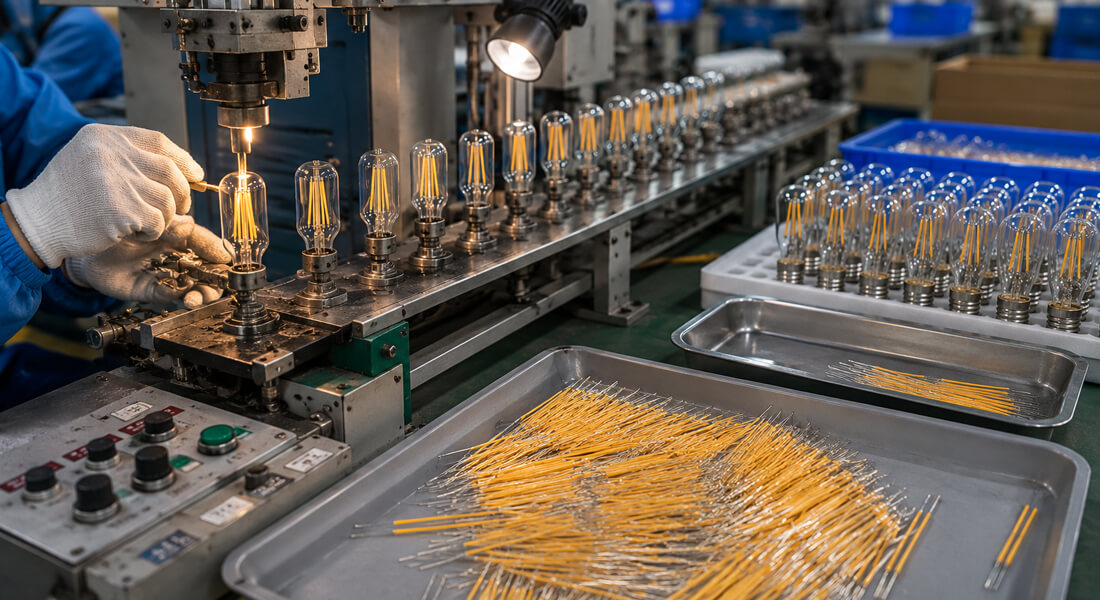
- Setki chipów żarnikowych LED
Dzięki tej miniaturyzacji, producenci mogą projektować cieńsze, zapalniczka, i bardziej atrakcyjne oprawy oświetleniowe bez utraty jasności.
Dzisiaj, Chipy LED są szeroko stosowane w:
- Żarówki LED
- Żarówki żarnikowe LED
- Lampy wiszące
- Żyrandole
- Kinkiety
- Światła przeciwpowodziowe
- Oświetlenie ogrodowe
- Oświetlenie uliczne
- Oświetlenie samochodowe
- Oświetlenie komercyjne
Dlatego, Technologia LED zapewnia projektantom większą elastyczność, jednocześnie zaspokajając rosnące zapotrzebowanie na nowoczesne rozwiązania oświetleniowe.
Jaśniejszy, Mniejszy, Trwalsze
W ciągu ostatniej dekady, Technologia chipów LED szybko ewoluowała.
Ponieważ technologia wciąż się rozwija, producenci produkują chipy LED, które są:
- Jaśniejszy
- Mniejszy
- Bardziej energooszczędny
- Lepiej odprowadza ciepło
- Trwalsze
Dzisiaj, wiele wysokiej klasy chipów LED zapewnia wyższą wydajność 150 lumenów na wat, podczas gdy zaawansowane produkty komercyjne mogą osiągnąć ponad 200 lumenów na wat w idealnych warunkach.
Dla kupujących, oznacza to niższe koszty eksploatacji i lepszą wydajność oświetlenia.
Wyższa jasność
Nowoczesne chipy LED wytwarzają znacznie więcej lumenów, zużywając przy tym mniej energii elektrycznej.
Na przykład:
- Tradycyjna żarówka o mocy 60 W → w przybliżeniu 800 lumenów
- Nowoczesna żarówka LED o mocy 8W → ok 800 lumenów
W rezultacie, użytkownicy mogą cieszyć się tą samą jasnością, jednocześnie zmniejszając zużycie energii elektrycznej nawet o 85%.
Dłuższa żywotność
Kolejną ważną zaletą jest trwałość.
Wysokiej jakości chipy LED są zwykle trwałe:
- 25,000 godziny
- 35,000 godziny
- 50,000 godziny lub więcej
Więc, firmy i właściciele domów wydają mniej na wymianę żarówek i konserwację.
Lepsza jakość kolorów
Ponadto, Wysokiej jakości chipy LED zapewniają doskonałe oddawanie barw.
Dla większości zastosowań, kupujący powinni rozważyć:
- CRI 80+ do oświetlenia mieszkań
- CRI 90+ dla handlu detalicznego, gościnność, galerie, i luksusowe wnętrza
To oznacza kolory wydają się bardziej naturalne, wibrujący, i wygodne dla ludzkiego oka.
Poprawiona niezawodność
Równie ważne, zaawansowana technologia produkcji minimalizuje:
- Zanik światła
- Zmiana koloru
- Migocący
- Wczesna awaria chipa
Dlatego, oświetlenie pozostaje stabilne i spójne przez cały okres użytkowania.
Przyszłość jest jasna
Technologia chipów LED ewoluuje każdego roku.
Patrząc w przyszłość, kilka ważnych trendów kształtuje przyszłość branży oświetleniowej.
Wyższa efektywność energetyczna
Producenci opracowują chipy LED, które wytwarzają więcej światła, zużywając jeszcze mniej energii elektrycznej.
W rezultacie, przedsiębiorstwa mogą znacznie obniżyć koszty operacyjne i zmniejszyć emisję dwutlenku węgla.
Integracja inteligentnego oświetlenia
Tymczasem, Chipy LED są coraz bardziej kompatybilne z inteligentnymi systemami oświetleniowymi.
Dzisiejsze inteligentne rozwiązania oświetleniowe wspierają:
- Sterowanie Wi-Fi
- Łączność Bluetooth
- Asystenci głosowi
- Czujniki ruchu
- Automatyczne ściemnianie
- Regulowana temperatura barwowa
Więc, użytkownicy cieszą się większą wygodą, komfort, i oszczędność energii.
Oświetlenie zorientowane na człowieka
Ponadto, Przestrajalne białe chipy LED umożliwiają oświetlenie imitujące naturalne światło dzienne przez cały dzień.
Pomaga to poprawić komfort, stężenie, i ogólne samopoczucie w domach, biura, szkoły, i środowisk opieki zdrowotnej.
Zrównoważona produkcja
Naraz, producenci przyjmują bardziej ekologiczne metody produkcji, ograniczając ilość materiałów niebezpiecznych, usprawnienie recyklingu, i zwiększenie wydajności produkcji.
Dlatego, Technologia chipów LED w dalszym ciągu wspiera globalne cele zrównoważonego rozwoju.
Poznaj rewolucję LED
Chociaż chip LED jest jednym z najmniejszych elementów wewnątrz produktu oświetleniowego, ma to największy wpływ na ogólną wydajność.
Ostatecznie, jakość chipa LED określa jasność, wydajny, niezawodny, i trwałe będzie światło LED.
Porównując produkty oświetleniowe LED, kupujący powinni oceniać nie tylko cenę.
Zamiast, zwróć uwagę na takie czynniki jak:
- Jakość i marka chipów
- Wydajność lumenów
- Skuteczność świetlna (mb/szer)
- Wskaźnik oddawania barw (CRI)
- Temperatura barwowa (CCT)
- Projekt rozpraszania ciepła
- Oceniona żywotność
- Gwarancja producenta
Biorąc pod uwagę te czynniki, kupujący mogą wybrać produkty oświetleniowe, które zapewniają lepszą wydajność, niższe koszty utrzymania, i większą wartość długoterminową.
Podsumowując, Inwestycja w wysokiej jakości technologię chipów LED oznacza inwestycję w jaśniejsze oświetlenie, niższe rachunki za energię, i bardziej zrównoważoną przyszłość. Niezależnie od tego, czy pozyskujesz oświetlenie do domów, hotele, biura, powierzchnie handlowe, lub projekty komercyjne, wybór produktów zbudowanych z niezawodnych chipów LED to mądra decyzja, która będzie się opłacać przez wiele lat.