 English
 العربية
 Français
 Deutsch
 Italiano
 Polski
 Português
 Русский
 Español
 Українська


Plaquettes lumineuses vs. Lumières de canette: Quelle est la différence et lequel devriez-vous choisir?
Lors de la planification d’une mise à niveau de l’éclairage, Choisir le bon éclairage encastré peut faire une grande différence dans l'apparence et la performance de votre espace.. Aujourd'hui, deux des options les plus courantes sont lumières de plaquette et peut s'allumer.
Bien que les deux fournissent des, éclairage intégré au plafond, ils sont construits différemment et servent à des fins légèrement différentes. Donc, pour vous aider à prendre une décision en toute confiance, nous allons décomposer leurs définitions, caractéristiques, avantages, méthodes d'installation, et les principales différences dans un simple, manière facile à comprendre.
1. Que sont les lampes à plaquettes et les lampes à canettes?
Pour commencer, il est important de savoir ce qu'est réellement chaque type d'éclairage.
Que sont les lampes à plaquettes?
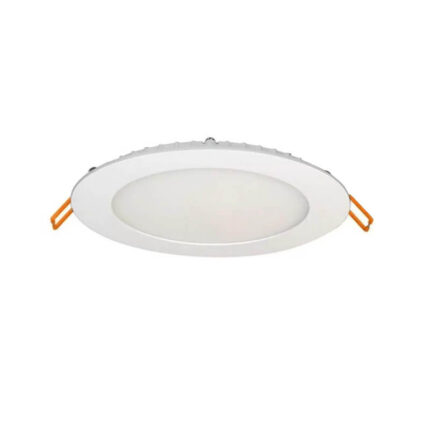
Lumières de plaquette, souvent appelé lumières encastrées sans canette, sont des luminaires LED ultra-minces conçus pour s'asseoir presque au ras du plafond. Contrairement aux systèmes encastrés traditionnels, ils ne nécessitent pas de boîtier métallique (peut).
Plutôt, ils se connectent directement à une boîte de jonction et sont installés dans une petite découpe du plafond. En raison de cette structure simplifiée, Les lampes à plaquettes sont particulièrement utiles dans les espaces avec une profondeur de plafond limitée ou dans les projets de rénovation où l'installation d'un boîtier complet serait difficile.
Que sont les lumières de canette?
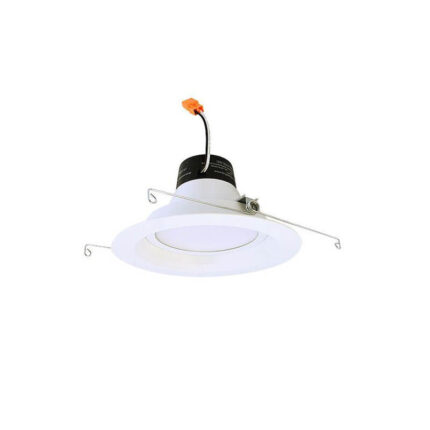
En revanche, peut s'allumer (également connu sous le nom lumières encastrées ou spots) utiliser un boîtier métallique cylindrique installé dans la structure du plafond.
L'ampoule se trouve à l'intérieur de ce boîtier et est recouverte d'une garniture. Contrairement aux lampes à plaquettes, Les lumières peuvent permettre aux utilisateurs de remplacer les ampoules et de choisir parmi une grande variété de garnitures et d'effets d'éclairage..
2. Principales caractéristiques des lampes Wafer et des lampes Can Can
Maintenant que nous comprenons les bases, regardons comment chaque type d'éclairage fonctionne en utilisation réelle.
Caractéristiques de la plaquette lumineuse
Les lampes Wafer sont conçues dans un souci de simplicité et d'efficacité moderne.. En particulier, ils offrent:
- Ultra-mince, conception peu encombrante
- Pas besoin de boîtier encastré
- Technologie LED intégrée
- Haute efficacité énergétique
- Installation de rénovation facile
- Faire le ménage, aspect minimal du plafond
- Longue durée de vie (jusqu'à 50,000 heures)
Peut éclairer les fonctionnalités
D'autre part, Les lampes de canette sont conçues pour la flexibilité et la personnalisation à long terme. Leurs principales caractéristiques comprennent:
- Système de boîtier encastré traditionnel
- Ampoules remplaçables (DIRIGÉ, halogène, LCF)
- Large gamme de styles de garniture
- Options d'éclairage réglables et directionnelles
- Forte compatibilité avec les nouvelles constructions
- Mises à niveau faciles des ampoules au fil du temps
3. Comparaison des avantages et des inconvénients
À ce point, il est utile de comparer les deux options côte à côte pour mieux comprendre leurs forces et leurs limites.
| Fonctionnalité | Lumières de plaquette | Lumières de canette |
|---|---|---|
| Installation | Simple et rapide | Plus complexe |
| Espace au plafond requis | Minimal | Plus de profondeur nécessaire |
| Coût initial | Inférieur | Plus haut |
| Efficacité énergétique | Excellent | Bon à très bon |
| Flexibilité de conception | Limité | Très flexible |
| Entretien | Faible | Modéré |
| Remplacement de l'ampoule | Luminaire entièrement remplacé | Ampoule uniquement |
| Durée de vie | Jusqu'à 50,000 heures | Varie selon l'ampoule |
| Aptitude à la modernisation | Excellent | Modéré |
| Utilisation dans une nouvelle construction | Bien | Excellent |
Plaquettes lumineuses – Avantages et inconvénients
Pour résumer, les lampes à plaquettes offrent de sérieux avantages dans les installations modernes. Tout d'abord, ils sont extrêmement faciles à installer. En outre, ils sont très économes en énergie et idéaux pour les espaces de plafond restreints.
Cependant, à la baisse, l'ensemble du luminaire doit être remplacé lorsque la LED atteint la fin de sa durée de vie. De plus, les options de personnalisation du design sont plus limitées que celles des lampes en canette.
Can Lights – Avantages et inconvénients
Par comparaison, les lumières peuvent-elles offrir une plus grande flexibilité. Par exemple, vous pouvez facilement remplacer les ampoules et choisir parmi plusieurs styles de garniture. En outre, ils sont largement utilisés dans les nouveaux projets de construction.
Cependant, ils nécessitent plus d'efforts d'installation. En outre, ils ont besoin de plus de profondeur de plafond, ce qui peut entraîner des coûts d'installation initiaux plus élevés.
4. Méthodes d'installation et différences clés
Suivant, Examinons de plus près comment chaque type d'éclairage est installé, car c'est souvent un facteur décisif pour de nombreux propriétaires et entrepreneurs.
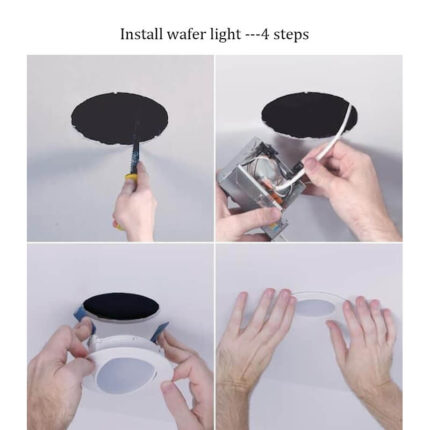
Installation de lumières de plaquette
Pour commencer, Les lampes à plaquettes sont conçues pour une installation rapide et simple. Typiquement, le processus comprend:
- Découper un petit trou dans le plafond
- Raccordement du câblage à une boîte de jonction
- Fixation de la lumière avec des clips à ressort
Parce qu'aucun logement n'est nécessaire, l'installation est beaucoup plus rapide et plus propre. Par conséquent, les lampes à plaquettes sont particulièrement populaires dans les projets de rénovation, sous-sols, et plafonds finis.
Installation de lumières de canette
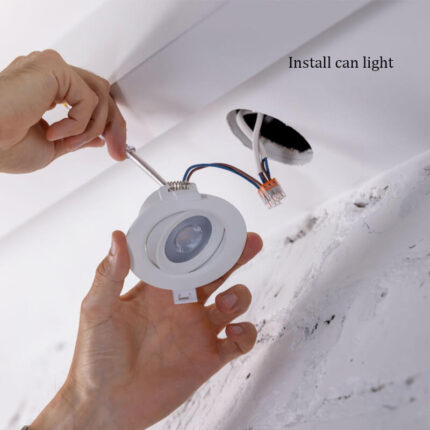
En revanche, les lumières peuvent-elles nécessiter un processus d'installation plus traditionnel. En général, cela inclut:
- Installation du boîtier encastré entre les solives du plafond
- Faire passer le câblage électrique à travers la structure
- Installation de cloisons sèches autour du boîtier
- Ajout de garniture et insertion de l'ampoule
Donc, Les lampes canettes sont généralement installées lors d'une nouvelle construction lorsque la structure du plafond est encore ouverte et accessible..
Comparaison d'installation rapide
| Facteur d'installation | Lumières de plaquette | Lumières de canette |
|---|---|---|
| Logement requis | Non | Oui |
| Vitesse d'installation | Rapide | Ralentissez |
| Compatible avec la rénovation | Oui | Limité |
| Coût de la main d'œuvre | Inférieur | Plus haut |
| Accès au plafond nécessaire | Minimal | Significatif |
5. Résumé final
En conclusion, les lampes à plaquettes et les lampes à canettes sont d'excellentes solutions d'éclairage encastrées, mais ils sont conçus pour des besoins différents.
D'une part, lumières de plaquette sont idéaux si vous voulez un style moderne, conception à profil bas, installation plus facile, et une efficacité énergétique élevée, en particulier dans les projets de rénovation ou les espaces avec une profondeur de plafond limitée.
D'autre part, peut s'allumer sont mieux adaptés si vous préférez une flexibilité à long terme, ampoules remplaçables, et plus d'options de personnalisation de l'éclairage, surtout dans les nouvelles constructions.
Finalement, il n’y a pas de « meilleure » option unique. Plutôt, le bon choix dépend de la structure de votre plafond, budget, conditions de pose, et préférences de conception. En comprenant ces différences, vous pouvez choisir en toute confiance la solution d'éclairage encastré qui correspond le mieux à votre espace et à vos besoins à long terme.