 English
 العربية
 Français
 Deutsch
 Italiano
 Polski
 Português
 Русский
 Español
 Українська


Les lumières LED d’intérieur sont-elles mauvaises pour vos yeux?
Introduction
L'éclairage LED est devenu le choix standard pour les maisons modernes, bureaux, hôtels, et espaces commerciaux. Grâce à leur efficacité énergétique exceptionnelle et leur longue durée de vie, Les ampoules LED ont largement remplacé l'éclairage à incandescence et CFL traditionnels ces dernières années..
Cependant, de nombreux propriétaires et acheteurs commerciaux posent toujours la même question:
Les lumières LED intérieures sont-elles mauvaises pour les yeux ??
La bonne nouvelle est que la réponse est généralement Non. Les lumières LED d'intérieur de haute qualité ne sont pas nocives pour vos yeux lorsqu'elles sont correctement conçues et utilisées dans des conditions normales.. Plutôt, la plupart des inconforts liés à l'éclairage proviennent d'ampoules LED de mauvaise qualité, luminosité excessive, éblouissement, vaciller, ou une conception d'éclairage incorrecte – pas la technologie LED elle-même.
Dans ce guide, nous séparerons les mythes des faits, expliquer comment l'éclairage LED affecte votre vision, et vous aider à choisir des ampoules LED respectueuses des yeux pour votre maison ou votre entreprise.
Pourquoi les gens pensent-ils que les lumières LED font mal aux yeux?
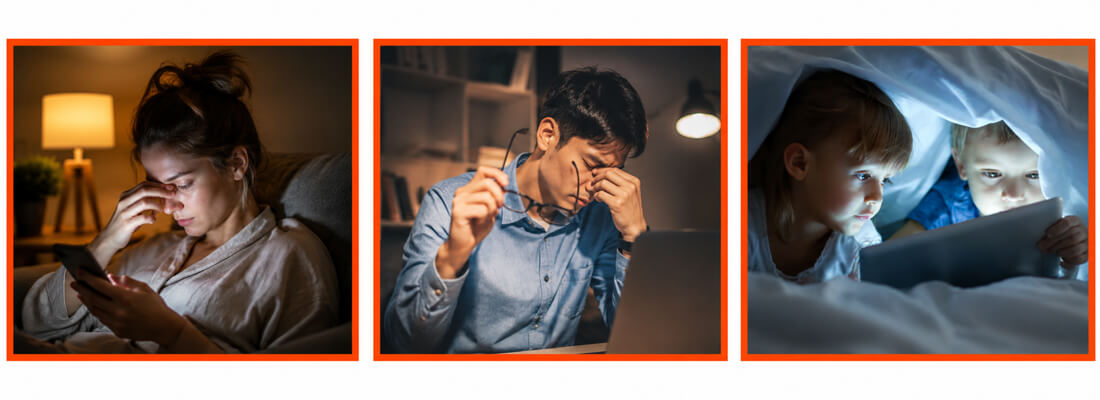
Alors que de plus en plus de foyers sont passés des ampoules à incandescence aux LED au cours de la dernière décennie, certains utilisateurs ont commencé à ressentir des symptômes tels que la fatigue oculaire, maux de tête, ou inconfort visuel. Par conséquent, beaucoup de gens pensaient que les lumières LED endommageaient leur vue.
En réalité, ces symptômes sont généralement causés par un ou plusieurs des éléments suivants:
- Ampoules LED de mauvaise qualité
- Luminosité excessive
- Éblouissement violent
- Lumière vacillante
- Température de couleur incorrecte
- De longues heures d’exposition sur écran numérique
Autrement dit, le problème est généralement la qualité de l'environnement lumineux plutôt que la technologie LED elle-même.
Donc, choisir des éclairages LED d’intérieur bien conçus est bien plus important que d’éviter complètement les LED.
Les lumières LED sont-elles réellement dangereuses pour vos yeux ??
Heureusement, les preuves scientifiques actuelles indiquent que l'éclairage intérieur normal à LED ne pas endommager des yeux sains dans des conditions domestiques ou de travail typiques.
La plupart des professionnels de la vue conviennent que les ampoules LED certifiées sont sûres lorsqu'elles répondent aux normes de sécurité reconnues..
Au lieu de vous soucier des LED elles-mêmes, les acheteurs doivent faire attention à la qualité de l'éclairage, y compris:
- Rendement lumineux stable
- Performances sans scintillement
- Faible éblouissement
- Une luminosité appropriée
- Température de couleur appropriée
- Puces et pilotes LED de haute qualité
Finalement, ces facteurs ont une influence bien plus grande sur le confort visuel que la technologie d'éclairage elle-même.
Comprendre la lumière bleue dans les ampoules LED
L’une des plus grandes préoccupations concernant les lumières LED d’intérieur est la lumière bleue..
Comme la lumière naturelle du soleil, la lumière bleue est également émise par de nombreux appareils du quotidien, y compris:
- Téléphones intelligents
- Comprimés
- Écrans d'ordinateur
- Téléviseurs
- Éclairage LED
Parce que les LED blanc froid contiennent une proportion plus élevée de longueurs d'onde bleues que les LED blanc chaud, de nombreux consommateurs craignent de se blesser les yeux.
Heureusement, la quantité de lumière bleue produite par les ampoules LED d'intérieur standard est généralement bien inférieure à l'exposition que les gens reçoivent du soleil ou passent des heures à regarder des écrans numériques..
Donc, pour la plupart des gens, L'éclairage intérieur à LED n'expose pas les yeux à des niveaux nocifs de lumière bleue lors d'une utilisation quotidienne normale.
Les lumières LED peuvent-elles causer une fatigue oculaire?
Bien que les LED elles-mêmes nuisent rarement à vos yeux, ils peuvent contribuer à la fatigue oculaire dans certaines conditions.
1. Luminosité excessive
Tout d'abord, de nombreux propriétaires installent des ampoules beaucoup plus lumineuses que nécessaire.
Par conséquent, les yeux s'adaptent constamment à la lumière excessive, entraînant une fatigue au fil du temps.
Plutôt, sélectionnez des ampoules LED dont le flux lumineux correspond à la taille de la pièce et à l'utilisation prévue.
2. Éblouissement
Une autre cause courante de l'inconfort oculaire est l'éblouissement.
Les ampoules LED nues ou les luminaires sans diffuseurs peuvent produire des, lumière directe, surtout dans les cuisines, salles de bains, bureaux, et espaces de vente au détail.
Par exemple, utiliser des ampoules givrées, abat-jour, ou des luminaires diffus aident à créer un éclairage plus doux tout en réduisant considérablement la fatigue oculaire.
3. LED clignotantes
En outre, certaines ampoules LED bon marché utilisent des pilotes de mauvaise qualité qui créent un scintillement invisible.
Bien que de nombreuses personnes ne puissent pas consciemment voir le scintillement, leurs yeux et leur cerveau y réagissent toujours, ce qui peut entraîner:
- Maux de tête
- Fatigue oculaire
- Difficulté à se concentrer
Donc, investir dans des ampoules LED sans scintillement est l'un des moyens les plus simples d'améliorer le confort de l'éclairage intérieur.
4. Température de couleur incorrecte
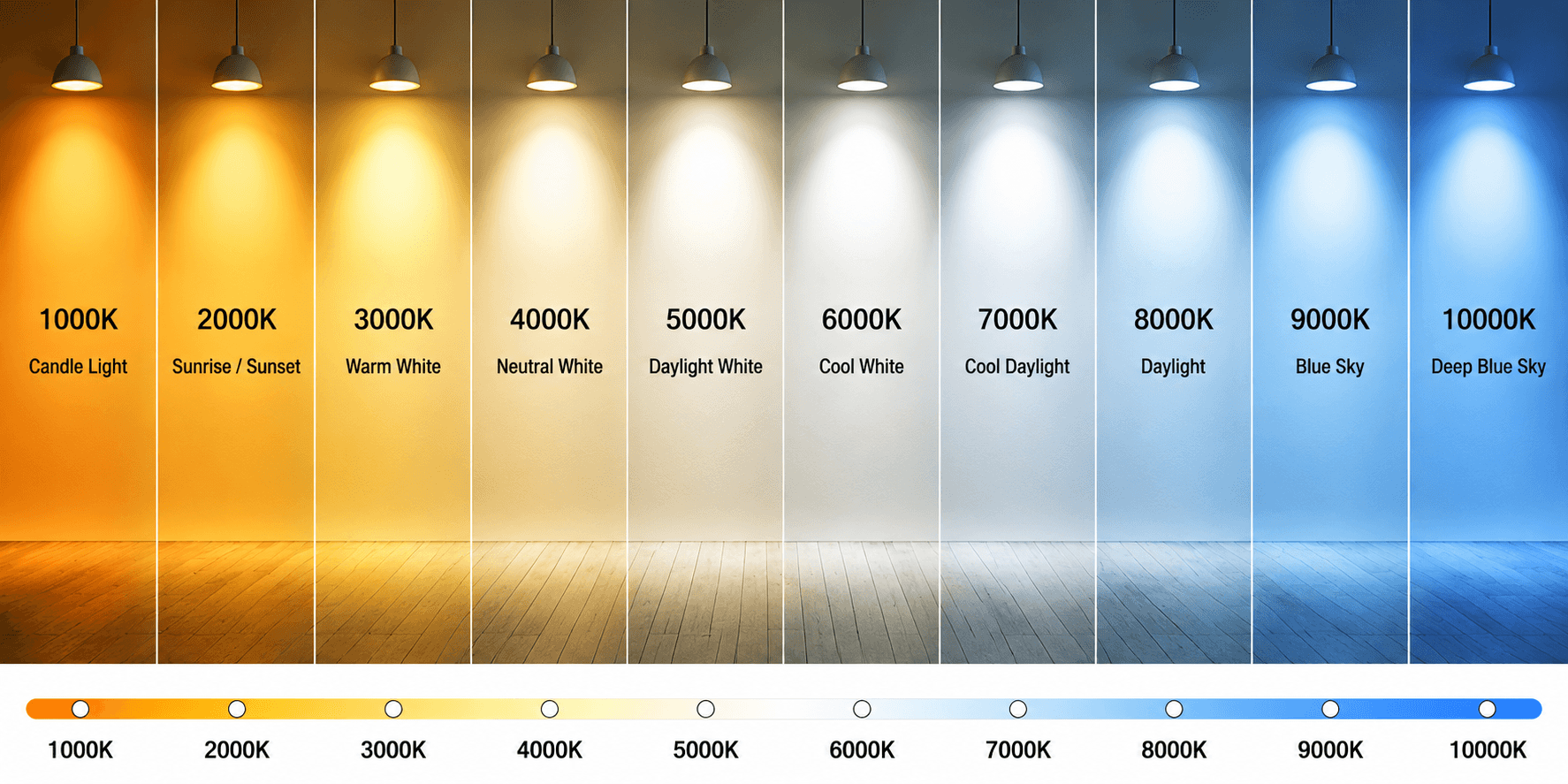
Outre la luminosité, la température de couleur a également un impact significatif sur le confort visuel.
| Température de couleur | Apparence | Idéal pour |
|---|---|---|
| 2700K | Blanc chaud | Chambres, Salons |
| 3000K | Blanc chaud et doux. | Salles à manger, Hôtels |
| 4000K | Blanc neutre | Cuisines, Bureaux |
| 5000K–6 500K | Lumière du jour fraîche | Garage, Ateliers |
En général, ampoules LED blanc chaud entre 2700K et 3000K fournir l’éclairage le plus confortable pour des espaces intérieurs relaxants.
Entre-temps, un éclairage plus frais est mieux adapté aux environnements axés sur les tâches où une plus grande visibilité est requise.
Les lumières LED affectent-elles le sommeil?
Alors que les lumières LED sont sans danger pour vos yeux, ils peuvent influencer votre cycle de sommeil s’ils sont mal utilisés.
Brillant, la lumière bleue du soir peut réduire la production de mélatonine, ce qui rend plus difficile l'endormissement.
Cependant, cet effet n'est pas propre à l'éclairage LED.
En fait, téléphones intelligents, comprimés, ordinateurs portables, et les écrans d'ordinateur émettent souvent beaucoup plus de lumière bleue que les ampoules LED d'intérieur..
Pour minimiser l’impact, considérez ce qui suit:
- Utilisez des ampoules LED blanc chaud après le coucher du soleil.
- Baissez votre éclairage intérieur le soir.
- Limiter le temps passé devant un écran avant de se coucher.
- Choisissez des ampoules LED intelligentes avec des températures de couleur réglables.
Par conséquent, vous créerez un environnement nocturne plus relaxant.
Les LED blanc chaud sont-elles meilleures pour vos yeux?
Pour la plupart des espaces intérieurs, la réponse est oui.
L'éclairage LED blanc chaud produit un éclairage plus doux avec moins d'éblouissement perçu, ce qui le rend idéal pour:
- Chambres
- Salons
- Hôtels
- Restaurants
- Cafés
- Espaces de lecture
D'autre part, l'éclairage blanc froid reste un excellent choix pour les bureaux, cuisines, ateliers, et magasins de détail où la visibilité et la concentration sont des priorités.
Finalement, le choix de la bonne température de couleur dépend de la manière dont la pièce sera utilisée.
Comment choisir des lumières LED intérieures respectueuses des yeux
Si vous achetez un éclairage LED intérieur pour votre maison ou votre entreprise, considérez les facteurs suivants.
Choisir Ampoules LED sans scintillement
Avant tout, recherchez des lumières LED sans scintillement avec des pilotes de haute qualité.
Ceci est particulièrement important pour les bureaux, salles de classe, et espaces de travail où les lumières restent allumées pendant de longues périodes.
Sélectionnez la bonne luminosité
Suivant, évitez de supposer que plus lumineux est toujours mieux.
Plutôt, adapter le flux lumineux à la taille de la pièce et à l'activité prévue.
Choisissez la température de couleur appropriée
De même, sélectionner la bonne température de couleur améliore à la fois le confort et la productivité.
- 2700K–3000K: Relaxant
- 4000K: Travail quotidien
- 5000K+: Éclairage de travail détaillé
Recherchez un CRI élevé
En plus, choisissez des ampoules LED avec un Indice de Rendu des Couleurs (Cri) d'au moins 80; un IRC de 90+ offre encore plus précision des couleurs naturelles et confort visuel. Sur notre site Internet, vous pouvez trouver l'ampoule LED qui avec toutes ces fonctionnalités; Cliquez ici pour plus de modèles.
Réduire l'éblouissement direct
Enfin, améliorer la qualité de l'éclairage en utilisant:
- Ampoules LED givrées
- Diffuseurs
- Abat-jour
- Éclairage encastré
- Éclairage indirect
Ensemble, ces solutions créent plus doux, éclairage intérieur plus confortable.
Pensées finales
Dans l'ensemble, Les lumières LED d'intérieur ne sont pas mauvaises pour vos yeux lorsque vous choisissez des produits de haute qualité et que vous les utilisez correctement.
Plutôt que de blâmer la technologie LED elle-même, les acheteurs devraient se concentrer sur la sélection d'ampoules LED sans scintillement, niveaux de luminosité appropriés, températures de couleur chaudes, le cas échéant, et des luminaires qui minimisent l'éblouissement.
Que vous modernisiez une maison, meubler un hôtel, concevoir un bureau, ou l'approvisionnement en produits pour la vente en gros, investir dans un éclairage LED intérieur haut de gamme offre un meilleur confort visuel, une plus grande efficacité énergétique, et des coûts de maintenance à long terme réduits.
En bref, le bon éclairage LED ne permet pas seulement d'économiser de l'énergie, il crée également un environnement plus sain., un environnement intérieur plus confortable tout en offrant les performances attendues par les propriétaires et les entreprises d'aujourd'hui.