 English
 العربية
 Français
 Deutsch
 Italiano
 Polski
 Português
 Русский
 Español
 Українська


L'éclat intemporel: Une plongée approfondie dans les lampes à filament LED
Le chaud, la lueur invitante d'une lampe à incandescence a une capacité presque magique à transformer un espace. Qu'il s'agisse de projeter une douce teinte ambrée sur une table à manger rustique ou d'éclairer un loft chic au charme vintage., ces ampoules établissent un équilibre parfait entre nostalgie et innovation. Lampes à incandescence LED, avec leurs délicates mèches lumineuses enveloppées dans du verre, sont plus que de simples sources de lumière : ils témoignent de la façon dont la technologie peut honorer la tradition tout en embrassant l'avenir.. Dans cette exploration complète de 3 000 mots, nous voyagerons à travers l'histoire des lampes à incandescence, découvrez les caractéristiques remarquables de leurs incarnations LED modernes, détaillent leur processus de production méticuleux, et partagez des conseils essentiels pour leur utilisation. Que vous soyez propriétaire, designer, ou passionné de durabilité, ce guide vous expliquera pourquoi les lampes à incandescence LED éclairent le monde avec style.
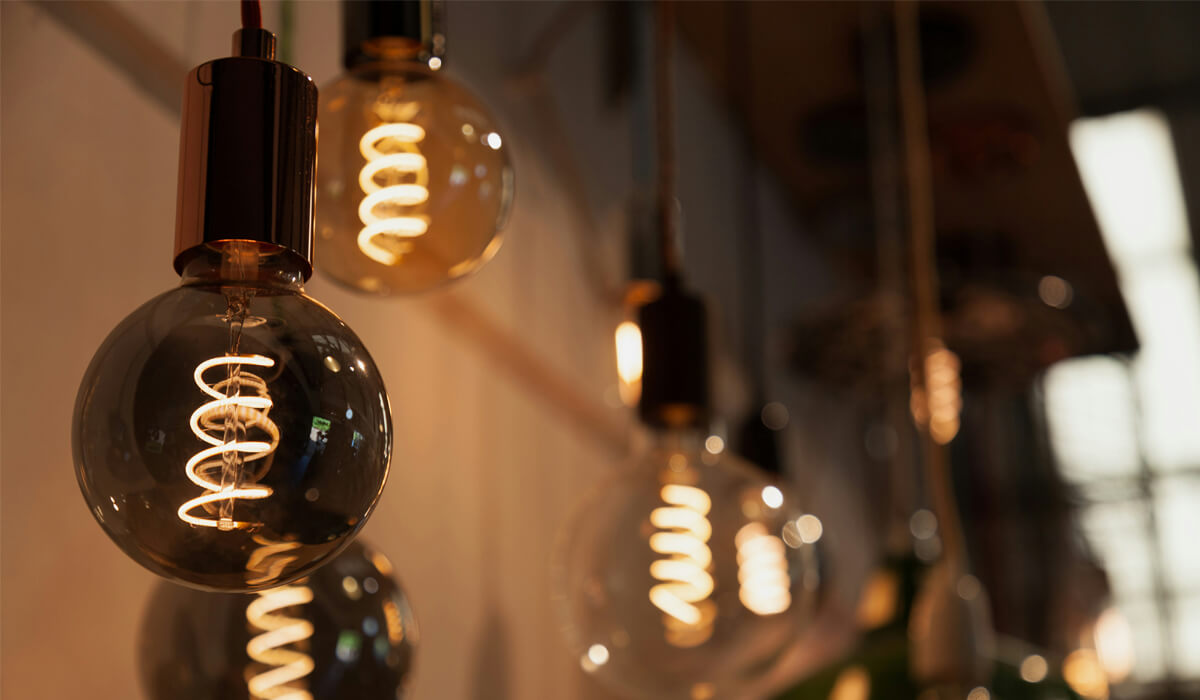
1. Les origines des lampes à incandescence: L'étincelle d'Edison vers le renouveau des LED
L'histoire de la lampe à incandescence commence au 19ème siècle, une époque où les lampes à gaz et les bougies étaient les principales sources de lumière artificielle. Entre Thomas Edison, dont le nom est gravé à jamais dans l'histoire de l'éclairage. Dans 1879, après des milliers d'expériences, Edison a dévoilé une ampoule à incandescence commercialement pratique qui pourrait briller pendant plus de 13 heures. Sa conception – un filament de bambou carbonisé scellé dans un vide de verre – a marqué un tournant, inaugurant l’ère de l’éclairage électrique. Alors que des inventeurs antérieurs comme Humphry Davy avaient démontré l'incandescence, L'ampoule d'Edison était abordable, évolutif, et suffisamment fiable pour éclairer les maisons et les rues, launching the electrical revolution.
Edison’s early bulbs relied on fragile carbon filaments, which burned out quickly—often within hours. By the early 20th century, the introduction of tungsten filaments transformed the industry. Tungsten’s high melting point (3,422°C/6,192°F) allowed bulbs to burn brighter and last longer, jusqu'à 1,000 heures. General Electric, building on Edison’s legacy, perfected tungsten filament production by 1913, making incandescent bulbs a household staple. These bulbs, with their delicate glowing wires, became icons of progress, lighting everything from factories to film studios.
Cependant, tungsten incandescents had significant drawbacks. They were energy hogs, converting just 10% of electricity into light and wasting the rest as heat. A single 60-watt bulb could consume as much power as a modern laptop, driving up electricity bills. Their 1,000-hour lifespan meant frequent replacements, and their production often involved hazardous materials like mercury in alternative fluorescent designs. By the 2000s, environmental concerns and regulations—like the EU’s 2009 incandescent phase-out—pushed the industry toward greener solutions.
Cue the LED filament lamp, a brilliant reinvention of Edison’s classic. Emerging around 2010, these bulbs mimic the aesthetic of vintage incandescents while leveraging Light Emitting Diode (DIRIGÉ) technologie, first developed by Nick Holonyak in 1962. Manufacturers like Huiyee Tech pioneered LED filaments by arranging tiny LED chips on thin substrates, creating the illusion of glowing tungsten wires. The result? Bulbs that look like 1879 originals but perform like 21st-century marvels.
Compared to tungsten bulbs, LED filament lamps are a leap forward. A 4-watt LED filament bulb delivers the same 400-800 lumens as a 40-watt incandescent, slashing energy use by 80-90%. Their lifespan stretches to 25,000-50,000 hours—3 to 5 years of daily use—reducing replacement costs. For a household with 20 ampoules, this translates to annual electricity savings of $100-$300, potentially thousands over the bulbs’ lifetime, based on U.S. Department of Energy estimates. Respectueux de l'environnement, LEDs are mercury-free and produce minimal heat, cutting cooling costs and landfill impact. From Brooklyn bistros to Tokyo boutiques, LED filament lamps have revived the Edison aesthetic while championing sustainability, proving that beauty and efficiency can coexist.
2. Modern Marvels: Features of LED Filament Lamps
What makes LED filament lamps a standout choice for today’s homes and businesses? It’s their seamless blend of vintage charm, cutting-edge technology, and practical versatility. Let’s explore the features that make these bulbs shine.
Glass Shells for Superior Heat Dissipation
Unlike early LEDs with plastic casings, filament lamps use borosilicate glass shells, which excel at dissipating heat. Operating at surface temperatures below 60°C (140°F), these bulbs stay cool to the touch, enhancing safety and longevity. The transparent or tinted glass showcases the glowing filaments, making them ideal for exposed-bulb fixtures like industrial pendants or retro chandeliers.
Flexible LED Filaments
Modern LED filaments are a triumph of engineering. Using Chip on Board (COB) or Surface-Mount Device (SMD) technologie, tiny LED chips are mounted on ceramic or glass substrates, forming long (50-100mm) or short (20-30mm) filaments. Artisans can hand-wind these into spirals, loops, or even bespoke shapes like stars, adding a custom touch for luxury installations. This flexibility ensures optimal light distribution, reducing glare in open designs.
Tunable Color Temperatures
LED filament lamps offer a spectrum of color temperatures to suit any mood or setting. Blanc chaud (1800K-3,000K) mimics candlelight, perfect for cozy bedrooms, while cool white (4,000K-6,500K) boosts focus in offices. Precise phosphor coatings ensure consistent hues, meeting diverse needs from intimate restaurants to clinical workspaces.
Dimmable Brilliance
Dimmability is a hallmark of modern LED filament lamps. Compatible with most TRIAC or 0-10V dimmers, they transition smoothly from 10% à 100% luminosité. Some models feature “warm dim” technology, shifting to warmer tones at lower settings, mimicking incandescent behavior. This ensures flicker-free performance, enhancing ambiance without compatibility woes.
Unmatched Lifespan and Savings
With lifespans of 25,000-50,000 heures (3-5 années à 3 hours daily), these bulbs outlast incandescents by a factor of 25. Their energy efficiency—using 4-8 watts for 40-60-watt equivalents—saves households $100-$300 annually, scaling to thousands over the bulb’s life. Pour les entreprises, the savings are exponential, with lower maintenance costs to boot.
Diverse Shell Designs
Glass shells come in varied shapes (A19, ST64, G25, BT180) and finishes (clair, givré, ambre), complementing the “light luxury” trend in minimalist and eco-conscious interiors. From petite globe bulbs for sconces to oversized pear shapes for statement pieces, there’s a design for every aesthetic.
Protective Packaging
Fragile glass demands careful handling. Foam inserts tailored to each bulb’s shape ensure safe shipping, minimizing breakage. Eco-friendly options like biodegradable foam are gaining traction, aligning with the bulbs’ green ethos.
These features have made LED filament lamps a consumer favorite, earning praise for their “vintage glow with modern smarts” on platforms like Amazon. Affordable at $2-5 per bulb, they’re a staple in homes, cafés, and boutique hotels, blending sustainability with style.
3. Crafting Excellence: The Production Process of LED Filament Lamps
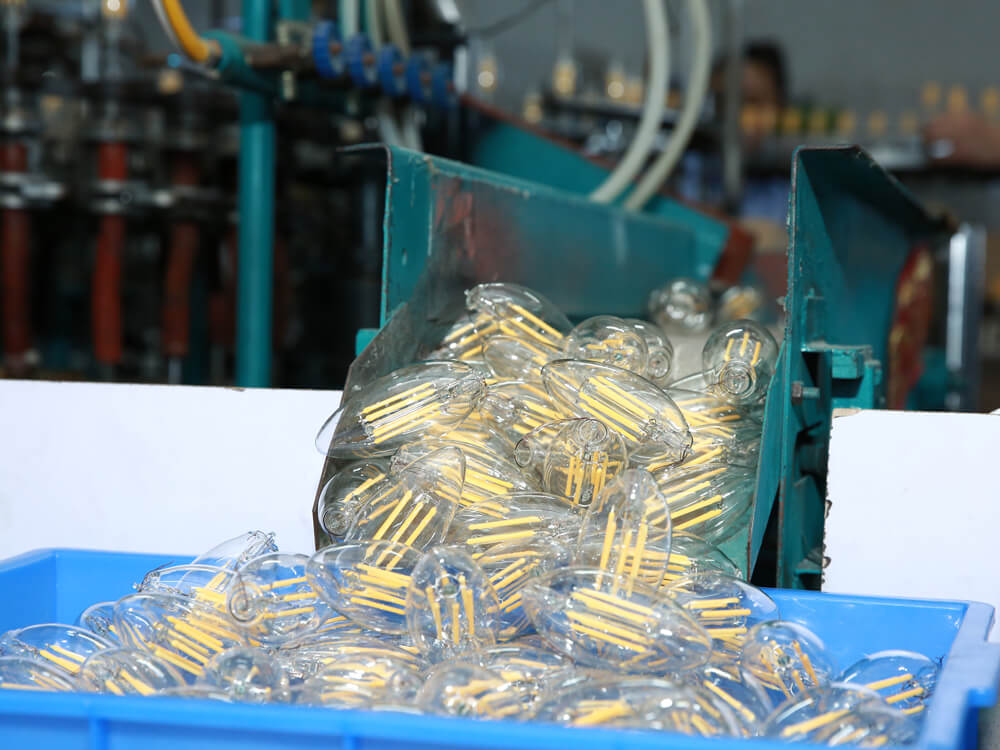
Creating an LED filament lamp is a blend of precision engineering and artisanal care. At facilities like Huiyee Tech’s, every bulb undergoes a rigorous process to ensure quality, with defect rates kept below 0.1%. Here’s how these luminous wonders come to life.
Étape 1: Glass Shell Inspection
The journey begins with the glass bulb shells. Each is 100% inspected using automated vision systems and UV light to detect micro-cracks, bubbles, or thickness inconsistencies. Only flawless shells—typically 98% of the batch—proceed, ensuring durability and thermal performance.
Étape 2: Shell Cleaning
Approved shells are cleaned in ultrasonic baths with deionized water and mild detergents, removing dust and oils. They’re rinsed in pure water cascades and air-dried in cleanrooms to prevent residue, which could cause hotspots or clouding.
Étape 3: Filament and Driver Assembly
Custom LED drivers, optimized for efficiency (power factor >0.9), are designed in-house. Filaments are hand-wound by technicians using micro-tools, arranging LED chips on substrates, and coating them with phosphor for uniform light. Each filament undergoes a 30-minute burn-in test to catch defects. AI vision systems ensure color and brightness consistency.
Étape 4: Bulb Assembly
The driver is fitted into the bulb’s base (E26/E27), connected to filaments via gold-plated contacts for reliability. The assembly is inserted into the glass shell under vacuum, filled with argon gas to prevent oxidation, and sealed with laser fusion or epoxy.
Étape 5: Aging and Testing
Sealed bulbs face 8+ hours of aging tests in environmental chambers, cycling through temperature (-20°C to 60°C), humidité, and voltage stress. Spectrometers monitor lumen output and color fidelity. Only bulbs maintaining 90% brightness pass.
Étape 6: Final Cleaning and Inspection
Bulbs are plasma-cleaned to remove particulates, followed by a second 100% inspection for electrical, photometric, and aesthetic quality. Approved bulbs are packed in foam-lined trays, shrink-wrapped, and batch-sampled for certifications (UL, CE, RoHS).
Étape 7: Shipping
Packaged bulbs are loaded into containers with desiccant packs to prevent moisture damage during global transit. The entire process, spanning 72 hours per batch, balances automation for scale with handcrafted precision for quality, delivering bulbs that shine reliably.
4. Usage Tips: Maximizing Your LED Filament Lamp’s Potential
To keep your LED filament lamps glowing brilliantly, follow these simple precautions to ensure safety, longevity, et performances.
Indoor Use Preferred
These bulbs are not waterproof (IP20 rating), so use them indoors to avoid moisture damage. For outdoor settings like patios, pair with IP65-rated waterproof enclosures to protect against rain or humidity, preserving the 3-5-year lifespan.
Voltage Compatibility
Always match the bulb’s voltage to your region: 120V for the U.S. (E26 base) and 230V for Europe (E27 base). Using a 120V bulb on a 230V grid risks immediate failure. Check labels or use universal-voltage models (100-240V) when available.
Dimmable Bulb Considerations
For dimmable lamps, sélectionnez des gradateurs compatibles TRIAC ou 0-10 V pour éviter le scintillement ou le bourdonnement. Testez les appariements au préalable, et consultez les tableaux de compatibilité des gradateurs de marques comme Leviton ou Lutron pour des performances fluides..
Conseils supplémentaires
Évitez les luminaires entièrement fermés qui emprisonnent la chaleur, car des températures supérieures à 70°C peuvent déclencher un étranglement thermique, sortie de gradation. Nettoyer les ampoules avec un chiffon en microfibre, éviter les produits chimiques agressifs. Recyclez de manière responsable via des programmes locaux de déchets électroniques, car les LED sont sans mercure.
Pour plus d’informations sur l’éclairage ou une assistance technique, contactez-nous à Sales@huiyeetech.com. Laissez-nous vous aider à garder vos espaces brillamment éclairés.
Écrivez à la fin:
Les lampes à incandescence LED sont bien plus que des ampoules : elles constituent un pont entre la vision pionnière d'Edison et la philosophie durable d'aujourd'hui.. Avec leur efficacité énergétique, longue durée de vie, et des conceptions polyvalentes, they’re redefining how we light our world. Ready to make the switch? Start with a single filament bulb and experience the glow that’s captivated designers and homeowners alike.
For custom solutions, bulk orders, or expert advice, reach out at Sales@huiyeetech.com. Here’s to a brighter, greener tomorrow.
