English
 العربية
 Français
 Deutsch
 Italiano
 Polski
 Português
 Русский
 Español
 Українська


Tageslicht vs. Weiche weiße Glühbirnen – welche sollten Sie kaufen??
Die Wahl der richtigen Glühbirne kann das Aussehen und die Atmosphäre Ihres Zuhauses dramatisch verändern. Dennoch kämpfen viele Hausbesitzer immer noch mit einer häufigen Frage:
Sollten Sie sich für eine Tageslichtlampe oder eine weiche weiße Glühbirne entscheiden??
Beide Optionen können eine hervorragende Ausleuchtung bieten, Sie schaffen ganz unterschiedliche Atmosphären und dienen unterschiedlichen Zwecken. Die Unterschiede zwischen der Farbtemperatur verstehen, Helligkeit, und die Farbwiedergabe helfen Ihnen, für jeden Raum in Ihrem Zuhause die beste Wahl zu treffen.
In diesem Ratgeber, Wir erklären Ihnen alles, was Sie über Tageslicht- und sanftweiße LED-Lampen wissen müssen, einschließlich ihrer wichtigsten Unterschiede, ideale Anwendungen, Energieeffizienz, und wie Sie die perfekte Glühbirne für Ihre Bedürfnisse auswählen.
Welche Glühbirne sollten Sie kaufen – Soft White oder Daylight??
Bevor ich den Unterschied erkläre, Ich denke, dass Sie das Bild unten besser verstehen werden:
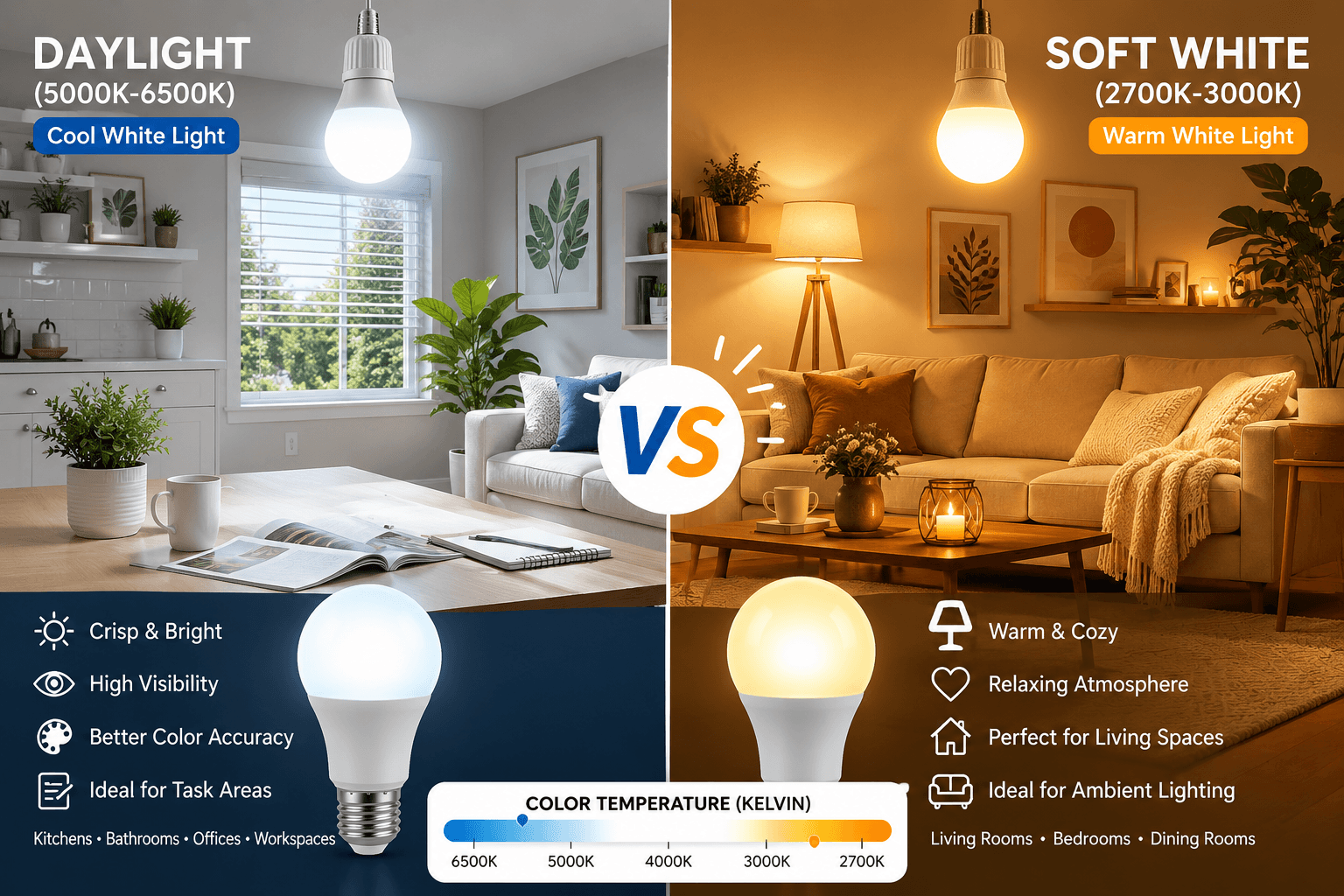
Die Antwort hängt weitgehend davon ab, wo Sie die Glühbirne einsetzen möchten und welche Atmosphäre Sie schaffen möchten.
Obwohl persönliche Vorlieben sicherlich eine Rolle spielen, Einige einfache Richtlinien können Ihnen bei der Auswahl der richtigen Beleuchtung für jeden Raum helfen.
Beginnen wir mit einem Blick auf Tageslichtlampen.
Tageslichtbirnen
Erstens, Es ist wichtig, nicht zu verwechseln Tageslichtlampen mit leuchtend weiße Glühbirnen. Auch wenn sie ähnlich erscheinen mögen, Sie erzeugen deutlich unterschiedliche Lichteffekte.
Tageslicht-LED-Lampen sind so konzipiert, dass sie das natürliche Sonnenlicht so genau wie möglich nachahmen. Sie ergeben eine knusprige Kruste, kühles Licht, das dabei hilft, Farben präzise wiederzugeben und die Sichtbarkeit zu verbessern.
Typischerweise, Tageslichtlampen haben eine Farbtemperatur dazwischen 5000K und 6500K, das dem natürlichen Tageslicht sehr ähnlich ist.
Wo sollten Sie Tageslichtlampen verwenden??
Denn Tageslichtlampen verstärken den Kontrast und verbessern die visuelle Klarheit, Sie sind ideal für Bereiche, in denen detaillierte Aufgaben ausgeführt werden, wie zum Beispiel:
- Heimbüros
- Lernräume
- Schreibtischlampen
- Badezimmer
- Waschküchen
- Workshops
- Garagen
- Küchen
Zum Beispiel, wenn Sie Rezepte lesen, Gemüse hacken, Auftragen von Make-up, oder handwerklich arbeiten, Tageslichtlampen helfen Ihnen, Farben und Details genauer zu sehen.
Warum sich Tageslichtlampen hervorragend für die Farbgenauigkeit eignen
Neben der Farbtemperatur, Ein weiterer wichtiger Faktor ist die Farbwiedergabeindex (CRI).
Der CRI misst, wie genau eine Lichtquelle Farben im Vergleich zum natürlichen Sonnenlicht wiedergibt.
- CRI 80 = Gut
- CRI 90+ = Ausgezeichnet
- CRI 95+ = Farbgenauigkeit auf professionellem Niveau
Eine Tageslichtlampe mit einem CRI oben 90 kann Essen zubereiten, Kleidung, Möbel, und Dekor wirken lebendiger und naturgetreuer.
Wenn es auf eine genaue Farbwahrnehmung ankommt, Wählen Sie immer eine Glühbirne mit Tageslicht-Farbtemperatur und einem hohen CRI-Wert.
Helligkeitsbeispiel
Wenn Sie eine herkömmliche 60-Watt-Glühlampe durch eine Tageslicht-LED-Glühbirne ersetzen, suchen:
- Stromverbrauch: 7–10 Watt
- Helligkeit: 650–800 Lumen
Erinnern, Lumen – nicht Watt – bestimmen, wie hell die Glühbirne erscheint.
Weiche weiße LED-Lampen
Bei Tageslichtlampen hingegen liegt der Schwerpunkt auf Klarheit und Sichtbarkeit, Weiche, weiße Glühbirnen sollen Wärme und Behaglichkeit erzeugen.
Sanftweiße LED-Lampen strahlen ein warmes Licht aus, einladendes Licht, das den Räumen ein gemütliches und entspannendes Gefühl verleiht. Ihre Farbtemperatur liegt typischerweise dazwischen 2700K und 3000K.
Wo sollten Sie weiche weiße Glühbirnen verwenden??
Sanftweiße Glühbirnen sind ideal für Räume, in denen Komfort und Atmosphäre wichtiger sind als Arbeitsbeleuchtung, einschließlich:
- Wohnzimmer
- Schlafzimmer
- Esszimmer
- Familienzimmer
- Flure
- Leseecken
Ihr warmes Licht schafft eine einladende Atmosphäre, die zum Entspannen und Gespräch einlädt.
Aus diesem Grund, Viele Hausbesitzer bevorzugen sanftes weißes Licht in Bereichen, in denen sie nach einem anstrengenden Tag entspannen.
Einschränkungen der weichen weißen Beleuchtung
Obwohl sanfte weiße Glühbirnen hervorragend dazu geeignet sind, Stimmung und Komfort zu schaffen, Für sehr detaillierte Aufgaben sind sie möglicherweise nicht die beste Wahl.
Kleingedrucktes lesen, Präzisionsarbeit leisten, oder das Erkennen subtiler Farbunterschiede kann bei wärmerem Licht schwieriger sein.
Helligkeitsbeispiel
Zum Ersetzen einer 60-Watt-Glühlampe, Wählen Sie eine weiche, weiße LED-Glühbirne mit:
- Stromverbrauch: 7–10 Watt
- Helligkeit: 650–800 Lumen
Genau wie Tageslichtlampen, Die Helligkeit hängt eher von Lumen als von der Wattzahl ab.
LED-Leuchten verstehen
Heute, LED-Lampen sind weltweit die beliebteste Beleuchtungsoption – und das aus gutem Grund.
Obwohl LEDs im Voraus etwas teurer sein können als herkömmliche Glühlampen, Sie bieten erhebliche langfristige Einsparungen.
Längere Lebensdauer
Eine hochwertige LED-Lampe kann lange halten:
- 15,000–50.000 Stunden
Im Vergleich zu:
- 1,000 Stunden für Glühbirnen
Das bedeutet weniger Austausch und geringere Wartungskosten.
Geringerer Energieverbrauch
LED-Lampen verbrauchen deutlich weniger Strom.
Zum Beispiel:
- 60W-Glühbirne = ca. 13 $/Jahr
- Äquivalente LED-Glühbirne = ca. 2 $/Jahr
Infolge, Viele Hausbesitzer amortisieren ihre Anfangsinvestition bereits im ersten Nutzungsjahr.
Wattzahl
Bevor die LED-Technologie zum Mainstream wurde, Verbraucher beurteilten die Helligkeit typischerweise anhand der Wattzahl.
Die allgemeine Annahme war:
Höhere Wattzahl = helleres Licht
Jedoch, das stimmt nicht mehr.
In moderner Beleuchtung, Die Wattzahl gibt einfach an, wie viel Energie eine Glühbirne verbraucht – nicht wie hell sie ist.
daher, beim Vergleich von LED-Lampen, Konzentrieren Sie sich eher auf Lumen als auf Watt.
Lumen (Helligkeit)
Lumen messen die Gesamtmenge des sichtbaren Lichts, das von einer Glühbirne abgegeben wird.
In einfachen Worten:
Mehr Lumen = mehr Helligkeit
Welches ist heller: Tageslicht oder sanftes Weiß?
Viele Menschen gehen davon aus, dass Tageslichtlampen automatisch heller sind als sanftweiße Glühbirnen.
In Wirklichkeit, Die Helligkeit hängt vollständig von der Lumenleistung ab.
Zum Beispiel:
- Tageslichtlampe: 800 Lumen
- Weiche weiße Glühbirne: 800 Lumen
Beide Lampen erzeugen die gleiche Helligkeit.
Jedoch, Tageslichtlampen erscheinen oft heller, weil das menschliche Auge kühlere Farben als intensiver wahrnimmt.
Kelvin (Farbtemperatur)
Der Hauptunterschied zwischen Tageslicht- und sanftweißen Glühbirnen ist ihre Farbtemperatur.
Die Farbtemperatur wird in Kelvin gemessen (K).
Weiches Weiß
- 2700K–3000K
- Warmer gelber Glanz
- Gemütliche und entspannte Atmosphäre
Tageslicht
- 5000K–6500K
- Klares weiß-blaues Licht
- Maximale Sichtbarkeit und Farbgenauigkeit
Schnelle Vergleichstabelle
| Besonderheit | Weiches Weiß | Tageslicht |
|---|---|---|
| Farbtemperatur | 2700K–3000K | 5000K–6500K |
| Aussehen | Warmes Gelb | Kühles Weiß |
| Am besten für | Schlafzimmer, Wohnzimmer, Esszimmer | Küchen, Badezimmer, Büros |
| Stimmung | Entspannend & Gemütlich | Hell & Anregend |
| Farbgenauigkeit | Gut | Exzellent |
| Empfohlener CRI | 90+ | 90+ |
Abschluss
Bei der Wahl zwischen Tageslicht- und sanftweißen Glühbirnen geht es nicht um die Entscheidung, welche besser ist – es geht darum, die richtige Beleuchtung für die richtige Umgebung auszuwählen.
Wenn Sie eine warme wollen, gemütliche Atmosphäre zum Entspannen und Bewirten der Gäste, wählen weiche weiße LED-Lampen (2700K–3000K).
Wenn Sie maximale Sichtbarkeit benötigen, genaue Farben, und bessere Arbeitsbeleuchtung, wählen Tageslicht-LED-Lampen (5000K–6500K).
Unabhängig von der Farbtemperatur, Wir empfehlen dringend, Glühbirnen mit einem zu wählen CRI von 90 oder höher. Lampen mit hohem CRI lassen Farben natürlicher erscheinen, lebendig, und näher an dem, was Sie unter natürlichem Sonnenlicht sehen würden.
Bei Huiyee-Beleuchtung, Unsere Standard-LED-Lampen werden mit hergestellt CRI 90+, Hausbesitzern helfen, Einzelhändler, und Lichthändler liefern eine hervorragende Lichtqualität und ein besseres visuelles Erlebnis.
Häufig gestellte Fragen
Ist weiches Weiß dasselbe wie warmes Weiß??
Nicht ganz.
Obwohl die Begriffe oft synonym verwendet werden, es gibt einen kleinen Unterschied.
- Weiches Weiß: 2700K–3000K
- Warmweiß: 3000K–4000K
Warmweiße Glühbirnen erscheinen etwas weißer und weniger gelb als weiche weiße Glühbirnen.
Was ist besser?: Sanftes Weiß oder Tageslicht?
Keines von beiden ist allgemein besser.
Die beste Wahl hängt von Ihrer Anwendung ab.
Wählen:
- Sanftes Weiß für Komfort und Entspannung.
- Tageslicht für Sichtbarkeit und aufgabenorientierte Aktivitäten.
Sind Tageslicht- und hellweiße Glühbirnen dasselbe??
NEIN.
Hellweiße Glühbirnen liegen typischerweise dazwischen:
- 3500K–4500K
Damit stellen sie einen Mittelweg zwischen sanftweißen Glühbirnen und Tageslichtlampen dar.
Viele Hausbesitzer bevorzugen helles, weißes Licht für die Küche, weil es ein klareres Erscheinungsbild ohne den bläulichen Farbton von Tageslichtlampen bietet.
Sollte ich in der Küche Tageslicht- oder sanftweiße Glühbirnen verwenden??
Für die meisten Küchen, Tageslichtlampen sind die bessere Wahl, da sie die Sicht verbessern und die Essenszubereitung erleichtern.
Jedoch, wenn sich das Tageslicht zu kühl oder blau anfühlt, Eine helle weiße Glühbirne mit etwa 4000 K kann einen hervorragenden Kompromiss darstellen.
Auf der Suche nach hochwertigen LED-Lampen?
Unsere Fabrik stellt eine breite Palette von LED-Beleuchtungsprodukten her, um den unterschiedlichen Beleuchtungsbedürfnissen im privaten und gewerblichen Bereich gerecht zu werden.
Wir bieten:
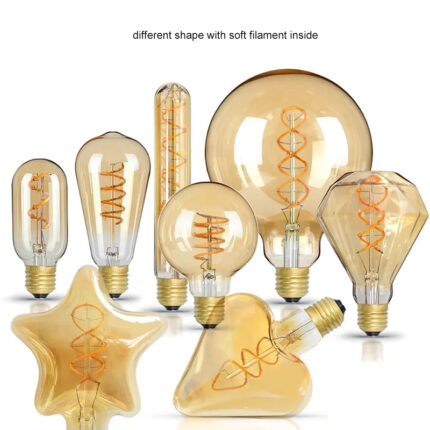
- LED -Filamentbirnen
- A19/60 LED-Lampen
- E26 & E27 LED-Lampen
- Kerzen-LED-Lampen
- Edison-Glühbirnen
- Kugelbirnen
- Röhren-LED-Lampen
- Dekorative LED-Glühbirnen
- Große Dekorzwiebeln
- Dimmbare LED-Lampen
- Intelligente LED-Lampen
- Kundenspezifischer OEM & ODM-Beleuchtungslösungen
Klicken Sie hier für weitere Artikel
Ergänzend zu unserem Standardsortiment, Viele dekorative Glühbirnen können individuell an Ihre spezifischen Anforderungen angepasst werden, inklusive Form, Wattzahl, Farbtemperatur, CRI, Verpackung, Branding, und Zertifizierungsanforderungen.
Ob Sie ein Beleuchtungsgroßhändler sind, Verteiler, Einzelhändler, Amazon-Verkäufer, Projektauftragnehmer, oder Markeninhaber, Wir können Ihnen helfen, Ihre Beleuchtungsideen zum Leben zu erwecken.
Weitere Optionen für LED-Lampen, Bitte besuchen Sie unsere Website. Wenn Sie Fragen haben, individuelle Anforderungen, oder Beschaffungsbedarf, Fühlen Sie sich frei Kontaktieren Sie unser Team direkt. Wir helfen Ihnen gerne dabei, die perfekte Beleuchtungslösung zu finden.
Verwandte Artikel