 English
 العربية
 Français
 Deutsch
 Italiano
 Polski
 Português
 Русский
 Español
 Українська


Können Sie eine LED-Glühbirne mit höherer Wattzahl verwenden?? Alles, was Sie wissen müssen
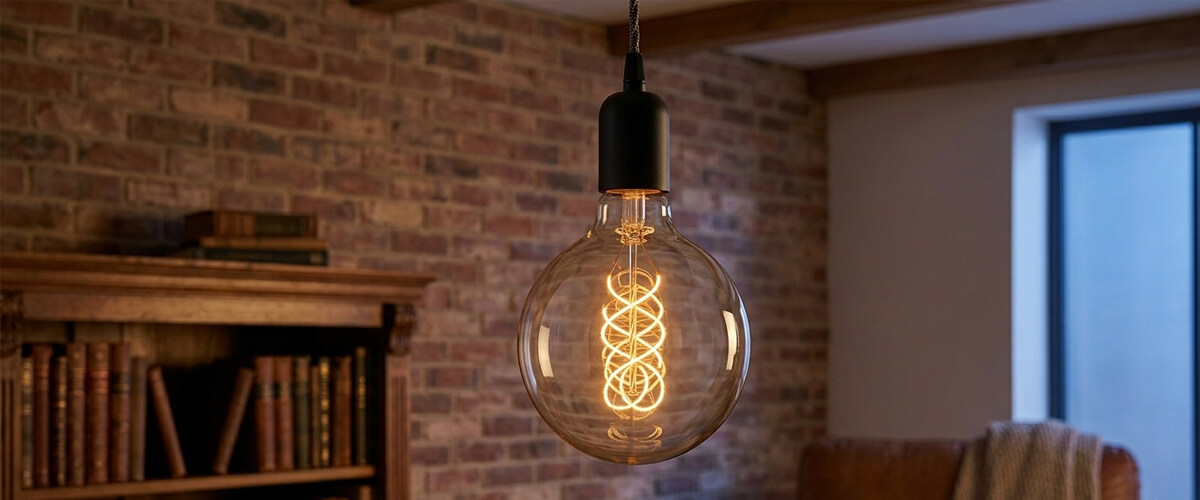
Da immer mehr Hausbesitzer von herkömmlichen Glühlampen auf LED-Beleuchtung umsteigen, Eine Frage taucht immer wieder auf:
Kann ich sicher eine LED-Lampe mit einer höheren Wattzahl verwenden, als meine Leuchte zulässt??
Die kurze Antwort lautet Ja– in den meisten Fällen, du kannst.
Jedoch, Es gibt ein paar wichtige Details, die Sie wissen sollten, bevor Sie sich für eine hellere LED-Lampe entscheiden. In diesem Ratgeber, Wir erklären, wie Wattäquivalente funktionieren, warum LEDs so energieeffizient sind, wie man die richtige Helligkeit wählt, und welche Rolle CRI für die Lichtqualität spielt.
Können Sie eine LED-Glühbirne mit höherer Wattzahl verwenden??
Ja, Sie können eine LED-Lampe mit einer höheren Wattzahl als der Nennleistung Ihrer Leuchte verwenden – solange der tatsächliche Stromverbrauch der LED unter der maximalen Wattzahlgrenze der Leuchte liegt.
Hier geraten viele Menschen in Verwirrung.
Zum Beispiel, wenn Sie ein Paket mit der Aufschrift sehen “100W-äquivalente LED,” das tut es nicht bedeuten, dass die Glühbirne verbraucht 100 Watt Strom.
Stattdessen, es bedeutet einfach, dass die LED ungefähr die gleiche Helligkeit erzeugt wie eine herkömmliche 100-Watt-Glühbirne, bei deutlich geringerem Energieverbrauch.
Hier ist ein einfaches Beispiel:
| Glühbirnentyp | Helligkeit | Tatsächlicher Stromverbrauch |
|---|---|---|
| 60W Glühlampe | Um 800 Lumen | 60W |
| 9W-LED | Um 800 Lumen | 9W |
| 14W-LED | Um 1,600 Lumen | 14W |
| 20W-LED | Um 2,600 Lumen | 20–30W (je nach Modell) |
Denn LED-Lampen verbrauchen deutlich weniger Strom, Sie erzeugen deutlich weniger Wärme als Glühbirnen.
Warum die Nennleistung von Geräten immer noch wichtig ist
Möglicherweise ist Ihnen in Ihrer Leuchte ein Etikett aufgefallen, auf dem steht::
“Maximal 60 Watt.”
Ursprünglich, Diese Warnung wurde für entwickelt Glühbirnen, die den Großteil ihrer Energie in Wärme und nicht in Licht umwandeln. Übermäßige Hitze kann die Steckdose beschädigen, Verdrahtung, oder Vorrichtung.
Glücklicherweise, LED-Lampen arbeiten viel kühler.
Zum Beispiel, Installation eines 100W-äquivalente LED das verbraucht eigentlich nur 14 Watt ist im Allgemeinen sicher in einer Vorrichtung, die dafür ausgelegt ist 60 Watt, weil die tatsächliche elektrische Belastung deutlich unter dem Grenzwert des Geräts bleibt.
Jedoch, Es gibt eine wichtige Ausnahme.
Einige Hochleistungs-LED-Lampen sind es Nicht für geschlossene Leuchten geeignet oder sehr kleine Leuchten.
Allerdings erzeugen LEDs deutlich weniger Wärme als Glühbirnen, Sie erzeugen immer noch Wärme in ihrem elektronischen Treiber. In geschlossenen Räumen mit schlechter Belüftung, die Wärme kann nicht effizient entweichen, Dadurch altern die LED-Komponenten schneller.
Zum Beispiel, mit a 14W (100W-Äquivalent) Eine LED-Glühbirne in einer kompakten, geschlossenen Fassung, die für kleinere Lampen konzipiert ist, kann die Lebensdauer der Glühbirne verkürzen, obwohl die Wattzahl innerhalb der sicheren elektrischen Grenze liegt.
Tipp: Überprüfen Sie immer, ob die LED-Lampe dafür geeignet ist Verwendung bei geschlossener Vorrichtung vor der Installation.
Warum sind LED-Lampen so energieeffizient??
Einer der größten Vorteile der LED-Technologie ist ihre unglaubliche Energieeffizienz.
Herkömmliche Glühbirnen erzeugen Licht, indem sie einen Wolframfaden erhitzen, bis er leuchtet. Bedauerlicherweise, Der größte Teil des Stroms wird in umgewandelt Hitze, nicht sichtbares Licht.
Tatsächlich, Nur ein kleiner Teil der Energie wird tatsächlich zur nutzbaren Beleuchtung.
LED-Lampen funktionieren sehr unterschiedlich.
Anstatt Licht durch Wärme zu erzeugen, LEDs erzeugen Licht mittels Halbleitertechnologie. Infolge, Sie erzeugen sehr wenig Infrarot- oder Ultraviolettstrahlung und wandeln einen viel höheren Prozentsatz der Elektrizität direkt in sichtbares Licht um.
Das bedeutet, dass LED-Lampen mehrere große Vorteile bieten:
- Bis zu verwenden 80–90 % weniger Strom
- Produzieren Sie deutlich weniger Wärme
- Hält deutlich länger
- Niedrigere Stromrechnungen
- Reduzieren Sie Wartungs- und Austauschkosten
Aus diesem Grund ist LED-Beleuchtung zur bevorzugten Wahl für Privathaushalte geworden, Büros, Hotels, Restaurants, und Gewerbebauten weltweit.
Kaufen Sie nicht nach Watt, sondern nach Lumen
Beim Kauf von LED-Leuchtmitteln, Die Helligkeit wird in Lumen gemessen, nicht Watt.
Watt gibt an, wie viel Strom eine Glühbirne verbraucht.
Lumen geben an, wie viel Licht tatsächlich erzeugt wird.
Hier ist eine kurze Referenz:
| LED-Lumen | Ungefähres Glühlampenäquivalent |
|---|---|
| 450 lm | 40W |
| 800 lm | 60W |
| 1,100 lm | 75W |
| 1,600 lm | 100W |
| 2,600 lm | 150W |
Zum Beispiel:
- Ein 800-Lumen-LED Bietet ungefähr die gleiche Helligkeit wie ein herkömmliches 60W-Glühbirne, während der Verwendung nur um 8–10 Watt.
- A 2,600-Lumen-LED kann a ersetzen 150W-Glühbirne, verbraucht jedoch typischerweise nur 20–30 Watt.
Solange die tatsächliche Wattleistung der LED unter der maximalen Nennleistung Ihrer Leuchte bleibt und die Glühbirne für den Leuchtentyp geeignet ist, Sie können sicher viel hellere Beleuchtung genießen, ohne den Energieverbrauch dramatisch zu erhöhen.
Helligkeit ist nicht alles – entscheiden Sie sich für eine LED mit hohem CRI
Helligkeit ist nur ein Teil einer guten Beleuchtung.
Der Farbwiedergabeindex (CRI) misst, wie genau eine Lichtquelle die wahren Farben von Objekten im Vergleich zum natürlichen Tageslicht wiedergibt.
Ein höherer CRI lässt Farben satter erscheinen, lebendiger, und natürlicher. Hier machen wir einen Vergleich für verschiedene CRI-Daten, damit Sie dieses Datum vielleicht besser verstehen.
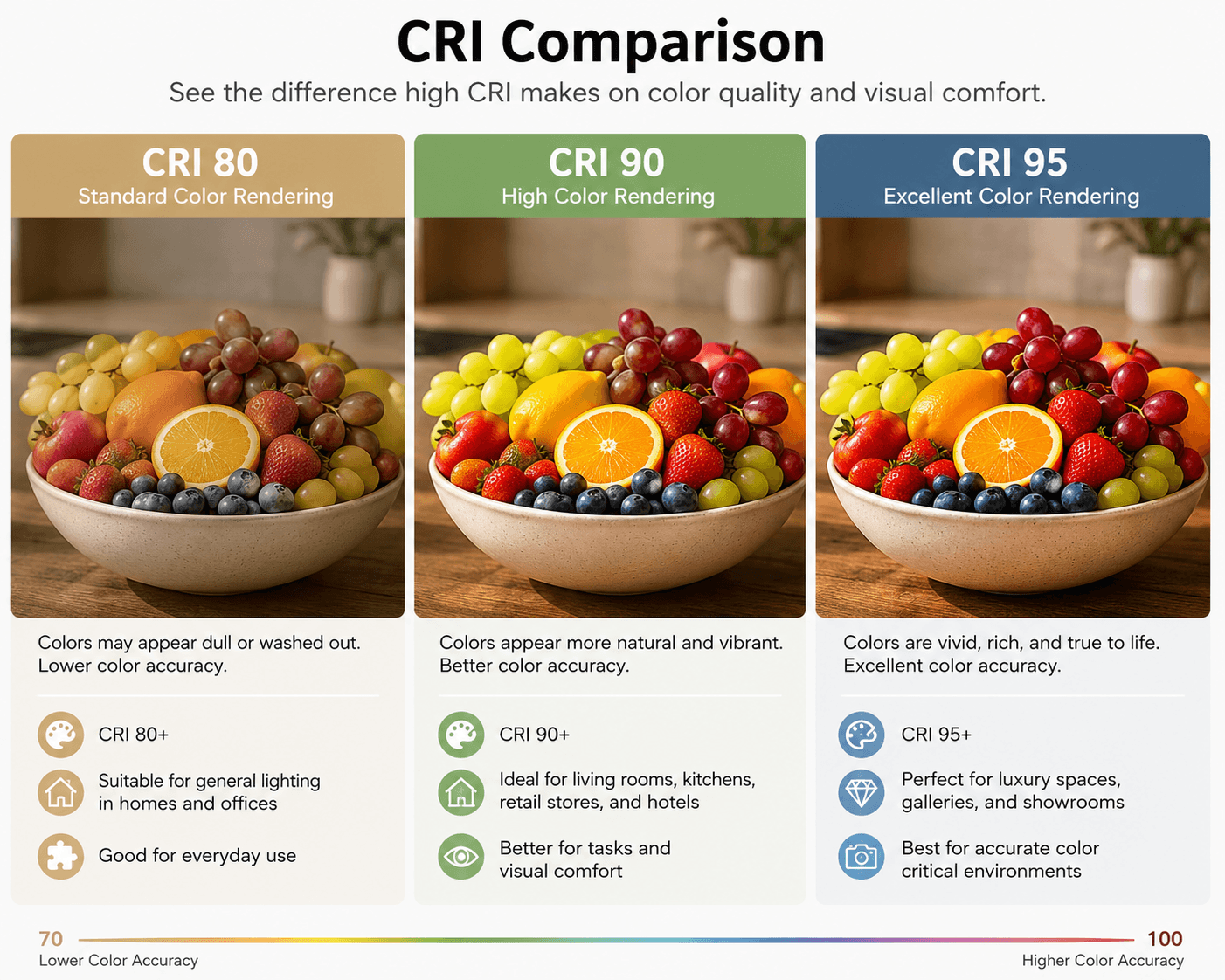
Allgemein gesprochen:
- CRI 80: Geeignet für Garagen, Lagerhäuser, und Versorgungsflächen.
- CRI 90+: Hervorragend geeignet für Küchen, Wohnzimmer, Schlafzimmer, Büros, Einzelhandelsgeschäfte, und Gastronomiebereiche.
- CRI 95+: Erstklassige Lichtqualität für die Fotografie, Kunstwerk, Luxuseinzelhandel, und professionelle Anwendungen.
Wenn Sie möchten, dass sich Ihr Zuhause heller anfühlt, komfortabler, und natürlicher, Auswahl eines CRI 90+ LED-Glühbirne ist sehr zu empfehlen.
Häufig gestellte Fragen (FAQ)
1. Kann ich eine 100-W-äquivalente LED-Lampe in einer Leuchte mit einer Nennleistung von 60 W verwenden??
Ja. Wenn die LED-Lampe nur ca. verbraucht 14 Watt, Es ist im Allgemeinen sicher, da sich die Gerätebewertung darauf bezieht tatsächlichen Stromverbrauch, nicht Glühlampenäquivalente Helligkeit. Stellen Sie einfach sicher, dass die Glühbirne gegebenenfalls für geschlossene Leuchten geeignet ist.
2. Wird eine LED mit höherer Wattzahl meine Stromrechnung erhöhen??
Nicht wesentlich. Ein höheres Wattäquivalent bedeutet einfach, dass die Glühbirne mehr Licht erzeugt. Sogar ein 150W-äquivalente LED verwendet normalerweise nur 20–30 Watt, Damit ist es weitaus effizienter als herkömmliche Glühlampenbeleuchtung.
3. Worauf sollte ich beim Kauf von LED-Leuchtmitteln achten??
Außer Helligkeit (Lumen), halten:
- Tatsächliche Wattzahl
- Farbtemperatur (Warmweiß, Neutralweiß, oder Tageslicht)
- CRI-Bewertung (Wählen Sie CRI 90+ wann immer möglich)
- Ob die Glühbirne dimmbar ist
- Ob es für geschlossene Leuchten geeignet ist
- Basistyp (E26, E27, E12, E14, usw.)
Die Wahl der richtigen Kombination sorgt für eine bessere Leistung, Komfort, und längere Lebensdauer.
Auf der Suche nach hochwertigen LED-Lampen?
Bei Huiyee-Beleuchtung, Wir sind auf die Herstellung hochwertiger LED-Lampen für Kunden auf der ganzen Welt spezialisiert.
Unsere Produkte zeichnen sich aus:
- ✔ Hoch CRI 90+ für natürlich, lebendige Farben
- ✔ Hervorragende Energieeffizienz
- ✔ Lange Lebensdauer
- ✔ Stabile Helligkeit mit minimalem Flimmern
- ✔ Mehrere Wattagen, Farbtemperaturen, und Basisoptionen
- ✔ OEM & ODM-Anpassungsdienste
- ✔ Strenge Qualitätskontrolle und internationale Zertifizierungen
Ob Sie ein Großhändler sind, Verteiler, Einzelhändler, oder Projektunternehmer, Wir bieten zuverlässige LED-Beleuchtungslösungen, die durch professionelle Fertigung und reaktionsschnellen Kundensupport unterstützt werden. Und wir sind seit mehr als in diesem Beleuchtungsbereich tätig 10 Jahre, Wir sind reich im Exportgeschäft
Kontaktieren Sie uns Erfahren Sie noch heute mehr über unsere hochwertigen LED-Lampen und entdecken Sie die perfekte Beleuchtungslösung für Ihr Unternehmen.
Letzte Gedanken
In der Regel wird eine LED-Glühbirne mit höherer Wattzahl verwendet sicher und praktisch, vorausgesetzt die Glühbirne tatsächlichen Stromverbrauch bleibt unter der maximalen Wattzahl Ihres Geräts.
Anstatt sich nur auf die Wattzahl zu konzentrieren, vergleichen Lumen Helligkeit zu bestimmen, Überprüfen Sie die Kompatibilität mit beiliegenden Vorrichtungen, und wählen CRI 90+ Glühbirnen für überragende Farbgenauigkeit und Sehkomfort.
Indem wir diese einfachen Prinzipien verstehen, Sie können heller genießen, Effizientere Beleuchtung bei gleichzeitiger Reduzierung der Energiekosten und Verlängerung der Lebensdauer Ihres Beleuchtungssystems. Heutzutage in hochwertige LED-Lampen zu investieren, bedeutet eine bessere Leistung, größere Einsparungen, und ein komfortableres Zuhause für die kommenden Jahre.