 English
 العربية
 Français
 Deutsch
 Italiano
 Polski
 Português
 Русский
 Español
 Українська


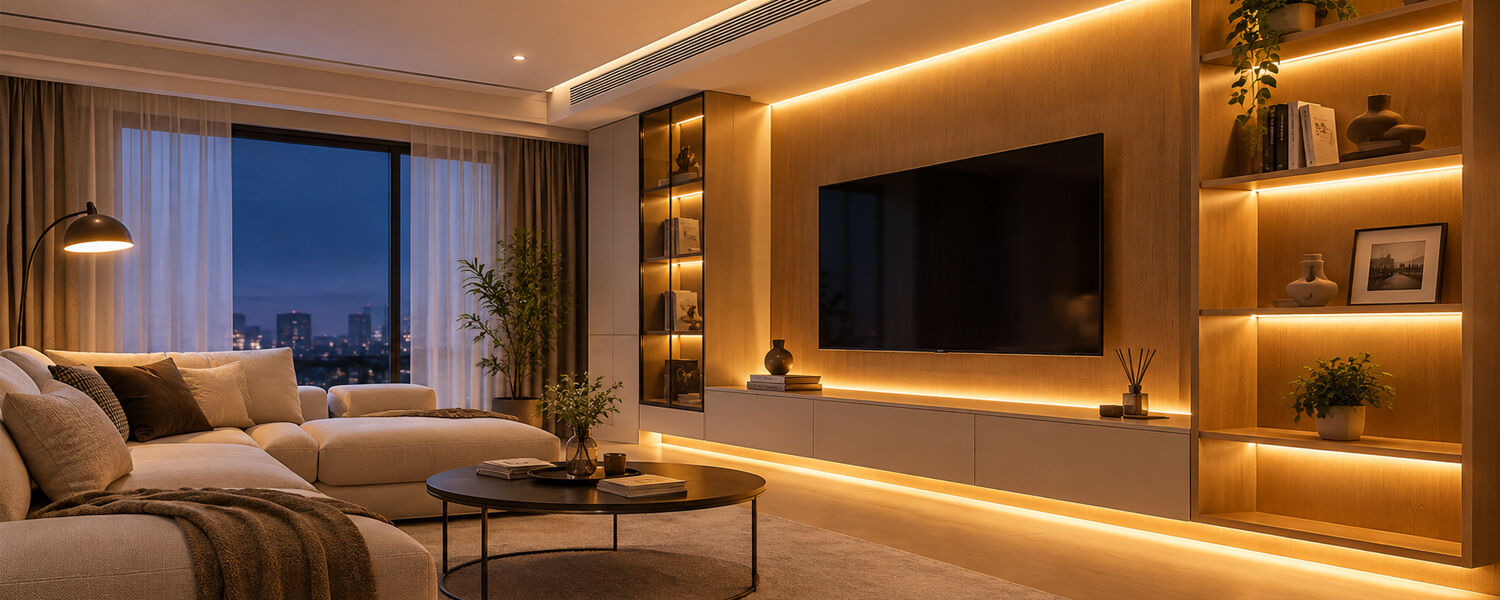
A well-lit closet makes it easier to organize clothes, find accessories, and choose the right outfit. However, many closets have limited natural light, leaving shelves, drawers, and hanging areas poorly illuminated. Fortunately, the right lighting can make even a small wardrobe brighter, more organized, and more attractive.
Today, many options can improve closet lighting. For example, you can install flexible LED strip lights beneath shelves, add motion-sensor lights inside cabinets, or use pendant fixtures to create a decorative focal point. Each option offers different benefits depending on your closet size, installation needs, and preferred interior style.
Among these solutions, an LED light strip is particularly versatile. Its slim profile allows it to fit into narrow spaces, while its flexible design makes it suitable for shelves, wardrobe edges, drawers, and display compartments. In addition, options such as 12V LED strip lights and battery LED strip lights provide greater flexibility when planning an installation.
In this guide, we will explore 13 practical closet lighting ideas, explain how to choose suitable lighting products, and answer common questions about wardrobe illumination. Whether you are updating a small closet or designing a spacious walk-in wardrobe, these ideas will help you create a lighting setup that combines functionality and style.
13 Brilliant Closet Lighting Ideas
Stick-on Closet LED Strip Lights
If you want to improve closet lighting without undertaking a major renovation, stick-on LED strip lights are an excellent starting point. Thanks to their slim profile, they fit neatly beneath shelves, along wardrobe edges, and inside drawers.
For example, installing an LED light strip beneath each shelf can illuminate folded clothes, handbags, and accessories. Alternatively, placing the strip along the sides of a wardrobe can improve visibility when selecting clothes. As a result, you can make better use of dark or hard-to-reach storage areas.
Many LED strip lights come with an adhesive backing, making installation relatively straightforward on clean, suitable surfaces. Furthermore, flexible strips can follow straight edges and certain corners, allowing you to create a tidy lighting layout.
For a more refined appearance, consider using LED strips with a compatible diffuser. This helps soften the light and can reduce the visibility of individual LED points.
Before choosing your lighting, consider the following factors:
- Brightness: Select an appropriate light output based on the size, depth, and layout of your closet.
- Color temperature: Warm white creates a comfortable atmosphere, while neutral white can provide a balanced appearance for everyday dressing.
- Power supply: Wired, USB-powered, and battery-powered options suit different installation conditions.
- Installation method: Check the strip length, adhesive quality, cutting points, and mounting requirements.
- Control options: Dimmers and motion sensors can make everyday use more convenient.
For homeowners, property developers, and lighting distributors, LED strip lights offer a flexible solution for improving wardrobe illumination. In addition, their variety of lengths, colors, and control options makes them suitable for different residential and commercial projects.
Opt for a Pendant Light with Character
While LED strip lighting is excellent for illuminating shelves, pendant lights can add personality to a closet. They provide general illumination while serving as decorative features, making them particularly suitable for walk-in closets and dressing rooms.
For example, a geometric pendant can complement a modern interior, whereas a brass or glass fixture may create a more elegant appearance. By matching the fixture to the wardrobe finishes and overall decor, you can achieve a more cohesive design.
However, pendant lights are not suitable for every closet. In smaller spaces, an oversized fixture may obstruct movement or make the room feel crowded. Therefore, consider the ceiling height, available floor space, and fixture dimensions before making a selection.
Moreover, a pendant light alone may not illuminate the inside of deep cabinets effectively. To address this issue, combine the pendant with LED strip lights beneath shelves or along wardrobe sides. This layered approach provides general illumination while making individual storage areas easier to see.
When selecting a pendant, also check its brightness, bulb compatibility, dimming options, and installation requirements. These details help ensure that the fixture meets both your decorative and practical needs.
Try a Trio of Pendants
For a larger walk-in closet, three pendant lights arranged in a row can create a balanced and visually appealing lighting scheme.
This arrangement works particularly well in long dressing rooms, spaces with a central island, or closets with symmetrical wardrobe units. In addition, using coordinated fixtures helps maintain a consistent design throughout the room.
To achieve the best result, choose pendants with complementary shapes, finishes, and proportions. Then, plan their spacing according to the room dimensions and the areas that require the most light.
Nevertheless, overhead lighting can leave shadows behind hanging clothes or inside deep shelves. Therefore, it is worth supplementing the pendants with LED strip lights installed inside the wardrobe.
For example, concealed strips beneath shelves can illuminate folded garments, while vertical LED lighting can improve visibility along hanging sections. Together, these lighting options create a more practical and comfortable dressing environment.
Create a Pool of Light with a Chandelier
A chandelier can transform a walk-in closet into a more luxurious dressing space. Besides providing general illumination, it introduces a decorative focal point that can make the room feel more sophisticated.
For example, a modern chandelier suits a minimalist wardrobe, while a crystal or brass design may complement a more traditional interior. However, the fixture should be proportionate to the room rather than overpowering the available space.
Brightness and light distribution are equally important. Although a chandelier may illuminate the center of the room, it may not provide sufficient light inside cabinets or beneath shelves.
For this reason, combining a chandelier with an LED light strip is often a practical choice. The chandelier provides overall illumination, while the strip lighting targets darker storage areas.
Furthermore, dimmable lighting can help you adjust the atmosphere for different activities, provided that the fixture, bulb, and dimmer are compatible. You can use brighter settings when selecting clothes and lower settings when you prefer a softer evening atmosphere.
Before installation, check the ceiling height, fixture dimensions, electrical requirements, and mounting support. These considerations help ensure that the chandelier is both attractive and suitable for everyday use.
Go Vintage
Vintage lighting is an excellent option for closets with rustic, industrial, or traditional interiors. With the right fixture, you can introduce warmth and character without making extensive changes to the wardrobe.
For instance, an antique-style wall lamp, a brass pendant, or a vintage-inspired ceiling fixture can complement wooden cabinets and classic hardware. In addition, warm white lighting often enhances these finishes by creating a comfortable, inviting atmosphere.
However, decorative appeal should not come at the expense of visibility. If you frequently coordinate clothing colors, consider the light source’s color rendering performance as well as its color temperature.
You do not need to use vintage fixtures throughout the entire closet. Instead, combine one decorative light with discreet LED strip lights to balance style and functionality.
For example, an LED strip installed beneath a wooden shelf can highlight the material’s natural texture while making stored items easier to find. Similarly, concealed lighting inside a display cabinet can draw attention to handbags, shoes, or accessories.
When selecting vintage-style fixtures, pay attention to heat management, electrical safety, and the manufacturer’s installation instructions. For enclosed or compact wardrobe spaces, choose products specifically suited to the intended application.
Add a Skylight
Natural light can make a closet feel brighter and more spacious. If the building design allows it, a skylight can introduce daylight into a walk-in closet or dressing room.
One advantage of natural light is that it can help you assess clothing colors during the day. Nevertheless, the amount of daylight depends on the skylight’s position, the weather, and the building’s orientation.
In addition, direct sunlight may cause fabrics and other stored items to fade over time. Appropriate glazing, shading, and placement can help manage this risk.
Even with a skylight, artificial lighting remains essential. After all, closets still need sufficient illumination in the evening, on cloudy days, and in areas that receive little daylight.
Therefore, consider combining natural light with LED strip lights inside the wardrobe. This arrangement provides more consistent visibility when daylight is insufficient.
If installing a skylight is impractical or too expensive, you can achieve a similar sense of brightness by using layered artificial lighting. For example, combine ceiling fixtures with under-shelf strips and vertical wardrobe lights to reduce dark areas throughout the space.
Use Mirrors to Bounce Light
Mirrors can make a closet appear larger and help distribute existing light throughout the space. For this reason, they are particularly useful in compact wardrobes and dressing rooms.
A full-length mirror allows you to check an outfit while reflecting light from nearby fixtures. Similarly, mirrored wardrobe doors can make a small room feel more open.
However, mirrors do not generate additional light. Their effectiveness depends on the position, direction, and brightness of the original light source.
To make the most of this effect, position lighting where it can illuminate the wardrobe without creating uncomfortable glare in the mirror. For example, LED strip lights installed along the sides of a cabinet can provide supplementary illumination while maintaining a clean appearance.
In addition, using a compatible diffuser can help soften the light and reduce harsh reflections. You can also illuminate shelves or display compartments to highlight handbags, shoes, and decorative accessories.
By combining mirrors with well-positioned LED lighting, you can create a closet that feels brighter, looks more organized, and makes better use of the available space.
Hang Sconces
Wall sconces are a practical choice when you need localized lighting or want to introduce a decorative feature into your closet. They work particularly well beside a mirror, near a dressing table, or along a wall that lacks sufficient illumination.
For the best result, choose a fixture that directs light toward the intended area. Diffused lighting can also help reduce harsh shadows when you are checking your appearance.
If you are designing a new wardrobe or renovating an existing space, plan the wiring and fixture positions before installation. Doing so can reduce the need for additional electrical work later.
However, wall sconces may not illuminate deep wardrobes evenly. To overcome this limitation, combine them with an LED light strip installed inside the cabinet. The sconces provide decorative or task lighting, while the strip illuminates shelves and hanging areas.
When selecting wall sconces, consider their dimensions, mounting position, light distribution, and compatibility with the available electrical supply. For smaller closets, slim fixtures are often more practical than bulky designs.
Ultimately, the right combination depends on whether you prioritize decorative appeal, functional lighting, or a balance of both.
Think of Lighting as Jewelry
Lighting can serve as both a functional feature and a decorative accessory. Just as carefully chosen details complete an outfit, the right fixture can give a closet a distinctive appearance.
For example, a sculptural pendant, a geometric chandelier, or a modern linear fixture can become a focal point without changing the wardrobe itself. Nevertheless, the fixture should complement the surrounding finishes rather than compete with them.
Consider the cabinet colors, handles, flooring, and overall interior style before selecting a decorative light. This helps create a more coordinated appearance.
Meanwhile, LED strip lights can highlight architectural details without adding visual clutter. Installing a strip beneath floating shelves, around display niches, or along selected cabinet edges creates depth and emphasizes the wardrobe’s design.
If you prefer a modern, integrated look, concealed lighting is especially effective because the light source remains less visible. Moreover, dimmable LED strip lighting allows you to adjust brightness according to the time of day and the intended use of the space.
By combining decorative fixtures with subtle accent lighting, you can create a closet that reflects your personal style while remaining practical for everyday use.
Use Vertical Lighting in a Large Closet
Vertical lighting is one of the most practical solutions for large wardrobes because it can illuminate clothing along its full length.
When light comes only from above, hanging clothes may block the beam and create dark areas toward the back of the closet. In contrast, vertical lighting distributes illumination along the sides or front edges of the wardrobe, making individual garments easier to see.
There are several ways to achieve this effect. For example, you can install slim LED bars, recessed vertical fixtures, or LED strip lights inside suitable mounting channels.
For a clean, built-in appearance, an LED light strip with a compatible diffuser can create a continuous line of light. This design works particularly well in modern wardrobes with flat cabinet doors and simple finishes.
Before installation, consider the following factors:
- Placement: Position the lights so that hanging clothes do not block most of the illumination.
- Diffusion: Use a suitable cover to create smoother light and protect the strip where required.
- Brightness: Choose an output appropriate for the wardrobe’s depth and layout.
- Color rendering: A high color rendering index, or CRI, helps clothing colors appear more accurate.
- Maintenance: Keep the power supply and electrical connections accessible for inspection and servicing.
For larger closets, combine vertical wardrobe lighting with ceiling fixtures. This arrangement provides general illumination while improving visibility inside individual storage areas.
In addition, consider whether a wired or low-voltage lighting system is more suitable for the project. For example, 12V LED strip lights may be appropriate for certain installations when paired with a compatible power supply and correctly rated components.
Amp Up Your Natural Glow
Good closet lighting should help you see clothing colors clearly while creating a comfortable environment. To achieve this, consider both color temperature and color rendering.
Color temperature describes whether light appears warm or cool. Warm white lighting, typically around 2700K to 3000K, creates a softer and more relaxed atmosphere. By comparison, neutral white lighting, around 3500K to 4000K, provides a more balanced appearance for everyday dressing.
However, color temperature alone does not determine how accurately clothing colors appear. The color rendering index is also important.
If color accuracy is a priority, consider LED products with a CRI of 90 or higher. This can be particularly useful when coordinating outfits, checking fabric colors, or displaying clothing in a dressing room.
In addition, avoid relying on a single strong light source directly above the mirror, as it may create unwanted shadows on the face. Instead, use balanced lighting around the mirror and supplement it with LED strip lights inside the wardrobe.
For commercial projects, such as boutique dressing rooms, hotel wardrobes, and retail display areas, consistent color temperatures and suitable color rendering can help create a more uniform lighting experience across multiple spaces.
Therefore, when choosing closet lighting, evaluate the complete lighting setup rather than focusing on brightness alone.
Bring in a Wow Factor for Your Closet
You do not need a major renovation to give your closet a distinctive appearance. In many cases, a statement fixture or a carefully planned LED strip installation is enough.
For example, a decorative pendant can add personality to a simple walk-in closet. Alternatively, concealed LED strips can highlight the edges of floating shelves, display compartments, or open wardrobe sections.
If you prefer a contemporary style, consider indirect lighting. By placing the LED strip where light reflects off a nearby surface rather than shining directly into the room, you can create a softer visual effect and emphasize the wardrobe’s shape.
Color-changing LED strip lights are another option for homeowners who want greater control over the atmosphere. Depending on the product, users may be able to adjust the color, brightness, and lighting effects.
Nevertheless, practical lighting should remain the priority. Although decorative colors can create an attractive atmosphere, warm white or neutral white light is generally more suitable for checking clothing colors.
For greater flexibility, consider lighting products with compatible dimmers or controllers. Before purchasing, confirm that the strip, controller, and power supply support the desired functions.
By combining a statement fixture with functional strip lighting, you can create a closet that reflects your personal style without compromising everyday usability.
Put a Table Lamp in the Closet
If your closet includes a dressing table, countertop, or open shelving area, a table lamp can provide additional light while serving as a decorative accessory.
A compact table lamp works particularly well on a vanity or dresser, especially when you need localized illumination for accessories and personal items. Furthermore, a lamp with a suitable shade can soften the light and complement the surrounding furniture.
However, table lamps are not always practical in narrow closets. They occupy valuable surface space and require a suitable power outlet.
If space is limited, an LED light strip installed beneath a shelf may be a better alternative. It illuminates the area without taking up room on the countertop.
You can also combine a table lamp with ceiling lighting or vertical wardrobe lights for more balanced coverage.
Ultimately, the best choice depends on your closet layout, available power sources, and daily lighting needs. By considering these factors together, you can select a solution that balances convenience, appearance, and functionality.
FAQs About Wardrobe Lighting Ideas
What Type of Light Bulbs Are Not Allowed in Closets?
Whether a light bulb or fixture is permitted in a closet depends on the applicable electrical code, the fixture design, and the installation location.
Incandescent bulbs and other light sources that generate substantial heat require particular care around clothing, paper, and other combustible materials. For many modern closet applications, LED lighting is a practical alternative because it generally consumes less energy and produces less heat than comparable incandescent lighting.
However, LED products are not automatically suitable for every location. Fixtures must be installed according to their instructions and applicable safety requirements.
For example, avoid using damaged or unsuitable fixtures where they may come into contact with stored items. In addition, maintain the required clearance between the fixture and clothing or other combustible materials.
If you are selecting lighting for a residential project, check the local electrical code and consult a qualified electrician when necessary. Requirements can vary depending on the location and type of installation.
What Is the Closet Lighting Trend for 2026?
Closet lighting in 2026 emphasizes clean designs, convenient controls, and lighting that integrates with the wardrobe rather than standing out unnecessarily.
Several approaches are worth considering when planning a modern closet:
- COB LED strip lights: These can provide a more continuous appearance than conventional strips with clearly visible LED points.
- Vertical wardrobe lighting: Slim fixtures illuminate hanging clothes and help reduce dark areas.
- Motion-sensor LED lights: Automatic activation can make closets easier to use without searching for a switch.
- Warm and neutral white lighting: Different color temperatures help create the desired atmosphere and improve everyday visibility.
- Statement fixtures: Pendants and chandeliers add character to walk-in closets and dressing rooms.
- Hidden lighting channels: Recessed or concealed strips create a neat, integrated appearance.
- Battery LED strip lights: These can be useful in wardrobes where access to a wired power supply is limited.
Importantly, these options do not have to be used separately. For example, a walk-in closet can combine a ceiling fixture for general illumination, vertical LED lights for hanging clothes, and motion-sensor strip lighting inside drawers.
When choosing products, consider installation requirements, maintenance, power consumption, and the intended use of the space rather than following trends alone.
For lighting manufacturers and wholesale buyers, these applications also provide opportunities to offer different product configurations for residential, hospitality, and furniture-related projects.
What Is the Best Closet Lighting?
The best closet lighting depends on the size of the space, the wardrobe layout, and the type of illumination required. In many cases, combining general lighting with targeted LED lighting provides the most practical result.
For small closets: Battery-powered lights or compact LED strip lights can illuminate shelves without requiring extensive wiring.
For wardrobes with multiple shelves: LED strip lights installed beneath shelves improve visibility and make stored items easier to find.
For large walk-in closets: Combine ceiling fixtures with vertical wardrobe lighting and task lighting around mirrors or dressing tables.
For decorative closets: Pendant lights, chandeliers, and wall sconces can establish the interior style, while concealed LED strips provide practical illumination.
For frequently used wardrobes: Motion-sensor lighting can improve convenience by switching on automatically when movement is detected or when a door opens, depending on the product.
When selecting an LED light strip, check its brightness, color temperature, CRI, power requirements, installation method, and compatibility with any dimmer or sensor.
For a comfortable appearance, warm white around 2700K to 3000K is a common choice. Alternatively, consider approximately 3500K to 4000K for a more neutral appearance.
There is no single lighting setup that suits every closet. Therefore, the most effective design is one that provides sufficient illumination, minimizes shadows, and matches the way the space is used.
How Do You Install LED Strip Lights in a Closet?
Installing LED strip lights is usually straightforward. Nevertheless, careful preparation is essential for a neat, reliable installation.
Measure the installation area. First, determine the required length for each shelf, wardrobe side, or hanging section. Plan the layout before cutting or attaching the strips.
Choose a suitable power supply. Next, check whether the strip requires a USB adapter, a dedicated DC power supply, or batteries. The voltage and electrical ratings must match the product specifications.
Prepare the surface. Clean and dry the mounting area before applying adhesive-backed strips. If the surface is unsuitable for adhesive mounting, consider compatible clips or an aluminum channel.
Position the lights. Install the strip where it can illuminate clothing or shelves effectively without producing excessive glare.
Connect the components. If the installation requires multiple strip sections, use compatible LED strip connectors or soldered connections as specified by the manufacturer.
Test before finishing. Finally, confirm that the lighting works correctly and that the connections are secure before concealing the wiring or closing the installation channel.
For safety, always follow the manufacturer’s installation instructions. Do not exceed the power supply’s rated capacity, and use components that are suitable for the intended environment.
If the installation involves mains wiring or modifications to the building’s electrical system, consult a qualified electrician.
Are Battery LED Strip Lights Good for Closets?
Yes. Battery LED strip lights can be a convenient option for closets, cabinets, and other areas where installing permanent wiring is difficult.
Because they do not require a direct connection to a wall outlet, these lights can simplify installation in rental properties, small wardrobes, and storage spaces. In addition, some models include motion sensors, timers, or remote controls, making everyday operation more convenient.
However, battery-powered lighting also has limitations. Runtime depends on battery capacity, brightness, usage frequency, and product efficiency. Rechargeable models must also be charged periodically.
Before purchasing, check the battery type, expected runtime, charging method, strip length, and battery replacement availability.
For example, battery LED strip lights may be ideal for a small wardrobe that is opened occasionally. By contrast, a wired LED light strip may be more suitable for a large walk-in closet that requires frequent or continuous illumination.
Ultimately, the right choice depends on the installation conditions, expected usage, and maintenance requirements.
What Is an LED Strip Connector and Why Do You Need One?
An LED strip connector joins compatible LED strip sections or connects a strip to a power cable or controller. It can be particularly useful when installing lighting around wardrobe corners, connecting separate shelf sections, or creating a customized lighting layout.
However, not all connectors are compatible with every LED strip. Therefore, it is important to check the product specifications before purchasing components.
Consider the following factors:
- Strip width: The connector must fit the width of the LED strip.
- Pin configuration: The number and arrangement of contacts must match the strip.
- Voltage and current: The connector must be suitable for the electrical requirements of the lighting system.
- LED type: Single-color, tunable-white, RGB, and RGBIC strips may require different connectors.
- Installation environment: Select components that are suitable for the intended indoor or outdoor application.
For example, a single-color strip may use a two-pin connector, while some RGB strips require four-pin connections. Other addressable or tunable-white systems may use different configurations.
Using a compatible LED strip connector can simplify installation and maintenance. Nevertheless, always confirm compatibility with the manufacturer’s specifications and ensure that the electrical contacts are secure.
For lighting manufacturers and wholesale buyers, offering compatible connectors, controllers, and power supplies can also make it easier for customers to purchase a complete lighting solution.
Final Words
Good closet lighting improves both the appearance and functionality of a wardrobe. With the right arrangement, you can make clothes easier to find, reduce dark corners, and create a more comfortable dressing environment.
Among the available options, LED strip lights stand out for their slim design, flexible installation, and suitability for shelves, cabinet edges, and vertical wardrobe sections. Meanwhile, pendant lights, chandeliers, wall sconces, and table lamps can add decorative appeal and provide additional illumination where needed.
To achieve the best result, consider the closet size, required brightness, color temperature, power supply, and installation conditions before choosing your lighting products. In addition, make sure that LED strips, connectors, controllers, and power supplies are compatible with one another.
Whether you are updating a small wardrobe or designing a large walk-in closet, combining general lighting with targeted LED illumination can help you create a practical and attractive space.
For lighting wholesalers, distributors, and project buyers, understanding these applications also makes it easier to select suitable product ranges for different customer needs. By offering flexible LED strip lights, appropriate connectors, and reliable power options, suppliers can support a wider range of wardrobe and interior lighting projects.
For more closet lighting, pls contact us directly!