 English
 العربية
 Français
 Deutsch
 Italiano
 Polski
 Português
 Русский
 Español
 Українська



Choosing the right light color temperature is essential for creating a comfortable atmosphere and meeting different lighting needs. Among the available options, 3000K light is a popular choice because it combines a warm white appearance with practical everyday illumination.
For lighting wholesalers, importers, and distributors, understanding color temperature is also important when selecting products for different markets. In addition to appearance, buyers need to consider product quality, brightness, color consistency, wholesale pricing, and delivery time.
As a lighting manufacturer, we help our customers evaluate these factors before placing bulk orders. In this guide, we explain what 3000K means, how it compares with other color temperatures, where it works best, and what buyers should check when sourcing LED bulbs.
What Does 3000K Mean in Lighting?
Color temperature describes the appearance of light and is measured in Kelvin (K). Generally, lower Kelvin values produce warmer, more yellow light, while higher values create a cooler, whiter appearance.
A 3000K color temperature produces warm white light with a slightly cleaner appearance than traditional warm lighting. Therefore, it is suitable for spaces that need a welcoming atmosphere without an overly yellow glow.
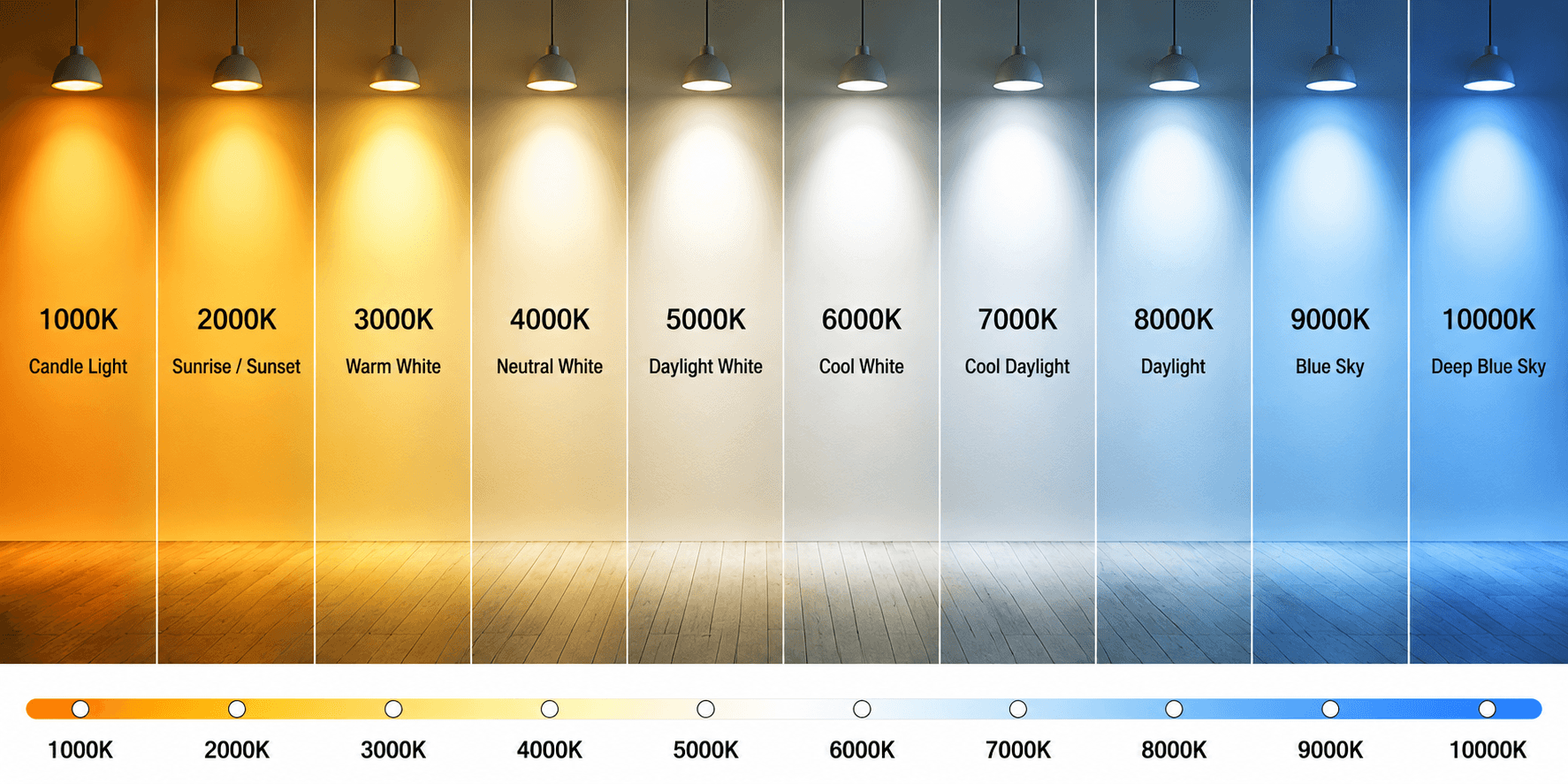
For example, a 2700k light bulb usually produces a softer, more amber appearance. In comparison, a 4000k light looks more neutral, while a 5000kelvin light creates a cooler, daylight-like effect.
However, color temperature and brightness are two different specifications. Color temperature, measured in Kelvin, describes the light’s appearance. Brightness is commonly evaluated through luminous flux, measured in lumens, while watts indicate power consumption.
For wholesale buyers, this distinction is particularly important. When customers request warm white lighting, they may still need different lumen outputs for bedrooms, kitchens, retail stores, and other applications.
Therefore, when sourcing LED bulbs, we recommend checking the Kelvin rating, lumen output, wattage, and CRI together rather than selecting products based on color temperature alone.
What Does 3000K Light Look Like?
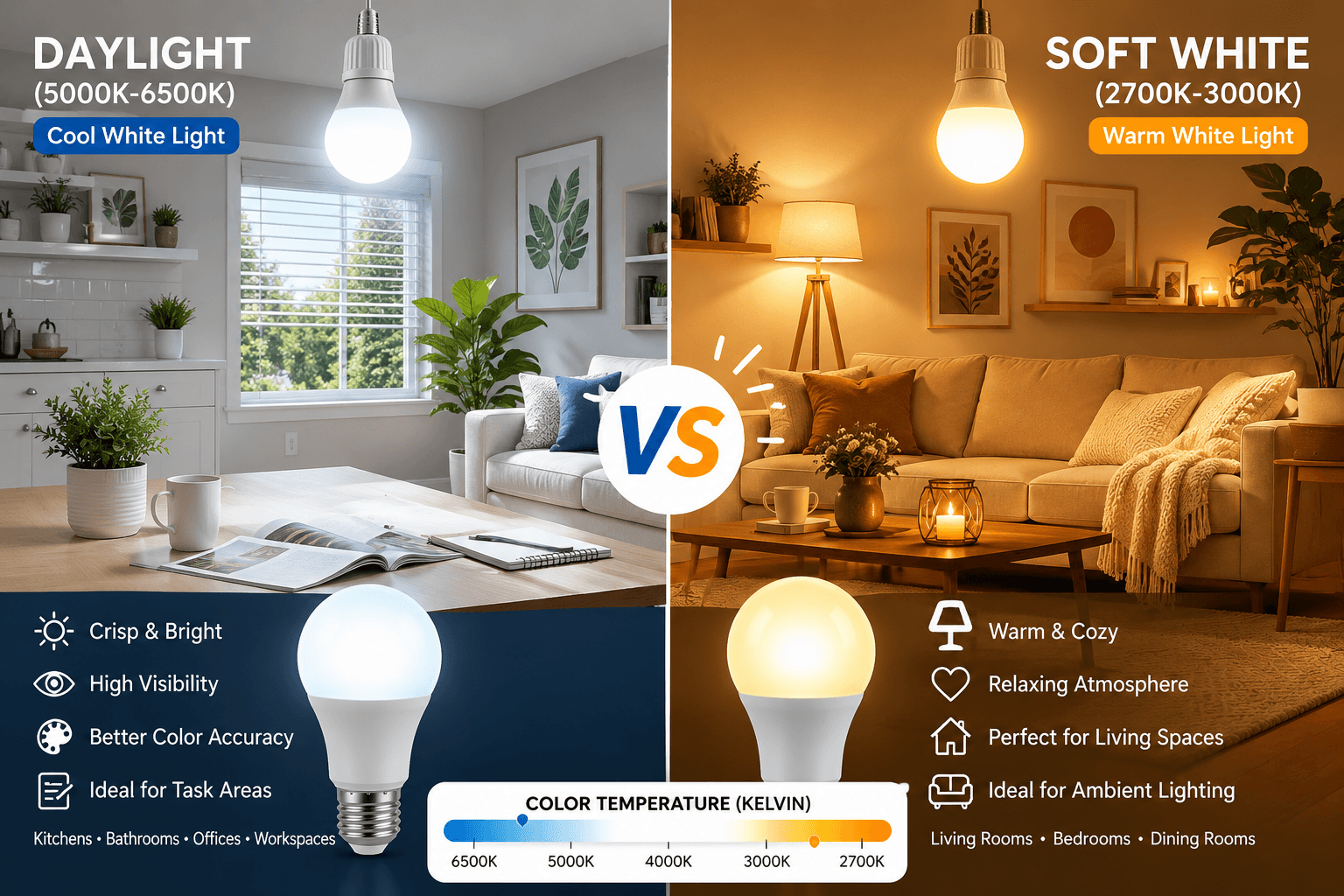
A 3000k light produces a warm, soft white glow. Compared with a 2700k bulb, it generally looks less yellow and slightly cleaner. At the same time, it retains enough warmth to make a room feel comfortable and inviting.
This light color works particularly well with wooden furniture, beige walls, natural stone, and warm-colored fabrics. In addition, it can complement both traditional and modern interior designs.
The final appearance, however, depends on more than the Kelvin rating. LED chip quality, diffuser materials, lampshade design, surrounding colors, and lighting placement can all affect how the light looks.
For instance, two LED bulbs with a nominal 3000K rating may appear slightly different if their color consistency or production specifications vary. As a result, buyers should request samples before approving large orders, especially when several bulbs will be installed in the same space.
From a factory perspective, maintaining consistent color temperature across production batches is an important quality consideration. We recommend confirming the target CCT range and acceptable color variation before mass production.
In this way, buyers can reduce color-matching issues and provide a more consistent lighting experience to their customers.
3000K Light Benefits: Why People Choose It
3000K lighting is popular because it balances a warm atmosphere with practical visibility. For this reason, it is widely used in residential lighting, hospitality projects, restaurants, and decorative fixtures.
A Balanced Warm White Appearance
First, 3000K provides a middle ground between a traditional warm glow and a cooler white light. Although 2700K may look too yellow for some modern interiors, 4000K may feel too cool for customers who prefer a cozy atmosphere.
Therefore, 3000K is a versatile option for buyers who need a single color temperature suitable for a wide range of applications.
Suitable for Everyday Activities
In addition to its appearance, 3000K can support everyday activities such as cooking, reading, grooming, and general household tasks when the brightness and fixture placement are appropriate.
For example, a kitchen light with sufficient lumen output can provide practical illumination while maintaining a warm atmosphere. Similarly, a 3000K bathroom light can create a comfortable appearance without producing an overly yellow effect.
However, detailed tasks may require additional lighting or a more neutral color temperature, depending on the application.
Versatile for Residential and Commercial Projects
Another advantage is its flexibility. Hotels, restaurants, apartments, retail stores, and residential developments can all benefit from 3000K lighting.
For wholesalers and distributors, this versatility makes 3000K a useful option for different customer groups. Moreover, offering several color temperatures can help buyers meet a wider range of market requirements without changing their entire product range.
Flexible Options for Wholesale Buyers
From a purchasing perspective, 3000K LED bulbs are available in different shapes, wattages, base types, and fixture designs. Buyers can select general-purpose bulbs, LED filament bulbs, decorative lamps, and compatible dimmable options according to customer demand.
Meanwhile, OEM/ODM services can provide additional flexibility for businesses that need customized packaging, logos, barcodes, or product specifications.
Before placing a bulk order, however, buyers should confirm the MOQ, sample availability, unit price, and estimated production lead time. These details help them plan inventory and calculate the total purchasing cost more accurately.
Quality Matters as Much as Color Temperature
Although color temperature influences the appearance of light, it does not guarantee product quality. LED chip performance, driver reliability, heat management, CRI, and electrical safety also affect the finished product.
For this reason, buyers should evaluate the manufacturer’s quality-control process before making a purchasing decision.
At Huiyee Lighting, our LED bulbs undergo an aging test of more than eight hours before shipment. We also recommend that buyers confirm the testing scope, acceptance criteria, and relevant product documents for their selected models.
Ultimately, consistent quality helps wholesalers reduce after-sales problems, protect their reputation, and build long-term customer relationships.
2700K vs 3000K vs 4000K vs 5000K
Different color temperatures create different visual effects. Therefore, understanding their differences can help wholesalers recommend suitable products and build a more competitive product range.
| Color temperature | Appearance | Common applications | Main advantage |
|---|---|---|---|
| 2700K | Warm, golden white | Bedrooms, living rooms, restaurants | Creates a cozy atmosphere |
| 3000K | Warm, soft white | Homes, hotels, kitchens, retail | Balances warmth and visibility |
| 4000K | Neutral white | Offices, kitchens, commercial spaces | Provides a cleaner appearance |
| 5000K | Daylight-like white | Garages, workshops, utility areas | Creates a crisp, cool appearance |
It is worth remembering that color temperature does not determine brightness. A 5000K bulb is not automatically brighter than a 3000K bulb. Actual light output depends on lumens, optical design, and fixture conditions.
3000K vs. 2700K: Warm White vs. Soft White
Both 2700K and 3000K belong to the warm-light range. However, a 2700 K LED bulb generally produces a more amber or golden glow, while a 3000k light looks slightly whiter and cleaner.
A 2700k bulb is often preferred for bedrooms, living rooms, restaurants, and hospitality environments where customers want a traditional warm atmosphere. Similarly, a 2700k warm light bulb can be suitable for decorative fixtures designed to create a vintage appearance.
In comparison, 3000K works well in kitchens, bathrooms, hallways, and living spaces where customers want a warm appearance with practical visibility.
Nevertheless, the terms soft white and warm white can vary between manufacturers. Therefore, wholesale buyers should always confirm the actual Kelvin rating instead of relying only on the product description.
3000K vs. 4000K: Warm White vs. Neutral or Cool White
A 4000k light generally looks more neutral and less yellow than 3000K. Depending on the manufacturer and market, 4000K may be described as neutral white or cool white.
For example, 4000K is often selected for offices, supermarkets, modern kitchens, and commercial work areas. It can provide a cleaner appearance where visual clarity is important.
By contrast, 3000K is frequently used in homes, hotels, restaurants, and decorative lighting projects because it creates a warmer atmosphere.
However, the best choice depends on the application rather than the Kelvin rating alone. For buyers serving both residential and commercial customers, offering 3000K and 4000K options can help cover different preferences.
3000K vs. 5000K: Warm White vs. Daylight
A 5000kelvin light produces a cooler, daylight-like white appearance. It is commonly used in garages, workshops, utility rooms, and other spaces where a crisp white effect is preferred.
On the other hand, 3000K provides a warmer appearance that often suits relaxing and social spaces.
Although 5000K may look visually sharper, it is not necessarily brighter than 3000K. Buyers should compare lumen output, beam distribution, and the intended lighting application before making a selection.
Furthermore, the term daylight is not used identically by every manufacturer. Therefore, checking the actual CCT specification is the most reliable way to compare products.
Where to Use 3000K Light
Because 3000K combines a warm appearance with practical illumination, it is suitable for many indoor and outdoor applications. However, the final selection should also consider brightness, fixture design, installation conditions, and customer preferences.
3000K Kitchen Light
A 3000K kitchen light creates a welcoming atmosphere while supporting daily activities such as cooking, food preparation, and dining.
For example, 3000K pendant lights, ceiling fixtures, and under-cabinet lights can complement wooden cabinets and warm-colored countertops. In addition, the light helps maintain a comfortable appearance without making the kitchen feel overly yellow.
Nevertheless, brightness and lighting distribution remain important. Work surfaces need sufficient illumination, so buyers should consider lumen output, beam angle, and fixture placement when selecting kitchen lighting products.
Some customers may prefer a 4000k light for a cleaner and more neutral kitchen appearance. Therefore, wholesalers serving different markets may benefit from offering both color temperatures.
3000K Bedroom Light
A 3000K bedroom light provides a soft, warm white glow that suits general lighting, bedside lamps, pendant lights, and wall sconces.
Compared with cooler white lighting, it often creates a more comfortable appearance for evening activities. However, customers who prefer a traditional amber glow may choose a 2700k light bulb instead.
For wholesale buyers, dimmable LED bulbs can also be worth considering. When the bulb and dimmer are compatible, users can adjust brightness to suit different activities.
As a result, offering suitable color temperatures and dimming options can help distributors serve a broader range of bedroom lighting needs.
3000K Bathroom Light
A 3000K bathroom light creates a comfortable atmosphere for everyday grooming, shaving, and general illumination.
For example, it can work well with mirror lights, vanity fixtures, wall sconces, and ceiling lights. In addition, products with a suitable CRI can help colors appear more natural.
However, bathroom lighting requires careful product selection because moisture and installation conditions can affect safety. Buyers should check the fixture’s IP rating and suitability for its intended location rather than assuming every LED bulb is suitable for wet environments.
For projects that require a cleaner white appearance, 4000K is another option. Therefore, the choice should depend on the project design, customer preferences, and technical requirements.
3000K Living Room Light
A 3000K living room light is a popular choice for ceiling lights, chandeliers, pendant lights, table lamps, and decorative bulbs.
Its warm white appearance complements a wide range of furniture styles. As a result, it works well in living rooms designed for relaxing, entertaining guests, and spending time with family.
For decorative fixtures where the bulb remains visible, 3000K LED filament bulbs can be an attractive option. Meanwhile, 2700K may suit customers who prefer a more traditional vintage glow.
For wholesalers, stocking different bulb shapes and base types can help meet the needs of lighting retailers, interior designers, and project buyers.
3000K Outdoor Lighting
3000K outdoor lighting can create a welcoming appearance around entrances, balconies, patios, gardens, and building facades.
For example, warm white light is often suitable for outdoor wall sconces, porch lights, landscape fixtures, and decorative pendant lights. It can highlight architectural details while maintaining a comfortable appearance.
However, outdoor products must match the installation environment. Before purchasing in bulk, buyers should confirm the IP rating, material durability, rated operating conditions, and local electrical requirements.
In addition, the fixture’s protection level should match its exposure to rain and moisture. A light installed in a sheltered entrance may have different requirements from one exposed directly to the weather.
By confirming these specifications before ordering, buyers can reduce compatibility problems and select products that better meet their customers’ needs.
Should You Choose 3000K?
3000K is a practical option when customers want warm white lighting without the stronger yellow appearance associated with some lower color temperatures.
However, the right choice depends on the intended application.
- Choose 2700K for customers who prefer a traditional warm glow in bedrooms, living rooms, restaurants, and decorative lighting.
- Choose 3000K when the project requires a balance between warmth and everyday visibility.
- Choose 4000K when a more neutral white appearance is preferred for offices, modern kitchens, retail stores, and work areas.
- Choose 5000K when customers specifically want a daylight-like appearance for garages, workshops, and utility spaces.
For lighting wholesalers and importers, the decision should also consider local market preferences, customer feedback, inventory planning, and target price points.
Therefore, before placing a bulk order, we recommend confirming the color temperature, lumen output, CRI, voltage, base type, and dimming requirements. These details help ensure that the selected products match the intended application.
How to Choose 3000K LED Bulbs
Choosing the right 3000K LED bulb involves more than selecting a warm white color. Buyers should also evaluate brightness, color rendering, electrical compatibility, product reliability, and supplier capabilities.
Check Lumens and Wattage
First, check the lumen output to understand how much light the bulb produces. Watts indicate energy consumption, while Kelvin describes the appearance of the light.
For example, two 3000K bulbs can have different lumen outputs even when they use the same color temperature. Similarly, a higher-wattage bulb does not always produce proportionally more light because LED efficiency varies.
Therefore, compare lumens and watts together when evaluating products from different suppliers. This approach helps you select the right product for each application and compare energy efficiency more accurately.
Check CRI and Color Consistency
Next, consider the Color Rendering Index (CRI), which indicates how accurately a light source reveals colors compared with a reference source.
For many general lighting applications, CRI 80 or above is common. Meanwhile, CRI 90 or above is often preferred for premium residential lighting, retail displays, and applications where color appearance is particularly important.
Our production standard for LED bulbs is CRI above 90. However, buyers should confirm the specifications and supporting test information for the exact model they intend to purchase.
In addition to CRI, color consistency is important when several bulbs are installed together or when products are reordered regularly. For this reason, ask the factory about CCT tolerances and batch consistency before approving mass production.
Check Dimming and Electrical Compatibility
Not every LED bulb supports dimming. Therefore, if your customers need adjustable brightness, confirm that the bulb is dimmable and compatible with the intended dimmer.
You should also check voltage, frequency, lamp base, driver design, and the electrical requirements of the destination market.
For example, products supplied to the United States, Europe, the United Kingdom, and Australia may require different electrical specifications or certification documents. Consequently, buyers should confirm the applicable requirements before production rather than relying on a general product description.
Ask About Factory Quality Control
Product quality directly affects customer satisfaction, replacement costs, and brand reputation. For this reason, it is important to understand how the factory inspects products before shipment.
When evaluating a supplier, ask the following questions:
- Does the factory inspect incoming components and finished products?
- Are LED bulbs tested for electrical performance and light output?
- Is aging or burn-in testing performed before shipment?
- Can the supplier provide relevant test reports and certification documents?
- How are defective products and shipping damage handled?
- What warranty terms and after-sales support are available?
Our LED bulbs undergo an aging test of more than eight hours before shipment. Nevertheless, buyers should confirm the testing scope, acceptance criteria, and documentation for their selected models.
In this way, both parties can establish clear quality expectations before the order enters mass production.
Compare Wholesale Prices, MOQ, and Delivery Time
For B2B buyers, the lowest unit price does not always mean the lowest total purchasing cost. Product consistency, packaging, freight, defect rates, and after-sales support also affect profitability.
Therefore, when requesting a quotation, provide the supplier with the following information:
- Product model, wattage, color temperature, and lamp base
- Required order quantity and target price range
- Destination market and applicable certification requirements
- Logo, retail packaging, barcode, or other customization needs
- Required delivery date and preferred shipping method
Once these details are clear, the factory can provide a more accurate quotation and production schedule.
MOQ and lead time vary by product. Stock availability, material supply, customization requirements, and order quantity can all affect delivery.
For example, our reference MOQ for certain pendant light models is 50 sets for in-stock products and 100 sets for customized products, with an estimated lead time of 15–20 days. However, these figures apply to specific pendant light orders and should not be treated as standard terms for all LED bulbs.
For this reason, buyers should confirm the exact MOQ, sample arrangements, unit price, and lead time for each model before placing an order.
Best 3000K Light Bulbs for Your Home
The best 3000K LED bulb depends on the fixture, intended application, and required brightness. For residential customers, appearance, energy efficiency, and ease of installation are often key considerations.
For wholesalers and distributors, however, product consistency, competitive pricing, dependable delivery, and customization options are equally important.
LED Filament Bulbs
LED filament bulbs suit pendant lights, chandeliers, wall sconces, and decorative fixtures. Their visible filaments create a traditional appearance while offering the benefits of LED technology.
Depending on the product, buyers can select different bulb shapes, base types, wattages, and color temperatures to suit their target markets.
General-Purpose LED Bulbs
General-purpose LED bulbs are widely used in everyday household fixtures. They are available in different lumen outputs, wattages, and lamp bases.
As a result, they are a practical option for distributors supplying supermarkets, lighting stores, e-commerce sellers, and other retail channels.
Dimmable LED Bulbs
Dimmable LED bulbs provide adjustable brightness when paired with compatible dimmers. As a result, they can suit bedrooms, living rooms, restaurants, and hospitality projects.
Before purchasing, buyers should confirm dimming compatibility and test the product with the intended control system.
Outdoor LED Bulbs
Outdoor LED bulbs can be used in suitable exterior fixtures. However, the complete installation must meet the required environmental protection and electrical specifications.
For this reason, buyers should check the fixture’s IP rating, operating conditions, and compatibility before selecting a product for outdoor applications.
What Wholesale Buyers Should Consider
Before committing to a large order, we recommend comparing product samples. This allows buyers to assess color appearance, brightness, construction quality, and packaging under realistic conditions.
Furthermore, confirming specifications before production helps reduce unnecessary changes and supports more consistent repeat orders.
At Huiyee Lighting, we support B2B inquiries for decorative lighting and LED products. Depending on the model, buyers can discuss product specifications, logo printing, customized packaging, and other OEM/ODM requirements with our team.
Psychological & Biological Effects of 3000K Light
Light color can influence how people perceive a room. For example, warm white lighting is often selected for bedrooms, living rooms, restaurants, and other spaces where a comfortable atmosphere is desired.
Compared with cooler-looking light, 3000K may feel less stark in rooms with warm-colored furniture and soft furnishings. However, the overall experience also depends on brightness, glare, fixture placement, and individual preference.
It is important to note that color temperature alone does not determine whether a light is safe for the eyes or whether it improves sleep. In particular, exposure to bright light in the evening can affect the body’s natural sleep-wake cycle, depending on the light intensity, timing, and duration of exposure.
Therefore, when selecting residential lighting, buyers should consider appropriate brightness, glare control, dimming options, and the intended time of use.
From a product sourcing perspective, it is better to evaluate measurable performance and actual application requirements rather than rely on broad health claims about a particular Kelvin rating.
FAQs About 3000K Color Temperature
How Bright Is 3000K?
3000K describes the color temperature, not the brightness. Actual brightness depends on the bulb’s lumen output, optical design, and fixture.
For example, a 3000K bulb with 800 lumens produces less total light than a 3000K bulb with 1,600 lumens, even though both have the same nominal color temperature.
Therefore, when selecting bulbs, check the lumen rating to determine whether the product provides enough light for the intended application.
What Color Is 3000K?
3000K generally produces a warm white color with a slight yellow tone. Compared with 2700K, it looks slightly cleaner, while remaining warmer than 4000K.
However, the exact appearance can vary between manufacturers and product designs. For wholesale orders, requesting samples can help ensure that the color meets your expectations.
Is 3000K Soft White or Daylight?
3000K is generally classified as warm white or soft white. By contrast, 5000K is commonly described as daylight or daylight white.
Nevertheless, product naming can vary between brands. Therefore, always check the actual Kelvin rating when comparing products from different suppliers.
Is 3000K Warm or Cold Light?
3000K is warm white light rather than cold light. It provides a comfortable appearance without the stronger amber tone often associated with 2700K.
For customers who prefer a neutral or cooler appearance, 4000K or 5000K may be more suitable.
What Are the Pros and Cons of 3000K Lighting?
The main advantage of 3000K is its versatility. It combines a warm atmosphere with a relatively clean white appearance, making it suitable for many residential, hospitality, and decorative applications.
However, it may not be ideal for every project. Customers who prefer a traditional warm glow may choose 2700K, while those who want a more neutral appearance for detailed work may prefer 4000K or 5000K.
For wholesalers, offering several color temperatures can help meet different customer preferences and expand product selection.
Is 2700K or 3000K Better for a Bedroom?
Both color temperatures can work well in bedrooms. A 2700k light bulb creates a warmer, more traditional atmosphere, while 3000K provides a slightly cleaner warm white appearance.
Ultimately, the better choice depends on the interior design, fixture type, personal preference, and desired brightness.
Is 3000K or 4000K Better for a Kitchen?
3000K is suitable for customers who prefer a warm, welcoming kitchen. In comparison, a 4000k light provides a more neutral appearance and may be preferred in modern kitchens or work areas.
In either case, buyers should also consider lumen output, lighting coverage, CRI, and fixture placement to ensure sufficient illumination.
Can 3000K LED Bulbs Be Used Outdoors?
Yes, 3000K LED bulbs can be used outdoors when installed in fixtures suitable for the environment. However, color temperature alone does not indicate weather resistance.
Before purchasing, check the fixture’s IP rating, operating conditions, electrical specifications, and local installation requirements.
What Should Wholesale Buyers Check Before Ordering 3000K LED Bulbs?
Wholesale buyers should confirm the following specifications before placing an order:
- Color temperature and acceptable CCT variation
- Lumen output, wattage, and CRI
- Lamp base, voltage, dimming compatibility, and product dimensions
- Required certifications and test documents for the destination market
- Sample availability, MOQ, bulk pricing, and production lead time
- Packaging, barcode, logo customization, warranty, and defect-handling terms
By confirming these details in advance, buyers can reduce purchasing risks and improve the consistency of repeat orders.
Can a Lighting Factory Customize 3000K LED Bulbs?
Yes, customization may be available depending on the product model and the factory’s production capabilities.
For example, buyers can ask about available wattages, bulb shapes, lamp bases, color temperatures, packaging, and branding options.
For OEM/ODM projects, provide the target market, technical specifications, estimated order quantity, and packaging requirements. The supplier can then confirm feasibility, sample costs if applicable, MOQ, quotation, and production lead time.
Conclusion
3000K light color temperature offers a versatile warm white appearance for homes, hotels, restaurants, retail spaces, and decorative lighting projects. Compared with 2700K, it looks slightly cleaner. Meanwhile, compared with 4000K and 5000K, it retains a warmer and more welcoming appearance.
For lighting wholesalers and importers, however, selecting the right product involves more than color temperature. Brightness, CRI, color consistency, electrical compatibility, quality control, certifications, and delivery reliability all contribute to long-term purchasing value.
At Huiyee Lighting, we work with B2B buyers looking for reliable lighting products and OEM/ODM solutions. If you are sourcing 3000K LED bulbs or decorative lighting for your market, contact our team at sales@huiyeetech.com.
Please include your target specifications, estimated order quantity, destination market, and customization requirements. With these details, we can help you review suitable products and confirm the MOQ, quotation, sample arrangements, and production lead time for your project.