 English
 العربية
 Français
 Deutsch
 Italiano
 Polski
 Português
 Русский
 Español
 Українська


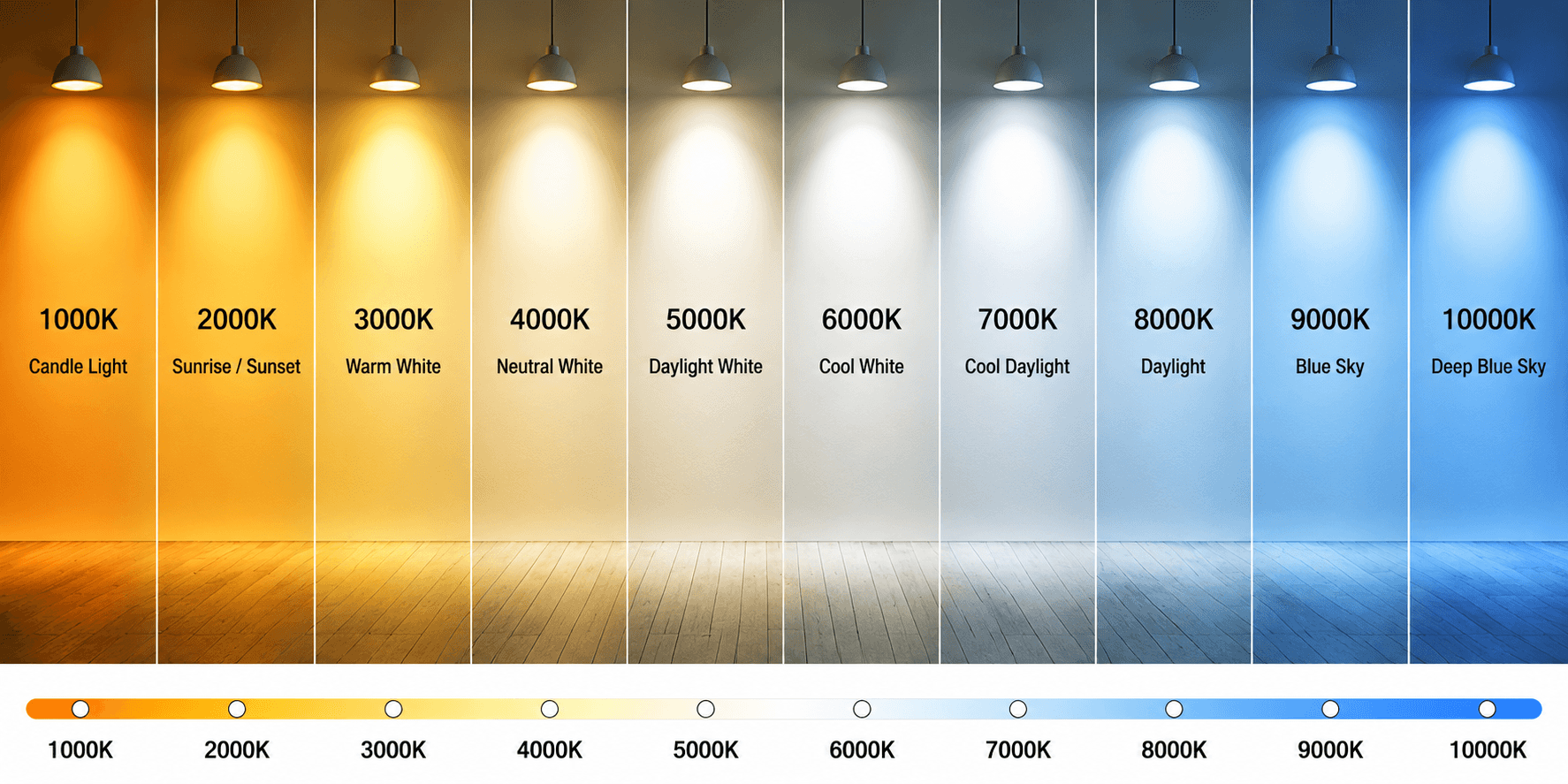
يؤثر اختيار درجة حرارة اللون المناسبة لمصباح LED على المظهر, راحة, ووظيفة الفضاء. لكن, أبيض ناعم, أبيض ناصع, and daylight bulbs produce different lighting effects and suit different applications.
The main difference is color temperature: soft white creates a warm, relaxing glow, bright white provides a more neutral appearance, and daylight produces a cooler, crisper white light.
لتجار الجملة, الموزعين, and lighting retailers, understanding these differences helps you select suitable products for residential, تجاري, ومشاريع الضيافة.
في هذا الدليل, we compare the three types of white light, explain where each works best, and share practical tips for choosing LED bulbs for wholesale orders.
1. ما هي درجة حرارة اللون?
Color temperature describes the visual appearance of light and is measured in Kelvin (ك). A lower Kelvin value produces warmer, more yellowish light, while a higher value creates a cooler, often bluish-white appearance.
LED bulbs are commonly grouped into three color-temperature ranges:
- أبيض ناعم: 2700ك – 3000 ك. دافئة ومريحة, ideal for relaxing spaces.
- أبيض ناصع: approximately 3500K–4500K. Neutral to slightly cool, suitable for everyday lighting and work areas.
- ضوء النهار: approximately 5000K–6500K. Crisp and cool, often preferred for task-oriented environments.
These ranges are common industry guidelines rather than universal standards. Different manufacturers may use slightly different labels, so always check the actual Kelvin rating.
للمشترين B2B, color temperature is an important product specification. Offering several options allows you to meet different customer preferences without limiting your catalog to one type of white light.
2. What Is Soft White Light?
Soft white light typically ranges from 2700K to 3000K. It produces a warm, slightly yellowish glow similar to traditional incandescent bulbs.
Compared with cooler light sources, soft white light creates a cozy and welcoming atmosphere. لذلك, it is widely used in bedrooms, غرف المعيشة, المطاعم, الفنادق, وتركيبات الإضاءة الزخرفية.
Key Features of Soft White Bulbs
- Warm appearance that supports a relaxed atmosphere.
- Suitable for residential and hospitality lighting.
- Complements wood furniture, warm-colored interiors, and traditional designs.
- Available in various bulb shapes, base types, القوة الكهربائية, and dimmable options.
When comparing soft white vs. أبيض دافئ, the two terms usually describe similar warm-colored lighting, particularly around 2700K–3000K. لكن, the exact color temperature depends on the manufacturer’s specifications.
أ soft white bulb is a practical choice for buyers serving customers who prioritize comfort and ambiance. For a complete product range, wholesalers can consider decorative LED filament bulbs, أضواء قلادة, الثريات, مصابيح الطاولة, and wall sconces that use warm white light.
3. What Is Bright White Light?
Bright white light generally falls within the 3500K–4500K range. It provides a more neutral appearance than soft white, without the distinctly cool tone often associated with daylight bulbs.
This balanced color makes bright white light suitable for kitchens, الحمامات, الممرات, مكاتب, ومساحات البيع بالتجزئة. It offers a clean, modern appearance for areas used throughout the day.
Key Features of Bright White LED Bulbs
- Balanced color between warm and cool lighting.
- Suitable for everyday activities and general illumination.
- Complements modern interiors and commercial environments.
- Offers a versatile option for residential and business lighting projects.
لكن, أبيض ناصع does not necessarily mean a bulb produces more light. Color temperature describes how light looks, while lumens measure the amount of visible light produced.
لذلك, buyers should compare Kelvin ratings and lumen output separately. القوة الكهربائية, زاوية الشعاع, and fixture design should also be considered when selecting products for a specific application.
لتجار الجملة, bright white LED bulbs help fill the gap between warm residential lighting and cooler task lighting. They are especially useful for customers seeking a clean, neutral appearance.
4. What Is Daylight Light?
Daylight LED bulbs typically range from 5000K to 6500K. They produce a cool, crisp white appearance that resembles the color of natural daylight more closely than warm white lighting.
Because of this cooler appearance, daylight bulbs are often used in garages, ورش العمل, study areas, غرف المرافق, and selected commercial environments.
Key Features of Daylight Bulbs
- Cool white appearance with a crisp visual effect.
- Suitable for task-oriented areas and detailed work.
- Commonly used in workshops, المرائب, مكاتب, ومساحات المرافق.
- Available in different wattages, bulb shapes, وأنواع القاعدة.
Daylight bulbs are also commonly described as cool white light bulbs. لكن, these labels are not always used consistently across brands. Checking the Kelvin rating is the most reliable way to compare products.
للمشترين B2B, daylight bulbs complement soft white and bright white products in a complete lighting catalog. The right selection depends on the target market, بيئة التثبيت, and customer requirements.
5. الأبيض الناعم مقابل ضوء النهار مقابل الأبيض الساطع: What Are the Differences?
The main difference between these three types of white light is their color temperature and visual appearance. Each serves a different purpose, so the best option depends on the room and the intended use.
Color Temperature Comparison
| ميزة | أبيض ناعم | Bright White | ضوء النهار |
|---|---|---|---|
| Typical color temperature | 2700ك – 3000 ك | 3500ك – 4500 ك | 5000ك – 6500 ك |
| مظهر | دافيء, yellowish white | Neutral to slightly cool | Crisp, أبيض بارد |
| أَجواء | مريح ومريح | Clean and balanced | Fresh and focused |
| Common applications | غرف نوم, غرف المعيشة, المطاعم | مطابخ, الحمامات, مكاتب, مساحات البيع بالتجزئة | الكراجات, ورش العمل, study areas |
| Common buyer preference | Comfort and ambiance | Versatility and everyday use | A cooler lighting appearance |
الأبيض الناعم مقابل ضوء النهار
The key difference between soft white and daylight is warmth. Soft white creates a comfortable atmosphere, while daylight produces a cooler, crisper appearance.
Choose soft white for bedrooms, غرف المعيشة, المطاعم, والتجهيزات الزخرفية. Daylight is often preferred for workshops, المرائب, and task-oriented spaces.
When comparing soft white vs daylight bulbs, neither option is universally better. The right choice depends on the application, desired atmosphere, إخراج الضوء, and customer preference.
Bright White vs Daylight
The difference between bright white VS daylight is that bright white generally looks more neutral, while daylight has a distinctly cooler tone.
Bright white is suitable for kitchens, الحمامات, مكاتب, and general-purpose lighting. Daylight is a useful option for workshops, workbenches, and spaces where users prefer a crisp white appearance.
لكن, daylight bulbs do not automatically produce more lumens than bright white bulbs. To compare actual brightness, check the lumen rating rather than relying on color temperature alone.
Warm vs Cool Light: الذي يجب عليك اختياره?
فهم warm vs cool light helps buyers select products for different applications.
Warm white light creates a welcoming atmosphere and works well in traditional and contemporary residential interiors. Cool white light offers a cleaner appearance that some users prefer for work areas and utility spaces.
Bright white or neutral white sits between the two, making it a versatile option for everyday lighting.
لتجار الجملة والموزعين, stocking all three color-temperature ranges helps meet different project requirements and reduces reliance on a single lighting style.
6. Which Light Color Is Best for Each Room?
Once you understand the color-temperature differences, the next step is to match the light color to the intended application.
غرفة الجلوس: أبيض ناعم
Soft white creates a relaxing atmosphere for watching television, ترفيه الضيوف, and spending time with family. It works well with chandeliers, أضواء قلادة, مصابيح الطاولة, وشمعدانات الحائط.
For residential and hospitality projects, 2700K–3000K is a popular starting point.
مطبخ: Bright White or Daylight
Kitchens require clear illumination for food preparation, طبخ, and cleaning. Bright white provides a balanced appearance, while daylight offers a cooler visual effect.
Both options can work for ceiling lights and under-cabinet lighting. Buyers should also consider lumen output, beam distribution, and glare control.
غرفة نوم: أبيض ناعم
Soft white is a popular bedroom choice because it creates a warm, جو مريح. Warm white LED bulbs are suitable for bedside lamps, أضواء قلادة, وشمعدانات الحائط.
Dimmable models offer additional flexibility for customers who want to adjust light levels in the evening.
حمام: Bright White
Bright white provides a clean, balanced appearance for daily tasks such as grooming and applying makeup. It is commonly used in vanity lights, mirror lights, and ceiling fixtures.
For bathroom projects, buyers should also check the fixture’s IP rating and suitability for the installation location.
مكتب منزلي: Bright White or Daylight
Bright white works well for general office lighting, while daylight may suit users who prefer a cooler appearance for focused tasks.
The best choice also depends on ambient lighting, وهج, screen reflections, and individual comfort.
Hallways and Entryways: Soft White or Bright White
Soft white creates a welcoming entrance, while bright white suits modern interiors that favor a cleaner appearance.
These applications also create opportunities for wholesalers to supply matching ceiling lights, شمعدانات الحائط, flush-mount fixtures, and compatible LED bulbs.
7. Can One Smart Bulb Provide Soft White, Bright White, و ضوء النهار?
نعم. Adjustable-color-temperature LED bulbs can offer several white-light settings in one product, allowing users to switch between warm, حيادي, and cool white light.
اعتمادا على النموذج, these bulbs may also support dimming, app control, جدولة, or voice control.
Benefits of Adjustable-Color-Temperature Bulbs
- إضاءة مرنة: Users can change the color temperature to suit different activities.
- Convenient operation: One bulb can provide multiple white-light settings.
- Multiple applications: Suitable for bedrooms, غرف المعيشة, المكاتب المنزلية, and selected commercial spaces.
- Product differentiation: Gives retailers and distributors another option for customers seeking modern lighting solutions.
لتجار الجملة, these products can complement traditional fixed-color LED bulbs and expand the available product range.
قبل وضع طلب بالجملة, check the Kelvin range, إخراج التجويف, التوافق يعتم, قاعدة المصباح, operating voltage, طريقة التحكم, and smart-home compatibility.
Depending on the model and order quantity, OEM/ODM services may also support customized branding, التعبئة والتغليف, and selected product specifications. Request a sample and technical data sheet when necessary to verify product suitability.
8. FAQs About Soft White, Bright White, و ضوء النهار
1. أبيض ناعم مثل الأبيض الدافئ?
They usually describe similar lighting. Both commonly refer to a warm color temperature of around 2700K–3000K. لكن, always check the product specifications because naming conventions can vary.
2. Is Daylight Brighter Than Bright White?
ليس بالضرورة. Daylight looks cooler, but actual brightness depends on the lumen output, beam distribution, and fixture design. Compare lumens when evaluating brightness.
3. What Color Temperature Is Bright White?
Bright white commonly falls between 3500K and 4500K. Since product labels vary, check the Kelvin rating to confirm the actual color temperature.
4. How Can You Tell Whether a Bulb Is Daylight or Soft White?
Check the Kelvin rating. Soft white is typically 2700K–3000K, while daylight is usually 5000K–6500K. Soft white looks warmer, whereas daylight appears cooler and crisper.
5. Is Bright White or Daylight Better for Reading?
Both can work well. Bright white offers a more neutral appearance, while daylight provides a cooler tone. Suitable light output, comfortable positioning, and glare control are also important.
6. أيهما أفضل: أبيض ناعم أو ضوء النهار?
Soft white is generally better suited to relaxing spaces such as bedrooms and living rooms. Daylight is often selected for workshops, المرائب, and task-oriented environments. The best choice depends on the intended use and personal preference.
7. Do Soft White Bulbs Look Yellow?
Soft white bulbs have a warm, slightly yellowish appearance, especially when compared with daylight bulbs. This is why they are popular for residential and decorative lighting.
8. Which Light Color Is Best for Eye Comfort?
There is no single color temperature that works best for everyone. وهج, شدة الضوء, وميض, تجسيد اللون, and fixture design all affect visual comfort. Choose a suitable light level and avoid excessive glare.
9. Is There a Light Color Between Soft White and Daylight?
نعم. Bright white or neutral white generally falls between soft white and daylight. It provides a balanced option for customers who prefer neither a strongly warm nor a distinctly cool appearance.
10. What Should Wholesalers Check When Buying LED Bulbs?
Wholesalers should compare color temperature, إخراج التجويف, القوة الكهربائية, CRI, قاعدة المصباح, الجهد االكهربى, التوافق يعتم, الشهادات, التعبئة والتغليف, موك, and lead time. للطلبات المخصصة, confirm branding and packaging requirements before production.
Find the Right LED Bulbs for Your Wholesale Business
أبيض ناعم, أبيض ناصع, and daylight LED bulbs serve different lighting needs. By offering all three options, wholesalers can meet a wider range of residential, تجاري, and hospitality requirements.
لكن, color temperature is only one part of product selection. Buyers should also evaluate light output, CRI, شكل لمبة, نوع القاعدة, electrical specifications, required certifications, والتعبئة والتغليف.
في Huiyee الإضاءة, we support B2B buyers looking for LED bulbs and decorative lighting products. Depending on the product and order quantity, OEM/ODM services can help meet specific branding, التعبئة والتغليف, and product requirements.
Looking for a reliable LED bulb manufacturer for wholesale orders? Contact our team to discuss your target market, مواصفات المنتج, preferred color temperatures, and customization needs.