Get Free Consultation!
We are ready to answer right now! Sign up for a free consultation.
I consent to the processing of personal data and agree with the user agreement and privacy policy

We are ready to answer right now! Sign up for a free consultation.
I consent to the processing of personal data and agree with the user agreement and privacy policy

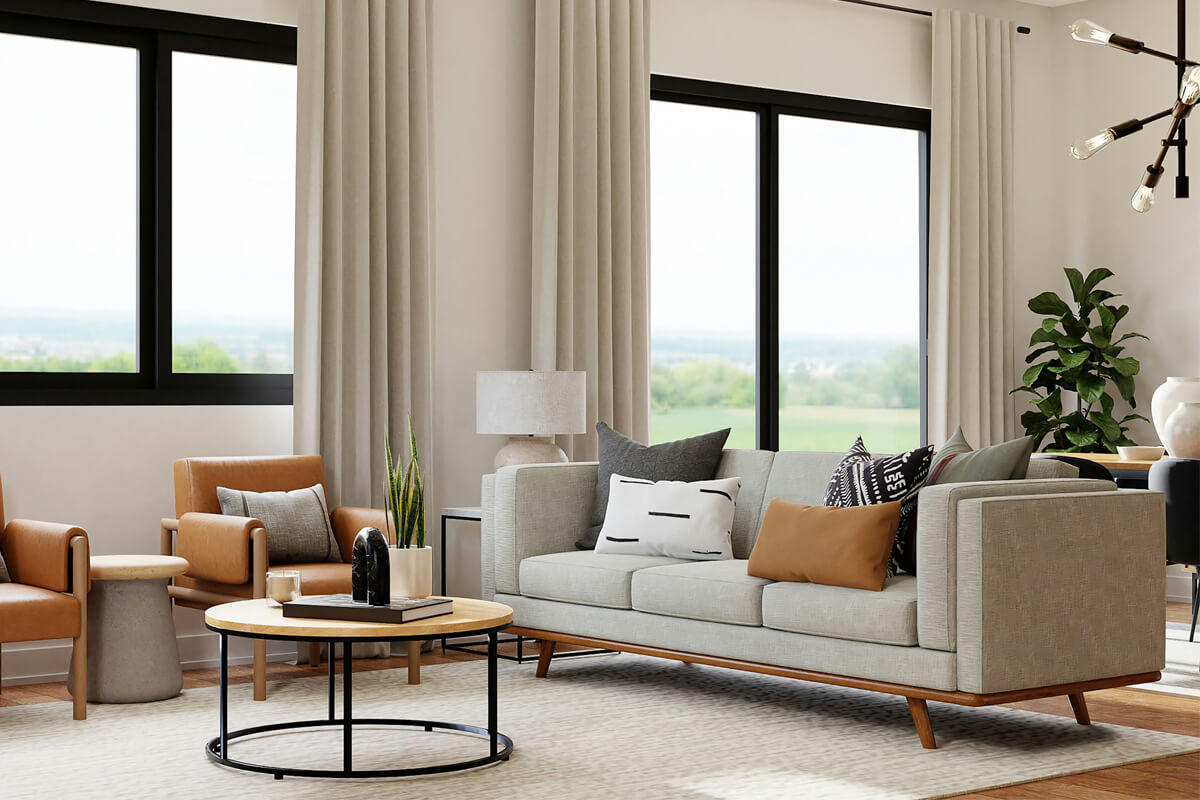
Lighting plays a crucial role in interior design. It not only provides visibility but also shapes the atmosphere and style of a space. When people plan lighting for a room, they often ask a simple question: What is a lamp on the ceiling called?
In most cases, people call it a ceiling light or ceiling lamp. However, this general term includes several types of lighting fixtures designed for different purposes and interior styles. Understanding these categories helps homeowners, designers, and buyers choose the right lighting solution more easily.
In this guide, we will explain what ceiling lamps are called, explore the most common types of ceiling lighting, and help you select the best option for your space.
A ceiling lamp, also known as a ceiling light fixture, is a lighting device installed directly on the ceiling or suspended from it. Unlike floor lamps or wall lights, ceiling lights provide overhead illumination, which makes them the primary light source in many rooms.
In modern interiors, ceiling lamps serve two important roles. First, they deliver general ambient lighting that brightens the entire space. Second, they act as decorative elements that enhance the room’s overall design.
As a result, people widely use ceiling lights in many environments, including:
Living rooms
Bedrooms
Kitchens
Dining rooms
Offices
Hotels and restaurants
Because of their versatility, ceiling lights remain one of the most essential lighting categories in both residential and commercial spaces.
Although many people use the term “ceiling lamp” as a general term, several specific lighting fixtures fall into this category. Each type offers unique features and suits different room layouts.
First, flush-mount ceiling lights sit directly against the ceiling without leaving any gap. This design makes them especially suitable for rooms with low ceilings.
Key characteristics include:
Compact and space-saving design
Even and balanced light distribution
Easy installation and maintenance
Because of these advantages, homeowners often install flush mount lights in:
Hallways
Bedrooms
Closets
Apartments with limited ceiling height
Therefore, flush-mount lighting is well-suited when you need practical illumination without occupying vertical space.
Next, semi-flush mount lights hang slightly below the ceiling, leaving a small gap between the fixture and the ceiling surface.
Compared with flush mount fixtures, semi-flush lights usually provide:
Better light diffusion
More decorative designs
Improved visual depth in the room
Consequently, designers frequently use them in spaces such as:
Entryways
Dining areas
Bedrooms
If you want a balance between decorative style and functional lighting, semi-flush fixtures offer an excellent solution.
In contrast to flush fixtures, pendant lights hang from the ceiling using a cord, chain, or metal rod. Typically, each pendant contains a single light source.
Because pendant lights direct light downward, they work particularly well for task lighting.
People commonly install pendant lights in areas such as:
Kitchen islands
Dining tables
Coffee bars or counters
Staircases
In addition, designers often arrange multiple pendants in a row or cluster to create a stronger visual impact and layered lighting.
Another popular ceiling lighting option is the chandelier. A chandelier features multiple arms or light sources and often serves as a decorative centerpiece in a room.
Traditionally, chandeliers symbolized luxury and elegance. Today, however, manufacturers produce many modern variations, including:
LED chandeliers
Crystal chandeliers
Minimalist chandeliers
Linear chandeliers for dining tables
Because of their dramatic presence, chandeliers frequently appear in:
Living rooms
Dining rooms
Hotel lobbies
High-ceiling spaces
As a result, chandeliers combine functional lighting with strong decorative value.
Finally, recessed lights, also known as downlights or can lights, sit inside the ceiling rather than hanging below it.
This installation style creates a clean and minimalist look, which fits modern interiors perfectly.
Recessed lighting offers several advantages:
A sleek and unobtrusive appearance
Focused or directional illumination
Efficient use of ceiling space
For this reason, architects and designers widely use recessed lights in:
Modern homes
Offices
Retail stores
Commercial environments
In everyday conversation, people often use different terms depending on the fixture style and location. However, the meaning generally remains the same.
For example:
| Term | Meaning |
|---|---|
| Ceiling light | Any light installed on the ceiling |
| Flush mount light | A fixture mounted directly to the ceiling |
| Pendant light | A hanging single light |
| Chandelier | A decorative multi-light fixture |
| Downlight | A recessed ceiling light |
For instance:
In a bedroom, people usually install a flush-mount ceiling light.
Above a kitchen island, homeowners typically choose pendant lights.
In dining rooms or living rooms, designers often recommend a chandelier.
Therefore, while the general term remains “ceiling light,” the specific name depends on the fixture style.
Choosing the right ceiling lamp requires careful consideration of several factors.
First, always evaluate the ceiling height:
Low ceilings: flush-mount lights work best
Standard ceilings: semi-flush fixtures or compact chandeliers
High ceilings: chandeliers or pendant lights
Selecting the appropriate fixture height helps maintain a comfortable visual balance in the room.
Next, consider how you use the space. Different rooms require different lighting solutions.
For example:
Kitchen: pendant lights or recessed lighting
Living room: chandelier or decorative ceiling light
Bedroom: soft flush mount lighting
Hallway: compact ceiling fixtures
Proper lighting placement improves both functionality and comfort.
Finally, ensure the lighting complements your interior design style.
For example:
Modern interiors: minimalist LED ceiling lights
Classic interiors: crystal chandeliers
Industrial spaces: metal pendant lights
When lighting aligns with the design theme, the entire space feels more cohesive and visually appealing.
In most situations, ceiling lamp and ceiling light refer to the same concept. People often use these terms interchangeably in everyday conversation.
However, professionals in lighting design and architecture often use the term ceiling light fixture to describe the complete unit, including the housing, light source, mounting system, and decorative elements.
Although the terminology varies slightly, the meaning generally remains consistent.
So, what is a lamp on the ceiling called?
Most people simply call it a ceiling light or ceiling lamp. However, this category includes several specific fixtures such as flush-mount lights, pendant lights, chandeliers, and recessed lights.
Each type serves different lighting needs and design goals. Therefore, when choosing a ceiling light, you should consider ceiling height, room function, and interior style. By selecting the right fixture, you can improve both the illumination and the aesthetic appeal of your space.
Ultimately, the right ceiling lamp does more than brighten a room—it enhances the entire living experience.
For more information, pls contact us directly.
Quick customized solution,and it takes 3-10 days after confirming detail.
If you like our lights, one free sample can be provided for reference.
We focus on high quality lights only. Your interiors need high quality.
Top quality lights has very high value. We protect it well for shipment.
Our team is available 24/7, and you can expect a response to your inquiries within 2 hours.
We are ready to answer right now! Sign up for a free consultation.
I consent to the processing of personal data and agree with the user agreement and privacy policy
