Get Free Consultation!
We are ready to answer right now! Sign up for a free consultation.
I consent to the processing of personal data and agree with the user agreement and privacy policy

We are ready to answer right now! Sign up for a free consultation.
I consent to the processing of personal data and agree with the user agreement and privacy policy

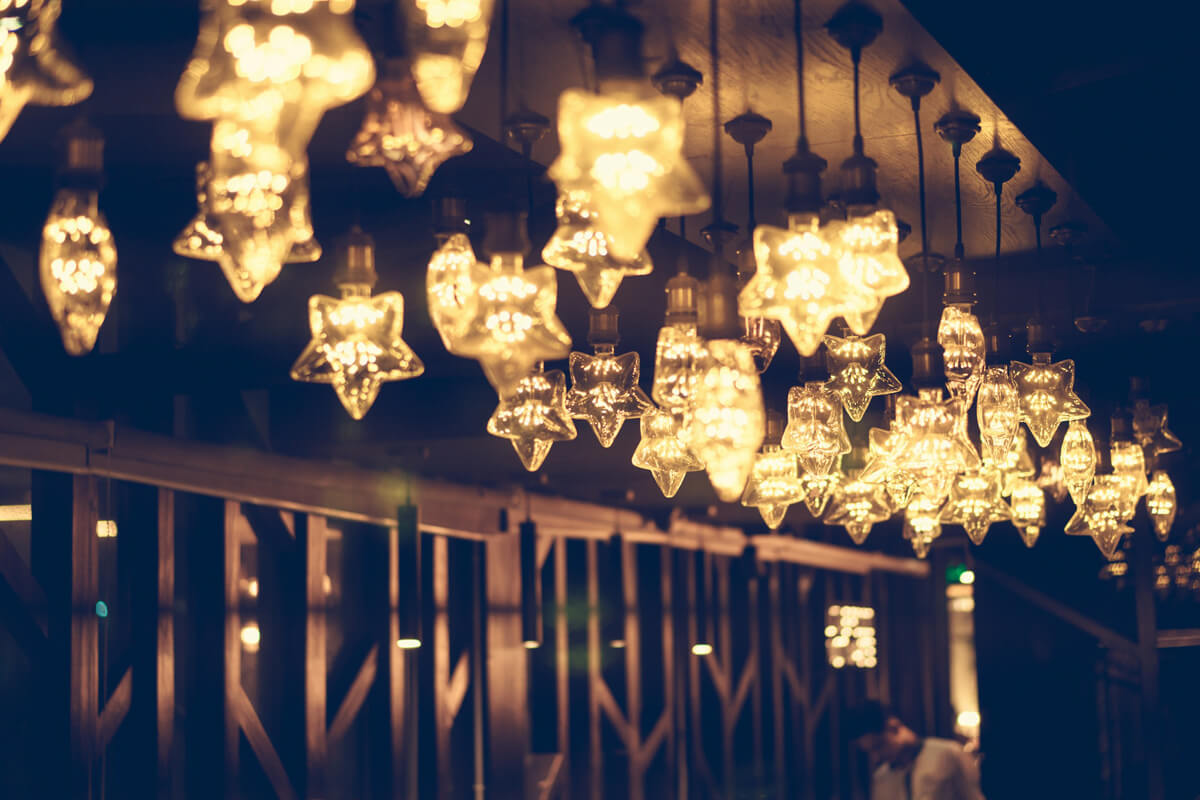
As LED products become standard across homes, businesses, and outdoor environments, many people still ask a simple but essential question: What does LED mean?
In fact, although LED lighting appears everywhere today, its meaning and advantages are often misunderstood. For this reason, understanding how an LED bulb works is critical before choosing the right lighting solution.
Moreover, from decorative Edison-style bulbs to outdoor LED lights and ambient lighting systems, LED technology now shapes nearly every modern lighting application. As a result, consumers, designers, and businesses increasingly rely on LEDs to balance efficiency, design, and durability.
In this guide, we will not only explain what LED means, but also explore how LED bulbs compare to traditional lightbulbs, how different light bulb types fit into each light bulb category, and where LED lighting performs best—both indoors and outdoors.
LED stands for Light Emitting Diode.
Instead of relying on a heated filament like traditional lightbulbs, an LED produces light when electricity flows through a semiconductor.
As a result, LEDs convert energy directly into light rather than heat. This efficiency explains why lights on LED systems consume far less power and last significantly longer than older technologies.
In simple terms:
Traditional bulbs waste energy as heat
LEDs focus energy on light output
Because of this fundamental difference, LEDs dominate today’s lighting store shelves worldwide.
A modern LED bulb contains several key components:
LED chips (diodes)
A driver to regulate voltage
A heat sink for temperature control
A compatible light socket base
When electricity flows through the circuit, the LED turns energy into visible light instantly. Therefore, users experience immediate illumination, often described as “LED on light”, without flicker or warm-up delay.
This design not only improves efficiency but also enhances durability in both indoor and outdoor environments.
To better understand why LEDs dominate the lightbulbs market, let’s compare them with older technologies:
| Feature | Incandescent | CFL | LED Bulb |
|---|---|---|---|
| Average Lifespan | ~1,000 hours | ~8,000 hours | 25,000–50,000 hours |
| Energy Efficiency | Low | Medium | Very High |
| Heat Emission | Very High | Medium | Low |
| Dimming Options | Limited | Rare | Common (dimmable light globes) |
| Maintenance Cost | High | Medium | Low |
Industry data shows that LED bulbs use up to 85% less energy and last 15–25 times longer than incandescent alternatives. Consequently, LEDs reduce both energy bills and replacement frequency.
Today, lighting products fall into several well-defined light bulb types, each serving different needs:
The most versatile option for residential, commercial, and industrial use.
Originally filament-based, the modern Edison bulb now combines vintage aesthetics with LED efficiency.
Flexible solutions ideal for indirect and ambient light applications.
High-lumen lighting designed for garages, warehouses, and workshops.
Often listed as lamp lamp LED, these emphasize visual appeal as much as illumination.
Together, these categories shape the modern light bulb category ecosystem.
Not all LEDs produce the same visual effect.
Warm light (2700K–3000K)
Creates a soft, welcoming atmosphere. Ideal for Edison bulbs, ambient light, and decorative fixtures.
Cool light (4000K–5000K)
Enhances visibility and focus. Common in LED shop lights and task lighting.
Because decorative bulbs focus on mood rather than brightness, most use warm light to enhance comfort and style.
Ambient light forms the foundation of a well-designed space. Rather than highlighting tasks, it shapes mood and perception.
Decorative LED bulbs work especially well when used with exposed or open fixtures. As a result, fixture LED lighting increasingly showcases the bulb itself as a design feature.
This trend explains the growing popularity of decorative LED lamps in hospitality, retail, and residential interiors.
LEDs suit bathroom environments because they:
Handle moisture effectively
Deliver stable brightness
Fit modern and decorative fixtures
In living rooms and bedrooms, LED bulbs provide consistent illumination while supporting relaxed, comfortable atmospheres.
LEDs also excel outdoors.
LEDs resist temperature changes and weather exposure, making them ideal for exterior use.
Common applications include:
Entryways
Gardens
Decorative patio lighting
Compared to halogen systems, outdoor LED lights can reduce energy consumption by more than 70% annually.
Many outdoor systems use volt lighting, such as 12V or 24V setups. These lower-voltage solutions improve safety while maintaining brightness and reliability.
Because LEDs operate efficiently at various voltages, they integrate seamlessly into modern landscape and architectural lighting systems.
Many modern LED bulbs support dimming. Dimmable light globes allow users to:
Adjust mood
Save energy
Integrate smart controls
However, always ensure compatibility between the LED bulb and dimmer to avoid flickering.
In every modern lighting store, LEDs dominate product offerings. Businesses prefer them because LEDs:
Lower long-term costs
Reduce maintenance
Support creative lighting designs
Commercial spaces increasingly rely on LED solutions for branding, ambiance, and operational efficiency.
So, what does LED mean today?
It represents:
Efficient energy use
Flexible design possibilities
Reliable performance indoors and outdoors
From LED shop lights to decorative Edison bulbs, LED lighting has transformed how we illuminate spaces. Whether you need bathroom fixtures, patio lights, or ambient lighting solutions, LEDs provide the most balanced choice for modern needs.
Now that you understand what LED means, it’s time to apply that knowledge to real-world lighting solutions.
We support:
Bulk orders for LED bulbs and fixtures
Custom decorative LED designs
Indoor and outdoor LED lighting projects
OEM & private label programs
Whatever you need, outdoor LED lights for houses, ambient lighting for commercial spaces, or decorative Edison-style bulbs, we provide reliable supply and project-based support. Get in touch with us right now!
Quick customized solution,and it takes 3-10 days after confirming detail.
If you like our lights, one free sample can be provided for reference.
We focus on high quality lights only. Your interiors need high quality.
Top quality lights has very high value. We protect it well for shipment.
Our team is available 24/7, and you can expect a response to your inquiries within 2 hours.
We are ready to answer right now! Sign up for a free consultation.
I consent to the processing of personal data and agree with the user agreement and privacy policy
