 English
 العربية
 Français
 Deutsch
 Italiano
 Polski
 Português
 Русский
 Español
 Українська


Jaka jest różnica między żarówkami E27 i E14?
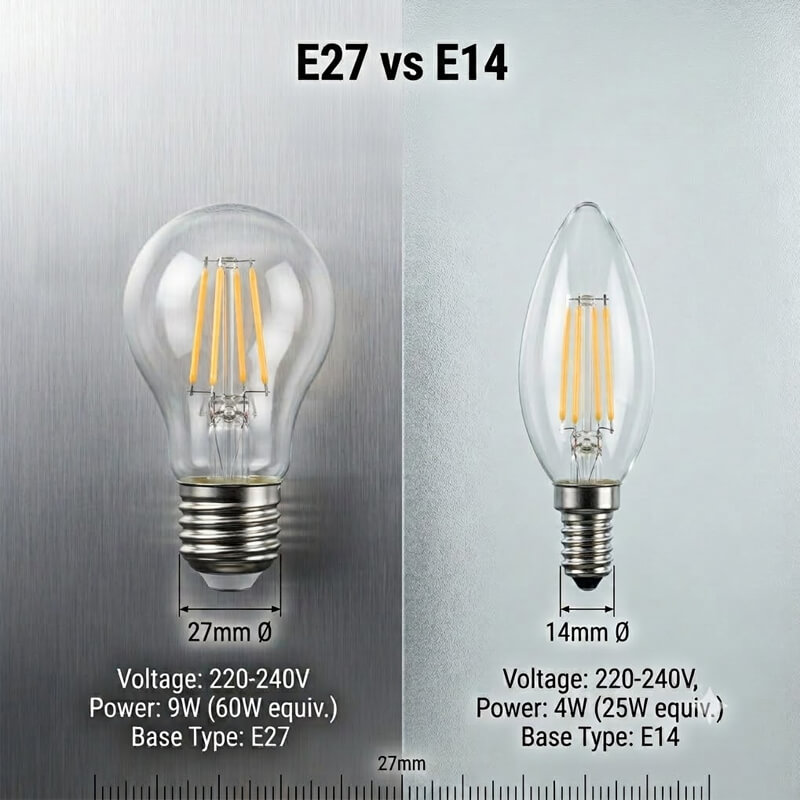
Kupując żarówki LED do swojego domu, biuro, lub projekty oświetleniowe, często można spotkać dwa popularne typy trzonków żarówek: Żarówki E27 i E14. Wielu kupujących pyta: Jaka jest różnica między żarówkami E27 i E14? Czy można ich używać w tej samej lampie?? Która podstawa żarówki jest właściwym wyborem dla mojej oprawy oświetleniowej?
Chociaż oba Żarówki E27 i E14 wykorzystują trzonki śrubowe Edisona, różnią się rozmiarem, aplikacja, kompatybilne modele żarówek, i pojemność mocy. Dlatego, Aby zapewnić prawidłową instalację, niezbędny jest wybór właściwej podstawy żarówki, bezpieczeństwo, i najlepszą wydajność oświetlenia.
W tym przewodniku, wyjaśnimy kluczowe różnice między Żarówki E27 kontra E14 z perspektywy kupującego, pomagając szybko znaleźć odpowiednie rozwiązanie oświetleniowe.
1. Różnica wielkości między żarówkami E27 i E14
Najbardziej oczywista różnica pomiędzy Żarówki E27 i E14 to rozmiar podstawy śruby.
List "MI" oznacza Śruba Edisona, co odnosi się do konstrukcji podstawy żarówki typu śrubowego. Tymczasem, liczba po „E” wskazuje średnicę podstawy w milimetrach.
Innymi słowy:
- E27 = średnica podstawy śruby 27 mm
- E14 = średnica podstawy śruby 14 mm
Z powodu tej różnicy wielkości, Żarówki E27 i E14 przeznaczone są do różnych typów opraw oświetleniowych.
Rozmiar żarówki E27
Jakiś Żarówka E27 posiada podstawę śrubową 27 mm, co czyni ją jedną z najczęściej używanych podstaw żarówek na całym świecie.
Ze względu na większy rozmiar, zapewnia podstawa E27:
- Silniejsze połączenie
- Lepsze wsparcie dla większych żarówek
- Kompatybilność z żarówkami LED o większej mocy
Z tego powodu, Żarówki E27 są powszechnie używane do ogólnego oświetlenia domowego i komercyjnego.
Typowe kształty żarówek E27 obejmują:
- Żarówki LED A19
- Żarówki Edisona ST64
- Żarówki kuliste G45
- Żarówki kuliste G95
- Żarówki dekoracyjne G125
- Żarówki żarnikowe LED
Rozmiar żarówki E14
Dla porównania, jakiś Żarówka E14 ma znacznie mniejszą podstawę śrubową 14 mm.
Ze względu na kompaktową konstrukcję, Żarówki E14 idealnie nadają się do opraw oświetleniowych o ograniczonej przestrzeni.
Są powszechnie używane z:
- Żarówki świec
- Małe żarówki kuliste
- Dekoracyjne żarówki żarnikowe
- Kompaktowe żarówki LED
Dlatego, Żarówki E14 są często wybierane do lamp dekoracyjnych, a nie do zastosowań o wysokiej jasności.
Szybkie porównanie rozmiaru E27 i E14
| Funkcja | Żarówka E27 | Żarówka E14 |
|---|---|---|
| Średnica podstawy | 27mm | 14mm |
| Typ podstawowy | Śruba Edisona | Śruba Edisona |
| Rozmiar | Większy | Mniejszy |
| Główne zastosowanie | Oświetlenie ogólne | Dekoracyjne oświetlenie |
Mówiąc prosto:
E27 = większa podstawa, mocniejsze zastosowania oświetleniowe
E14 = mniejsza podstawa, eleganckie aplikacje dekoracyjne
2. Różnica w obszarach użytkowania między żarówkami E27 i E14
Chociaż zarówno żarówki E27, jak i E14 są popularne na całym świecie, ich użycie różni się w zależności od regionalnych preferencji oświetleniowych.
Gdzie powszechnie stosowane są żarówki E27?
Żarówki E27 są powszechnie stosowane:
- Ameryka Północna
- Europa
- Australia
- Środkowy Wschód
- Azja Południowo-Wschodnia
W wielu krajach, E27 jest uważany za standardową podstawę żarówki domowej.
Ze względu na swoją wszechstronność, Często montowane są żarówki E27:
- Lampy sufitowe
- Lampy wiszące
- Lampy stołowe
- Lampy podłogowe
- Kinkiety
- Oprawy oświetlenia zewnętrznego
Na przykład, wiele nowoczesnych lamp wiszących i dekoracyjnych lamp sufitowych zaprojektowano z oprawkami E27, ponieważ można w nich dopasować szeroką gamę kształtów i stylów żarówek.
Gdzie powszechnie stosowane są żarówki E14?
Z drugiej strony, Żarówki E14 są szczególnie popularne w krajach europejskich, w tym:
- Niemcy
- Francja
- Włochy
- Hiszpania
- Wielka Brytania
Często można je spotkać w dekoracyjnych i kompaktowych oprawach oświetleniowych.
Typowe zastosowania obejmują:
- Żyrandole
- Lampki nocne
- Oświetlenie szafki
- Dekoracyjne kinkiety
- Małe lampki stołowe
Zwłaszcza, Żarówki świecowe E14 są szeroko stosowane w żyrandolach w stylu europejskim, ponieważ ich smukły kształt zapewnia elegancki i klasyczny wygląd.
3. Różnice w kompatybilnych typach żarówek
Poza rozmiarem podstawowym, Kolejną ważną różnicą między żarówkami E27 i E14 jest różnorodność dostępnych kształtów żarówek.
Wybór odpowiedniego kształtu żarówki nie tylko wpływa na jasność, ale także na ogólny wygląd oprawy oświetleniowej.
Popularne typy żarówek E27
Ponieważ E27 ma większą podstawę śrubową, obsługuje szerszą gamę konstrukcji żarówek.
Żarówka LED A19
Żarówka LED A19 to jedna z najpopularniejszych żarówek domowych.
Jest popularny, ponieważ oferuje:
- Wysoka jasność
- Efektywność energetyczna
- Łatwa wymiana
- Szerokie zastosowanie
Jest powszechnie stosowany w sypialniach, salony, kuchnie, i biura.
Żarówka LED E27
Do oświetlenia dekoracyjnego, Popularnym wyborem są żarówki LED typu Filament E27.
Są powszechnie stosowane w:
- Lampy wiszące w stylu vintage
- Lampy przemysłowe
- Oświetlenie restauracji
- Dekoracyjne żyrandole
Popularne style obejmują:
- Żarówki Edisona ST64
- Żarówki kuliste G95
- Żarówki ponadgabarytowe G125
Żarówki te łączą w sobie wygląd vintage z nowoczesną, energooszczędną technologią LED.
Popularne typy żarówek E14
W porównaniu z żarówkami E27, Żarówki E14 skupiają się bardziej na wzorach dekoracyjnych.
Żarówki LED w kształcie świec E14
Żarówka świecowa jest najpopularniejszym typem żarówki E14.
Jest szeroko stosowany w:
- Żyrandole
- Lampy kryształowe
- Kinkiety ścienne
- Oprawy dekoracyjne
Kształt świecy tworzy ciepłą i elegancką atmosferę.
Małe dekoracyjne żarówki LED
Dostępne są także żarówki E14:
- Żarówki w kształcie mini kulek
- Żarówki żarnikowe
- Zabytkowe żarówki
Są idealne dla kupujących, którzy chcą stylowego oświetlenia, a jednocześnie oszczędzają miejsce.
4. Różnica w mocy żarówki między E27 a E14
Kolejną kluczową różnicą jest typowy zakres mocy.
Ogólnie, Żarówki E27 obsługują wyższą moc, chwila Żarówki E14 są przeznaczone do mniejszych zastosowań oświetleniowych.
Zakres mocy żarówki E27
Powszechnie dostępne są żarówki LED E27:
- 4W–10W do oświetlenia dekoracyjnego
- 10W–15W do oświetlenia domu
- 15W–20W+ do zastosowań o wysokiej jasności
Typowe zamienniki:
- 6W Żarówka LED ≈ 40W
- 10W Żarówka LED ≈ 75 W
- 15W Żarówka LED ≈ 100W
Dlatego, Żarówki E27 są lepszym wyborem, gdy potrzebne jest mocniejsze oświetlenie.
Zakres mocy żarówki E14
Ponieważ oprawy E14 są zwykle mniejsze, ich zakres mocy jest generalnie niższy.
Typowe moce żarówek LED E14 obejmują:
- 2W–5W do oświetlenia dekoracyjnego
- 5W–8W do małych pomieszczeń
- 8W–12W do jaśniejszych zastosowań
Jednakże, jasność nie zależy tylko od mocy. Rzeczywista moc światła zależy również od:
- lumenów
- Jakość chipów LED
- Kąt wiązki
- Temperatura barwowa
Wskazówka dla kupującego:
Przed zakupem jakiejkolwiek żarówki, zawsze sprawdzaj:
- Typ gniazda
- Maksymalna moc oprawy
- Dostępna przestrzeń instalacyjna
Zainstalowanie żarówki o zbyt dużej lub zbyt dużej mocy może skrócić żywotność lub spowodować problemy z przegrzaniem.
5. Inne różnice między żarówkami E27 i E14
Poza rozmiarem, region, typy żarówek, i moc, istnieje kilka innych różnic, które warto rozważyć.
1. Różne zastosowania oświetleniowe
Żarówki E27 nadają się do:
- Oświetlenie głównego pomieszczenia
- Oświetlenie kuchni
- Lampy wiszące
- Lampy zewnętrzne
- Oświetlenie komercyjne
Zapewniają większą elastyczność, ponieważ dostępnych jest wiele stylów żarówek i opcji jasności.
Żarówki E14 nadają się do:
- Żyrandole
- Lampy dekoracyjne
- Oświetlenie akcentujące
- Małe oprawy
Są preferowane, gdy ważny jest wygląd i design.
2. Różne kompatybilności opraw
Żarówki E27 i E14 nie mogą bezpośrednio zastępować się nawzajem.
Na przykład:
- Żarówka E27 nie pasuje do oprawki E14.
- Żarówka E14 nie pasuje do oprawki E27.
Chociaż istnieją adaptery, użycie właściwej podstawy żarówki jest zawsze najbezpieczniejszą i najbardziej niezawodną opcją.
3. Różne efekty wyglądu
Ponieważ żarówki E27 są większe, często stają się widocznym elementem wystroju opraw oświetleniowych.
Dobrze współpracują:
- Lampy w stylu industrialnym
- Nowoczesne lampy wiszące
- Duże elementy dekoracyjne
Tymczasem, Żarówki E14 mają mniejszy i delikatniejszy wygląd.
Są idealne do:
- Klasyczne żyrandole
- Oświetlenie kryształowe
- Zabytkowe kinkiety
6. Często zadawane pytania dotyczące żarówek E27 i E14
Pytanie 1: Czy żarówki E27 i E14 są wymienne??
NIE. Mają różną średnicę śrub.
Żarówki E27 wymagają oprawek E27, natomiast żarówki E14 wymagają oprawek E14.
Pytanie 2: Który jest jaśniejszy, E27 lub E14?
Ogólnie, Żarówki E27 mogą zapewnić wyższą jasność, ponieważ zwykle obsługują opcje LED o wyższej mocy.
Jednakże, jasność zależy od rzeczywistej mocy świetlnej, a nie tylko od rozmiaru podstawy żarówki.
Pytanie 3: Czy E27 to standardowy trzonek żarówki??
Tak. E27 to jedna z najpopularniejszych standardowych trzonków żarówek stosowanych w oświetleniu gospodarstw domowych na całym świecie.
Pytanie 4: Czy do żarówki E27 mogę zastosować żarówkę E14??
NIE, mają różne rozmiary.
Należy użyć podstawy żarówki pasującej do oprawki lampy.
Pytanie 5: Która żarówka jest lepsza do lamp wiszących?
To zależy od projektu lampy wiszącej.
- W dużych lampach wiszących zwykle stosuje się żarówki E27.
- Małe dekoracyjne lampy wiszące mogą wykorzystywać żarówki E14.
Do oświetlenia wiszącego w stylu vintage, Szczególną popularnością cieszą się żarówki LED Filament E27.
Pytanie 6: Jaką żarówkę wybrać do żyrandola?
W większości tradycyjnych żyrandoli stosuje się żarówki świecowe E14, ponieważ zapewniają one elegancki efekt dekoracyjny.
Jednakże, niektóre nowoczesne żyrandole wykorzystują żarówki E27, aby zapewnić lepszą wydajność świetlną.
Przed zakupem zawsze sprawdź specyfikację urządzenia.
7. Wniosek: Żarówki E27 i E14, Który wybrać?
Główna różnica między Żarówki E27 i E14 to rozmiar podstawy śruby. Jednakże, różnice wpływają również na styl żarówki, jasność, kompatybilność opraw, i zastosowanie.
Podsumowując:
- Żarówki E27 mają podstawę o średnicy 27 mm i idealnie nadają się do oświetlenia ogólnego, lampy wiszące, i zastosowania wymagające większej jasności.
- Żarówki E14 mają podstawę o średnicy 14 mm i idealnie nadają się do żyrandoli, lampy dekoracyjne, i kompaktowe oprawy oświetleniowe.
Wybierając pomiędzy Żarówki E27 kontra E14, zawsze rozważ:
✔ Typ oprawki lampy
✔ Wymagany poziom jasności
✔ Rozmiar urządzenia
✔ Wygląd żarówki
✔ Maksymalna moc znamionowa
Do większości codziennych projektów oświetleniowych, Żarówki LED E27 oferują większą wszechstronność, chwila Żarówki LED E14 to lepszy wybór do eleganckiego oświetlenia dekoracyjnego.
Zrozumienie różnicy pomiędzy Żarówki E27 i E14 pomoże Ci uniknąć błędów zakupowych, poprawić wydajność oświetlenia, i stwórz idealną atmosferę dla swojej przestrzeni. Kliknij tutaj, aby Żarówki E27 i E14