 English
 العربية
 Français
 Deutsch
 Italiano
 Polski
 Português
 Русский
 Español
 Українська


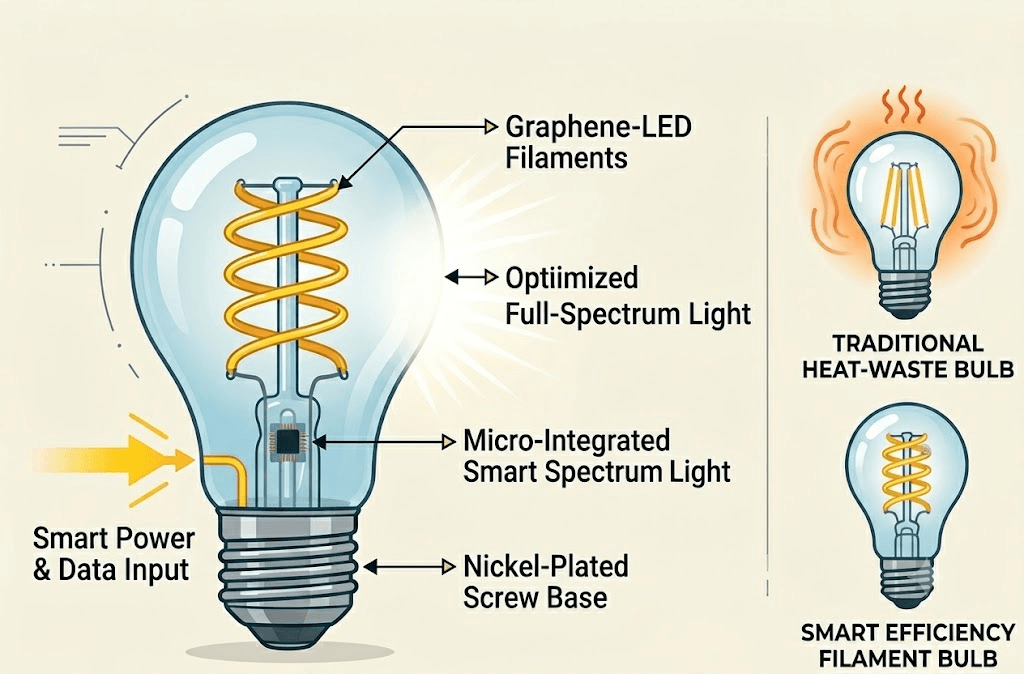
Jak działa oświetlenie LED: Nauka stojąca za nowoczesnymi energooszczędnymi żarówkami
Oświetlenie LED całkowicie zmieniło sposób, w jaki oświetlamy nasze domy, biura, hotele, restauracje, i przestrzenie komercyjne. W porównaniu z tradycyjnymi żarówkami i żarówkami CFL, Oświetlenie LED zapewnia lepszą efektywność energetyczną, dłuższą żywotność, poprawiona jakość oświetlenia, i niższe koszty utrzymania.
Jednakże, wiele osób na co dzień korzysta z żarówek LED, nie wiedząc, co tak naprawdę dzieje się w ich wnętrzu. Po włączeniu światła LED, jak elektryczność staje się jasna, komfortowe oświetlenie?
Odpowiedź leży w małym, ale potężnym elemencie wewnątrz żarówki: układ półprzewodnikowy.
Kiedy prąd elektryczny przepływa przez ten chip, wytwarza światło widzialne w procesie zwanym elektroluminescencja. W odróżnieniu od żarówek, które podgrzewają żarnik, aż zacznie się świecić, Technologia LED przekształca energię elektryczną bezpośrednio w światło. W rezultacie, znacznie mniej energii marnuje się w postaci ciepła.
Dzięki tej wydajnej konwersji energii, Żarówki LED mogą zmniejszyć zużycie energii elektrycznej nawet o 80% w porównaniu z tradycyjnym oświetleniem. Ponadto, ich długa żywotność pomaga zmniejszyć częstotliwość wymiany i koszty konserwacji.
Dzisiaj, Technologia LED jest stosowana wszędzie — od dekoracyjnych żarówek Edisona i żarówek świec w żyrandolach po oprawy wpuszczane typu downlight, inteligentne systemy oświetleniowe, i komercyjne rozwiązania oświetleniowe.
W tym kompletnym przewodniku, wyjaśnimy jak działa oświetlenie LED, jakie elementy znajdują się wewnątrz żarówki LED, dlaczego diody LED są bardziej energooszczędne niż tradycyjne żarówki, i jak czynniki takie jak jasność, temperatura barwowa, i CRI wpływają na wrażenia świetlne. Poniższy rysunek może pomóc w lepszym zrozumieniu działania żarówki.
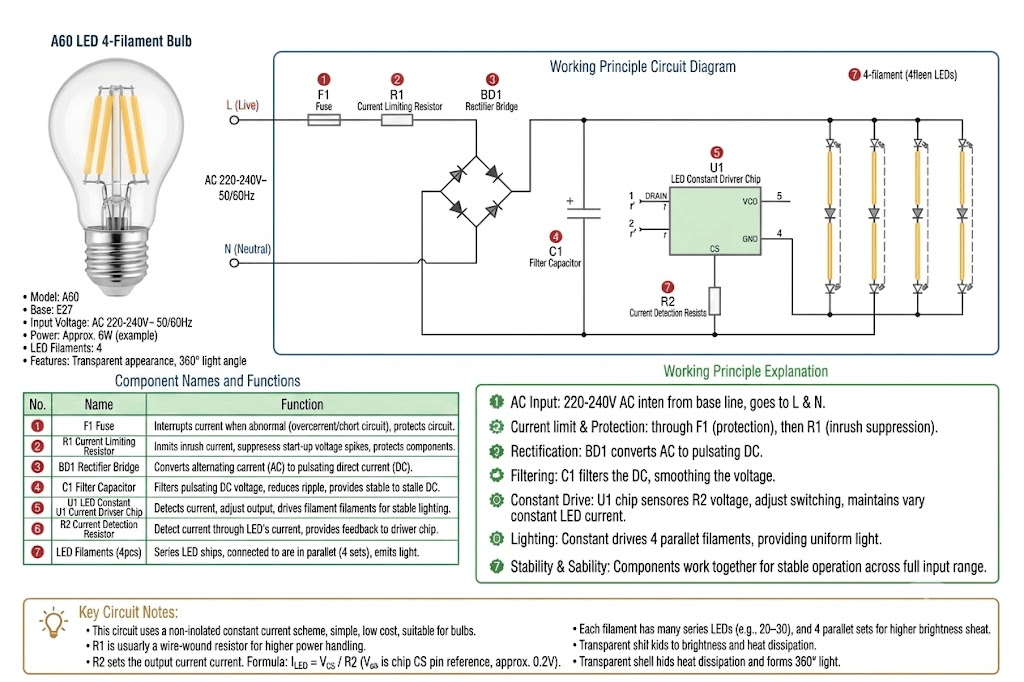
Niezależnie od tego, czy wymieniasz pojedynczą żarówkę, modernizację oświetlenia w domu, lub planujesz komercyjny projekt oświetlenia, zrozumienie technologii LED pomoże Ci wybrać odpowiednie rozwiązanie oświetleniowe.
Co to jest dioda LED?
Zanim zaczniesz odkrywać, jak działa oświetlenie LED, ważne jest, aby zrozumieć, co oznacza termin „LED”..
LED oznacza Dioda elektroluminescencyjna. Jest to urządzenie półprzewodnikowe, które przekształca energię elektryczną w światło widzialne.
W odróżnieniu od żarówek, które wytwarzają światło poprzez ogrzewanie żarnika wolframowego, Diody LED wytwarzają światło w procesie zwanym elektroluminescencja.
Po prostu wyjaśnione:
Wchodzi prąd → Elektrony poruszają się wewnątrz półprzewodnika → Energia jest uwalniana w postaci światła
Ponieważ diody LED nie muszą podgrzewać żarnika, zużywają energię znacznie efektywniej i wytwarzają znacznie mniej ciepła.
Ta prosta, ale zaawansowana technologia jest powodem, dla którego są żarówki LED:
- Bardziej energooszczędny
- Trwalsze
- Chłodnica podczas pracy
- Bardziej elastyczny w projektowaniu
- Dostępne w wielu kolorach i stylach oświetlenia
Ponieważ technologia LED stale się udoskonala, producenci mogą teraz tworzyć żarówki o lepszej jasności, większa dokładność kolorów, i inteligentniejsze funkcje sterowania.
Krótka historia technologii LED
Chociaż oświetlenie LED jest uważane za nowoczesną technologię, jego rozwój trwał wiele lat.
Pierwsze diody LED nie były przeznaczone do oświetlenia domu. Zamiast, używano ich głównie jako małych lampek kontrolnych w urządzeniach elektronicznych.
Nadgodziny, udoskonalenia materiałów półprzewodnikowych przekształciły diody LED w dzisiejsze zaawansowane rozwiązania oświetleniowe.
1962 – Pierwsza praktyczna dioda LED
Nick Holonyak Jr. opracował pierwszą praktyczną widoczną czerwoną diodę LED, tworząc podwaliny pod przyszłą technologię LED.
1970lata 80. XX wieku – opracowano więcej kolorów diod LED
W tym okresie, producenci wprowadzili kolor żółty, pomarańczowy, i zielone diody LED, rozszerzenie zastosowań LED poza proste wskaźniki.
1990s – Niebieska dioda LED zmieniła branżę oświetleniową
Przełomem był rozwój niebieskich diod LED o dużej jasności. Łącząc niebieskie chipy LED z materiałami fosforowymi, producenci mogli wreszcie stworzyć wydajne białe oświetlenie LED.
2000s – Żarówki LED weszły do domów
Wraz ze spadkiem kosztów produkcji i poprawą wydajności, Żarówki LED stały się praktycznym zamiennikiem żarówek i żarówek CFL.
Dziś – oświetlenie LED dominuje na rynku
Nowoczesne diody LED są obecnie szeroko stosowane w:
- Oświetlenie mieszkalne
- Budynki komercyjne
- Hotele i restauracje
- Oświetlenie zewnętrzne
- Inteligentne systemy oświetleniowe
- Zastosowania przemysłowe
Najważniejsze, wynalezienie technologii niebieskich diod LED umożliwiło nowoczesne białe oświetlenie LED i całkowicie zmieniło światowy przemysł oświetleniowy.
Żarówki LED vs żarówki żarowe vs CFL: Który jest lepszy?
Aby lepiej zrozumieć, dlaczego diody LED stały się tak popularne, pomaga to w porównaniu ze starszymi technologiami oświetleniowymi.
| Funkcja | Rozżarzony | CFL | PROWADZONY |
|---|---|---|---|
| Źródło światła | Podgrzewany włókno | Gaz rtęciowy | Układ półprzewodnikowy |
| Efektywność energetyczna | Niski | Średni | Wysoki |
| Typowa wydajność | Wokół 15 mb/szer | Wokół 60 mb/szer | 80–120 lm/W |
| Długość życia | O 1,000 godziny | O 8,000 godziny | 25,000–50 000+ godzin |
| Moc cieplna | Bardzo wysoki | Umiarkowany | Niski |
| Zawartość rtęci | NIE | Tak | NIE |
| Zużycie energii | Najwyższy | Średni | Najniższy |
Jak pokazuje porównanie, Żarówki LED zapewniają korzyści w niemal każdej kategorii.
Na przykład, zastąpienie tradycyjnej żarówki o mocy 60 W żarówką LED o mocy 9 W może zapewnić podobną jasność przy znacznie mniejszym zużyciu energii.
Dlatego, Diody LED są obecnie preferowanym wyborem dla właścicieli domów, biznesy, i specjalistów od oświetlenia na całym świecie.
Anatomia nowoczesnej żarówki LED
Choć żarówka LED z zewnątrz może wyglądać podobnie do tradycyjnej żarówki, jego struktura wewnętrzna jest znacznie bardziej zaawansowana.
Wewnątrz każdej żarówki LED, kilka kluczowych komponentów współpracuje ze sobą, tworząc stabilny, wydajny, i wysokiej jakości oświetlenie.
Zrozumienie tych części wyjaśnia również, dlaczego niektóre żarówki LED działają znacznie lepiej niż inne, nawet jeśli mają tę samą moc.
Układ LED: Serce żarówki
Chip LED jest najważniejszą częścią całego systemu oświetleniowego.
Jest to element wytwarzający światło, gdy przepływa przez niego prąd elektryczny.
Nowoczesne chipy LED są zwykle wykonane z materiałów półprzewodnikowych, takich jak:
- azotek galu (GaN)
- Azotek indu i galu (InGaN)
Materiały te skutecznie przekształcają energię elektryczną w światło widzialne.
Dzisiaj, Chipy LED są powszechnie dostępne w trzech głównych typach:
Dioda SMD (Urządzenie do montażu powierzchniowego)
Diody LED SMD są szeroko stosowane w produktach oświetleniowych gospodarstwa domowego.
Zalety:
- Wysoka wydajność
- Równomierny rozkład światła
- Niezawodne działanie
- Ekonomiczna produkcja
Często spotykane są w żarówkach LED, panele, i downlighty.
Dioda COB (Chip na pokładzie)
Diody COB łączą wiele chipów LED na jednej płycie.
Korzyści obejmują:
- Wyższa jasność
- Lepsze zarządzanie ciepłem
- Mocniejszy strumień świetlny
Są często używane w oświetleniu komercyjnym i zastosowaniach wymagających dużej mocy.
Chip żarnika LED
Technologia żarników LED ma na celu imitować wygląd tradycyjnych żarników.
Te żarówki są szczególnie popularne:
- Żarówki Edisona
- Zabytkowe oświetlenie
- Dekoracyjne żyrandole
- Lampy wiszące
Ponieważ technologia chipów LED stale się poprawia, producenci mogą produkować jaśniejsze rozwiązania oświetleniowe przy niższym zużyciu energii.
Sterownik LED: Mózg żarówki LED
Podczas gdy chip LED jest częścią wytwarzającą światło, nie może pracować bezpośrednio z energią elektryczną z domu.
To tutaj Sterownik LED staje się niezbędne.
Sterownik LED działa jak mały system zarządzania energią wewnątrz żarówki. Jego głównym zadaniem jest przetwarzanie prądu przemiennego wysokiego napięcia (AC) z instalacji elektrycznej do prądu stałego o niskim napięciu (DC) jakich potrzebuje chip LED.
W prostych słowach:
Energia elektryczna w domu → Sterownik LED → Stabilna moc → Chip LED wytwarza światło
Oprócz konwersji mocy, wysokiej jakości sterownik LED kontroluje również przepływ prądu i chroni żarówkę przed wahaniami elektrycznymi.
Dobry sterownik LED zapewnia kilka ważnych funkcji:
- Konwersja prądu przemiennego na prąd stały
- Regulacja prądu stałego
- Ochrona napięcia
- Ochrona przeciwprzepięciowa
- Redukcja migotania
- Kompatybilność ze ściemnianiem
Dlatego, jakość sterownika LED ma bezpośredni wpływ na wydajność żarówki, stabilność jasności, i żywotność.
Z drugiej strony, sterowniki LED niskiej jakości mogą powodować typowe problemy, takie jak:
- Widoczne migotanie
- Brzęczące dźwięki
- Zmniejszona jasność
- Krótsza żywotność
- Słaba wydajność ściemniania
Z tego powodu, ważny jest wybór żarówek LED od sprawdzonych producentów, szczególnie do zastosowań, w których jakość oświetlenia ma znaczenie, takie jak domy, hotele, restauracje, i sklepy detaliczne.
Radiator: Utrzymywanie żarówek LED w chłodzie i niezawodności
Chociaż żarówki LED wytwarzają znacznie mniej ciepła niż żarówki tradycyjne, nie są całkowicie pozbawione ciepła.
Podczas pracy, chip LED nadal generuje niewielką ilość ciepła. Jeśli to ciepło nie może prawidłowo uciec, może to spowodować uszkodzenie elementów wewnętrznych i skrócenie żywotności żarówki.
Aby rozwiązać ten problem, producenci dodają radiator do projektów żarówek LED.
Radiator działa poprzez pochłanianie ciepła z chipa LED i przenoszenie go do otaczającego środowiska.
Typowe materiały pochłaniające ciepło obejmują:
- Aluminium
- Ceramiczny
- Grafitowe materiały kompozytowe
Wśród tych materiałów, aluminium jest szeroko stosowane, ponieważ zapewnia doskonałe odprowadzanie ciepła, a jednocześnie jest lekkie i niedrogie.
W rezultacie, skuteczne zarządzanie ciepłem pomaga żarówkom LED:
- Utrzymuj stabilną jasność
- Zapobiegaj przegrzaniu
- Popraw niezawodność
- Osiągnij ich znamionową żywotność
Z tego też powodu dwie żarówki LED o tej samej mocy mogą mieć bardzo różną żywotność. Konstrukcja wewnętrzna i system zarządzania ciepłem robią znaczącą różnicę.
Powłoka fosforowa i dyfuzor: Tworzenie wygodnego białego światła
Ciekawostką dotyczącą technologii LED jest to, że większość chipów LED nie wytwarza w naturalny sposób białego światła.
Zamiast, wiele chipów LED wytwarza niebieskie światło.
Jak więc producenci tworzą ciepłe białe lub chłodne białe oświetlenie, które widzimy na co dzień?
Odpowiedzią jest specjalny materiał tzw powłoka fosforowa.
Na chip LED nałożona jest warstwa luminoforu. Kiedy niebieskie światło przechodzi przez tę powłokę, część energii jest przekształcana na inne długości fal, w tym żółty, pomarańczowy, i czerwone światło.
Połączenie tych kolorów tworzy dla ludzkiego oka wrażenie białego światła.
Technologia ta pozwala producentom produkować różne kolory oświetlenia, w tym:
| Temperatura barwowa | Wygląd | Typowe zastosowania |
|---|---|---|
| 2700K | Ciepły biały | Sypialnie, salony |
| 3000K | Miękki, ciepły biały | Hotele, restauracje, jadalnie |
| 4000K | Neutralna biel | Kuchnie, łazienki, biura |
| 5000K | Chłodny biały | Obszary robocze, obszary komercyjne |
| 6500K | Światło dzienne białe | Garaże, warsztaty |
Ponadto, Żarówki LED zwykle zawierają dyfuzor lub osłonę optyczną.
Dyfuzor pomaga:
- Rozprowadź równomiernie światło
- Zmniejsz odblaski
- Wyeliminuj ostre, gorące punkty
- Stwórz wygodniejsze wrażenia wizualne
Dlatego, wysokiej jakości żarówki LED to nie tylko jasność, ale także zapewnienie wygodnego i zrównoważonego oświetlenia.
Podstawa i obudowa lampy: Dzięki czemu żarówki LED są łatwe w montażu
Po zmontowaniu elementów wewnętrznych, są zabezpieczone wewnątrz obudowy żarówki i połączone z podstawą lampy.
Podstawa to część łącząca żarówkę z oprawą i dostarczająca energię elektryczną.
Typowe typy podstaw żarówek LED obejmują:
- E26
- E27
- E12
- E14
- GU10
- MR16
- B22
Wybór właściwej podstawy żarówki jest istotny, ponieważ niekompatybilna podstawa może uniemożliwić montaż lub mieć wpływ na bezpieczeństwo.
Na przykład:
- E26 i E27 są szeroko stosowane w domowych gniazdach śrubowych
- E12 jest powszechnie stosowany w dekoracyjnych żarówkach do świec i żyrandolach
- GU10 często można spotkać w reflektorach punktowych i oświetleniu wpuszczanym
Poprzez zrozumienie podstaw żarówek, możesz szybko wybrać odpowiednią zamienną żarówkę LED do swojej oprawy.
Nauka stojąca za oświetleniem LED: Jak elektryczność staje się światłem
Teraz, gdy rozumiemy główne części żarówki LED, przyjrzyjmy się bliżej faktycznej nauce stojącej za tym, jak diody LED wytwarzają światło.
Chociaż proces ten zachodzi na poziomie mikroskopowym, podstawowa idea jest zaskakująco prosta.
Złącze P-N: Gdzie generowane jest światło
Wewnątrz każdego chipa LED znajduje się specjalna konstrukcja zwana a Złącze P-N.
Zawiera dwie warstwy półprzewodnika:
Półprzewodnik typu N
Warstwa ta zawiera dodatkowe elektrony.
Półprzewodnik typu P
Warstwa ta zawiera obszary zwane „dziurami”.,”, czyli przestrzenie, w których mogą poruszać się elektrony.
Kiedy prąd przepływa przez diodę LED, elektrony przemieszczają się z warstwy typu N w stronę warstwy typu P.
Kiedy elektrony łączą się z dziurami, uwalniana jest energia.
Proces ten nazywa się rekombinacja elektron-dziura.
Uwolniona energia pojawia się w postaci maleńkich cząstek światła, tzw fotony.
W prostych słowach:
Elektryczność → Ruch elektronów → Uwalnianie fotonów → Światło widzialne
W odróżnieniu od żarówek, Diody LED nie muszą niczego podgrzewać, aby wytworzyć światło.
Z tego powodu, znacznie więcej energii elektrycznej staje się użytecznym oświetleniem zamiast marnowanego ciepła.
Dlaczego diody LED wytwarzają różne kolory
Kolor diody LED zależy od materiałów półprzewodnikowych zastosowanych wewnątrz chipa.
Różne materiały mają różne poziomy energii, znany również jako przerwy pasmowe.
Różnica energii określa długość fali wytwarzanego światła.
Na przykład:
| Kolor | Przybliżona długość fali |
|---|---|
| Czerwony | 620–750 nm |
| Zielony | 520–560 nm |
| Niebieski | 460–495 nm |
| Fioletowy | 400–420 nm |
Dostosowując materiały półprzewodnikowe, producenci mogą tworzyć różne kolory diod LED do różnych zastosowań.
Technologia ta jest wykorzystywana w:
- Dekoracyjne oświetlenie
- Inteligentne żarówki RGB
- Wyświetl ekrany
- Oświetlenie architektoniczne
Jak białe diody LED wytwarzają białe światło
Co ciekawe, większość białych żarówek LED nie wytwarza bezpośrednio białego światła.
Zamiast, używają kombinacji:
- Niebieski chip LED
- Powłoka fosforowa
Niebieska dioda LED wytwarza niebieskie światło, podczas gdy powłoka fosforowa przekształca część tego światła w inne kolory.
Kiedy te kolory się mieszają, nasze oczy postrzegają wynik jako białe światło.
Ta metoda zapewnia:
- Wysoka wydajność
- Lepsza spójność kolorów
- Długa żywotność
- Niższy koszt produkcji
Z powodu tych zalet, diody LED z konwersją fosforu stały się standardową technologią w nowoczesnym białym oświetleniu LED.
Dlaczego oświetlenie LED jest tak energooszczędne
Jednym z głównych powodów, dla których ludzie decydują się na oświetlenie LED, jest oszczędność energii.
Jednakże, Prawdziwą zaletą technologii LED nie jest po prostu to, że zużywa mniej watów. Kluczowa różnica polega na tym jak skutecznie diody LED przekształcają energię elektryczną w światło użytkowe.
Tradycyjne żarówki działają poprzez podgrzewanie metalowego żarnika, aż stanie się wystarczająco gorący, aby świecić. W rezultacie, większość energii elektrycznej jest uwalniana w postaci ciepła, a nie światła.
Wobec, Żarówki LED wykorzystują technologię półprzewodnikową do przekształcania energii elektrycznej bezpośrednio w światło.
To oznacza:
Mniej marnowanej energii → Więcej energii zamienionej na światło → Niższe koszty energii elektrycznej
Dzięki tej wydajnej konstrukcji, Żarówki LED mogą zapewnić taką samą jasność jak tradycyjne żarówki, zużywając przy tym znacznie mniej energii.
Dla właścicieli domów, oznacza to niższe miesięczne rachunki za prąd.
Dla firm, takie jak hotele, restauracje, biura, i sklepy detaliczne, Oświetlenie LED może znacznie obniżyć długoterminowe koszty eksploatacji.
Lumeny vs Waty: Zrozumienie jasności diod LED
Przy zakupie tradycyjnych żarówek, wiele osób używało watów do oszacowania jasności.
Jednakże, z technologią LED, ta metoda nie jest już dokładna.
Powód jest prosty:
Waty mierzą zużycie energii, nie jasność.
Lumeny mierzą rzeczywistą moc świetlną.
Na przykład:
| Tradycyjna żarówka | Jasność | Odpowiednik LED |
|---|---|---|
| 25W Żarowe | Wokół 250 lumenów | 2– Dioda LED 3W |
| 40W Żarowe | Wokół 450 lumenów | 4–6W dioda LED |
| 60W Żarowe | Wokół 800 lumenów | 7–10W dioda LED |
| 75W Żarowe | Wokół 1,100 lumenów | 10–13W dioda LED |
| 100W Żarowe | Wokół 1,600 lumenów | 14–18W dioda LED |
Dlatego, przy wyborze żarówki LED, lepiej skupić się na lumenach niż na watach.
Na przykład, jeśli chcesz mieć taką samą jasność jak stara żarówka o mocy 60 W, poszukaj żarówki LED z ok 800 lumenów.
Ta prosta zmiana nawyków zakupowych może pomóc Ci łatwiej wybrać odpowiednią żarówkę LED.
Mniej ciepła oznacza więcej korzyści
Kolejną ważną zaletą oświetlenia LED jest zmniejszona produkcja ciepła.
Tradycyjne żarówki wydzielają dużą ilość energii w postaci ciepła. W rzeczywistości, około 90% ich energii może zostać utracone w postaci ciepła, a nie użytecznego światła.
Żarówki LED działają inaczej.
Ponieważ efektywniej przekształcają energię elektryczną, wytwarzają znacznie mniej ciepła.
W rezultacie:
- Pokoje pozostają chłodniejsze
- Systemy klimatyzacji pracują mniej
- Oprawy pozostają bezpieczniejsze
- Żarówki działają dłużej
- Zmniejsza się straty energii
Jest to szczególnie cenne w ciepłym klimacie, budynki komercyjne, oraz zamknięte oprawy, w których nadmierne ciepło może mieć wpływ na wydajność.
Ponadto, niższe zużycie energii pomaga zmniejszyć emisję dwutlenku węgla, sprawia, że oświetlenie LED jest wyborem bardziej przyjaznym dla środowiska.
Jakość koloru: Dlaczego dobre oświetlenie to coś więcej niż jasność
Chociaż jasność jest ważna, nie jest to jedyny czynnik decydujący o jakości oświetlenia.
Komfortowe środowisko oświetleniowe zależy również od:
- Temperatura barwowa
- Wskaźnik oddawania barw (CRI)
- Wydajność ściemniania
- Kontrola migotania
Czynniki te wpływają na wygląd i samopoczucie przestrzeni.
Na przykład, restauracja może potrzebować ciepła, zapraszające światło, podczas gdy biuro może wymagać jaśniejszego światła, chłodniejsze oświetlenie poprawiające koncentrację.
Zrozumienie tych szczegółów pomoże Ci wybrać żarówki LED pasujące do przeznaczenia każdego pomieszczenia.
Zrozumienie temperatury barwowej (CCT)
Temperatura barwowa opisuje, jak światło wydaje się ludzkiemu oku.
Mierzy się go w Kelvinach (K).
Niższe wartości Kelvina powodują ocieplenie, więcej żółtego światła, podczas gdy wyższe wartości Kelvina powodują chłodniej, bardziej niebieskie światło.
| Temperatura barwowa | Wygląd | Zalecane użycie |
|---|---|---|
| 2700K | Ciepły biały | Sypialnie, salony |
| 3000K | Miękki biały | Jadalnie, hotele, restauracje |
| 4000K | Neutralna biel | Kuchnie, łazienki, biura |
| 5000K | Chłodny biały | Obszary robocze, obszary komercyjne |
| 6500K | Światło dzienne | Garaże, warsztaty |
Na przykład:
Żarówka LED o temperaturze 2700 K tworzy przytulną atmosferę, dzięki czemu idealnie nadaje się do stref relaksu.
Tymczasem, żarówka 4000 K lub 5000 K zapewnia wyraźniejsze i bardziej energetyczne oświetlenie, co lepiej sprawdza się w środowiskach pracy.
Dlatego, wybór właściwej temperatury barwowej jest tak samo ważny jak wybór odpowiedniej jasności.
Dlaczego CRI ma znaczenie w oświetleniu LED
Kolejnym ważnym czynnikiem wpływającym na jakość oświetlenia jest CRI, lub Wskaźnik oddawania barw.
CRI mierzy, jak dokładnie źródło światła oddaje prawdziwe kolory obiektów w porównaniu z naturalnym światłem słonecznym.
Im wyższa wartość CRI, tym bardziej naturalne kolory się pojawiają. Możesz zobaczyć różnicę pomiędzy różnymi ocenami CRI zgodnie z poniższym obrazkiem.
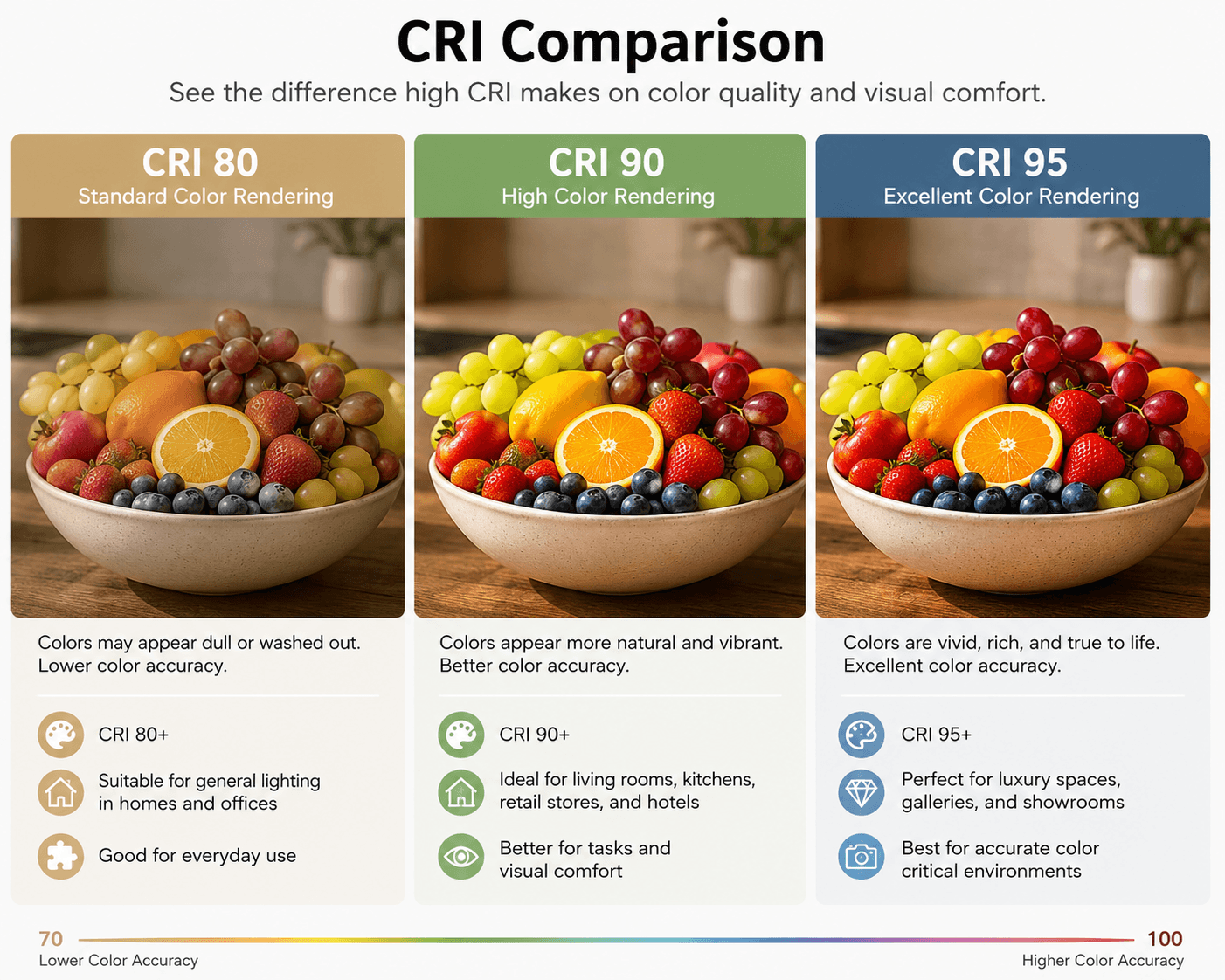
Do codziennego oświetlenia domu, CRI 80+ jest zazwyczaj akceptowalne.
Jednakże, do pomieszczeń, w których liczy się wygląd koloru, jak na przykład:
- Restauracje
- Sklepy odzieżowe
- Galerie sztuki
- Hotele
- Obszary makijażu
CRI 90+ Często zalecane są żarówki LED.
Oświetlenie o wysokim CRI może sprawić:
- Jedzenie wygląda na świeższe
- Odcienie skóry wydają się bardziej naturalne
- Kolory wnętrza wyglądają na bogatsze
- Produkty wydają się bardziej atrakcyjne
Dlatego, Sama jasność nie definiuje wysokiej jakości żarówki LED.
Technologia ściemniania LED: Tworzenie właściwej atmosfery
Jedną z zalet nowoczesnego oświetlenia LED jest możliwość regulacji jasności.
Jednakże, Żarówki LED działają inaczej niż tradycyjne żarówki żarowe.
Żarówki można przyciemnić po prostu zmniejszając moc elektryczną.
Żarówki LED wymagają specjalnych elektronicznych układów sterowania.
Typowe technologie przyciemniania diod LED obejmują:
Najnowocześniejsze przyciemnianie
Tradycyjna metoda przyciemniania, często stosowana w starszych systemach.
Ściemnianie krawędzi tylnej
Nowsza technologia, która zwykle zapewnia płynniejsze i cichsze przyciemnianie diod LED.
Inteligentne przyciemnianie
Umożliwia użytkownikom kontrolowanie jasności za pomocą:
- Aplikacje mobilne
- Asystenci głosowi
- Systemy inteligentnego domu
Podczas instalowania ściemnialnych żarówek LED, zawsze sprawdzaj kompatybilność żarówki i ściemniacza.
Użycie niekompatybilnego ściemniacza może spowodować:
- Migocący
- Brzęczenie
- Ograniczony zakres ściemniania
- Skrócona żywotność żarówki
Zrozumienie migotania diod LED
Chociaż żarówki LED są bardzo wydajne, produkty niskiej jakości mogą powodować migotanie.
Migotanie diody LED zwykle ma miejsce, gdy sterownik nie jest w stanie zapewnić stabilnego prądu elektrycznego.
Typowe przyczyny obejmują:
- Sterowniki niskiej jakości
- Nieprawidłowa kompatybilność ściemniacza
- Zły projekt obwodu
Widoczne migotanie może powodować:
- Dyskomfort oczu
- Bóle głowy
- Problemy z nagrywaniem kamery
- Obniżony komfort widzenia
Na szczęście, wysokiej jakości żarówki LED z niezawodnymi sterownikami mogą znacznie zmniejszyć lub wyeliminować problemy z migotaniem.
Do obszarów, w których ludzie spędzają wiele godzin, takie jak biura, sypialnie, i przestrzenie komercyjne, Szczególnie ważny jest wybór oświetlenia LED pozbawionego migotania.
Dlaczego żarówki LED działają tak długo
Jedną z najbardziej imponujących zalet technologii LED jest jej wyjątkowo długa żywotność.
W odróżnieniu od żarówek, które zwykle zawodzą nagle, gdy żarnik się przepali, Żarówki LED działają zupełnie inaczej.
Zamiast nagle przestać, Diody LED stopniowo tracą jasność w miarę upływu czasu. Proces ten nazywa się amortyzacja lumenów.
Innymi słowy, Wysokiej jakości żarówka LED zwykle nie „przepala się” tak jak tradycyjne żarówki. Zamiast, jego strumień świetlny powoli maleje, aż do osiągnięcia końca okresu użytkowania.
Większość wysokiej jakości żarówek LED ma znamiona:
- 15,000 godziny
- 25,000 godziny
- 35,000 godziny
- 50,000+ godziny
Dla przeciętnego gospodarstwa domowego, żarówka LED o żywotności 25 000 godzin może wytrzymać ponad 10 lata, w zależności od codziennego użytkowania.
Jednakże, rzeczywista żywotność żarówki LED zależy od kilku ważnych czynników:
Zarządzanie ciepłem
Dobra konstrukcja termiczna pomaga chronić chip LED i komponenty elektroniczne przed przegrzaniem.
Jakość sterownika
Niezawodny przetwornik zapewnia stabilne dostarczanie mocy i zmniejsza naprężenia części wewnętrznych.
Stabilność elektryczna
Stabilne napięcie pomaga zapobiegać przedwczesnym uszkodzeniom.
Wentylacja oprawy
Właściwy przepływ powietrza umożliwia ucieczkę ciepła i poprawia długoterminową wydajność.
Dlatego, natomiast sama technologia LED została zaprojektowana tak, aby służyć przez wiele lat, jakość produktu i projekt wewnętrzny nadal odgrywają główną rolę.
Typowe zastosowania oświetlenia LED
Ponieważ technologia LED jest wydajna, wytrzymały, i bardzo elastyczny, jest obecnie używany w prawie każdym typie zastosowań oświetleniowych.
Od prostych żarówek domowych po zaawansowane inteligentne systemy oświetleniowe, Diody LED stały się istotną częścią nowoczesnego projektowania oświetlenia.
Oświetlenie LED w budynkach mieszkalnych
W domach, Powszechnie stosowane są żarówki LED:
- Lampy sufitowe
- Lampy wiszące
- Żyrandole
- Lampy stołowe
- Lampy podłogowe
- Oprawy wpuszczane
- Oprawy zewnętrzne
Na przykład, W salonach popularne są dekoracyjne żarówki LED typu Filament, jadalnie, i restauracjach, ponieważ łączą w sobie efektywność energetyczną z klasycznym wyglądem vintage.
Tymczasem, Oprawy LED typu downlight i lampy sufitowe zapewniają jasne światło, czyste oświetlenie kuchni, łazienki, i obszary pracy.
Dekoracyjne oświetlenie LED
Technologia LED zmieniła także oświetlenie dekoracyjne.
Do popularnych produktów dekoracyjnych LED zaliczają się m.in:
- Żarówki LED Edisona
- Żarówki LED do świec
- Zabytkowe żarówki żarnikowe
- Żarówki kuliste
- Inteligentne żarówki RGB
Produkty te pozwalają projektantom i właścicielom domów tworzyć różne atmosfery przy jednoczesnym niskim zużyciu energii.
Na przykład:
- Ciepłe, białe żarówki świec tworzą elegancki efekt żyrandola
- Żarówki Edisona dodają industrialnego stylu vintage
- Inteligentne żarówki RGB tworzą konfigurowalne kolory i nastroje
Komercyjne oświetlenie LED
Firmy coraz częściej wybierają oświetlenie LED, ponieważ obniża to koszty operacyjne i poprawia jakość obsługi klienta.
Typowe zastosowania obejmują:
- Hotele
- Restauracje
- Sklepy detaliczne
- Biura
- Magazyny
- Centra handlowe
W środowiskach komercyjnych, Jakość oświetlenia jest szczególnie ważna, ponieważ wpływa:
- Komfort klienta
- Wygląd produktu
- Atmosfera marki
- Produktywność pracowników
W rezultacie, wiele projektów komercyjnych wykorzystuje obecnie wysokiej jakości systemy LED zamiast tradycyjnych rozwiązań oświetleniowych.
Specjalne zastosowania diod LED
Poza codziennym oświetleniem, Diody LED znajdują również zastosowanie w specjalistycznych dziedzinach, takich jak:
- Oświetlenie uliczne
- Oświetlenie architektoniczne
- Oświetlenie krajobrazu
- Oświetlenie ogrodnicze
- Aplikacje UV
- Oświetlenie samochodowe
Ponieważ diody LED są małe, wydajny, i łatwe do kontrolowania, nadal tworzą nowe możliwości w różnych branżach.
Jak wybrać najlepszą żarówkę LED
Po zapoznaniu się z działaniem oświetlenia LED, wybór odpowiedniej żarówki LED staje się znacznie łatwiejszy.
Jednakże, wielu kupujących nadal koncentruje się wyłącznie na mocy lub cenie. W rzeczywistości, kilka czynników decyduje o tym, czy żarówka LED zapewni odpowiednią jasność, komfort, i żywotność.
Przed zakupem, rozważ następujące punkty.
1. Sprawdź jasność (lumenów)
Pierwszym krokiem jest wybór właściwej jasności.
Pamiętać:
Waty = zużycie energii
Lumeny = Moc światła
Na przykład:
- 400–500 lumenów → Małe lampki i oświetlenie akcentujące
- 800 lumenów → Zamiennik tradycyjnej żarówki o mocy 60W
- 1,100+ lumenów → Większe pomieszczenia lub jaśniejsze przestrzenie
Wybór odpowiedniego strumienia świetlnego pozwala uniknąć zbyt ciemnego lub niepotrzebnego rozjaśnienia pomieszczeń.
2. Wybierz odpowiednią temperaturę barwową
Najlepsza temperatura barwowa zależy od atmosfery, jaką chcesz stworzyć.
Do relaksujących przestrzeni:
Wybierać:
- 2700K
- 3000K
Nadaje się do:
- Sypialnie
- Pokoje dzienne
- Restauracje
- Hotele
Dla środowisk pracy:
Wybierać:
- 4000K
- 5000K
Nadaje się do:
- Biura
- Kuchnie
- Warsztaty
Odpowiednia temperatura barwowa może znacznie poprawić komfort i wrażenia wizualne.
3. Rozważ CRI, aby uzyskać lepszą jakość kolorów
Jeśli dokładne kolory mają znaczenie, wybierz żarówkę LED o wyższym CRI.
Do oświetlenia ogólnego:
- CRI 80+ jest dopuszczalne
Do zastosowań premium:
- CRI 90+ jest zalecane
Szczególnie przydatne jest oświetlenie o wysokim CRI:
- Jadalnie
- Ekspozycje detaliczne
- Grafika
- Przestrzenie do makijażu
- Projekty hotelarskie
4. Potwierdź typ podstawy żarówki
Zawsze sprawdzaj, czy podstawa żarówki pasuje do Twojej oprawy.
Typowe opcje obejmują:
- E26
- E27
- E12
- E14
- GU10
- MR16
- B22
Na przykład:
Podstawy śrubowe E26 i E27 są powszechnie stosowane w urządzeniach gospodarstwa domowego.
E12 i E14 są często używane do dekoracyjnych żyrandoli i żarówki w kształcie świec.
Wybór odpowiedniej podstawy zapewnia łatwy montaż i bezpieczną eksploatację.
5. Sprawdź kompatybilność przyciemniania
Jeśli chcesz regulować jasność, upewnij się, że żarówka jest oznaczona jako ściemniana.
Sprawdź także to:
- Ściemniacz obsługuje technologię LED
- Zakres mocy jest zgodny
- Żarówka i ściemniacz są zaprojektowane do współpracy
W przeciwnym razie, może wystąpić migotanie lub słaba wydajność przyciemniania.
6. Rozważ środowisko urządzeń
Nie każda żarówka LED nadaje się do każdej oprawy.
Na przykład:
- Oprawy zamknięte wymagają żarówek zaprojektowanych z myślą o kontroli ciepła
- Oprawy zewnętrzne wymagają konstrukcji odpornych na warunki atmosferyczne
- Środowiska o wysokiej temperaturze wymagają lepszego zarządzania ciepłem
Wybór odpowiedniej żarówki LED do środowiska pomaga zmaksymalizować żywotność i wydajność. Sprawdź tutaj, aby uzyskać więcej wysokiej jakości żarówek LED Huiyeetech.
Często zadawane pytania dotyczące oświetlenia LED
Jak w prostych słowach działają diody LED?
Diody LED wytwarzają oświetlenie, gdy prąd przepływa przez chip półprzewodnikowy. Ruch elektronów uwalnia energię w postaci fotonów, które widzimy jako światło widzialne.
W odróżnieniu od tradycyjnych żarówek, Diody LED nie nagrzewają żarnika, dzięki czemu marnują znacznie mniej energii.
Czy każdą żarówkę mogę wymienić na żarówkę LED??
W większości przypadków, Tak.
Jednakże, powinieneś sprawdzić:
- Typ podstawy żarówki
- Woltaż
- Wymagania dotyczące jasności
- Kompatybilność ze ściemnianiem
- Ograniczenia urządzeń
Wybór kompatybilnej żarówki LED zapewnia bezpieczną instalację i niezawodne działanie.
Dlaczego żarówki LED są droższe od tradycyjnych żarówek??
Żarówki LED zwykle kosztują więcej z góry, ponieważ zawierają zaawansowane komponenty, takie jak:
- Chipy półprzewodnikowe
- Sterowniki LED
- Systemy zarządzania ciepłem
- Elementy optyczne
Jednakże, wyższy koszt początkowy jest zwykle równoważony przez:
- Niższe zużycie energii elektrycznej
- Dłuższa żywotność
- Mniej zamienników
Nadgodziny, Diody LED często stają się bardziej ekonomicznym wyborem.
Czy diody LED zużywają dużo prądu?
NIE.
Oświetlenie LED to jedna z najbardziej energooszczędnych dostępnych obecnie technologii oświetleniowych.
Zapewniają podobną jasność, zużywając znacznie mniej energii elektrycznej w porównaniu z żarówkami tradycyjnymi i świetlówkami CFL.
Czy żarówki LED są lepsze od żarówek?
Dla większości zastosowań, Tak.
Oferta żarówek LED:
- Niższe zużycie energii
- Dłuższa żywotność
- Mniej ciepła
- Lepsza trwałość
- Więcej opcji projektowania
Dlatego diody LED stały się standardowym zamiennikiem tradycyjnego oświetlenia.
Ostatnie przemyślenia: Dlaczego oświetlenie LED jest przyszłością
Oświetlenie LED całkowicie zmieniło sposób, w jaki używamy i rozumiemy światło.
Przekształcając energię elektryczną bezpośrednio w światło widzialne, Diody LED zapewniają wyjątkową efektywność energetyczną, dłuższą żywotność, niższe koszty utrzymania, i lepszą wydajność oświetlenia.
Ponadto, ciągłe doskonalenie technologii półprzewodników, Sterowniki LED, zarządzanie ciepłem, jakość koloru, i inteligentne sterowanie sprawiają, że oświetlenie LED jest jeszcze potężniejsze i bardziej wszechstronne.
Niezależnie od tego, czy wymieniasz pojedynczą żarówkę domową, modernizację powierzchni handlowej, lub zaprojektowanie kompletnego projektu oświetlenia, zrozumienie działania oświetlenia LED pozwala podejmować lepsze decyzje.
Od oszczędności energii po poprawę komfortu, Technologia LED oferuje inteligentniejsze, odkurzacz, i bardziej zrównoważony sposób oświetlania świata.
Przyszłość oświetlenia to diody LED – i ta przyszłość już nadeszła.