English
 العربية
 Français
 Deutsch
 Italiano
 Polski
 Português
 Русский
 Español
 Українська


Światło dzienne vs. Miękkie białe żarówki – które powinieneś kupić?
Wybór odpowiedniej żarówki może radykalnie zmienić wygląd i samopoczucie Twojego domu. Jednak wielu właścicieli domów wciąż boryka się z częstym pytaniem:
Czy wybrać żarówkę o świetle dziennym, czy o miękkiej białej żarówce?
Obie opcje mogą zapewnić doskonałe oświetlenie, tworzą bardzo odmienną atmosferę i służą różnym celom. Zrozumienie różnic pomiędzy temperaturą barwową, jasność, i oddawanie barw pomogą Ci dokonać najlepszego wyboru dla każdego pomieszczenia w domu.
W tym przewodniku, Wyjaśnimy wszystko, co musisz wiedzieć o żarówkach LED o świetle dziennym i miękkiej bieli, łącznie z ich kluczowymi różnicami, idealne zastosowania, efektywność energetyczna, i jak wybrać idealną żarówkę do swoich potrzeb.
Którą żarówkę kupić – miękką biel czy światło dzienne?
Zanim wyjaśnię różnicę, Myślę, że dzięki poniższemu obrazkowi będziesz lepiej zrozumiały:
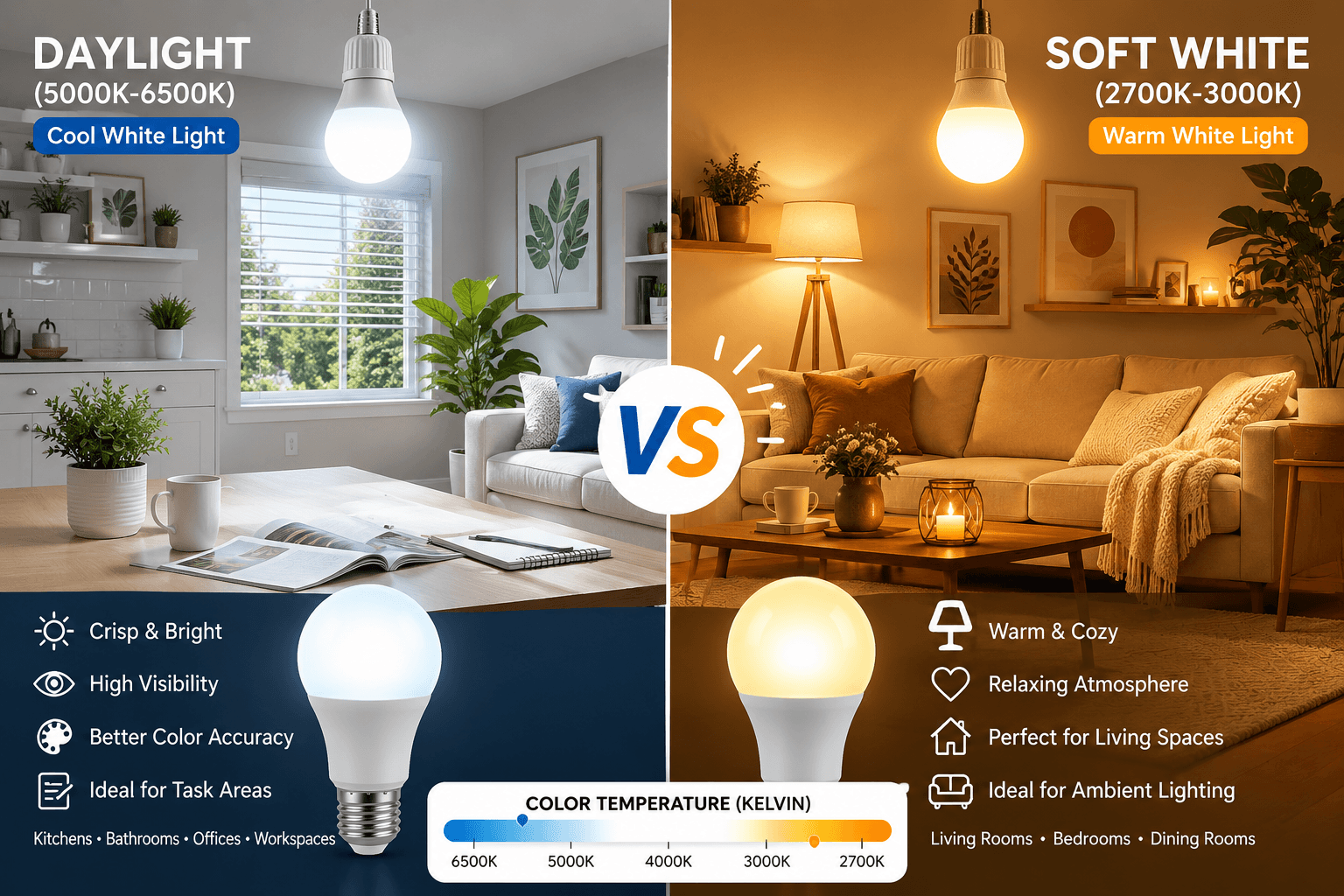
Odpowiedź w dużej mierze zależy od tego, gdzie planujesz używać żarówki i atmosfery, jaką chcesz stworzyć.
Chociaż osobiste preferencje z pewnością odgrywają rolę, kilka prostych wskazówek pomoże Ci wybrać odpowiednie oświetlenie dla każdej przestrzeni.
Zacznijmy od przyjrzenia się żarówkom dziennym.
Żarówki dzienne
Przede wszystkim, ważne jest, aby nie mylić żarówki dzienne z jasne białe żarówki. Chociaż mogą wydawać się podobne, dają zauważalnie różne efekty świetlne.
Żarówki LED typu Daylight zostały zaprojektowane tak, aby jak najdokładniej naśladować naturalne światło słoneczne. Wytwarzają chrupiące, chłodne światło, które pomaga dokładnie ukazać kolory i poprawia widoczność.
Typowo, żarówki światła dziennego mają temperaturę barwową pomiędzy 5000K i 6500 K, które bardzo przypomina naturalne światło dzienne.
Gdzie należy używać żarówek dziennych?
Ponieważ żarówki dzienne zwiększają kontrast i poprawiają klarowność obrazu, idealnie nadają się do obszarów, w których wykonywane są szczegółowe zadania, jak na przykład:
- Biura domowe
- Pokoje do nauki
- Lampki na biurko
- Łazienki
- Pralnie
- Warsztaty
- Garaże
- Kuchnie
Na przykład, kiedy czytasz przepisy, siekanie warzyw, nakładanie makijażu, lub zajmując się rzemiosłem, żarówki światła dziennego pomagają dokładniej widzieć kolory i szczegóły.
Dlaczego żarówki dzienne doskonale zapewniają dokładność kolorów
Oprócz temperatury barwowej, Kolejnym ważnym czynnikiem jest Wskaźnik oddawania barw (CRI).
CRI mierzy, jak dokładnie źródło światła oddaje kolory w porównaniu z naturalnym światłem słonecznym.
- CRI 80 = Dobrze
- CRI 90+ = Doskonale
- CRI 95+ = Profesjonalna dokładność kolorów
Żarówka dzienna z a CRI powyżej 90 może przygotować jedzenie, odzież, meble, i dekoracje wydają się bardziej żywe i realistyczne.
Jeśli liczy się dokładne postrzeganie kolorów, zawsze wybieraj żarówkę o dziennej temperaturze barwowej i wysokim współczynniku CRI.
Przykład jasności
Jeśli wymieniasz tradycyjną żarówkę o mocy 60 W na żarówkę LED emitującą światło dzienne, szukać:
- Zużycie energii: 7–10 watów
- Jasność: 650–800 lumenów
Pamiętać, lumeny, a nie waty, określają jasność żarówki.
Miękkie białe żarówki LED
Natomiast żarówki dzienne skupiają się na przejrzystości i widoczności, Miękkie białe żarówki zostały zaprojektowane tak, aby zapewnić ciepło i wygodę.
Miękkie białe żarówki LED emitują ciepło, zachęcający blask, który sprawia, że pomieszczenia stają się przytulne i relaksujące. Ich temperatura barwowa zazwyczaj mieści się w przedziale od 2700K i 3000K.
Gdzie należy używać miękkich białych żarówek?
Miękkie białe żarówki idealnie nadają się do pomieszczeń, w których komfort i atmosfera są ważniejsze niż oświetlenie zadaniowe, w tym:
- Pokoje dzienne
- Sypialnie
- Jadalnie
- Pokoje rodzinne
- Korytarze
- Kąciki czytelnicze
Ich ciepłe światło tworzy przyjazną atmosferę, która zachęca do relaksu i rozmów.
Z tego powodu, wielu właścicieli domów woli miękkie, białe oświetlenie w obszarach, w których odpoczywają po męczącym dniu.
Ograniczenia miękkiego białego oświetlenia
Chociaż miękkie białe żarówki doskonale nadają się do tworzenia nastroju i komfortu, mogą nie być najlepszym wyborem w przypadku bardzo szczegółowych zadań.
Czytanie drobnym drukiem, wykonywanie prac precyzyjnych, lub rozpoznanie subtelnych różnic w kolorach może być trudniejsze w cieplejszym oświetleniu.
Przykład jasności
Do wymiany żarówki żarowej o mocy 60 W, wybierz miękką białą żarówkę LED:
- Zużycie energii: 7–10 watów
- Jasność: 650–800 lumenów
Podobnie jak żarówki dzienne, jasność zależy od lumenów, a nie od mocy.
Zrozumienie świateł LED
Dzisiaj, Żarówki LED są najpopularniejszą opcją oświetlenia na całym świecie – i nie bez powodu.
Chociaż diody LED mogą kosztować nieco więcej niż tradycyjne żarówki, oferują znaczne długoterminowe oszczędności.
Dłuższa żywotność
Wysokiej jakości żarówka LED może trwać:
- 15,000–50 000 godzin
W porównaniu do:
- 1,000 godzin dla żarówek
Oznacza to mniejszą liczbę wymian i niższe koszty konserwacji.
Niższe zużycie energii
Żarówki LED zużywają znacznie mniej prądu.
Na przykład:
- 60W żarówka żarowa = około 13 USD rocznie
- Odpowiednik żarówki LED = około 2 USD rocznie
W rezultacie, wielu właścicieli domów odzyskuje początkową inwestycję w ciągu pierwszego roku użytkowania.
Moc
Zanim technologia LED stała się głównym nurtem, konsumenci zazwyczaj oceniali jasność na podstawie mocy.
Powszechnym założeniem było:
Wyższe waty = jaśniejsze światło
Jednakże, to już nie jest prawdą.
W nowoczesnym oświetleniu, moc wskazuje po prostu, ile energii zużywa żarówka, a nie jej jasność.
Dlatego, porównując żarówki LED, skup się na lumenach, a nie na watach.
lumenów (Jasność)
Lumeny mierzą całkowitą ilość światła widzialnego emitowanego przez żarówkę.
W prostych słowach:
Więcej lumenów = większa jasność
Co jest jaśniejsze: Światło dzienne lub miękka biel?
Wiele osób zakłada, że żarówki dzienne są automatycznie jaśniejsze niż żarówki o miękkiej bieli.
W rzeczywistości, jasność zależy całkowicie od strumienia świetlnego.
Na przykład:
- Żarówka dzienna: 800 lumenów
- Miękka biała żarówka: 800 lumenów
Obie żarówki dają tę samą jasność.
Jednakże, żarówki dzienne często wydają się jaśniejsze, ponieważ ludzkie oko postrzega chłodniejsze kolory jako bardziej intensywne.
kelwin (Temperatura barwowa)
Podstawową różnicą między żarówkami o świetle dziennym i miękkimi białymi jest ich temperatura barwowa.
Temperaturę barwową mierzy się w Kelvinach (K).
Miękki biały
- 2700K–3000K
- Ciepły żółty blask
- Przytulna i relaksująca atmosfera
Światło dzienne
- 5000K–6500K
- Wyraźne biało-niebieskie światło
- Maksymalna widoczność i dokładność kolorów
Szybka tabela porównawcza
| Funkcja | Miękki biały | Światło dzienne |
|---|---|---|
| Temperatura barwowa | 2700K–3000K | 5000K–6500K |
| Wygląd | Ciepły żółty | Chłodny biały |
| Najlepsze dla | Sypialnie, Pokoje dzienne, Jadalnie | Kuchnie, Łazienki, Biura |
| Nastrój | Odprężający & Przytulny | Jasny & Energetyzujący |
| Dokładność kolorów | Dobry | Doskonały |
| Zalecane CRI | 90+ | 90+ |
Wniosek
Wybór pomiędzy żarówkami o świetle dziennym i miękkimi białymi nie polega na decydowaniu, która z nich jest lepsza – chodzi o wybór odpowiedniego oświetlenia do odpowiedniego otoczenia.
Jeśli chcesz ciepło, komfortowa atmosfera sprzyjająca relaksowi i zabawie gości, wybierać miękkie białe żarówki LED (2700K–3000K).
Jeśli potrzebujesz maksymalnej widoczności, dokładne kolory, i lepsze oświetlenie zadaniowe, wybierać żarówki LED do światła dziennego (5000K–6500K).
Niezależnie od temperatury barwowej, zdecydowanie zalecamy wybór żarówek o średnicy A CRI z 90 lub wyższy. Żarówki o wysokim współczynniku CRI sprawiają, że kolory wydają się bardziej naturalne, wibrujący, i bliżej tego, co można zobaczyć w naturalnym świetle słonecznym.
Na Oświetlenie Huiyee, produkowane są nasze standardowe żarówki LED CRI 90+, pomaganie właścicielom domów, detaliści, i dystrybutorzy oświetlenia zapewniają doskonałą jakość oświetlenia i lepsze wrażenia wizualne.
Często zadawane pytania
Czy miękka biel jest tym samym, co ciepła biel??
Nie dokładnie.
Chociaż terminy te są często używane zamiennie, jest niewielka różnica.
- Miękki biały: 2700K–3000K
- Ciepły biały: 3000K–4000K
Ciepłe białe żarówki wydają się nieco bielsze i mniej żółte niż miękkie białe żarówki.
Co jest lepsze: Miękkie białe lub światło dzienne?
Żadne z nich nie jest uniwersalnie lepsze.
Najlepszy wybór zależy od zastosowania.
Wybierać:
- Delikatna biel dla komfortu i relaksu.
- Światło dzienne zapewniające widoczność i działania zorientowane na zadania.
Czy żarówki dzienne i jasne białe są takie same??
NIE.
Jasne, białe żarówki zazwyczaj mieszczą się pomiędzy:
- 3500K–4500K
Dzięki temu są rozwiązaniem pośrednim pomiędzy żarówkami o miękkiej bieli i świetle dziennym.
Wielu właścicieli domów preferuje jasne, białe oświetlenie do kuchni, ponieważ zapewnia czystszy wygląd bez niebieskawego odcienia żarówek światła dziennego.
Czy powinienem używać w kuchni żarówek dziennych czy miękkich białych??
Do większości kuchni, żarówki dzienne są lepszym rozwiązaniem, ponieważ poprawiają widoczność i ułatwiają przygotowywanie posiłków.
Jednakże, jeśli światło dzienne wydaje się zbyt chłodne lub niebieskie, Jasna biała żarówka o temperaturze około 4000 K może stanowić doskonały kompromis.
Poszukuję wysokiej jakości żarówek LED?
Nasza fabryka produkuje szeroką gamę produktów oświetleniowych LED, aby sprostać różnym potrzebom w zakresie oświetlenia mieszkaniowego i komercyjnego.
Oferujemy:
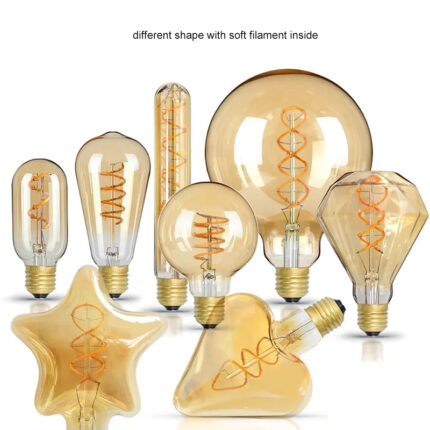
- Żarówki żarnikowe LED
- Żarówki LED A19/60
- E26 & Żarówki LED E27
- Żarówki LED do świec
- Żarówki Edisona
- Żarówki kuliste
- Żarówki rurowe LED
- Dekoracyjne żarówki LED
- Żarówki dekoracyjne o dużych rozmiarach
- Ściemnialne żarówki LED
- Inteligentne żarówki LED
- Niestandardowy OEM & Rozwiązania oświetleniowe ODM
Kliknij tutaj, aby uzyskać więcej przedmiotów
Oprócz naszej standardowej oferty produktów, wiele żarówek dekoracyjnych można dostosować do własnych wymagań, łącznie z kształtem, moc, temperatura barwowa, CRI, opakowanie, branding, i potrzeby certyfikacyjne.
Niezależnie od tego, czy jesteś hurtownią oświetlenia, dystrybutor, detalista, Sprzedawcy z Amazona, wykonawca projektu, lub właściciel marki, możemy pomóc w realizacji Twoich pomysłów na oświetlenie.
Więcej opcji żarówek LED, prosimy odwiedzić naszą stronę internetową. Jeśli masz jakieś pytania, niestandardowe wymagania, lub potrzeby zaopatrzeniowe, nie krępuj się skontaktuj się z naszym zespołem bezpośrednio. Zawsze chętnie pomożemy Ci znaleźć idealne rozwiązanie oświetleniowe.
Powiązane artykuły
Przeczytaj więcej Rozważ więcej