 English
 العربية
 Français
 Deutsch
 Italiano
 Polski
 Português
 Русский
 Español
 Українська


Temperatura barwowa – co to oznacza?
Kupując żarówkę, często spotkasz się z takimi terminami jak temperatura barwowa, ciepła biel, chłodna biel, I światło dzienne. Jeśli nie jesteś pewien, co one oznaczają, z pewnością nie jesteś sam.
W przeszłości, wybór żarówki był prosty, ponieważ w większości domów używano tradycyjnych żarówek, które dawały podobny ciepły blask. Dzisiaj, Jednakże, PROWADZONY, fluorowiec, i świetlówki CFL są dostępne w szerokim zakresie temperatur barwowych. W rezultacie, wybór właściwej barwy światła jest tak samo ważny, jak wybór właściwej podstawy żarówki czy jasności.
Zrozumienie temperatury barwowej pomaga stworzyć odpowiednią atmosferę, poprawić widoczność, i upewnij się, że żarówki zamienne pasują do istniejącego oświetlenia.
Co to jest temperatura barwowa?
W prostych słowach, temperatura barwowa opisuje wygląd białego światła wytwarzanego przez źródło światła. Zamiast mierzyć jasność, wskazuje, czy pojawia się światło ciepły (żółty), neutralny, Lub Fajny (niebieski).
Temperaturę barwową mierzy się w kelwin (K).
- 2700K–3000K: Ciepły biały
- 3500K: Neutralna biel
- 4000K: Chłodny biały
- 5000K–6500K: Światło dzienne
Po prostu pamiętaj:
- Niższy Kelvin = Cieplejsze światło
- Wyższy Kelvin = chłodniejsze światło
Ważne jest, aby o tym pamiętać temperatura barwowa nie determinuje jasności. Jasność mierzy się osobno w lumenów (lm).
Dlaczego temperatura barwowa ma znaczenie?
Temperatura barwowa ma istotny wpływ na wygląd i atmosferę pomieszczenia.
Na przykład, wyobraź sobie, że przepala się jedna z trzech żarówek w Twojej kuchni. Kupujesz zamiennik z tą samą bazą, kształt, moc, i jasność. Po zainstalowaniu, Jednakże, nowa żarówka wyraźnie różni się od pozostałych — jedna wydaje się ciepła i żółta, podczas gdy nowy wygląda na jasnobiały.
Powód jest prosty: żarówki mają różną temperaturę barwową.
Nawet jeśli żarówki wytwarzają tę samą liczbę lumenów, niedopasowane współczynniki Kelvina mogą sprawić, że pokój będzie wydawał się niespójny i mniej atrakcyjny wizualnie. Dlatego, pasujące do kelwin (K) Ocena to jeden z najłatwiejszych sposobów uzyskania równomiernego oświetlenia w całym domu.
Wykres temperatury barwowej (Skala Kelvina)
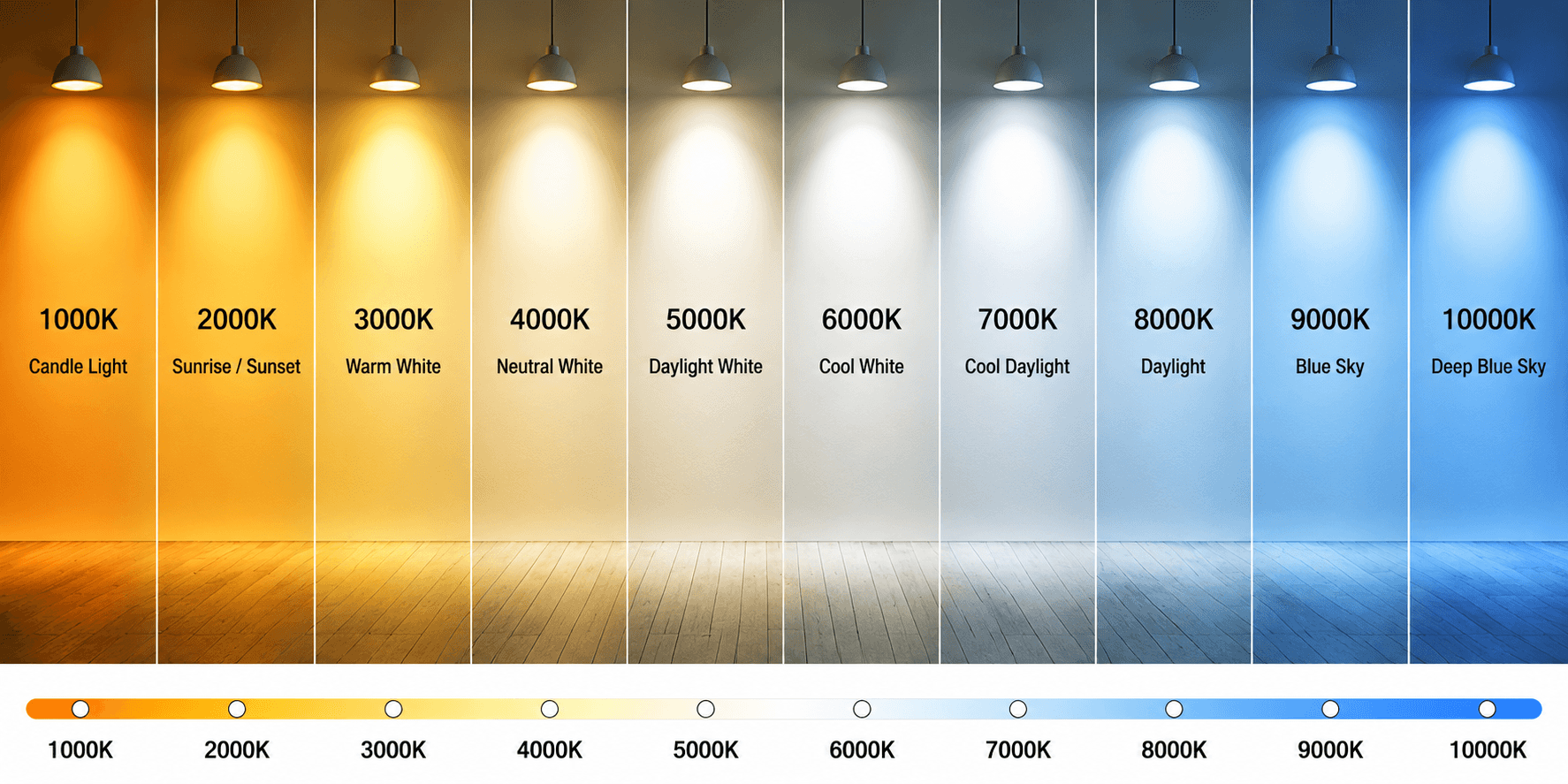
Na szczęście, porównywanie jasnych kolorów jest łatwe. The kelwin (K) skala pokazuje, jak ciepłe lub chłodne będzie źródło światła.
| Temperatura barwowa | Wygląd | Typowe zastosowanie |
|---|---|---|
| 1000K | Światło świecy | Dekoracyjna atmosfera |
| 2700K–3000K | Ciepły biały | Domy, hotele, restauracje |
| 3500K | Neutralna biel | Biura, szkoły |
| 4000K | Chłodny biały | Kuchnie, łazienki |
| 5000K–6500K | Światło dzienne | Warsztaty, sprzedaż detaliczna, biura |
| 9000K | Czyste, błękitne niebo | Naturalne odniesienie |
Większość producentów wyraźnie drukuje Ocena Kelvina zarówno na opakowaniu, jak i na specyfikacji produktu, co ułatwia wybór właściwej żarówki zamiennej.
Co się stanie, jeśli nie znam temperatury barwowej moich istniejących żarówek??
Jeśli Twoja aktualna żarówka nie wyświetla liczby Kelvinów, Nie martw się.
Większość oświetlenia mieszkaniowego ma jedną z tych popularnych temperatur barwowych:
- 2700K–3000K – Ciepły biały
- 3500K - Biały
- 4000K – Chłodna biel
- 6500K – Światło dzienne
Porównując istniejące oświetlenie z tymi standardowymi zakresami, zazwyczaj można znaleźć najbliższe dopasowanie.
Na szczęście, podczas zakupów online, liczba Kelvinów jest prawie zawsze podana w specyfikacjach produktu, co znacznie ułatwia wymianę.
2700K–3000K – Ciepła Biel
Wśród wszystkich temperatur barwowych, Ciepły biały to najpopularniejszy wybór w przypadku oświetlenia mieszkaniowego. Bardzo przypomina delikatny blask tradycyjnych żarówek i tworzy przyjazną atmosferę, relaksująca atmosfera.
Najlepsze dla
- Pokoje dzienne
- Sypialnie
- Jadalnie
- Hotele
- Restauracje
- Dekoracyjne oświetlenie
Zalety
- Tworzy ciepło, przytulna atmosfera
- Wygodny do stosowania wieczorem
- Idealny do żarówek LED w stylu vintage i Edisona
- Uwydatnia drewniane meble i ciepłe kolory wnętrz
Ogólnie, Ciepła Biel to najlepszy wybór wszędzie tam, gdzie priorytetem jest komfort i relaks.
3500K – Neutralna Biel
Jeśli szukasz równowagi pomiędzy ciepłym i chłodnym oświetleniem, 3500K Neutralny biały to doskonały wybór. Zapewnia czystość, naturalnie wyglądające oświetlenie, bez efektu nadmiernego żółtego lub niebieskiego.
Najlepsze dla
- Biura
- Szkoły
- Recepcje
- Poczekalnie
- Powierzchnie handlowe
- Korytarze
Zalety
- Wygodny do codziennego użytku
- Naturalny wygląd koloru
- Nadaje się zarówno do pomieszczeń mieszkalnych, jak i komercyjnych
- Pomaga zmniejszyć zmęczenie oczu podczas długotrwałego użytkowania
W rezultacie, 3500K to popularna opcja w przypadku przestrzeni, które służą wielu celom.
4000K – Chłodna biel
Dla jaśniejszego oświetlenia na co dzień, 4000K Chłodny biały to jedna z najbardziej wszechstronnych dostępnych opcji. Wytwarza chrupiące, czyste oświetlenie z bardzo małą ilością żółtego odcienia, ułatwiając dostrzeżenie szczegółów.
Najlepsze dla
- Kuchnie
- Łazienki
- Pralnie
- Warsztaty
- Garaże
- Zewnętrzne oświetlenie zabezpieczające
Zalety
- Jasny, czysty wygląd
- Doskonała dokładność kolorów
- Idealny do gotowania, czyszczenie, i pielęgnacja
- Popularny zarówno w domach, jak i budynkach komercyjnych
Więc, 4000K to jedna z najczęściej zalecanych temperatur barwowych w oświetleniu zadaniowym.
6500K – Światło dzienne
Gdy wymagana jest maksymalna jasność i widoczność, 6500K. Światło dzienne jest często preferowanym wyborem. Bardzo przypomina naturalne światło dzienne i wytwarza jasne, białe światło z zauważalnym niebieskim odcieniem.
Najlepsze dla
- Biura
- Warsztaty
- Ekspozycje detaliczne
- Studia fotograficzne
- Magazyny
- Oświetlenie zewnętrzne
Zalety
- Maksymalna widoczność
- Doskonałe oddawanie barw
- Pomaga poprawić koncentrację
- Idealny tam, gdzie istotne jest dokładne rozpoznawanie kolorów
Wskazówka: Jeśli wolisz ciepłą i relaksującą atmosferę, unikaj używania żarówek 6500 K w sypialniach i salonach.
Światło dzienne a żarówki dzienne o pełnym spektrum działania
Chociaż terminy te są często używane zamiennie, Żarówki LED do oświetlenia dziennego I Żarówki dzienne o pełnym spektrum działania nie są takie same.
A 6500K Żarówka dzienna po prostu naśladuje kolor naturalnego światła dziennego.
A Żarówka o pełnym spektrum, Jednakże, został zaprojektowany tak, aby wytwarzać szerszy zakres widzialnych długości fal, które bardziej przypominają naturalne światło słoneczne. Te specjalistyczne lampy są powszechnie używane w fotografii, wzrost roślin, i terapię światłem, w tym aplikacje, które mogą pomóc osobom dotkniętym Sezonowe zaburzenie afektywne (SMUTNY).
Jak wybrać odpowiednią temperaturę barwową
Idealna temperatura barwowa zależy od sposobu użytkowania pomieszczenia. Jako ogólny przewodnik, poniższe zalecenia sprawdzają się w większości zastosowań.
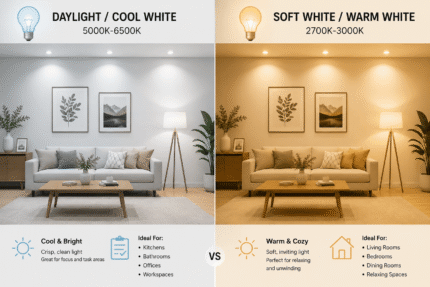
| Pokój | Zalecana temperatura barwowa |
|---|---|
| Sypialnia | 2700K–3000K |
| Salon | 2700K–3000K |
| Jadalnia | 2700K–3000K |
| Kuchnia | 4000K |
| Łazienka | 4000K |
| ministerstwo spraw wewnętrznych | 4000K–5000K |
| Warsztat | 5000K–6500K |
| Wyświetlacz detaliczny | 5000K–6500K |
| Bezpieczeństwo na zewnątrz | 4000K–6500K |
Często zadawane pytania
Czy wyższy stopień Kelvina oznacza jaśniejszą żarówkę??
NIE. Kelvin mierzy kolor światła, podczas gdy jasność mierzy się w lumenów (lm). Dwie żarówki o tym samym strumieniu świetlnym mogą mieć zupełnie różne temperatury barwowe.
Czy lepsze jest 3000K czy 4000K??
Żadne z nich nie jest uniwersalnie lepsze. 3000K tworzy ciepłą i relaksującą atmosferę, idealną do pomieszczeń mieszkalnych, chwila 4000K zapewnia jaśniejszy, czystsze oświetlenie, które lepiej pasuje do kuchni, łazienki, i obszary pracy.
Czy 2700K to to samo, co miękka biel?
Tak. Większość producentów używa Miękki biały I Ciepły biały zamiennie z żarówkami ok 2700K. Chociaż sformułowania mogą się nieznacznie różnić w zależności od marki, generalnie wytwarzają to samo ciepło, wygodne światło.
Która temperatura barwowa jest najlepsza dla żarówek LED?
Nie ma jednej najlepszej opcji. Idealna temperatura barwowa zależy od tego, gdzie żarówka będzie używana. Ciepły biały (2700K–3000K) najlepiej sprawdza się w pomieszczeniach relaksacyjnych, podczas gdy Cool White (4000K) i światło dzienne (5000K–6500K) są lepsze do oświetlenia zadaniowego i środowiska pracy.
Jaka temperatura barwowa jest najlepsza dla sypialni?
Większość ekspertów od oświetlenia zaleca 2700K–3000K, ponieważ ciepłe światło tworzy przytulną atmosferę i sprzyja relaksowi.
Czy mogę mieszać różne temperatury barwowe??
Możesz, ale ogólnie najlepiej jest utrzymywać tę samą temperaturę barwową w jednym pomieszczeniu. Spójne oświetlenie zapewnia czystość, bardziej profesjonalny wygląd.
Jaka temperatura barwowa jest najbliższa naturalnemu światłu dziennemu?
6500K najbardziej przypomina naturalne światło dzienne i jest powszechnie stosowany w warsztatach, biura, ekspozycje detaliczne, oraz inne obszary, w których wymagana jest maksymalna widoczność.
Ostatnie przemyślenia
Wybór słuszności temperatura barwowa jest tak samo ważne jak wybór właściwej podstawy żarówki lub jasności. Niezależnie od tego, czy wolisz ciepły blask 2700K, zrównoważony wygląd 3500K, wyraźna klarowność 4000K, lub jasne oświetlenie 6500K. Światło dzienne, zrozumienie Skala Kelvina ułatwia stworzenie idealnego oświetlenia dla każdego pomieszczenia.
Przed zakupem żarówek zamiennych, zawsze sprawdzaj kelwin (K) ocena obok typ podstawowy I strumień świetlny. Dopasowanie wszystkich trzech specyfikacji pomoże zapewnić spójność, komfortowe oświetlenie w całym domu lub miejscu pracy.
Huiyee Lighting działa w tej dziedzinie od ponad 10 lata. Kliknij tutaj aby uzyskać więcej opcji dotyczących temperatury barwowej żarówek LED.