 English
 العربية
 Français
 Deutsch
 Italiano
 Polski
 Português
 Русский
 Español
 Українська


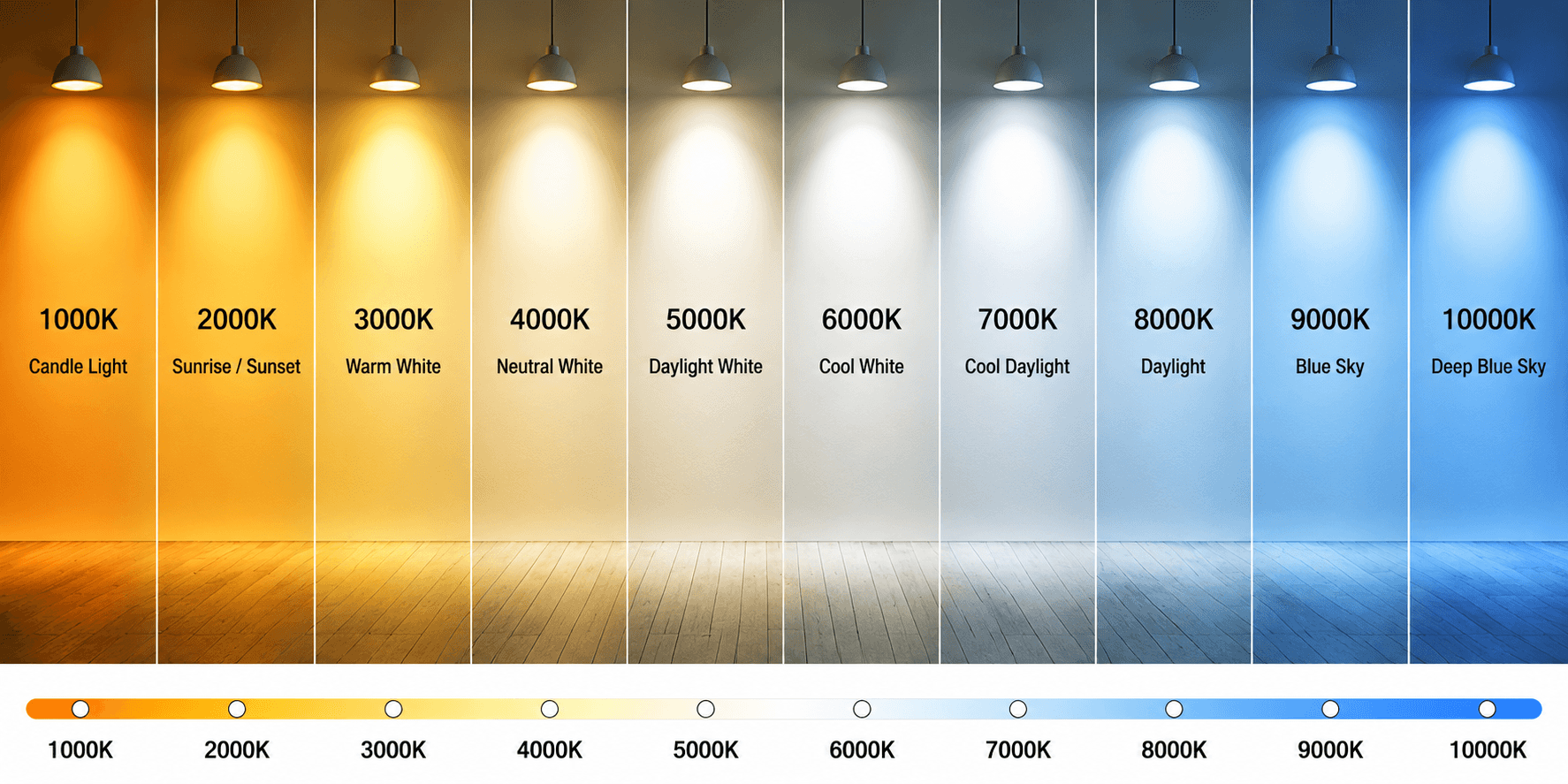
10 Common Questions About LED Light Bulb Color Temperature
When buying Żarówki LED in bulk, dystrybutorzy, hurtownicy, detaliści, and lighting project buyers most often ask about color temperature.
The right temperatura barwowa affects an LED bulb’s appearance, atmosfera, i zastosowanie. Dlatego, buyers need to understand what 2200K, 2700K, 3000K, 4000K, 5000K, and 6000K mean before placing a wholesale order.
Below are 10 common questions about LED bulb color temperature, covering color temperature basics, aplikacja, jasność, CRI, ściemnianie, wycena, and wholesale purchasing.
1. What Is LED Bulb Color Temperature?
LED bulb color temperature describes how warm or cool the light looks and is measured in Kelvin (K).
Ogólnie, a lower Kelvin value produces warmer, więcej żółtego światła, while a higher Kelvin value produces cooler, bielsze światło.
Na przykład:
- 2200K–2400K: Extra warm or amber light
- 2700K: Warm yellow light
- 3000K: Ciepłe białe światło
- 3500K: Neutral warm white
- 4000K: Neutralna biel
- 5000K: Daylight white
- 6000K: Cool white light
Dlatego, color temperature is mainly about the appearance of light, not the amount of light produced.
For wholesale buyers, it is important to specify CCT together with wattage, lumenów, CRI, woltaż, and bulb base when requesting an RFQ.
2. What Are the Most Common LED Bulb Color Temperatures?
The most common color temperatures for Żarówki LED are 2700K, 3000K, 4000K, 5000K, i 6000 tys.
Jednakże, decorative lighting may also use 2200K and 2400K to create a warmer vintage atmosphere.
| Temperatura barwowa | Lekki wygląd | Typowe zastosowania |
|---|---|---|
| 2200K | Bursztyn / Extra Warm | Bars, restauracje, hotele, oświetlenie dekoracyjne |
| 2400K | Very Warm | Vintage interiors, sypialnie, gościnność |
| 2700K | Ciepły żółty | Sypialnie, salony, hotele |
| 3000K | Ciepły biały | Domy, restauracje, hotele, sprzedaż detaliczna |
| 3500K | Neutral Warm White | Kuchnie, łazienki, sprzedaż detaliczna |
| 4000K | Neutralna biel | Biura, sklepy, kuchnie, szkoły |
| 5000K | Światło dzienne białe | Garaże, warsztaty, magazyny |
| 6000K | Chłodny biały | Industrial areas, obszary robocze, utility areas |
W rezultacie, wholesalers can cover more customer requirements by offering a combination of warm, neutralny, and cool CCT options.
3. What Are the Main Differences Between LED Bulb Color Temperatures?
The main difference is the visual appearance of the light, ranging from warm yellow to neutral white and cool white.
2200K–3000K: Ciepłe światło
Lower color temperatures produce a warm, żółty, or amber appearance.
These temperatures are commonly used for:
- Sypialnie
- Pokoje dzienne
- Restauracje
- Hotele
- Bars
- Dekoracyjne oświetlenie
Na przykład, miękkie białe żarówki I soft light bulbs are often selected when customers want a comfortable and relaxing atmosphere.
3500K–4000K: Neutral Light
Następny, neutral temperatures provide a balance between warm and cool tones.
Nadają się do:
- Kuchnie
- Łazienki
- Biura
- Sklepy detaliczne
- Szkoły
- Przestrzenie komercyjne
Zwłaszcza, 4000K is a versatile option for both residential and commercial applications.
5000K–6000K: Cool Light
Higher color temperatures create a clean, bright-looking white appearance.
They are commonly used for:
- Garaże
- Warsztaty
- Magazyny
- Fabryki
- Utility areas
- Oświetlenie zadaniowe
Dlatego, chłodne białe światło I chłodna biel LED bulbs are generally selected when customers prefer a daylight-style appearance.
W prostych słowach:
Lower K = warmer-looking light
Higher K = cooler-looking light
4. What Applications Are Suitable for LED Bulbs from 2200K to 6000K?
Different color temperatures are suitable for different environments, so buyers should select CCT according to the application.
2200K – Extra Warm Light
2200K produces a deep amber and cozy appearance.
It is suitable for restaurants, bary, hotele, vintage interiors, ozdobne wisiorki, and mood lighting.
2400K – Vintage Warm Light
2400K provides a soft and warm appearance and works well for cafés, restauracje, sypialnie, hotele, i elementy dekoracyjne.
2700K – Traditional Warm Light
2700K is commonly used in bedrooms, salony, jadalnie, hotele, and residential lighting.
It is a practical choice for customers who prefer traditional ciepłe światło.
3000K – Warm White Light
3000K provides comfortable ciepłe białe światło with a cleaner appearance than 2700K.
It works well in living rooms, jadalnie, sypialnie, kuchnie, hotele, restauracje, i sklepy detaliczne.
3500K – Neutral Warm White
3500K sits between warm and neutral white.
It is suitable for kitchens, łazienki, restauracje, biura, i środowiska detaliczne.
It can also provide a comfortable warm and light appearance without looking strongly yellow.
4000K – Neutralna Biel
4000K provides a balanced and clean appearance.
It is widely suitable for offices, kuchnie, łazienki, szkoły, sklepy detaliczne, i budynki komercyjne.
5000K – Daylight White
5000K creates a daylight-style appearance.
It is suitable for garages, warsztaty, magazyny, fabryki, biura, and utility rooms.
6000K – Chłodna biel
6000K provides a noticeably cool white appearance.
It can be used in workshops, industrial areas, magazyny, garaże, utility spaces, and task-lighting applications.
Dlatego, when building a wholesale product range, offering several CCT options can help serve different end-user applications. For customized special CCT, proszę skontaktuj się z nami bezpośrednio!
5. Does Higher Color Temperature Mean a Brighter LED Bulb?
NIE. Color temperature and brightness are different specifications.
Color temperature describes whether the light looks warm or cool, chwila lumenów indicate the amount of visible light produced.
Na przykład, a 3000K LED bulb and a 5000K LED bulb can have the same lumen output while producing very different-looking light.
Dlatego, when purchasing an LED lamp or LED light bulb, buyers should check:
- Temperatura barwowa
- lumenów
- Moc
- CRI
- Woltaż
- Bulb base
- Kąt wiązki
- Kompatybilność ze ściemnianiem
- Rated lifetime
This is particularly important for wholesale buyers because customers may have specific requirements for both light appearance and output.
6. Does Color Temperature Affect CRI and Color Rendering?
Color temperature and CRI are different specifications, but both are important when evaluating lighting quality.
CRI, lub Wskaźnik oddawania barw, indicates how accurately a light source reveals the colors of objects.
Na przykład, sklepy detaliczne, hotele, restauracje, and residential projects may require good color rendering so that products, żywność, meble, and interior colors appear more natural.
Dlatego, buyers should specify both CCT and CRI when sourcing LED bulbs.
For B2B products, a clear specification might include:
3000K + CRI 90+ + możliwość przyciemniania + Podstawa E27
This provides much more useful information than specifying color temperature alone.
7. Can One LED Bulb Have Different Color Temperatures?
Tak. Some LED bulbs can provide three different color temperatures in one bulb.
Na przykład, a multi-CCT ściemnialna żarówka LED can switch between:
- Ciepła biel
- Neutralna biel
- Chłodna biel
When combined with a compatible dimmer or control system, users can adjust the lighting according to different needs.
Dla hurtowników, this type of product can reduce the need to stock several separate CCT versions.
Typowe opcje obejmują:
- E27 bulb dimmable LED
- Żarówki LED E26
- Multi-CCT decorative bulbs
- Dimmable LED lamp produkty
Jednakże, buyers should confirm the dimmer type, control method, woltaż, and compatibility before placing an order.
8. Are LED Bulbs with Different Color Temperatures the Same Price?
In standard production, LED bulbs with different color temperatures are generally priced similarly.
Na przykład, common CCT options such as 2700K, 3000K, 4000K, 5000K, and 6000K normally do not create a significant price difference when the other specifications are the same.
Jednakże, pricing may change when buyers request:
- Special color temperatures
- Custom CCT ranges
- Special LED chips
- Advanced dimming functions
- Low-MOQ customization
- Special certifications
- Custom packaging
- Private-label production
Dlatego, when requesting a quotation, wholesalers should provide complete specifications, including CCT, moc, woltaż, opierać, CRI, dimming function, opakowanie, and quantity.
9. How Should Wholesalers Choose the Right LED Bulb Color Temperature?
The best approach is to match color temperature with the intended application and target customer.
| Aplikacja | Zalecana temperatura barwowa |
|---|---|
| Restauracje & Bars | 2200K–2700K |
| Sypialnie | 2700K–3000K |
| Pokoje dzienne | 2700K–3000K |
| Hotele | 2700K–3000K |
| Kuchnie | 3000K–4000K |
| Łazienki | 3000K–4000K |
| Sklepy detaliczne | 3000K–4000K |
| Biura | 4000K–5000K |
| Garaże | 4000K–5000K |
| Warsztaty | 4000K–6000K |
| Magazyny | 5000K–6000K |
| Industrial Areas | 5000K–6000K |
Na przykład, residential customers may prefer warm white products, while commercial and industrial buyers may require more neutral or cool options.
Więc, distributors can consider stocking several popular CCTs instead of relying on only one color temperature.
10. What Should Buyers Check Besides Color Temperature?
Color temperature is only one of several specifications that wholesale buyers should confirm before ordering LED bulbs.
Podstawa żarówki
Pierwszy, confirm the correct bulb base for the target market.
Na przykład, Żarówki LED E26 are commonly used in North American applications, while E27 bulbs are widely used in many international markets.
Ściemnianie
If customers require adjustable brightness, select compatible dimmable bulbs Lub żarówki z możliwością ściemniania.
Na przykład, A ściemnialna żarówka LED E27 can be suitable for residential, gościnność, and decorative applications.
Woltaż
Następny, confirm whether the product is designed for 120V, 220–240 V, or another voltage requirement.
Moc i lumeny
Wattage indicates power consumption, while lumens indicate light output. Both specifications should be confirmed before production.
CRI
For applications where accurate color appearance is important, buyers should confirm the required CRI level.
Certyfikaty
Depending on the target market, buyers may need CE, RoHS, ETL, ul, or other applicable certifications.
Opakowanie
Wreszcie, packaging should be considered carefully for bulk shipments. Individual boxes, protective materials, inner cartons, and master cartons can help reduce transportation damage.
Dimmable LED Bulbs and Color Temperature
It is important to understand that dimming and color temperature are not the same function.
A standard dimmable bulb usually changes brightness without changing its CCT. Jednakże, specially designed products can combine brightness adjustment with color-temperature control.
Na przykład, A dimmable LED lamp may support both brightness adjustment and three CCT settings.
Naraz, buyers should check compatibility with the intended dimmer. A dimmable lamp bulb is not automatically compatible with every dimmer system.
Dlatego, product specifications should clearly state:
- Dimmable or non-dimmable
- Compatible dimmer type
- Dimming range
- Input voltage
- Color-temperature options
- Control method
Clear specifications can help reduce compatibility issues and after-sales problems.
Wholesale LED Bulb Color Temperature Guide
For distributors and importers, the right product mix depends on the target market and sales channel.
| Typ produktu | Zalecane CCT | Typowe zastosowania |
|---|---|---|
| Decorative LED Bulb | 2200K–2700K | Restauracje, hotele, home décor |
| Residential LED Bulb | 2700K–3000K | Domy, mieszkanie, hotele |
| General LED Bulb | 3000K–4000K | Mieszkaniowy & handlowy |
| Commercial LED Bulb | 4000K–5000K | Biura, sklepy, szkoły |
| Industrial LED Bulb | 5000K–6000K | Garaże, magazyny, fabryki |
| Możliwość przyciemniania żarówki LED | 2700K–4000K | Domy & gościnność |
| Multi-CCT LED Bulb | 3 Opcje CCT | Sprzedaż detaliczna & flexible applications |
W rezultacie, wholesalers can build a more flexible product portfolio by combining warm, neutralny, and cool color temperatures.
Naraz, the exact product mix should be based on customer demand, target-market standards, and project requirements.
Frequently Asked Questions About LED Bulb Color Temperature
What color temperature is warm white?
Warm white generally refers to approximately 2700K–3000K and produces a comfortable, yellowish-white appearance.
Czy lepsze jest 3000K czy 4000K??
They serve different applications. 3000K produces warmer-looking light, chwila 4000K provides a more neutral white appearance. The appropriate option depends on the intended application.
Is 5000K too cool for home lighting?
Nie koniecznie. 5000K can be suitable for garages, warsztaty, pomieszczenia gospodarcze, and some kitchens. Warmer CCTs are commonly considered for bedrooms and relaxing areas.
Are dimmable LED bulbs more expensive?
Nie koniecznie. Pricing depends on the LED driver, dimming technology, specifications, order quantity, and customization requirements.
Can one LED bulb provide warm and cool light?
Tak. Some multi-CCT ściemnialne żarówki LED can switch between warm white, neutralna biel, and cool white settings.
What is the difference between soft white and warm white?
The terms can overlap. Soft white light bulbs commonly refer to bulbs around 2700K–3000K, while warm white is also generally used for a similar color-temperature range.
What are color light bulbs?
Color light bulbs usually produce colored light such as red, niebieski, zielony, or RGB effects. They are different from standard white LED bulbs, which are normally specified by their color temperature.
Final Buying Tips for LED Bulb Wholesalers
When sourcing Żarówki LED in bulk, color temperature should be considered together with the complete product specification.
Pierwszy, determine the intended application. Then select the appropriate CCT range. Potem, confirm CRI, lumenów, moc, woltaż, bulb base, kompatybilność ze ściemnianiem, certifications, opakowanie, and MOQ.
For residential and decorative applications, warm CCT options such as 2700K and 3000K can be included. Tymczasem, 4000K is useful for many general and commercial applications, while 5000K–6000K can be considered for work, utility, and industrial environments.
Whether you are sourcing Żarówki LED, Żarówki LED E26, dimmable bulbs, soft light bulbs, or decorative LED products, a well-planned color-temperature range can help your product portfolio serve different customer and project requirements.