 English
 العربية
 Français
 Deutsch
 Italiano
 Polski
 Português
 Русский
 Español
 Українська


Light Bulb Shape: The Complete Guide to Light Bulb Shapes, Sizes, and Codes
Introduction
When selecting a light bulb, many buyers focus mainly on brightness, wattage, or color temperature. However, the light bulb shape is another important factor that should not be overlooked. The shape affects how light is distributed, how the bulb fits into a fixture, and how the overall lighting design looks.
Today, there are many different light bulb shapes available, ranging from classic household bulbs to decorative and specialty designs. Some shapes are created for general illumination, while others are designed to provide focused lighting or enhance the appearance of decorative fixtures.
At first glance, bulb codes such as A19, B11, G25, or PAR38 may appear confusing. However, these codes follow a simple identification system that helps buyers quickly understand the bulb shape and size. Once this system is understood, selecting the right bulb becomes much easier.
Furthermore, as lighting technology continues to develop, traditional bulb designs are now available in more efficient versions, giving buyers greater flexibility when replacing existing bulbs or choosing lighting products for new projects.
Whether you are upgrading home lighting, designing a commercial space, or sourcing products for a lighting business, understanding different bulb shapes and codes will help you make more informed decisions.
Light Bulb Codes Explained
Before exploring individual bulb shapes, it is important to understand how light bulb codes work. These codes provide a simple way to identify a bulb’s design and approximate size.
In most cases, a bulb code consists of a letter followed by a number. The letter represents the bulb shape, while the number indicates the approximate diameter.
For example:
- A19
- B11
- C15
- G25
- MR16
- PAR38
By understanding these codes, buyers can more easily compare bulb types and find suitable replacements without relying solely on appearance.
Understanding the Letters
The letter at the beginning of a bulb code identifies its shape category.
| Code | Shape | Common Application |
|---|---|---|
| A | Standard pear shape | General lighting |
| PS | Pear Straight | High-output lighting |
| B | Bullet shape | Decorative fixtures |
| C | Candle shape | Chandeliers |
| CA | Bent candle shape | Decorative lighting |
| G | Globe shape | Vanity and pendant lights |
| T | Tubular shape | Specialty lighting |
| R | Reflector shape | Directional lighting |
| BR | Bulged reflector | Recessed lighting |
| PAR | Parabolic reflector | Outdoor and commercial lighting |
| MR | Multifaceted reflector | Spotlights |
Each bulb shape has been developed for different lighting requirements. Therefore, understanding the code system is the first step toward choosing the right bulb.
Understanding the Numbers
The number in a bulb code generally represents the bulb diameter measured in eighths of an inch.
For example:
- A19 = 19/8 inches
- B11 = 11/8 inches
- G25 = 25/8 inches
- PAR38 = 38/8 inches
Although some specialty bulbs may use different naming methods, this measurement system applies to most common residential and commercial bulbs.
As a result, learning how bulb codes work makes it easier to select compatible products, especially when replacing existing lighting fixtures.
Bulb Shapes Overview
After understanding bulb codes, the next step is exploring the different light bulb shapes available on the market.
Over the years, bulb designs have evolved from simple incandescent shapes into a wide range of styles created for different lighting purposes. While some bulbs focus on providing comfortable general illumination, others are designed to create decorative effects or deliver precise directional lighting.
Furthermore, modern manufacturing technology allows traditional bulb designs to be produced with improved efficiency and performance. This means buyers can maintain the appearance they want while selecting from a wider range of lighting solutions.
Below is an overview of the most common bulb families:
| Bulb Series | Appearance | Main Purpose |
|---|---|---|
| A | Classic pear shape | Everyday lighting |
| PS | Large pear shape | Higher-output lighting |
| B | Slim bullet shape | Decorative fixtures |
| C | Candle shape | Chandeliers |
| CA | Bent candle shape | Elegant decorative lighting |
| G | Round globe shape | Vanity and pendant lighting |
| T | Tubular shape | Compact and specialty fixtures |
| R / BR / PAR | Reflector shape | Directional lighting |
| MR | Compact reflector | Accent lighting |
In the following sections, we will explore each bulb family in more detail, including their design characteristics and common sizes.
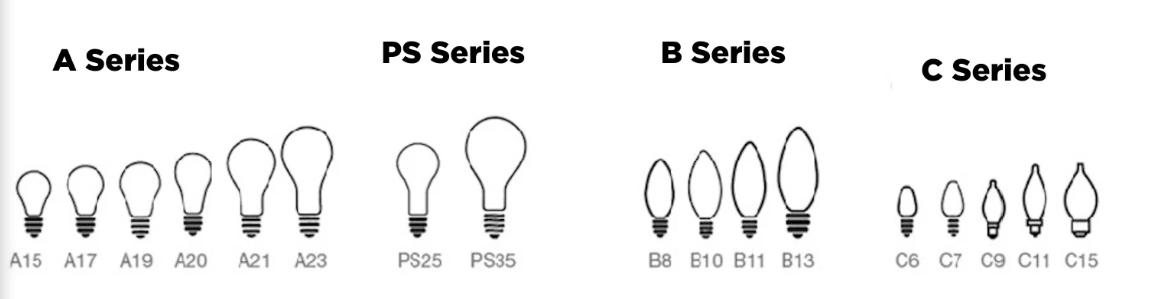
A Series (Standard Light Bulbs)
Starting with the most common bulb category, the A Series is the classic, widely recognized light bulb shape used worldwide. Its familiar pear-shaped design has made it the standard choice for everyday lighting in homes, offices, and commercial spaces.
Because of its balanced shape, the A Series provides a comfortable spread of light and works with a wide range of fixtures. As a result, it remains one of the most popular bulb types for general lighting applications.
Over time, the A Series has continued to evolve with changes in lighting technology. While early versions were mainly incandescent, today’s market offers many variations designed to meet different lighting requirements. Therefore, buyers can easily find A-series bulbs suitable for both traditional and modern lighting projects.
In addition, the universal design of A-series bulbs makes them one of the easiest replacements when upgrading existing fixtures. Their widespread availability and compatibility have helped them remain a preferred choice for residential and commercial lighting.
Common Sizes
The most common A-series bulb sizes include:
- A15
- A19
- A21
- A23
Among these sizes, A19 is the standard household bulb commonly used in North America. Meanwhile, A60 is the equivalent designation widely used in Europe, Asia, Australia, and many other international markets.
Although the naming systems are slightly different, both sizes represent one of the most common general-purpose bulb shapes worldwide.
PS Series (Pear Straight Bulbs)
Moving from standard household bulbs to higher-output designs, the PS Series, also known as Pear Straight Bulbs, features a larger pear-shaped profile with a longer neck compared with the A Series.
Because of its larger size, the PS Series is often selected for applications where stronger illumination is needed. The expanded bulb shape provides additional space for lighting components while maintaining a familiar appearance.
Furthermore, PS bulbs are commonly chosen for larger fixtures and environments where higher brightness is required. Their practical design makes them a suitable option for commercial, industrial, and outdoor lighting applications.
Common Sizes
Common PS-series bulb sizes include:
- PS25
- PS30
- PS35
Larger PS sizes are typically selected when increased light output and broader illumination are required.
B Series (Bullet Bulbs)
Following the larger pear-shaped designs, the B Series introduces a slimmer and more decorative profile. Also known as Bullet Bulbs, these bulbs feature a tapered body with a rounded tip, creating an elegant appearance.
Because the bulb itself often remains visible within the fixture, B-series bulbs are especially popular for decorative lighting designs. Their refined shape adds visual appeal while maintaining a classic lighting style.
In addition, the popularity of vintage and exposed-bulb fixtures has increased demand for B-series bulbs in homes, restaurants, hotels, and retail environments.
Common Sizes
The most common B-series bulb sizes include:
- B10
- B11
- B13
Among these, B11 is one of the most commonly used decorative bulb sizes.
C Series (Candle Bulbs)
Continuing with decorative bulb shapes, the C Series, commonly known as Candle Bulbs, is designed to resemble the shape of a traditional candle flame.
Because of their elegant appearance, candle bulbs have remained a popular choice for chandeliers, wall sconces, and decorative fixtures. Their slim profile allows them to complement classic and modern lighting designs.
Furthermore, candle bulbs are widely used in applications where the bulb contributes to the overall visual style of the fixture rather than simply providing illumination.
Common Sizes
Common C-series bulb sizes include:
- C7
- C9
- C11
- C15
Different sizes allow buyers to select the right proportion for various decorative fixtures.
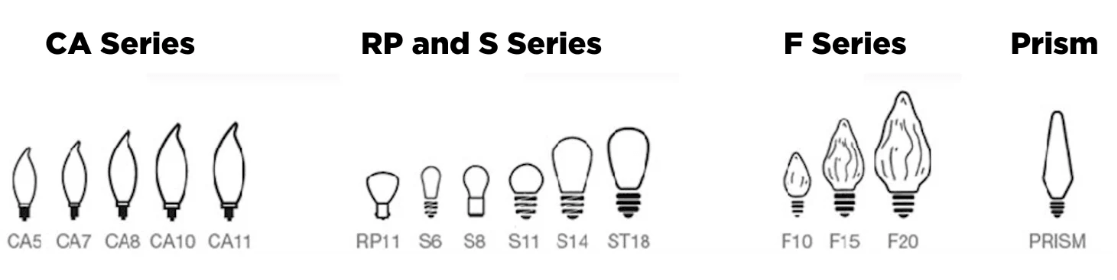
CA Series (Bent Tip Candle Bulbs)
Finally, the CA Series, also known as Bent Tip Candle Bulbs, builds upon the traditional candle shape by adding a curved flame-like tip.
This small design difference creates a more realistic candle appearance, making CA bulbs especially popular in elegant decorative fixtures. Compared with standard candle bulbs, the bent tip design provides a more refined visual effect.
As a result, CA-series bulbs are frequently used in chandeliers, luxury lighting fixtures, hospitality projects, and decorative interior designs where appearance plays an important role.
Common Sizes
The most common CA-series bulb sizes include:
- CA10
- CA11
These bulbs are available with different base options, allowing them to be used in a wide range of decorative lighting fixtures.
RP Series (Reflector Bulbs)
After exploring the basic decorative bulb shapes, we now move into more specialized lighting designs. The RP Series, also known as Reflector Bulbs, is developed to provide more controlled and directional illumination compared with standard household bulbs.
Unlike traditional bulbs that spread light in all directions, reflector bulbs use a reflective surface inside the bulb to guide light forward. As a result, they are especially suitable for applications where focused lighting and better beam control are required.
Furthermore, RP bulbs are commonly used in display lighting, accent lighting, and specialty fixtures where directing light toward a specific area is more important than creating general illumination.
Common Sizes
Common RP-series bulb sizes include:
- RP20
- RP30
- RP38
With the continued development of LED technology, modern reflector bulbs are now available with improved efficiency, longer lifespan, and more stable light output.
S Series (Straight-Sided Bulbs)
Following reflector-style bulbs, the S Series offers a simpler and more functional bulb design. The letter “S” refers to its straight-sided shape, which creates a clean cylindrical appearance.
Because of this compact and practical design, S-series bulbs are often used in applications where space is limited or where a simple decorative appearance is preferred. Meanwhile, their straightforward structure allows manufacturers to produce them in different sizes for various lighting needs.
In addition, S bulbs are frequently chosen for decorative string lights, signs, outdoor fixtures, and specialty lighting installations.
Common Sizes
The most common S-series sizes include:
- S11
- S14
- S19
Among these, S14 bulbs are particularly popular for outdoor decorative lighting and string light applications.
F Series (Flame-Shaped Bulbs)
The F Series, also known as Flame Bulbs, features a pointed flame-like profile that combines decorative appeal with practical lighting performance.
Compared with traditional candle bulbs, F-series bulbs usually have a slightly more elongated shape, creating a distinctive appearance when installed in visible fixtures. Therefore, they are often selected for decorative lighting designs where the bulb itself becomes part of the overall style.
Furthermore, the flame shape works especially well with vintage, classic, and elegant interior designs, helping create a warm and inviting atmosphere.
Common Sizes
Common F-series bulb sizes include:
- F10
- F11
- F15
These compact decorative bulbs are frequently used in chandeliers, wall sconces, pendant fixtures, and accent lighting.
Prism Bulbs
Moving from flame-shaped designs to decorative glass styles, Prism Bulbs are designed with textured or faceted glass surfaces that create unique light effects.
Unlike clear bulbs that produce a simple light appearance, prism bulbs scatter and soften illumination through their patterned glass structure. As a result, they can reduce glare while adding visual interest to decorative fixtures.
Because of their distinctive appearance, prism bulbs are often selected for vintage-inspired interiors, pendant lights, decorative chandeliers, and specialty lighting projects.
Common Sizes
Prism bulbs are available in various shapes and sizes, including:
- A-shaped prism bulbs
- Globe prism bulbs
- Decorative filament prism bulbs
The exact size depends on the fixture style and the desired decorative effect.
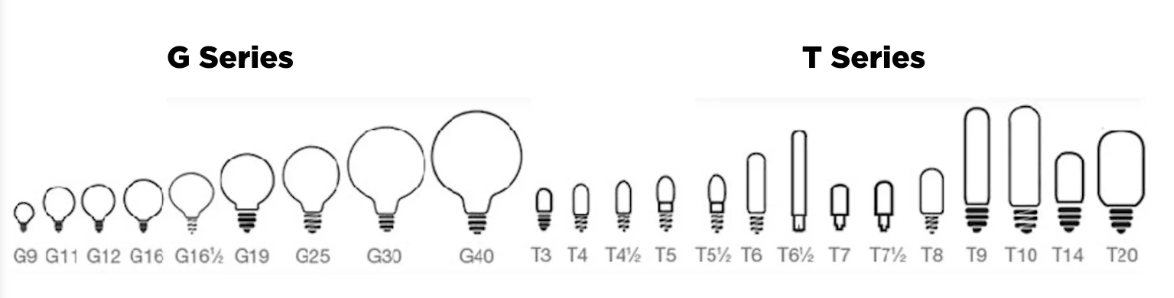
G Series (Globe Bulbs)
The G Series, commonly known as Globe Bulbs, features a round spherical shape that provides both decorative appeal and balanced illumination.
Unlike standard household bulbs, globe bulbs are often designed to be visible within the fixture. For this reason, they have become a popular choice for modern interior designs where lighting is not only functional but also part of the overall decoration.
Furthermore, the large surface area of globe bulbs helps create a softer and more comfortable lighting effect, making them suitable for spaces where a stylish appearance is important.
Common Sizes
Common G-series sizes include:
- G16
- G25
- G30
- G40
- G45
- G80
- G95
- G125
Among these sizes, G25 bulbs are commonly used for bathroom vanity lighting, while larger models such as G80, G95, and G125 are popular for decorative pendant lights, chandeliers, and statement fixtures.
T Series (Tubular Bulbs)
After round decorative bulbs, the T Series introduces a completely different design approach. The “T” stands for tubular, describing its long cylindrical shape.
Because of their narrow profile, T-series bulbs are ideal for fixtures where traditional bulb shapes cannot fit. In addition, their elongated design allows them to provide consistent illumination in compact spaces.
Today, tubular bulbs are widely used in appliances, display lighting, signs, decorative fixtures, and specialty applications.
Common Sizes
Popular T-series bulb sizes include:
- T5
- T7
- T8
- T10
- T20
The number after the “T” represents the approximate tube diameter measured in eighths of an inch.
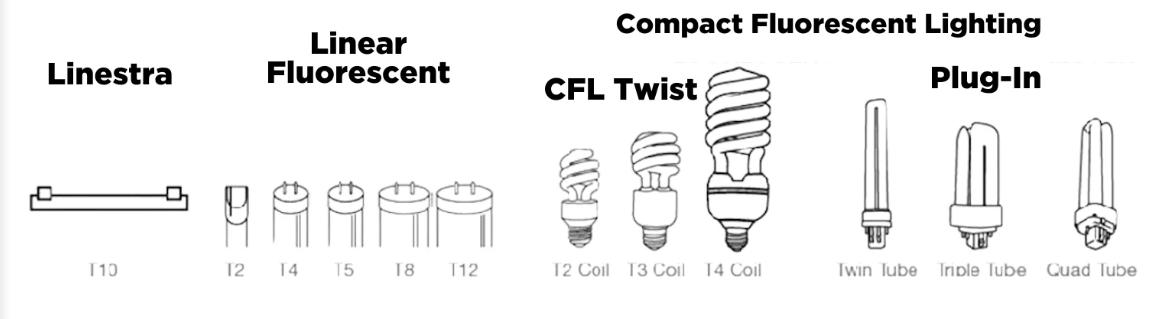
Linestra Bulbs
Continuing with linear lighting designs, Linestra Bulbs feature a long, slim shape created specifically for decorative and architectural lighting applications.
Unlike standard bulbs that emit light from a single point, Linestra lamps provide illumination along the entire length of the tube. Therefore, they are particularly effective for creating smooth and even lighting effects.
Because of their clean appearance, Linestra bulbs are often used in bathroom mirrors, vanity fixtures, wall-mounted lighting, and modern interior designs.
Common Sizes
Common Linestra lengths include:
- 30cm
- 50cm
- 60cm
- 90cm
With the transition toward energy-efficient lighting, LED Linestra replacements have become increasingly popular while maintaining the original linear appearance.
Linear Fluorescent Bulbs
While Linestra bulbs focus more on decorative applications, Linear Fluorescent Bulbs are designed primarily for large-area illumination.
These long tube-shaped lamps have been widely used in commercial and industrial environments because they provide broad and even lighting coverage. Although LED technology has replaced many fluorescent installations, linear fluorescent lamps are still found in many existing buildings.
For this reason, they remain an important part of the lighting market, especially for replacement and maintenance projects.
Common Sizes
The most common linear fluorescent sizes include:
- T5
- T8
- T12
The number following the “T” indicates the tube diameter, measured in eighths of an inch.
CFL (Compact Fluorescent Bulbs)
Finally, CFL (Compact Fluorescent Lamps) represent an important stage in the development of energy-efficient lighting.
Compared with traditional incandescent bulbs, CFLs were designed to provide similar brightness while using less electricity. Their folded tube structure allowed them to fit into standard household fixtures while improving energy efficiency.
However, as LED lighting has continued to advance, CFL bulbs have become less common in new installations. Nevertheless, they are still found in many existing fixtures and replacement markets.
Common Sizes
Common CFL designs include:
- Spiral CFL
- Twin-tube CFL
- Triple-tube CFL
- Plug-in CFL
Today, many users are gradually replacing CFL bulbs with LED options because LEDs provide longer service life, faster startup, better dimming performance, and greater design flexibility.
R Series (Reflector Bulbs)
Continuing with directional lighting solutions, the R Series, also known as Reflector Bulbs, is designed to control and direct light toward a specific area. Unlike standard bulbs that distribute light in multiple directions, reflector bulbs use an internal reflective surface to create a more focused beam.
Because of this directional design, R-series bulbs are commonly used when concentrated illumination is required. They are especially suitable for applications where highlighting specific areas or objects is important, such as accent lighting, display lighting, and recessed fixtures.
Furthermore, with the development of LED technology, modern R-series bulbs now provide improved energy efficiency, longer lifespan, and more consistent light output compared with traditional reflector lamps.
Common Sizes
The most common R-series bulb sizes include:
- R20
- R30
- R40
Among these, R20 bulbs are typically used for smaller fixtures, while larger sizes such as R30 and R40 are better suited for applications requiring wider light coverage.
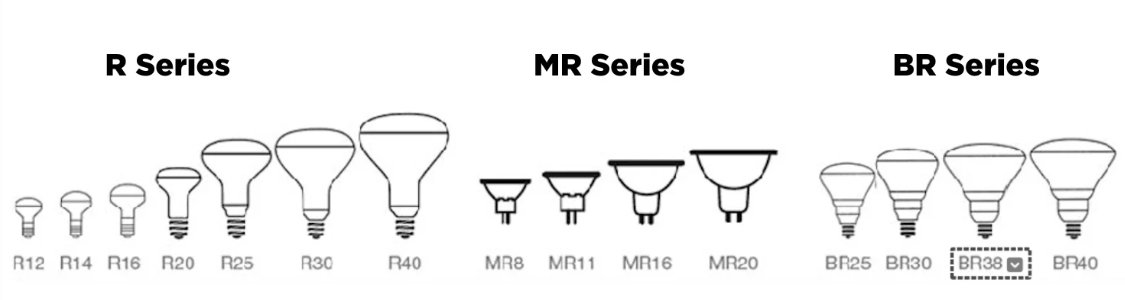
MR Series (Multifaceted Reflector Bulbs)
The MR Series, short for Multifaceted Reflector Bulbs, is a compact reflector bulb designed for precise and controlled lighting. Unlike larger reflector bulbs, MR lamps feature a smaller profile and a multifaceted reflector that helps manage beam direction and light intensity.
Due to their compact size and accurate beam control, MR bulbs are widely used in applications where focused illumination is needed without taking up much space. As a result, they have become a popular choice for accent lighting, retail displays, landscape lighting, and architectural projects.
In addition, MR bulbs are available in different beam angles, allowing designers to create everything from narrow spotlight effects to wider area illumination.
Common Sizes
Common MR-series sizes include:
- MR8
- MR11
- MR16
Among these, MR16 is one of the most widely recognized sizes and is frequently used in spotlight fixtures and low-voltage lighting systems.
BR Series (Bulged Reflector Bulbs)
Moving from compact reflector designs to broader lighting solutions, the BR Series, or Bulged Reflector Bulbs, features a larger reflector shape that creates a wider and softer beam compared with traditional reflector bulbs.
Because of their wider light distribution, BR bulbs are often preferred for general recessed lighting where a broad area needs to be illuminated evenly. They help reduce harsh shadows while maintaining controlled downward lighting.
Compared with R-series bulbs, BR bulbs have a more rounded reflector design, allowing them to provide smoother light coverage. Therefore, they are commonly selected for residential and commercial downlighting applications.
Common Sizes
Popular BR-series bulb sizes include:
- BR20
- BR30
- BR40
Among these, BR30 and BR40 are commonly used in recessed ceiling fixtures, kitchens, living rooms, and commercial spaces.
PAR Series (Parabolic Aluminized Reflector Bulbs)
The PAR Series, meaning Parabolic Aluminized Reflector Bulbs, is designed for powerful directional lighting with excellent beam control. These bulbs combine a reflector and lens system to create a concentrated and consistent light output.
Compared with general reflector bulbs, PAR lamps are usually more durable and are widely used in environments where strong illumination and accurate beam direction are required.
For this reason, PAR bulbs are commonly found in outdoor lighting, landscape projects, stage lighting, security lighting, and architectural applications. Meanwhile, LED PAR bulbs have become increasingly popular because they provide similar performance with lower energy consumption.
Common Sizes
Common PAR-series sizes include:
- PAR16
- PAR20
- PAR30
- PAR38
- PAR56
Among them, PAR20 and PAR30 are often used for indoor accent lighting, while PAR38 is commonly selected for outdoor flood lighting.
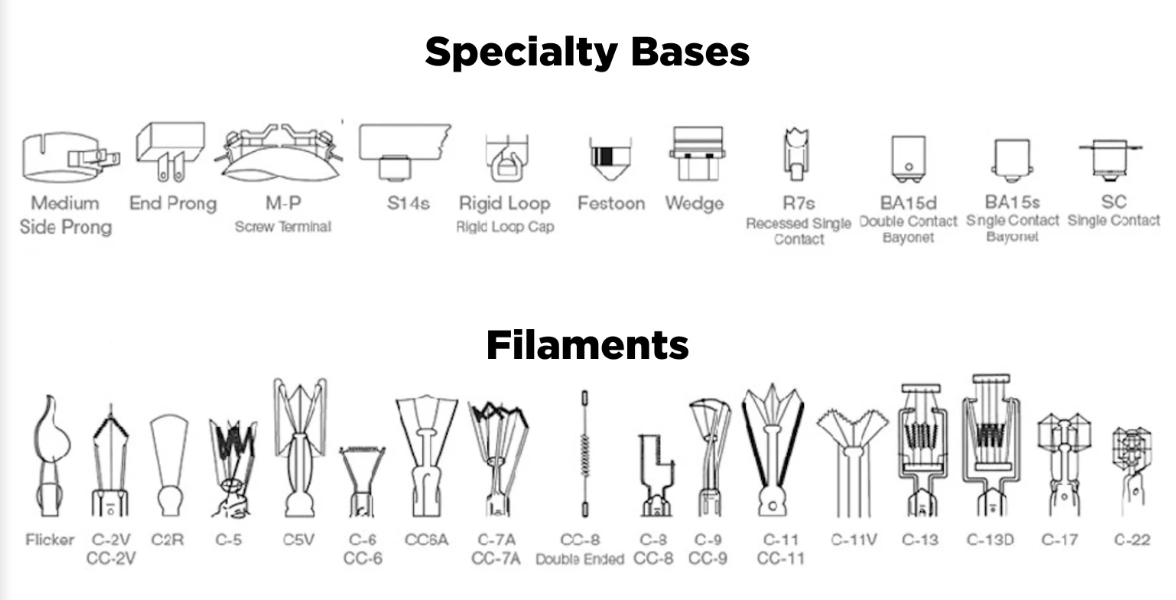
Specialty Bulbs
Beyond standard bulb categories, there are also many specialty bulbs designed for specific environments and unique lighting requirements. Unlike common household bulbs, specialty lamps are often developed for particular fixtures, equipment, or decorative purposes.
These bulbs may feature unusual shapes, compact designs, special materials, or unique performance characteristics. Therefore, they are often selected when standard bulb shapes cannot provide the required fit or lighting effect.
In addition, specialty bulbs continue to expand as lighting applications become more diverse, covering everything from decorative interiors to industrial equipment.
Common Types
Common specialty bulb categories include:
- Appliance bulbs
- Miniature bulbs
- Decorative filament bulbs
- Colored bulbs
- High-temperature bulbs
- Specialty tube bulbs
The correct choice depends on the fixture design, operating environment, and specific lighting requirements.
BT Series (Bulged Tubular Bulbs)
The BT Series, also known as Bulged Tubular Bulbs, features a tubular shape with an expanded upper section. This unique design creates a larger light-emitting surface compared with standard tubular bulbs.
Because of their larger profile, BT bulbs are often chosen for applications where both visual impact and strong illumination are important. Their distinctive appearance also makes them suitable for decorative fixtures and larger lighting installations.
Furthermore, the wide shape allows manufacturers to create bulbs with higher brightness levels while maintaining a balanced appearance.
Common Sizes
Common BT-series sizes include:
- BT28
- BT37
- BT56
Larger BT bulbs are often used in high-ceiling fixtures, decorative lighting projects, and statement luminaires.
E Series (Elliptical Bulbs)
The E Series, or Elliptical Bulbs, features an oval-shaped design that creates a unique appearance compared with traditional round or pear-shaped bulbs.
Because of their elongated profile, E-series bulbs are often selected for decorative fixtures where the bulb itself contributes to the overall design. They can create a distinctive visual effect when installed in exposed lighting applications.
In addition, the larger surface area helps provide a comfortable light appearance while maintaining an attractive decorative style.
Common Sizes
Common E-series sizes include:
- E17
- E26
- E39
The appropriate size depends on the fixture design, socket type, and intended lighting effect.
ED Series (Elliptical Dimple Bulbs)
The ED Series, meaning Elliptical Dimple Bulbs, combines an elliptical shape with a rounded dimple design. Compared with standard bulb shapes, ED bulbs usually have a larger profile, making them suitable for applications where a more noticeable bulb appearance is desired.
Because of their larger size and distinctive shape, ED bulbs are often used in commercial, industrial, and decorative lighting fixtures. Furthermore, their expanded surface area allows for effective light distribution in larger spaces.
Common Sizes
Common ED-series bulb sizes include:
- ED17
- ED23
- ED28
These sizes are commonly found in commercial fixtures, industrial lighting systems, and decorative large-format luminaires.
AR Series (Aluminized Reflector Bulbs)
Finally, the AR Series, or Aluminized Reflector Bulbs, is a specialized reflector bulb designed for precise directional lighting. The aluminum reflector inside the bulb improves beam control and helps deliver consistent illumination.
Compared with general reflector bulbs, AR lamps are often used in professional lighting environments where accuracy and reliability are important. Therefore, they are commonly selected for architectural lighting, retail displays, galleries, and accent lighting projects.
Furthermore, AR bulbs are available in different sizes and beam angles, allowing lighting designers to create specific visual effects according to project requirements.
Common Sizes
The most common AR-series sizes include:
- AR48
- AR70
- AR111
Among these, AR111 is one of the most widely used sizes for commercial and architectural lighting due to its large reflector design and excellent beam control.
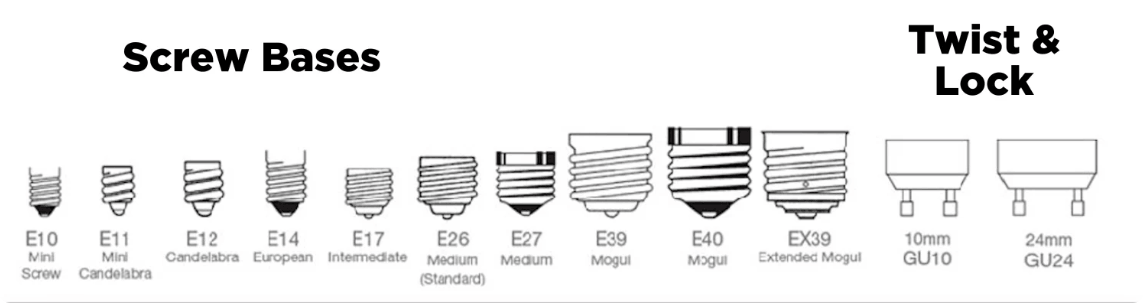
Base Types
After understanding different light bulb shapes, the next important factor to consider is the light bulb base type. While the bulb shape determines the appearance and light distribution, the base determines whether the bulb can be correctly installed and connected to the fixture.
Therefore, even when you choose the right bulb shape, selecting the wrong base type may prevent the bulb from fitting or operating properly. Before purchasing a replacement bulb, it is always important to check the socket type and match it with the correct base standard.
Light bulb bases vary depending on the region, fixture design, and application. For example, E26 and E27 screw bases are widely used for general lighting, while smaller bases such as E12 and E14 are commonly found in decorative bulbs and chandelier fixtures.
Common Light Bulb Base Types
E26 Base
The E26 base, also known as the medium Edison screw base, is one of the most common bulb bases in North America.
Because of its wide compatibility, it is frequently used with:
- A19 bulbs
- Globe bulbs
- Reflector bulbs
- Decorative LED bulbs
- Household lighting fixtures
As a result, E26 bulbs remain one of the most popular choices for residential and commercial lighting applications.
E27 Base
The E27 base is the standard screw base widely used across Europe, Asia, Australia, and many other international markets.
Although E26 and E27 look very similar, they are designed according to different regional standards. Therefore, buyers should always confirm the fixture specifications before replacing bulbs between different markets.
E12 Base
The E12 base, often called the candelabra base, features a smaller diameter compared with E26 and E27 bases.
Due to its compact size, it is commonly used for decorative lighting applications, including:
- Candle bulbs
- Chandeliers
- Wall sconces
- Decorative fixtures
For this reason, E12 bases are especially popular in elegant interior lighting designs.
E14 Base
The E14 base is another widely used small screw base, particularly in European lighting markets.
It is commonly paired with decorative bulb shapes such as candle bulbs and small globe bulbs. In addition, its compact size makes it suitable for fixtures where a smaller lamp profile is required.
B22 Base
The B22 base, also known as the bayonet base, uses a push-and-twist installation method rather than a screw connection.
This base type is commonly found in:
- UK lighting products
- Australian lighting fixtures
- Traditional household lamps
When selecting a bulb, checking the existing socket type is essential because base compatibility directly affects installation and safety.
Filament Types
Besides choosing the correct light bulb shape and base type, the internal filament design also influences the appearance and overall lighting style.
Traditional incandescent bulbs created light by heating a metal filament. However, as lighting technology has developed, modern filament designs have evolved to provide the same classic appearance with improved efficiency.
Traditional Filament Bulbs
Traditional filament bulbs are known for their warm glow and vintage appearance. Because of their classic style, they remain popular in decorative fixtures where the visible filament becomes part of the overall design.
However, compared with newer lighting technologies, traditional filament bulbs generally consume more energy and have a shorter operating life.
LED Filament Bulbs
Today, LED filament bulbs have become a popular choice for decorative lighting. These bulbs use LED technology arranged in a filament-like structure, creating the appearance of traditional incandescent lamps while providing improved efficiency.
Furthermore, LED filament designs are available in many decorative bulb shapes, including:
- Edison bulbs
- Candle bulbs
- Globe bulbs
- Vintage pendant bulbs
As a result, they allow designers and buyers to achieve a classic lighting appearance without sacrificing modern performance.
Decorative Filament Designs
In addition to standard filament styles, manufacturers now offer various decorative arrangements, such as spiral, cross, and vertical filament designs.
These designs are especially popular in exposed-bulb fixtures because the internal structure becomes an important visual element. Therefore, choosing the right filament style can enhance both the lighting effect and the overall appearance of a fixture. Huiyee lighting provide kinds of LED decorative filament designs; OEM service is also provided.
Buying Guide: How to Choose the Right Light Bulb Shape
After understanding bulb shapes, codes, bases, and filament styles, the next step is choosing the right bulb for your specific lighting needs.
Although appearance is important, a suitable bulb should also match the fixture design, installation requirements, and expected lighting performance.
1. Identify the Correct Bulb Shape
First of all, determine which light bulb shape your fixture requires.
For example:
- A-series bulbs are suitable for general lighting
- Candle bulbs are commonly used in chandeliers
- Globe bulbs work well with decorative fixtures
- BR and PAR bulbs are designed for directional lighting
Choosing the correct shape helps ensure proper fitting and creates the intended lighting effect.
2. Check the Base Type
Next, confirm the socket type before purchasing.
Common base options include:
- E26
- E27
- E12
- E14
- B22
Even if the bulb shape is correct, an incompatible base will prevent proper installation.
3. Match the Bulb With the Fixture Style
Furthermore, the bulb should complement the fixture design.
For exposed fixtures, decorative shapes such as:
- Edison bulbs
- Candle bulbs
- Globe bulbs
can enhance the visual appeal.
Meanwhile, for recessed or directional fixtures, reflector bulbs are usually more suitable because they provide controlled light distribution.
4. Consider Bulb Size
Size is another important factor that should not be overlooked.
Before installation, check:
- Bulb diameter
- Overall bulb length
- Fixture clearance
- Available installation space
A bulb that is too large may not fit, while a bulb that is too small may appear unbalanced within the fixture.
5. Consider Lighting Requirements
Finally, consider the overall lighting performance, including:
- Brightness (lumens)
- Color temperature
- Dimming capability
- Voltage requirements
- Energy efficiency
By considering both design and performance, buyers can select a bulb that provides the right balance of appearance, compatibility, and functionality.
Frequently Asked Questions About Light Bulb Shapes
What are the most common light bulb shapes?
The most common light bulb shapes include A-series, globe, candle, reflector, tubular, and PAR bulbs. Among them, A19 bulbs remain one of the most widely used choices for everyday lighting.
What do light bulb codes mean?
Light bulb codes use letters and numbers to describe the bulb shape and size. The letter identifies the shape, while the number generally indicates the bulb diameter.
For example, A19 represents an A-shaped bulb with a diameter of approximately 19/8 inches.
Are all bulb shapes available as LED?
Yes. Most popular bulb shapes, including A bulbs, candle bulbs, globe bulbs, reflector bulbs, and decorative bulbs, are now available in LED versions.
Can LED bulbs replace incandescent bulbs?
In most cases, yes. LED bulbs are designed as replacements for traditional incandescent bulbs. However, buyers should confirm the base type, voltage, and fixture compatibility before installation.
What bulb shape is best for chandeliers?
Candle-shaped bulbs, including C and CA series bulbs, are commonly used for chandeliers because their slim design matches traditional candle-style fixtures.
What bulb shape is best for recessed lighting?
Reflector bulbs, including BR, R, and PAR series bulbs, are commonly used for recessed lighting because they direct light downward and provide better beam control.
What is the difference between BR and PAR bulbs?
BR bulbs usually provide a wider and softer beam, making them suitable for general recessed lighting. In contrast, PAR bulbs offer a more focused beam and are commonly used for outdoor, commercial, and accent lighting.
How do I know which bulb fits my fixture?
To find the correct bulb, check:
- Bulb shape
- Base type
- Size requirements
Matching these three factors ensures proper installation and lighting performance.
Conclusion
Understanding light bulb shapes makes selecting the right lighting solution much easier. From everyday A-series bulbs to decorative candle and globe bulbs, and from reflector lamps to specialty designs, each bulb shape serves a different purpose.
Furthermore, choosing the right bulb requires more than simply selecting an attractive design. The bulb shape, base type, size, and lighting requirements should all work together to create the best result.
As lighting technology continues to advance, buyers now have more choices than ever before. Whether upgrading residential lighting, completing a commercial project, or sourcing products for a lighting business, understanding bulb shapes and codes helps ensure smarter purchasing decisions.