 English
 العربية
 Français
 Deutsch
 Italiano
 Polski
 Português
 Русский
 Español
 Українська


Comprendere la potenza di un chip LED
Introduzione
Poiché l'illuminazione a LED continua a sostituire le tradizionali lampadine a incandescenza e CFL, sempre più acquirenti prestano attenzione a un componente piccolo ma fondamentale: il Circuito integrato del LED. Sia che tu stia acquistando lampadine a LED, lampadine a filamento, illuminazione commerciale, o apparecchi decorativi, la qualità del chip LED determina direttamente la luminosità, efficienza, durata, e le prestazioni complessive del prodotto.
Tanto per cominciare, capire come funziona un chip LED può aiutarti a confrontare i prodotti di illuminazione in modo più efficace. Invece di concentrarci solo sul prezzo, sarai in grado di valutare l’efficienza energetica, affidabilità, e valore a lungo termine.
COSÌ, cos'è esattamente un chip LED? Ancora più importante, perché gli acquirenti dovrebbero preoccuparsi del tipo di chip LED utilizzato in una lampadina?
Esploriamo tutto ciò che devi sapere dal punto di vista dell'acquirente.
Il cuore dell'illuminazione a LED
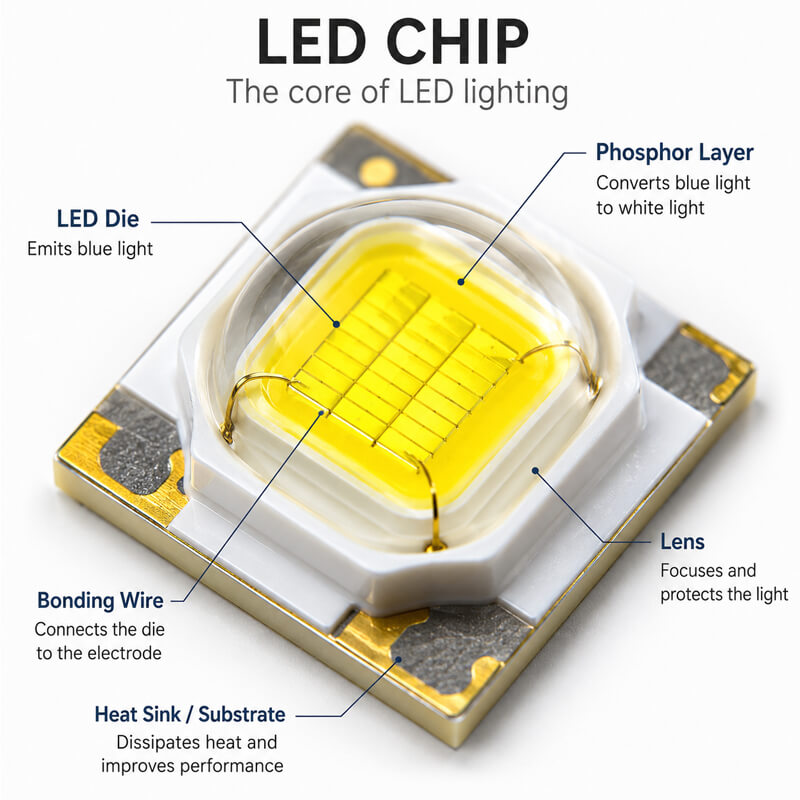
Al suo centro, UN Circuito integrato del LED (Chip del diodo a emissione luminosa) è il componente che produce luce all'interno di ogni lampada a LED. È un minuscolo semiconduttore che converte l'energia elettrica direttamente in luce visibile attraverso un processo noto come elettroluminescenza.
A differenza di lampadine a incandescenza tradizionali, che generano luce riscaldando un filamento di tungsteno, I chip LED producono luce in modo molto più efficiente generando pochissimo calore.
Di conseguenza, L’illuminazione a LED offre numerosi vantaggi significativi, compreso:
- Minore consumo energetico
- Maggiore luminosità
- Maggiore durata
- Meno generazione di calore
- Costi di manutenzione ridotti
- Prestazioni rispettose dell'ambiente
A causa di questi vantaggi, I chip LED sono diventati la base della moderna tecnologia di illuminazione. Che tu stia acquistando lampadine domestiche o apparecchi di illuminazione commerciale, la qualità del chip LED influenzerà direttamente le prestazioni complessive.
Uno sguardo alla composizione
Sebbene un chip LED sia incredibilmente piccolo, è costituito da diversi strati progettati con precisione che lavorano insieme per fornire prestazioni di illuminazione affidabili.
Tipicamente, include un chip LED:
- Materiale semiconduttore (solitamente nitruro di gallio o arseniuro di gallio)
- Elettrodi conduttivi
- Substrato termoconduttore
- Incapsulamento protettivo
- Lente ottica o rivestimento al fosforo
Tra questi componenti, il substrato termoconduttore gioca un ruolo particolarmente importante. Poiché il calore eccessivo può ridurre sia la luminosità che la durata della vita, una gestione termica efficiente è essenziale.
Inoltre, molti produttori di LED premium utilizzano materiali di alta qualità come:
- Substrati ceramici
- Circuiti stampati in rame
- Dissipatori di calore in alluminio
- Lenti in silicone ad alta trasmittanza
Di conseguenza, questi materiali migliorano la dissipazione del calore, consentendo ai chip LED di mantenere una luminosità stabile e di funzionare in modo efficiente per decine di migliaia di ore.
Per gli acquirenti, chiedere informazioni sulla progettazione termica è importante quanto controllare la potenza o il flusso luminoso.
La meraviglia della miniaturizzazione
Una delle caratteristiche più notevoli della tecnologia LED è la sua dimensione compatta.
Infatti, i moderni chip LED misurano solo pochi millimetri di diametro. Nonostante le loro piccole dimensioni, possono generare una quantità impressionante di luce.
A seconda dell'applicazione di illuminazione, un prodotto può contenere:
- Un chip LED ad alta potenza
- Chip LED SMD multipli
- Moduli LED COB
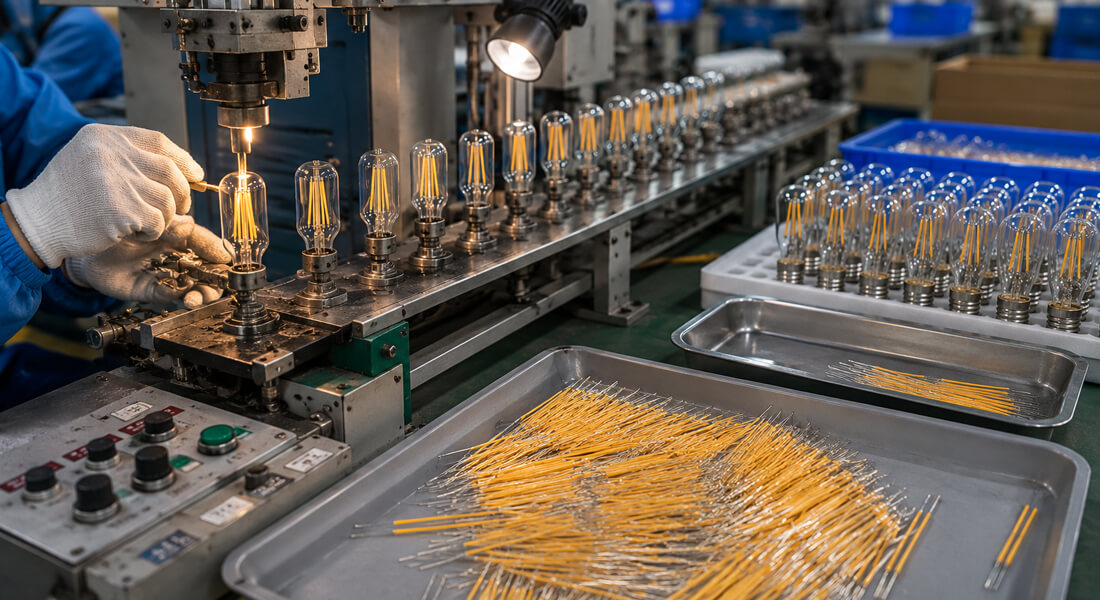
- Centinaia di chip a filamento LED
Grazie a questa miniaturizzazione, i produttori possono progettare più snelli, più leggero, e apparecchi di illuminazione più attraenti senza compromettere la luminosità.
Oggi, I chip LED sono ampiamente utilizzati in:
- Lampadine a LED
- Lampadine a filamento LED
- Lampade a sospensione
- Lampadari
- Lampade da parete
- Luci di inondazione
- Illuminazione da giardino
- Illuminazione stradale
- Illuminazione automobilistica
- Illuminazione commerciale
Perciò, La tecnologia LED offre ai progettisti una maggiore flessibilità soddisfacendo al tempo stesso la crescente domanda di soluzioni di illuminazione moderne.
Più luminoso, Più piccolo, Più duraturo
Negli ultimi dieci anni, La tecnologia dei chip LED si è evoluta rapidamente.
Mentre la tecnologia continua ad avanzare, i produttori stanno producendo chip LED che lo sono:
- Più luminoso
- Più piccolo
- Più efficienza energetica
- Meglio dissipare il calore
- Più duraturo
Oggi, molti chip LED premium offrono efficienze superiori 150 lumen per watt, mentre i prodotti commerciali avanzati possono raggiungere risultati superiori 200 lumen per watt in condizioni ideali.
Per gli acquirenti, questo significa minori costi di esercizio e migliori prestazioni illuminotecniche.
Maggiore luminosità
I moderni chip LED producono molti più lumen consumando meno elettricità.
Per esempio:
- Lampadina tradizionale a incandescenza da 60 W → circa 800 lumen
- Moderna lampadina LED da 8 W → circa 800 lumen
Di conseguenza, gli utenti godono della stessa luminosità riducendo al contempo il consumo di elettricità fino a 85%.
Durata della vita più lunga
Un altro grande vantaggio è la durabilità.
I chip LED di alta qualità generalmente durano:
- 25,000 ore
- 35,000 ore
- 50,000 ore o più
Di conseguenza, le aziende e i proprietari di case spendono meno per la sostituzione delle lampadine e la manutenzione.
Migliore qualità del colore
Inoltre, I chip LED premium forniscono un'eccellente resa cromatica.
Per la maggior parte delle applicazioni, gli acquirenti dovrebbero considerare:
- CRI 80+ per l'illuminazione residenziale
- CRI 90+ per la vendita al dettaglio, ospitalità, gallerie, e interni premium
Questo significa i colori appaiono più naturali, vibrante, e confortevole per l'occhio umano.
Affidabilità migliorata
Altrettanto importante, la tecnologia di produzione avanzata riduce al minimo:
- Decadimento leggero
- Cambiamento di colore
- Sfarfallio
- Guasto precoce del chip
Perciò, l'illuminazione rimane stabile e coerente per tutta la sua durata.
Il futuro è luminoso
La tecnologia dei chip LED continua ad evolversi ogni anno.
Guardando avanti, diverse tendenze importanti stanno plasmando il futuro del settore dell’illuminazione.
Maggiore efficienza energetica
I produttori stanno sviluppando chip LED che producono più luce consumando ancora meno elettricità.
Di conseguenza, le aziende possono abbassare significativamente i costi operativi e ridurre le emissioni di carbonio.
Integrazione dell'illuminazione intelligente
Nel frattempo, I chip LED stanno diventando sempre più compatibili con i sistemi di illuminazione intelligente.
Le odierne soluzioni di illuminazione intelligente supportano:
- Controllo Wi-Fi
- Connettività Bluetooth
- Assistenti vocali
- Sensori di movimento
- Oscuramento automatico
- Temperature colore regolabili
Di conseguenza, gli utenti godono di una maggiore comodità, comfort, e risparmio energetico.
Illuminazione incentrata sull'uomo
Inoltre, I chip LED bianchi regolabili consentono all'illuminazione di imitare la luce del giorno naturale per tutto il giorno.
Questo aiuta a migliorare il comfort, concentrazione, e il benessere generale nelle case, uffici, scuole, e ambienti sanitari.
Produzione sostenibile
Allo stesso tempo, i produttori stanno adottando metodi di produzione più ecologici riducendo i materiali pericolosi, migliorare il riciclaggio, e aumentare l’efficienza produttiva.
Perciò, La tecnologia dei chip LED continua a supportare gli obiettivi di sostenibilità globale.
Abbraccia la rivoluzione LED
Sebbene il chip LED sia uno dei componenti più piccoli all'interno di un prodotto di illuminazione, ha il maggiore impatto sulle prestazioni complessive.
In definitiva, la qualità del chip LED determina la luminosità, efficiente, affidabile, e durevole sarà una luce a LED.
Quando si confrontano i prodotti di illuminazione a LED, gli acquirenti dovrebbero valutare qualcosa di più del semplice prezzo.
Invece, prestare attenzione a fattori come:
- Qualità e marchio del chip
- Emissione luminosa
- Efficacia luminosa (lm/W)
- Indice di resa cromatica (CRI)
- Temperatura del colore (CCT)
- Progettazione della dissipazione del calore
- Durata nominale
- Garanzia del produttore
Considerando questi fattori, gli acquirenti possono selezionare prodotti di illuminazione che offrono prestazioni migliori, minori costi di manutenzione, e maggiore valore a lungo termine.
In sintesi, investire nella tecnologia dei chip LED di alta qualità significa investire in un'illuminazione più brillante, bollette energetiche più basse, e un futuro più sostenibile. Che tu stia acquistando illuminazione per le case, alberghi, uffici, spazi commerciali, o progetti commerciali, scegliere prodotti realizzati con chip LED affidabili è una decisione intelligente che continuerà a dare i suoi frutti negli anni a venire.