 English
 العربية
 Français
 Deutsch
 Italiano
 Polski
 Português
 Русский
 Español
 Українська


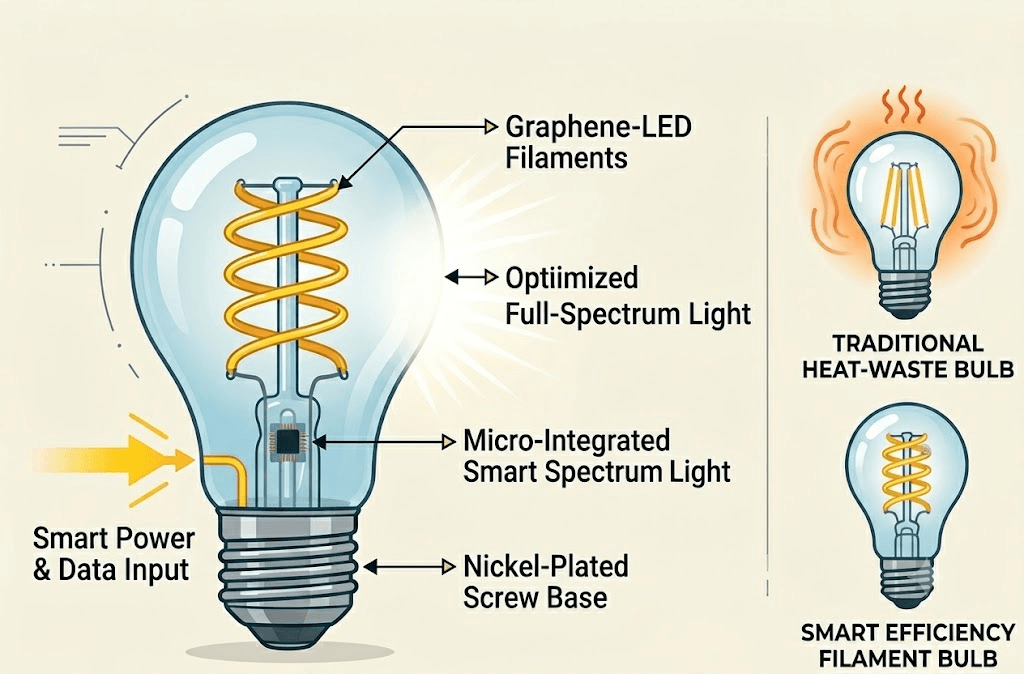
Come funziona l'illuminazione a LED: La scienza dietro le moderne lampadine a risparmio energetico
L’illuminazione a LED ha completamente trasformato il modo in cui illuminiamo le nostre case, uffici, alberghi, ristoranti, e spazi commerciali. Rispetto alle tradizionali lampadine a incandescenza e alle lampadine CFL, Le luci a LED garantiscono una migliore efficienza energetica, durata di vita più lunga, migliore qualità della luce, e minori costi di manutenzione.
Tuttavia, molte persone utilizzano quotidianamente le lampadine LED senza sapere cosa realmente accade al loro interno. Quando accendi una luce LED, come fa l'elettricità a diventare luminosa?, illuminazione confortevole?
La risposta sta in un componente piccolo ma potente all'interno della lampadina: il chip semiconduttore.
Quando la corrente elettrica passa attraverso questo chip, produce luce visibile attraverso un processo chiamato elettroluminescenza. A differenza delle lampadine a incandescenza, che riscaldano un filamento finché non si illumina, La tecnologia LED converte l'elettricità direttamente in luce. Di conseguenza, molta meno energia viene sprecata sotto forma di calore.
Grazie a questa efficiente conversione energetica, Le lampadine a LED possono ridurre il consumo di elettricità fino a 80% rispetto all’illuminazione tradizionale. Inoltre, la loro lunga durata aiuta a ridurre la frequenza di sostituzione e i costi di manutenzione.
Oggi, La tecnologia LED è utilizzata ovunque: dalle lampadine decorative Edison alle lampadine a candela nei lampadari fino ai downlight da incasso, sistemi di illuminazione intelligenti, e soluzioni di illuminazione commerciale.
In questa guida completa, spiegheremo come funziona l'illuminazione a LED, quali componenti sono presenti all'interno di una lampadina a LED, perché i LED sono più efficienti dal punto di vista energetico rispetto alle lampadine tradizionali, e come fattori come la luminosità, temperatura del colore, e CRI influenzano la tua esperienza di illuminazione. L'immagine qui sotto può aiutarti a capire meglio come funziona la lampadina.
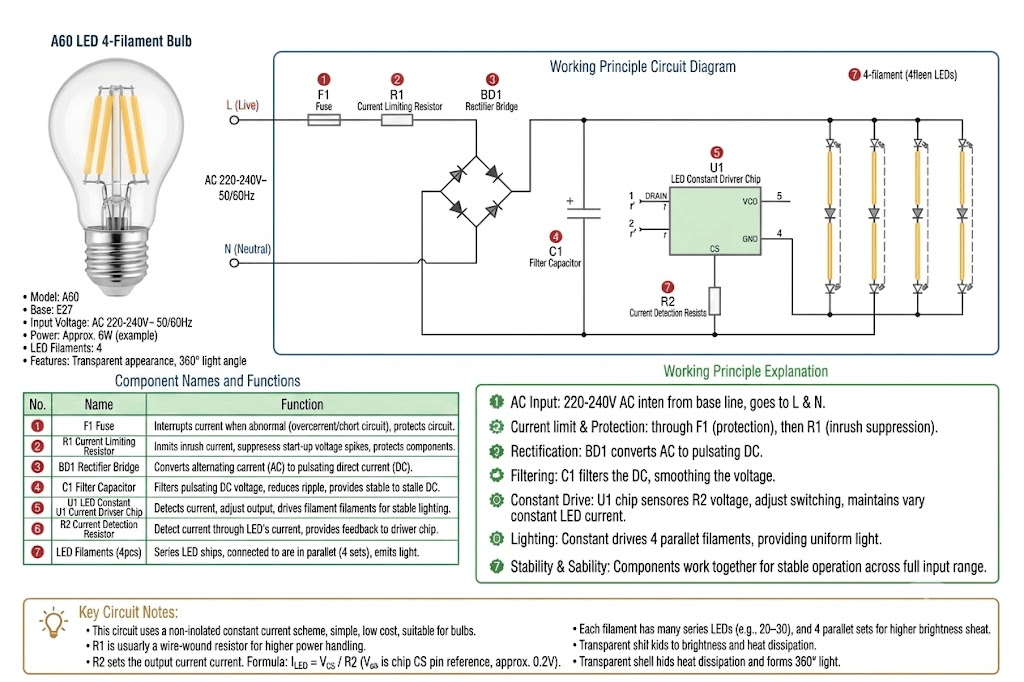
Sia che tu stia sostituendo una singola lampadina, migliorare l'illuminazione della tua casa, o pianificando un progetto di illuminazione commerciale, comprendere la tecnologia LED ti aiuterà a scegliere la giusta soluzione di illuminazione.
Cos'è un LED?
Prima di esplorare come funziona l'illuminazione a LED, è importante capire cosa significa il termine “LED”..
LED sta per Diodo emettitore di luce. È un dispositivo a semiconduttore che converte l'energia elettrica in luce visibile.
A differenza delle lampadine a incandescenza, che creano luce riscaldando un filamento di tungsteno, I LED producono luce attraverso un processo chiamato elettroluminescenza.
Semplicemente spiegato:
L'elettricità entra → Gli elettroni si muovono all'interno del semiconduttore → L'energia viene rilasciata sotto forma di luce
Perché i LED non hanno bisogno di riscaldare un filamento, utilizzano l'energia in modo molto più efficiente e generano molto meno calore.
Questa tecnologia semplice ma avanzata è la ragione per cui esistono le lampadine a LED:
- Più efficienza energetica
- Più duraturo
- Dispositivo di raffreddamento durante il funzionamento
- Più flessibile nel design
- Disponibile in molti colori e stili di illuminazione
Poiché la tecnologia LED continua a migliorare, i produttori possono ora creare lampadine con una migliore luminosità, maggiore precisione del colore, e funzionalità di controllo più intelligenti.
Una breve storia della tecnologia LED
Sebbene l'illuminazione a LED sia considerata una tecnologia moderna, il suo sviluppo ha richiesto molti anni.
I primi LED non erano progettati per l’illuminazione domestica. Invece, venivano utilizzati principalmente come piccole spie luminose nei dispositivi elettronici.
Col tempo, i miglioramenti nei materiali semiconduttori hanno trasformato i LED nelle odierne soluzioni di illuminazione avanzate.
1962 – Il primo LED pratico
Nick Holonyak Jr. ha sviluppato il primo pratico LED rosso visibile, creando le basi per la futura tecnologia LED.
1970Anni '80: vengono sviluppati più colori LED
Durante questo periodo, i produttori hanno introdotto il giallo, arancia, e LED verdi, espandere le applicazioni dei LED oltre i semplici indicatori.
1990s – Il LED blu ha cambiato il settore dell'illuminazione
Lo sviluppo dei LED blu ad alta luminosità ha rappresentato una svolta. Combinando chip LED blu con materiali al fosforo, i produttori potrebbero finalmente creare un’efficiente illuminazione a LED bianchi.
2000s – Le lampadine a LED sono entrate nelle case
Poiché i costi di produzione sono diminuiti e le prestazioni sono migliorate, Le lampadine a LED sono diventate un pratico sostituto delle lampadine a incandescenza e CFL.
Oggi – L’illuminazione a LED domina il mercato
I moderni LED sono ormai ampiamente utilizzati in:
- Illuminazione residenziale
- Edifici commerciali
- Alberghi e ristoranti
- Illuminazione esterna
- Sistemi di illuminazione intelligenti
- Applicazioni industriali
Soprattutto, l'invenzione della tecnologia LED blu ha reso possibile la moderna illuminazione a LED bianchi e ha cambiato completamente il settore dell'illuminazione globale.
Lampadine LED, a incandescenza e CFL: Quale è migliore?
Per capire meglio perché i LED sono diventati così popolari, aiuta a confrontarli con le tecnologie di illuminazione più vecchie.
| Caratteristica | Incandescente | CFL | GUIDATO |
|---|---|---|---|
| Sorgente luminosa | Filamento riscaldato | Gas di mercurio | Chip semiconduttore |
| Efficienza energetica | Basso | Medio | Alto |
| Efficienza tipica | In giro 15 lm/W | In giro 60 lm/W | 80–120 lumen/W |
| Durata | Di 1,000 ore | Di 8,000 ore | 25,000–50.000+ ore |
| Potenza termica | Molto alto | Moderare | Basso |
| Contenuto di mercurio | NO | SÌ | NO |
| Consumo energetico | Più alto | Medio | Il più basso |
Come mostra il confronto, Le lampadine a LED offrono vantaggi in quasi tutte le categorie.
Per esempio, sostituire una tradizionale lampadina a incandescenza da 60 W con una lampadina LED da 9 W può fornire una luminosità simile consumando molta meno elettricità.
Perciò, I LED sono ora la scelta preferita per i proprietari di case, imprese, e professionisti dell’illuminazione in tutto il mondo.
Anatomia di una moderna lampadina a LED
Anche se una lampadina a LED può sembrare simile ad una lampadina tradizionale dall'esterno, la sua struttura interna è molto più avanzata.
All'interno di ogni lampadina LED, diversi componenti chiave lavorano insieme per creare stabilità, efficiente, e illuminazione di alta qualità.
Comprendere queste parti spiega anche perché alcune lampadine a LED funzionano molto meglio di altre, anche quando hanno lo stesso wattaggio.
Circuito integrato del LED: Il cuore della lampadina
Il chip LED è la parte più importante dell'intero sistema di illuminazione.
È il componente che produce luce quando l'elettricità lo attraversa.
I moderni chip LED sono generalmente realizzati con materiali semiconduttori come:
- Nitruro di gallio (GaN)
- Nitruro di indio e gallio (InGaN)
Questi materiali convertono in modo efficiente l’energia elettrica in luce visibile.
Oggi, I chip LED sono comunemente disponibili in tre tipi principali:
LED SMD (Dispositivo montato su superficie)
I LED SMD sono ampiamente utilizzati nei prodotti di illuminazione domestica.
Vantaggi:
- Alta efficienza
- Distribuzione uniforme della luce
- Prestazioni affidabili
- Produzione economicamente vantaggiosa
Si trovano comunemente nelle lampadine a LED, pannelli, e downlight.
LED COB (Chip a bordo)
I LED COB combinano più chip LED su un'unica scheda.
I vantaggi includono:
- Maggiore luminosità
- Migliore gestione termica
- Emissione luminosa più forte
Sono spesso utilizzati nell'illuminazione commerciale e nelle applicazioni ad alta potenza.
Chip filamento LED
La tecnologia dei filamenti LED è progettata per imitare l'aspetto dei tradizionali filamenti a incandescenza.
Queste lampadine sono particolarmente apprezzate per:
- Lampadine Edison
- Illuminazione d'epoca
- Lampadari decorativi
- Lampade a sospensione
Poiché la tecnologia dei chip LED continua a migliorare, i produttori possono produrre soluzioni di illuminazione più luminose con un consumo energetico inferiore.
Driver LED: Il cervello di una lampadina a LED
Mentre il chip LED è la parte che crea la luce, non può funzionare direttamente con l'elettricità di casa tua.
Questo è dove il Driver LED diventa essenziale.
Il driver LED funziona come un piccolo sistema di gestione dell'energia all'interno della lampadina. Il suo compito principale è convertire la corrente alternata ad alta tensione (AC) dal vostro impianto elettrico alla corrente continua a bassa tensione (DC) di cui ha bisogno il chip LED.
In termini semplici:
Elettricità domestica → Driver LED → Potenza stabile → Il chip LED produce luce
Oltre a convertire la potenza, un driver LED di alta qualità controlla anche il flusso di corrente e protegge la lampadina dalle fluttuazioni elettriche.
Un buon driver LED fornisce diverse funzioni importanti:
- Conversione di potenza da CA a CC
- Regolazione a corrente costante
- Protezione dalla tensione
- Protezione contro le sovratensioni
- Riduzione dello sfarfallio
- Compatibilità con la dimmerazione
Perciò, la qualità del driver LED ha un impatto diretto sulle prestazioni della lampadina, stabilità della luminosità, e durata della vita.
D'altra parte, driver LED di bassa qualità possono causare problemi comuni come:
- Sfarfallio visibile
- Suoni ronzanti
- Luminosità ridotta
- Durata di vita più breve
- Scarse prestazioni di oscuramento
Per questo motivo, scegliere lampadine LED di produttori affidabili è importante, soprattutto per le applicazioni in cui la qualità dell'illuminazione è importante, come le case, alberghi, ristoranti, e negozi al dettaglio.
Radiatore: Mantenere le lampadine a LED fresche e affidabili
Sebbene le lampadine a LED producano molto meno calore delle lampadine a incandescenza, non sono completamente esenti da calore.
Durante il funzionamento, il chip LED genera ancora una piccola quantità di calore. Se questo calore non può fuoriuscire correttamente, potrebbe danneggiare i componenti interni e ridurre la durata della lampadina.
Per risolvere questo problema, i produttori aggiungono a radiatore ai design delle lampadine a LED.
Il dissipatore di calore funziona assorbendo il calore dal chip LED e trasferendolo nell'ambiente circostante.
I materiali comuni del dissipatore di calore includono:
- Alluminio
- Ceramica
- Materiali compositi in grafite
Tra questi materiali, l'alluminio è ampiamente utilizzato perché fornisce un'eccellente dissipazione del calore pur rimanendo leggero e conveniente.
Di conseguenza, un'efficace gestione termica aiuta le lampadine a LED:
- Mantenere una luminosità stabile
- Prevenire il surriscaldamento
- Migliorare l'affidabilità
- Raggiungere la durata nominale
Questo è anche il motivo per cui due lampadine LED con la stessa potenza possono avere durate molto diverse. Il design interno e il sistema di gestione del calore fanno una differenza significativa.
Rivestimento e diffusore al fosforo: Creazione di una luce bianca confortevole
Un fatto interessante della tecnologia LED è che la maggior parte dei chip LED non produce naturalmente luce bianca.
Invece, molti chip LED producono luce blu.
Quindi, come fanno i produttori a creare l'illuminazione bianca calda o bianca fredda che vediamo ogni giorno??
La risposta è un materiale speciale chiamato rivestimento al fosforo.
Uno strato di fosforo viene applicato sul chip LED. Quando la luce blu passa attraverso questo rivestimento, parte dell'energia viene convertita in altre lunghezze d'onda, compreso il giallo, arancia, e luce rossa.
La combinazione di questi colori crea all'occhio umano l'apparenza di luce bianca.
Questa tecnologia consente ai produttori di produrre diversi colori di illuminazione, compreso:
| Temperatura del colore | Aspetto | Applicazioni comuni |
|---|---|---|
| 2700K | Bianco caldo | Camere da letto, salotti |
| 3000K | Bianco caldo morbido | Alberghi, ristoranti, zone pranzo |
| 4000K | Bianco neutro | Cucine, bagni, uffici |
| 5000K | Bianco freddo | Spazi di lavoro, aree commerciali |
| 6500K | Bianco luce diurna | Garage, officine |
Inoltre, Le lampadine a LED solitamente includono un diffusore o una copertura ottica.
Il diffusore aiuta:
- Diffondere la luce in modo uniforme
- Ridurre l'abbagliamento
- Elimina gli hotspot difficili
- Crea un'esperienza visiva più confortevole
Perciò, Le lampadine LED di alta qualità non riguardano solo la luminosità, ma anche la produzione di un'illuminazione confortevole ed equilibrata.
Base e alloggiamento della lampada: Rendere le lampadine a LED facili da installare
Dopo che i componenti interni sono stati assemblati, sono protetti all'interno del portalampada e collegati ad una base della lampada.
La base è la parte che collega la lampadina all'apparecchio e fornisce l'energia elettrica.
I tipi comuni di basi per lampadine a LED includono:
- E26
- E27
- E12
- E14
- GU10
- MR16
- B22
La scelta della base corretta della lampadina è essenziale perché una base incompatibile può impedire l'installazione o compromettere la sicurezza.
Per esempio:
- E26 ed E27 sono ampiamente utilizzati nelle prese a vite domestiche
- L'E12 è comunemente usato per lampadine a candela e lampadari decorativi
- GU10 si trova spesso nei faretti e nell'illuminazione ad incasso
Comprendendo le basi delle lampadine, puoi selezionare rapidamente la lampadina LED sostitutiva corretta per il tuo apparecchio.
La scienza dietro l’illuminazione a LED: Come l'elettricità diventa luce
Ora comprendiamo le parti principali all'interno di una lampadina a LED, esaminiamo più in profondità la scienza che sta dietro al modo in cui i LED creano la luce.
Sebbene il processo avvenga a livello microscopico, l'idea di base è sorprendentemente semplice.
La giunzione PN: Dove viene generata la luce
All'interno di ogni chip LED è presente una struttura speciale chiamata a Giunzione PN.
Contiene due strati semiconduttori:
Semiconduttore di tipo N
Questo strato contiene elettroni extra.
Semiconduttore di tipo P
Questo livello contiene aree chiamate “buchi”.,” che sono spazi in cui gli elettroni possono muoversi.
Quando l'elettricità scorre attraverso il LED, gli elettroni si spostano dallo strato di tipo N verso lo strato di tipo P.
Quando gli elettroni si combinano con le lacune, l'energia viene rilasciata.
Questo processo si chiama ricombinazione elettrone-lacuna.
L'energia rilasciata appare come minuscole particelle di luce chiamate fotoni.
In termini semplici:
Elettricità → Movimento degli elettroni → Rilascio di fotoni → Luce visibile
A differenza delle lampadine a incandescenza, I LED non hanno bisogno di riscaldare nulla per creare luce.
A causa di ciò, molta più energia elettrica diventa illuminazione utile invece che calore sprecato.
Perché i LED producono colori diversi
Il colore di un LED dipende dai materiali semiconduttori utilizzati all'interno del chip.
Materiali diversi hanno livelli energetici diversi, noto anche come lacune di banda.
La differenza di energia determina la lunghezza d'onda della luce prodotta.
Per esempio:
| Colore | Lunghezza d'onda approssimativa |
|---|---|
| Rosso | 620–750 nm |
| Verde | 520–560 nm |
| Blu | 460–495 nm |
| Viola | 400–420 nm |
Regolando i materiali semiconduttori, i produttori possono creare diversi colori LED per varie applicazioni.
Questa tecnologia è utilizzata in:
- Illuminazione decorativa
- Lampadine RGB intelligenti
- Schermi di visualizzazione
- Illuminazione architettonica
Come i LED bianchi creano luce bianca
È interessante notare, la maggior parte delle lampadine a LED bianche non creano direttamente la luce bianca.
Invece, usano una combinazione di:
- Chip LED blu
- Rivestimento al fosforo
Il LED blu produce luce blu, mentre il rivestimento al fosforo converte parte di quella luce in altri colori.
Quando questi colori si mescolano, i nostri occhi percepiscono il risultato come luce bianca.
Questo metodo fornisce:
- Alta efficienza
- Migliore consistenza del colore
- Lunga durata
- Costo di produzione inferiore
A causa di questi vantaggi, I LED convertiti al fosforo sono diventati la tecnologia standard per la moderna illuminazione a LED bianchi.
Perché l’illuminazione a LED è così efficiente dal punto di vista energetico
Uno dei motivi principali per cui le persone passano all’illuminazione a LED è il risparmio energetico.
Tuttavia, il vero vantaggio della tecnologia LED non è semplicemente il consumo di meno watt. La differenza fondamentale è l'efficienza con cui i LED convertono l'elettricità in luce utilizzabile.
Le tradizionali lampadine a incandescenza funzionano riscaldando un filamento metallico finché non diventa abbastanza caldo da brillare. Di conseguenza, la maggior parte dell'elettricità viene rilasciata sotto forma di calore anziché di luce.
In confronto, Le lampadine a LED utilizzano la tecnologia dei semiconduttori per convertire l'elettricità direttamente in luce.
Questo significa:
Meno energia sprecata → Più energia convertita in luce → Minori costi dell'elettricità
Grazie a questo design efficiente, Le lampadine a LED possono fornire la stessa luminosità delle lampadine tradizionali consumando molta meno energia.
Per i proprietari di casa, questo significa bollette elettriche mensili più basse.
Per le imprese, come gli hotel, ristoranti, uffici, e negozi al dettaglio, L'illuminazione a LED può ridurre notevolmente i costi operativi a lungo termine.
Lumen contro Watt: Comprendere la luminosità dei LED
Quando si acquistano lampadine tradizionali, molte persone hanno utilizzato i watt per stimare la luminosità.
Tuttavia, con tecnologia LED, questo metodo non è più accurato.
Il motivo è semplice:
I Watt misurano il consumo energetico, non luminosità.
I lumen misurano l'emissione luminosa effettiva.
Per esempio:
| Lampadina tradizionale | Luminosità | Equivalente al LED |
|---|---|---|
| 25W Incandescente | In giro 250 lumen | 2–LED da 3 W |
| 40W Incandescente | In giro 450 lumen | 4–LED da 6 W |
| 60W Incandescente | In giro 800 lumen | 7–LED da 10 W |
| 75W Incandescente | In giro 1,100 lumen | 10–LED da 13W |
| 100W Incandescente | In giro 1,600 lumen | 14–LED da 18W |
Perciò, quando si sceglie una lampadina a LED, è meglio concentrarsi sui lumen anziché sui watt.
Per esempio, se desideri la stessa luminosità di una vecchia lampadina a incandescenza da 60W, cercare una lampadina a LED con intorno 800 lumen.
Questo semplice cambiamento nelle abitudini di acquisto può aiutarti a selezionare più facilmente la lampadina LED giusta.
Meno calore significa più vantaggi
Un altro importante vantaggio dell'illuminazione a LED è la ridotta produzione di calore.
Le tradizionali lampadine a incandescenza rilasciano una grande quantità di energia sotto forma di calore. Infatti, circa 90% della loro energia può essere persa sotto forma di calore anziché di luce utile.
Le lampadine a LED funzionano diversamente.
Perché convertono l'elettricità in modo più efficiente, producono molto meno calore.
Di conseguenza:
- Le stanze rimangono più fresche
- Gli impianti di climatizzazione funzionano meno
- Gli infissi restano più sicuri
- Le lampadine durano più a lungo
- Lo spreco energetico è ridotto
Ciò è particolarmente utile nei climi caldi, edifici commerciali, e apparecchi chiusi in cui il calore eccessivo può influire sulle prestazioni.
Inoltre, un minore consumo di energia aiuta a ridurre le emissioni di carbonio, rendere l’illuminazione a LED una scelta più rispettosa dell’ambiente.
Qualità del colore: Perché una buona illuminazione è più della luminosità
Sebbene la luminosità sia importante, non è l'unico fattore che determina la qualità dell'illuminazione.
Dipende anche da un ambiente di illuminazione confortevole:
- Temperatura del colore
- Indice di resa cromatica (CRI)
- Prestazioni di attenuazione
- Controllo dello sfarfallio
Questi fattori influenzano l’aspetto e la sensazione di uno spazio.
Per esempio, un ristorante potrebbe aver bisogno di calore, luce invitante, mentre un ufficio potrebbe richiedere più luminoso, illuminazione più fredda per migliorare la concentrazione.
Comprendere questi dettagli ti aiuta a scegliere le lampadine a LED adatte allo scopo di ogni spazio.
Comprendere la temperatura del colore (CCT)
La temperatura del colore descrive come appare la luce all'occhio umano.
Si misura in Kelvin (K).
I valori Kelvin più bassi creano più caldo, più luce gialla, mentre valori Kelvin più alti creano più freddo, luce più dai toni blu.
| Temperatura del colore | Aspetto | Uso consigliato |
|---|---|---|
| 2700K | Bianco caldo | Camere da letto, salotti |
| 3000K | Bianco morbido | Sale da pranzo, alberghi, ristoranti |
| 4000K | Bianco neutro | Cucine, bagni, uffici |
| 5000K | Bianco freddo | Spazi di lavoro, aree commerciali |
| 6500K | Luce del giorno | Garage, officine |
Per esempio:
Una lampadina LED da 2700K crea un'atmosfera accogliente, rendendolo ideale per zone relax.
Nel frattempo, una lampadina da 4000K o 5000K fornisce un'illuminazione più chiara ed energica, che funziona meglio per gli ambienti di lavoro.
Perciò, selezionare la temperatura colore corretta è importante tanto quanto scegliere la giusta luminosità.
Perché l'IRC è importante nell'illuminazione a LED
Un altro fattore importante che influenza la qualità dell'illuminazione è CRI, o Indice di resa cromatica.
L'IRC misura la precisione con cui una sorgente luminosa mostra i veri colori degli oggetti rispetto alla luce solare naturale.
Maggiore è il valore CRI, più appaiono i colori naturali. Puoi vedere la differenza tra le diverse valutazioni CRI secondo l'immagine qui sotto.
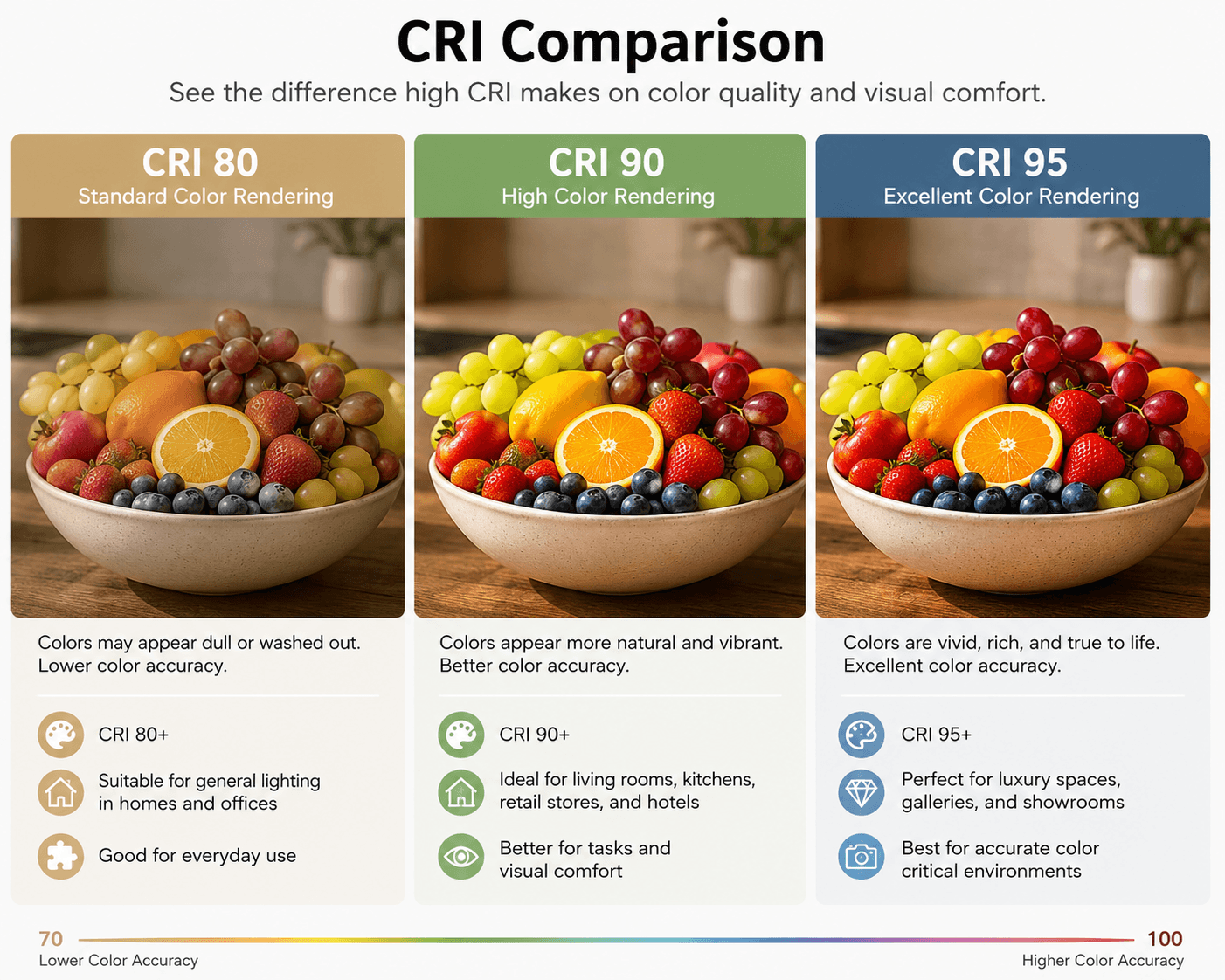
Per l'illuminazione domestica quotidiana, CRI 80+ è solitamente accettabile.
Tuttavia, per gli spazi in cui l'aspetto del colore conta, ad esempio:
- Ristoranti
- Negozi di abbigliamento
- Gallerie d'arte
- Alberghi
- Aree trucco
CRI 90+ Le lampadine a LED sono spesso consigliate.
L'illuminazione ad alto CRI può fare:
- Il cibo sembra più fresco
- I toni della pelle appaiono più naturali
- I colori degli interni sembrano più ricchi
- I prodotti appaiono più attraenti
Perciò, la sola luminosità non definisce una lampadina LED di alta qualità.
Tecnologia di regolazione LED: Creare la giusta atmosfera
Uno dei vantaggi della moderna illuminazione a LED è la possibilità di regolare la luminosità.
Tuttavia, Le lampadine a LED funzionano diversamente dalle tradizionali lampadine a incandescenza.
Le lampadine a incandescenza possono essere regolate semplicemente riducendo la potenza elettrica.
Le lampadine a LED richiedono speciali sistemi di controllo elettronico.
Le tecnologie comuni di dimmerazione dei LED includono:
Dimming all'avanguardia
Un metodo di regolazione tradizionale che viene spesso utilizzato con i sistemi più vecchi.
Oscuramento del bordo d'uscita
Una tecnologia più recente che solitamente fornisce un oscuramento dei LED più fluido e silenzioso.
Oscuramento intelligente
Consente agli utenti di controllare la luminosità:
- App mobili
- Assistenti vocali
- Sistemi domestici intelligenti
Quando si installano lampadine LED dimmerabili, verificare sempre la compatibilità tra lampadina e dimmer.
L'utilizzo di un dimmer incompatibile potrebbe causare:
- Sfarfallio
- Ronzio
- Gamma di attenuazione limitata
- Durata della lampadina ridotta
Comprendere lo sfarfallio dei LED
Sebbene le lampadine a LED siano altamente efficienti, i prodotti di scarsa qualità potrebbero presentare sfarfallio.
Lo sfarfallio del LED di solito si verifica quando il driver non è in grado di fornire una corrente elettrica stabile.
Le cause comuni includono:
- Driver di bassa qualità
- Compatibilità dimmer errata
- Progettazione del circuito scadente
Uno sfarfallio visibile può causare:
- Fastidio agli occhi
- Mal di testa
- Problemi di registrazione della videocamera
- Comfort visivo ridotto
Fortunatamente, lampadine LED di alta qualità con driver affidabili possono ridurre o eliminare significativamente i problemi di sfarfallio.
Per le aree in cui le persone trascorrono molte ore, come gli uffici, camere da letto, e spazi commerciali, la scelta di un'illuminazione a LED priva di sfarfallio è particolarmente importante.
Perché le lampadine a LED durano così a lungo
Uno dei vantaggi più impressionanti della tecnologia LED è la sua durata estremamente lunga.
A differenza delle lampadine a incandescenza, che di solito si guastano improvvisamente quando il filamento si brucia, Le lampadine a LED funzionano in modo completamente diverso.
Invece di fermarsi all'improvviso, I LED perdono gradualmente luminosità nel tempo. Questo processo si chiama deprezzamento dei lumen.
In altre parole, una lampadina LED di alta qualità solitamente non si “brucia” come le lampadine tradizionali. Invece, la sua emissione luminosa diminuisce lentamente fino al raggiungimento della fine della sua vita utile.
La maggior parte delle lampadine LED di qualità sono classificate:
- 15,000 ore
- 25,000 ore
- 35,000 ore
- 50,000+ ore
Per una famiglia media, una lampadina LED da 25.000 ore può durare più di 10 anni, a seconda dell'uso quotidiano.
Tuttavia, la durata effettiva di una lampadina a LED dipende da diversi fattori importanti:
Gestione del calore
Un buon design termico aiuta a proteggere il chip LED e i componenti elettronici dal surriscaldamento.
Qualità dell'autista
Un driver affidabile garantisce un'erogazione di potenza stabile e riduce lo stress sulle parti interne.
Stabilità elettrica
La tensione stabile aiuta a prevenire danni prematuri.
Ventilazione dell'apparecchio
Un flusso d'aria adeguato consente al calore di fuoriuscire e migliora le prestazioni a lungo termine.
Perciò, mentre la stessa tecnologia LED è progettata per durare molti anni, la qualità del prodotto e il design interno giocano ancora un ruolo importante.
Applicazioni comuni dell'illuminazione a LED
Perché la tecnologia LED è efficiente, durevole, e altamente flessibile, ora è utilizzato in quasi ogni tipo di applicazione di illuminazione.
Dalle semplici lampadine domestiche ai sistemi avanzati di illuminazione intelligente, I LED sono diventati una parte essenziale del moderno design dell’illuminazione.
Illuminazione residenziale a LED
Nelle case, Le lampadine a LED sono comunemente utilizzate per:
- Plafoniere
- Lampade a sospensione
- Lampadari
- Lampade da tavolo
- Lampade da terra
- Downlight da incasso
- Apparecchi per esterni
Per esempio, Le lampadine decorative a filamento LED sono popolari nei salotti, zone pranzo, e ristoranti perché uniscono l’efficienza energetica ad un classico aspetto vintage.
Nel frattempo, I downlight a LED e le plafoniere forniscono luminosità, illuminazione pulita per le cucine, bagni, e aree di lavoro.
Illuminazione decorativa a LED
La tecnologia LED ha cambiato anche l’illuminazione decorativa.
I prodotti LED decorativi più diffusi includono:
- Lampadine LED Edison
- Lampadine LED a candela
- Lampadine a filamento vintage
- Lampadine a globo
- Lampadine RGB intelligenti
Questi prodotti consentono a progettisti e proprietari di case di creare atmosfere diverse mantenendo un basso consumo energetico.
Per esempio:
- Le calde lampadine a candela bianche creano un elegante effetto lampadario
- Le lampadine Edison aggiungono uno stile industriale vintage
- Le lampadine intelligenti RGB creano colori e atmosfere personalizzabili
Illuminazione commerciale a LED
Le aziende scelgono sempre più l'illuminazione a LED perché riduce i costi operativi e migliora l'esperienza del cliente.
Le applicazioni comuni includono:
- Alberghi
- Ristoranti
- Negozi al dettaglio
- Uffici
- Magazzini
- Centri commerciali
Negli ambienti commerciali, la qualità dell'illuminazione è particolarmente importante perché influisce:
- Comodità del cliente
- Aspetto del prodotto
- Atmosfera del marchio
- Produttività dei dipendenti
Di conseguenza, molti progetti commerciali ora utilizzano sistemi LED di alta qualità invece delle tradizionali soluzioni di illuminazione.
Applicazioni LED speciali
Oltre l'illuminazione quotidiana, I LED sono utilizzati anche in campi specializzati come:
- Illuminazione stradale
- Illuminazione architettonica
- Illuminazione del paesaggio
- Illuminazione orticola
- Applicazioni UV
- Illuminazione automobilistica
Perché i LED sono piccoli, efficiente, e facile da controllare, continuano a creare nuove possibilità in diversi settori.
Come scegliere la migliore lampadina LED
Dopo aver appreso come funziona l'illuminazione a LED, scegliere la giusta lampadina LED diventa molto più semplice.
Tuttavia, molti acquirenti si concentrano ancora solo sulla potenza o sul prezzo. In realtà, diversi fattori determinano se una lampadina a LED fornirà la giusta luminosità, comfort, e durata della vita.
Prima dell'acquisto, considerare i seguenti punti.
1. Controlla la luminosità (Lumen)
Il primo passo è scegliere la luminosità corretta.
Ricordare:
Watt = Consumo energetico
Lumen = emissione luminosa
Per esempio:
- 400–500 lumen → Piccole lampade e illuminazione d'accento
- 800 lumen → Sostituzione di una lampadina tradizionale da 60W
- 1,100+ lumen → Stanze più grandi o spazi più luminosi
La scelta del corretto flusso luminoso evita che le stanze siano troppo buie o inutilmente luminose.
2. Seleziona la giusta temperatura di colore
La temperatura colore migliore dipende dall'atmosfera che vuoi creare.
Per spazi rilassanti:
Scegliere:
- 2700K
- 3000K
Adatto per:
- Camere da letto
- Soggiorni
- Ristoranti
- Alberghi
Per ambienti di lavoro:
Scegliere:
- 4000K
- 5000K
Adatto per:
- Uffici
- Cucine
- Workshop
La giusta temperatura del colore può migliorare significativamente il comfort e l'esperienza visiva.
3. Considera l'CRI per una migliore qualità del colore
Se i colori accurati contano, scegli una lampadina LED con CRI più elevato.
Per illuminazione generale:
- CRI 80+ è accettabile
Per applicazioni premium:
- CRI 90+ è raccomandato
L'illuminazione ad alto CRI è particolarmente utile per:
- Aree pranzo
- Espositori per la vendita al dettaglio
- Opera d'arte
- Spazi per il trucco
- Progetti di ospitalità
4. Conferma il tipo di base della lampadina
Controlla sempre se la base della lampadina corrisponde al tuo apparecchio.
Le opzioni comuni includono:
- E26
- E27
- E12
- E14
- GU10
- MR16
- B22
Per esempio:
Basi a vite E26 e E27 sono comunemente usati negli apparecchi domestici.
E12 ed E14 sono spesso utilizzati per lampadari decorativi e lampadine a candela.
La scelta della base corretta garantisce una facile installazione e un funzionamento sicuro.
5. Controlla la compatibilità con l'attenuazione
Se vuoi una luminosità regolabile, assicurati che la lampadina sia etichettata come dimmerabile.
Controlla anche quello:
- Il dimmer supporta la tecnologia LED
- La gamma di potenza è compatibile
- La lampadina e il dimmer sono progettati per funzionare insieme
Altrimenti, potresti riscontrare sfarfallio o prestazioni di oscuramento scarse.
6. Considera l'ambiente del dispositivo
Non tutte le lampadine LED sono adatte a ogni apparecchio.
Per esempio:
- Gli apparecchi chiusi necessitano di lampadine progettate per il controllo del calore
- Gli apparecchi per esterni richiedono design resistenti agli agenti atmosferici
- Gli ambienti ad alta temperatura necessitano di una gestione termica più forte
Selezionare la lampadina LED corretta per l'ambiente aiuta a massimizzare la durata e le prestazioni. Controlla qui per ulteriori lampadine LED di alta qualità Huiyeetech.
Domande frequenti sull'illuminazione a LED
Come funzionano le luci a LED in termini semplici?
Le luci a LED creano illuminazione quando l'elettricità passa attraverso un chip semiconduttore. Il movimento degli elettroni rilascia energia sotto forma di fotoni, che noi vediamo come luce visibile.
A differenza delle lampadine tradizionali, I LED non riscaldano un filamento, quindi sprecano molta meno energia.
Posso sostituire qualsiasi lampadina con una lampadina a LED?
Nella maggior parte dei casi, SÌ.
Tuttavia, dovresti controllare:
- Tipo di attacco a lampadina
- Voltaggio
- Requisiti di luminosità
- Compatibilità con la dimmerazione
- Limitazioni del dispositivo
La scelta di una lampadina LED compatibile garantisce un'installazione sicura e prestazioni affidabili.
Perché le lampadine a LED sono più costose delle lampadine tradizionali??
Le lampadine a LED di solito costano di più in anticipo perché contengono componenti avanzati come:
- Chip semiconduttori
- Driver LED
- Sistemi di gestione del calore
- Componenti ottici
Tuttavia, il costo iniziale più elevato è solitamente bilanciato da:
- Minore consumo di elettricità
- Durata della vita più lunga
- Meno sostituzioni
Col tempo, I LED spesso diventano la scelta più economica.
Le luci a LED consumano molta elettricità?
NO.
Le luci a LED sono tra le tecnologie di illuminazione più efficienti dal punto di vista energetico oggi disponibili.
Forniscono una luminosità simile consumando molta meno elettricità rispetto alle lampadine a incandescenza e CFL.
Le lampadine a LED sono migliori delle lampadine a incandescenza?
Per la maggior parte delle applicazioni, SÌ.
Offerta lampadine LED:
- Minore consumo energetico
- Durata della vita più lunga
- Meno calore
- Migliore durata
- Più opzioni di progettazione
Ecco perché i LED sono diventati il sostituto standard dell’illuminazione tradizionale.
Considerazioni finali: Perché l'illuminazione a LED è il futuro
L’illuminazione a LED ha cambiato completamente il modo in cui utilizziamo e comprendiamo la luce.
Convertendo l'elettricità direttamente in luce visibile, I LED garantiscono un'eccezionale efficienza energetica, durata di vita più lunga, minori costi di manutenzione, e migliori prestazioni di illuminazione.
Inoltre, miglioramenti continui nella tecnologia dei semiconduttori, Driver LED, gestione termica, qualità del colore, e i controlli intelligenti continuano a rendere l’illuminazione a LED ancora più potente e versatile.
Sia che tu stia sostituendo una singola lampadina domestica, riqualificare uno spazio commerciale, o ideare un progetto di illuminazione completo, capire come funziona l'illuminazione a LED ti consente di prendere decisioni migliori.
Dal risparmio energetico al miglioramento del comfort, La tecnologia LED offre una soluzione più intelligente, più pulito, e un modo più sostenibile per illuminare il mondo.
Il futuro dell’illuminazione è il LED e quel futuro è già qui.