English
 العربية
 Français
 Deutsch
 Italiano
 Polski
 Português
 Русский
 Español
 Українська


Luce del giorno vs. Lampadine bianche morbide: quale dovresti acquistare?
Scegliere la lampadina giusta può cambiare radicalmente l'aspetto e l'atmosfera della tua casa. Eppure molti proprietari di case sono ancora alle prese con una domanda comune:
Dovresti scegliere una lampadina a luce diurna o una lampadina bianca morbida?
Mentre entrambe le opzioni possono fornire un'illuminazione eccellente, creano atmosfere molto diverse e servono a scopi diversi. Comprendere le differenze tra la temperatura del colore, luminosità, e la resa cromatica ti aiuterà a fare la scelta migliore per ogni stanza della tua casa.
In questa guida, ti spiegheremo tutto ciò che devi sapere sulla luce diurna e sulle lampadine LED a luce bianca morbida, comprese le loro principali differenze, applicazioni ideali, efficienza energetica, e come selezionare la lampadina perfetta per le tue esigenze.
Quale lampadina dovresti acquistare: bianca morbida o luce diurna?
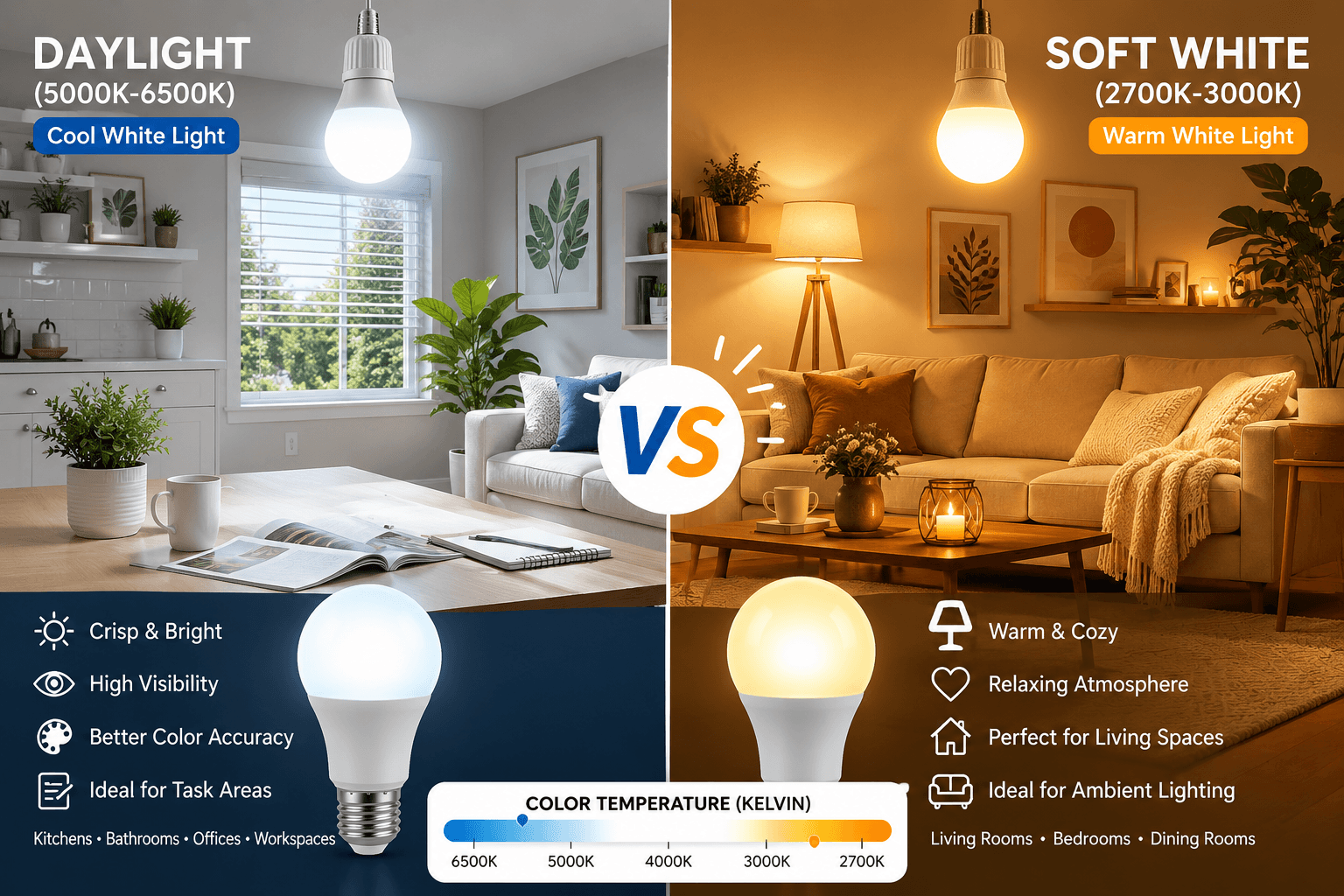
Prima di spiegare la differenza, Penso che avrai una migliore comprensione attraverso l'immagine qui sotto:
La risposta dipende in gran parte da dove intendi utilizzare la lampadina e dall'atmosfera che desideri creare.
Sebbene le preferenze personali giochino sicuramente un ruolo, alcune semplici linee guida possono aiutarti a scegliere la giusta illuminazione per ogni spazio.
Cominciamo guardando le lampadine a luce diurna.
Lampadine per luce diurna
Prima di tutto, è importante non fare confusione lampadine per luce diurna con lampadine bianche luminose. Anche se possono sembrare simili, producono effetti di luce notevolmente diversi.
Le lampadine LED Daylight sono progettate per imitare il più fedelmente possibile la luce solare naturale. Producono un croccante, luce fredda che aiuta a rivelare i colori in modo accurato e migliora la visibilità.
Tipicamente, le lampadine diurne hanno una temperatura di colore compresa tra 5000K e 6500K, che ricorda da vicino la luce del giorno naturale.
Dove dovresti usare le lampadine per la luce diurna?
Perché le lampadine diurne migliorano il contrasto e migliorano la chiarezza visiva, sono ideali per le aree in cui vengono eseguite attività dettagliate, ad esempio:
- Uffici domestici
- Sale studio
- Lampade da scrivania
- Bagni
- Locali lavanderia
- Workshop
- Garage
- Cucine
Per esempio, quando leggi le ricette, tritare le verdure, applicare il trucco, o lavorare nell'artigianato, le lampadine a luce diurna ti aiutano a vedere colori e dettagli in modo più accurato.
Perché le lampadine Daylight sono eccezionali per la precisione del colore
Oltre alla temperatura del colore, un altro fattore importante è il Indice di resa cromatica (CRI).
L'IRC misura la precisione con cui una sorgente luminosa rivela i colori rispetto alla luce solare naturale.
- CRI 80 = Buono
- CRI 90+ = Eccellente
- CRI 95+ = Precisione del colore di livello professionale
Una lampadina per luce diurna con a CRI sopra 90 può preparare il cibo, vestiario, mobilia, e l'arredamento appare più vibrante e fedele alla vita.
Se la percezione accurata del colore è importante, scegli sempre una lampadina con temperatura di colore diurna e un indice CRI elevato.
Esempio di luminosità
Se stai sostituendo una tradizionale lampadina a incandescenza da 60 watt con una lampadina a LED a luce diurna, cercare:
- Consumo energetico: 7–10 Watt
- Luminosità: 650–800 lumen
Ricordare, i lumen, non i watt, determinano la luminosità della lampadina.
Lampadine LED bianche morbide
Mentre le lampadine diurne si concentrano sulla chiarezza e sulla visibilità, le lampadine bianche morbide sono progettate per creare calore e comfort.
Le lampadine a LED bianche morbide emettono una luce calda, bagliore invitante che rende le stanze accoglienti e rilassanti. La loro temperatura di colore è generalmente compresa tra 2700K e 3000K.
Dove dovresti usare le lampadine bianche morbide?
Le lampadine bianche morbide sono ideali per gli spazi in cui il comfort e l'atmosfera sono più importanti dell'illuminazione operativa, compreso:
- Soggiorni
- Camere da letto
- Sale da pranzo
- Camere familiari
- Corridoi
- Angoli di lettura
La loro luce calda crea un'atmosfera accogliente che favorisce il relax e la conversazione.
Per questo motivo, molti proprietari di casa preferiscono un'illuminazione bianca morbida nelle aree in cui si rilassano dopo una giornata impegnativa.
Limitazioni dell'illuminazione bianca morbida
Sebbene le lampadine bianche morbide siano eccellenti per creare atmosfera e comfort, potrebbero non essere la scelta migliore per attività altamente dettagliate.
Leggere caratteri piccoli, eseguire lavori di precisione, oppure identificare sottili differenze di colore può essere più difficile in condizioni di illuminazione più calda.
Esempio di luminosità
Per sostituire una lampadina a incandescenza da 60 watt, scegli una lampadina LED bianca morbida con:
- Consumo energetico: 7–10 Watt
- Luminosità: 650–800 lumen
Proprio come le lampadine a luce diurna, la luminosità dipende dai lumen piuttosto che dalla potenza.
Comprendere le luci a LED
Oggi, Le lampadine a LED sono l’opzione di illuminazione più popolare in tutto il mondo, e per una buona ragione.
Sebbene i LED possano costare leggermente di più rispetto alle tradizionali lampadine a incandescenza, offrono notevoli risparmi a lungo termine.
Durata della vita più lunga
Una lampadina LED di qualità può durare:
- 15,000–50.000 ore
Rispetto a:
- 1,000 ore per le lampadine a incandescenza
Ciò significa meno sostituzioni e minori costi di manutenzione.
Minore consumo energetico
Le lampadine a LED consumano molta meno elettricità.
Per esempio:
- 60Lampadina a incandescenza W = circa $ 13 all'anno
- Lampadina LED equivalente = circa $ 2 all'anno
Di conseguenza, molti proprietari di case recuperano l'investimento iniziale entro il primo anno di utilizzo.
Potenza
Prima che la tecnologia LED diventasse mainstream, i consumatori in genere giudicavano la luminosità in base alla potenza.
Il presupposto comune era:
Watt più alti = luce più brillante
Tuttavia, questo non è più vero.
Nell'illuminazione moderna, la potenza indica semplicemente quanta energia consuma una lampadina, non quanto è luminosa.
Perciò, quando si confrontano le lampadine a LED, concentrarsi sui lumen piuttosto che sui watt.
Lumen (Luminosità)
I lumen misurano la quantità totale di luce visibile emessa da una lampadina.
In termini semplici:
Più lumen = più luminosità
Che è più luminoso: Luce diurna o bianco morbido?
Molte persone presumono che le lampadine diurne siano automaticamente più luminose delle lampadine bianche tenui.
In realtà, la luminosità dipende interamente dal flusso luminoso.
Per esempio:
- Lampadina per luce diurna: 800 lumen
- Lampadina bianca morbida: 800 lumen
Entrambe le lampadine producono la stessa luminosità.
Tuttavia, Le lampadine a luce diurna spesso appaiono più luminose perché l'occhio umano percepisce i colori più freddi come più intensi.
Kelvin (Temperatura del colore)
La differenza principale tra le lampadine a luce diurna e quelle a luce bianca morbida è la loro temperatura di colore.
La temperatura del colore è misurata in Kelvin (K).
Bianco morbido
- 2700K–3000K
- Caldo bagliore giallo
- Atmosfera accogliente e rilassante
Luce del giorno
- 5000K–6500K
- Luce bianco-blu nitida
- Massima visibilità e precisione del colore
Tabella di confronto rapido
| Caratteristica | Bianco morbido | Luce del giorno |
|---|---|---|
| Temperatura del colore | 2700K–3000K | 5000K–6500K |
| Aspetto | Giallo caldo | Bianco freddo |
| Ideale per | Camere da letto, Soggiorni, Sale da pranzo | Cucine, Bagni, Uffici |
| Umore | Rilassante & Accogliente | Luminoso & Energizzante |
| Precisione del colore | Bene | Eccellente |
| IRC consigliato | 90+ | 90+ |
Conclusione
Scegliere tra lampadine a luce diurna e lampadine a luce bianca morbida non significa decidere quale sia la migliore, ma piuttosto selezionare l'illuminazione giusta per l'ambiente giusto.
Se vuoi un po' di caldo, un'atmosfera confortevole per rilassarsi e intrattenere gli ospiti, scegliere Lampadine LED bianche morbide (2700K–3000K).
Se hai bisogno della massima visibilità, colori accurati, e una migliore illuminazione delle attività, scegliere lampadine a LED per luce diurna (5000K–6500K).
Indipendentemente dalla temperatura del colore, consigliamo vivamente di selezionare lampadine con a CRI di 90 o superiore. Le lampadine ad alto CRI rendono i colori più naturali, vibrante, e più vicino a quello che vedresti sotto la luce solare naturale.
A Illuminazione Huiyee, le nostre lampadine LED standard sono prodotte con CRI 90+, aiutare i proprietari di casa, rivenditori, e i distributori di illuminazione offrono una qualità di illuminazione superiore e una migliore esperienza visiva.
Domande frequenti
Il bianco morbido è uguale al bianco caldo?
Non esattamente.
Sebbene i termini siano spesso usati in modo intercambiabile, c'è una leggera differenza.
- Bianco morbido: 2700K–3000K
- Bianco caldo: 3000K–4000K
Le lampadine di colore bianco caldo appaiono leggermente più bianche e meno gialle rispetto alle lampadine di colore bianco tenue.
Che è meglio: Bianco tenue o luce diurna?
Nessuno dei due è universalmente migliore.
La scelta migliore dipende dalla vostra applicazione.
Scegliere:
- Soft White per comfort e relax.
- Luce diurna per visibilità e attività orientate ai compiti.
La luce diurna e le lampadine bianche luminose sono le stesse??
NO.
Le lampadine bianche luminose in genere cadono in mezzo:
- 3500K–4500K
Questo le rende una via di mezzo tra le lampadine bianche tenui e quelle a luce diurna.
Molti proprietari di case preferiscono un'illuminazione bianca brillante per le cucine perché offre un aspetto più pulito senza il tono bluastro delle lampadine a luce diurna.
Dovrei usare la luce del giorno o lampadine bianche morbide in cucina?
Per la maggior parte delle cucine, le lampadine a luce diurna sono l’opzione migliore perché migliorano la visibilità e facilitano la preparazione del cibo.
Tuttavia, se la luce del giorno sembra troppo fredda o blu, una lampadina bianca brillante intorno ai 4000K può fornire un ottimo compromesso.
Alla ricerca di lampadine LED di alta qualità?
La nostra fabbrica produce un'ampia gamma di prodotti di illuminazione a LED per soddisfare le diverse esigenze di illuminazione residenziale e commerciale.
Offriamo:
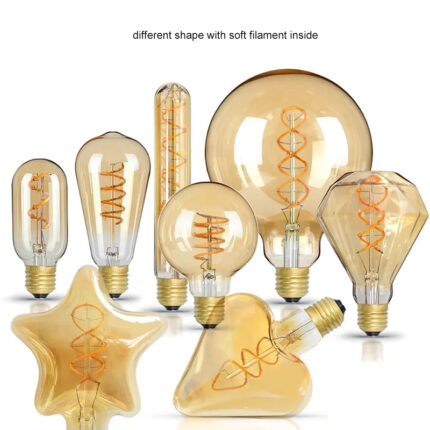
- Bulbi di filamento a LED
- Lampadine LED A19/60
- E26 & Lampadine LED E27
- Lampadine LED a candela
- Lampadine Edison
- Lampadine a globo
- Lampadine LED a tubo
- Lampadine LED decorative
- Lampadine decorative di grandi dimensioni
- Lampadine LED dimmerabili
- Lampadine LED intelligenti
- OEM personalizzato & Soluzioni di illuminazione ODM
Fare clic qui per ulteriori articoli
In aggiunta alla nostra gamma di prodotti standard, molte lampadine decorative possono essere personalizzate in base alle vostre esigenze specifiche, compresa la forma, wattaggio, temperatura del colore, CRI, confezione, marchio, e le esigenze di certificazione.
Che tu sia un grossista di illuminazione, distributore, rivenditore, Venditori di Amazon, appaltatore del progetto, o proprietario del marchio, possiamo aiutarti a dare vita alle tue idee di illuminazione.
Per ulteriori opzioni di lampadine a LED, si prega di visitare il nostro sito web. Se hai qualche domanda, requisiti personalizzati, o esigenze di approvvigionamento, sentiti libero di contatta il nostro team direttamente. Siamo sempre felici di aiutarti a trovare la soluzione di illuminazione perfetta.
Articoli correlati
Per saperne di più Scopri di più