 English
 العربية
 Français
 Deutsch
 Italiano
 Polski
 Português
 Русский
 Español
 Українська


Temperatura del colore: cosa significa?
Quando acquisti una lampadina, ti imbatterai spesso in termini come temperatura del colore, bianco caldo, bianco freddo, E luce del giorno. Se non sei sicuro di cosa significano, certamente non sei solo.
Nel passato, scegliere una lampadina era semplice perché la maggior parte delle case utilizzava lampadine a incandescenza tradizionali che producevano tutte una luce calda simile. Oggi, Tuttavia, GUIDATO, alogeno, e le lampadine CFL sono disponibili in un'ampia gamma di temperature di colore. Di conseguenza, selezionare il giusto colore della luce è importante tanto quanto scegliere la base o la luminosità corretta della lampadina.
Comprendere la temperatura del colore ti aiuta a creare la giusta atmosfera, migliorare la visibilità, e assicurati che le lampadine sostitutive corrispondano all'illuminazione esistente.
Cos'è la temperatura del colore?
In termini semplici, temperatura del colore descrive l'aspetto della luce bianca prodotta da una sorgente luminosa. Piuttosto che misurare la luminosità, indica se appare la luce Caldo (giallo), neutro, O Freddo (blu).
La temperatura del colore viene misurata Kelvin (K).
- 2700K–3000K: Bianco caldo
- 3500K: Bianco neutro
- 4000K: Bianco freddo
- 5000K–6500K: Luce del giorno
Ricorda semplicemente:
- Kelvin più basso = luce più calda
- Kelvin più alto = luce più fredda
È importante notarlo la temperatura del colore non determina la luminosità. La luminosità viene misurata separatamente in lumen (lm).
Perché è importante la temperatura del colore?
La temperatura del colore ha un impatto significativo sull'aspetto e sull'atmosfera di una stanza.
Per esempio, immagina che una delle tre lampadine della tua cucina si bruci. Acquistate un ricambio con la stessa base, forma, wattaggio, e luminosità. Dopo averlo installato, Tuttavia, la nuova lampadina appare notevolmente diversa dalle altre: una appare calda e gialla, mentre quello nuovo sembra bianco brillante.
Il motivo è semplice: le lampadine hanno temperature di colore diverse.
Anche se le lampadine producono lo stesso numero di lumen, Valutazioni Kelvin non corrispondenti possono far sembrare una stanza incoerente e meno visivamente attraente. Perciò, corrispondente al Kelvin (K) La classificazione è uno dei modi più semplici per ottenere un'illuminazione uniforme in tutta la casa.
Grafico della temperatura del colore (Scala Kelvin)
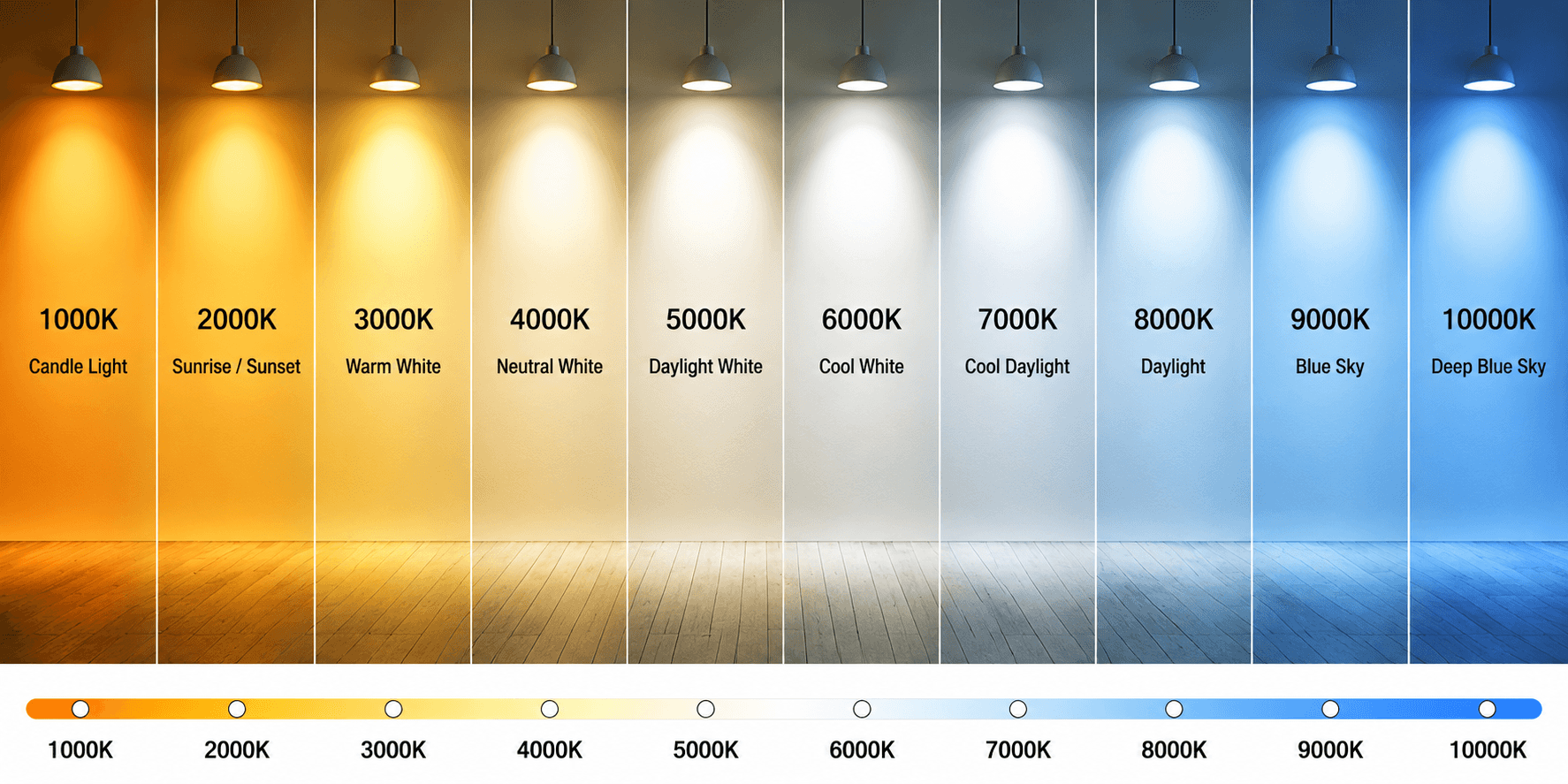
Fortunatamente, confrontare i colori chiari è facile. IL Kelvin (K) scala mostra quanto calda o fredda apparirà una sorgente luminosa.
| Temperatura del colore | Aspetto | Uso tipico |
|---|---|---|
| 1000K | Lume di candela | Ambiente decorativo |
| 2700K–3000K | Bianco caldo | Case, alberghi, ristoranti |
| 3500K | Bianco neutro | Uffici, scuole |
| 4000K | Bianco freddo | Cucine, bagni |
| 5000K–6500K | Luce del giorno | Workshop, vedere al dettaglio, uffici |
| 9000K | Cielo azzurro e limpido | Riferimento naturale |
La maggior parte dei produttori stampa chiaramente il file Valutazione Kelvin sia sulla confezione che sulle specifiche del prodotto, facilitando la scelta della lampadina di ricambio corretta.
Cosa succede se non conosco la temperatura del colore delle mie lampadine esistenti??
Se la tua lampadina attuale non mostra la sua valutazione Kelvin, Non preoccuparti.
La maggior parte dell’illuminazione residenziale rientra in una di queste temperature di colore comuni:
- 2700K–3000K – Bianco caldo
- 3500K - Bianco
- 4000K – Bianco freddo
- 6500K – Luce del giorno
Confrontando l'illuminazione esistente con queste gamme standard, di solito puoi trovare la corrispondenza più vicina.
Fortunatamente, quando fai acquisti online, l'indice Kelvin è quasi sempre indicato nelle specifiche del prodotto, rendendo la sostituzione molto più semplice.
2700K–3000K – Bianco caldo
Tra tutte le temperature di colore, Bianco caldo è la scelta più popolare per l'illuminazione residenziale. Assomiglia molto alla luce soffusa delle tradizionali lampadine a incandescenza e crea un'atmosfera accogliente, atmosfera rilassante.
Meglio per
- Soggiorni
- Camere da letto
- Sale da pranzo
- Alberghi
- Ristoranti
- Illuminazione decorativa
Vantaggi
- Crea un ambiente caldo, atmosfera accogliente
- Comodo per l'uso serale
- Ideale per lampadine a filamento LED vintage e in stile Edison
- Esalta i mobili in legno e i colori caldi degli interni
Complessivamente, Warm White è la scelta migliore ovunque il comfort e il relax siano la priorità.
3500K – Bianco neutro
Se stai cercando un equilibrio tra illuminazione calda e fredda, 3500K Bianco neutro è una scelta eccellente. Fornisce pulito, illuminazione dall'aspetto naturale senza apparire eccessivamente gialla o blu.
Meglio per
- Uffici
- Scuole
- Aree di accoglienza
- Sale d'attesa
- Spazi commerciali
- Corridoi
Vantaggi
- Comodo per l'uso quotidiano
- Aspetto del colore naturale
- Adatto sia per spazi residenziali che commerciali
- Aiuta a ridurre l'affaticamento degli occhi durante l'uso prolungato
Di conseguenza, 3500K è un'opzione popolare per gli spazi che servono a più scopi.
4000K – Bianco freddo
Per un'illuminazione quotidiana più brillante, 4000K Bianco freddo è una delle opzioni più versatili disponibili. Produce croccantezza, illuminazione pulita con pochissima sfumatura gialla, rendendo i dettagli più facili da vedere.
Meglio per
- Cucine
- Bagni
- Locali lavanderia
- Workshop
- Garage
- Illuminazione di sicurezza per esterni
Vantaggi
- Luminoso, aspetto pulito
- Eccellente precisione del colore
- Ideale per cucinare, pulizia, e toelettatura
- Popolare sia nelle case che negli edifici commerciali
Di conseguenza, 4000K è una delle temperature di colore più comunemente consigliate per l'illuminazione operativa.
6500K – Luce del giorno
Quando è richiesta la massima luminosità e visibilità, 6500K Luce diurna è spesso la scelta preferita. Assomiglia molto alla luce del giorno naturale e produce una luce bianca brillante con una notevole sfumatura blu.
Meglio per
- Uffici
- Workshop
- Espositori per la vendita al dettaglio
- Studi fotografici
- Magazzini
- Illuminazione esterna
Vantaggi
- Massima visibilità
- Ottima resa cromatica
- Aiuta a migliorare la concentrazione
- Ideale laddove il riconoscimento accurato del colore è essenziale
Mancia: Evita di utilizzare lampadine da 6500K nelle camere da letto o nei soggiorni se preferisci un'atmosfera calda e rilassante.
Luce diurna vs lampadine per luce diurna a spettro completo
Sebbene questi termini siano spesso usati in modo intercambiabile, Lampadine LED per luce diurna E Lampadine per luce diurna a spettro completo non sono gli stessi.
UN 6500K Lampadina per luce diurna imita semplicemente il colore della luce naturale.
UN Lampadina a spettro completo, Tuttavia, è progettato per produrre una gamma più ampia di lunghezze d'onda visibili che assomigliano maggiormente alla luce solare naturale. Queste lampade specializzate sono comunemente utilizzate per la fotografia, crescita delle piante, e terapia della luce, comprese le applicazioni che possono aiutare le persone colpite da Disturbo affettivo stagionale (TRISTE).
Come scegliere la giusta temperatura di colore
La temperatura del colore ideale dipende da come viene utilizzata la stanza. Come guida generale, le seguenti raccomandazioni funzionano bene per la maggior parte delle applicazioni.
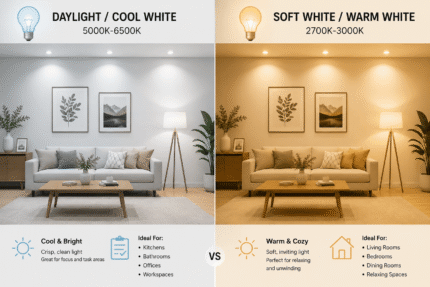
| Camera | Temperatura colore consigliata |
|---|---|
| Camera da letto | 2700K–3000K |
| Soggiorno | 2700K–3000K |
| Sala da pranzo | 2700K–3000K |
| Cucina | 4000K |
| Bagno | 4000K |
| Ufficio domestico | 4000K–5000K |
| Officina | 5000K–6500K |
| Esposizione al dettaglio | 5000K–6500K |
| Sicurezza esterna | 4000K–6500K |
Domande frequenti
Un Kelvin più alto significa una lampadina più luminosa?
NO. Kelvin misura il colore della luce, mentre viene misurata la luminosità lumen (lm). Due lampadine con lo stesso flusso luminoso possono avere temperature di colore completamente diverse.
È meglio 3000K o 4000K?
Nessuno dei due è universalmente migliore. 3000K crea un'atmosfera calda e rilassante, ideale per gli spazi abitativi, Mentre 4000K fornisce più luminoso, un’illuminazione più pulita e più adatta alle cucine, bagni, e aree di lavoro.
2700K è uguale a Soft White?
SÌ. La maggior parte dei produttori utilizza Bianco morbido E Bianco caldo in modo intercambiabile per le lampadine in giro 2700K. Sebbene la formulazione possa variare leggermente tra i marchi, generalmente producono lo stesso caldo, luce confortevole.
Quale temperatura di colore è migliore per le lampadine a LED?
Non esiste un’unica opzione migliore. La temperatura del colore ideale dipende da dove verrà utilizzata la lampadina. Bianco caldo (2700K–3000K) funziona meglio per gli spazi rilassanti, mentre il bianco freddo (4000K) e luce del giorno (5000K–6500K) sono migliori per l'illuminazione operativa e gli ambienti di lavoro.
Quale temperatura di colore è la migliore per una camera da letto?
La maggior parte degli esperti di illuminazione lo consiglia 2700K–3000K, poiché la luce calda crea un'atmosfera accogliente e aiuta a favorire il relax.
Posso mescolare diverse temperature di colore?
Puoi, ma generalmente è meglio mantenere la stessa temperatura di colore all’interno di una singola stanza. L'illuminazione coerente crea un ambiente più pulito, aspetto più professionale.
Quale temperatura di colore è più vicina alla luce del giorno naturale?
6500K ricorda molto da vicino la luce del giorno naturale ed è ampiamente utilizzato per le officine, uffici, espositori al dettaglio, e altre aree dove è richiesta la massima visibilità.
Considerazioni finali
Scegliere il giusto temperatura del colore è importante quanto selezionare la base o la luminosità corretta della lampadina. Se preferisci la calda luce del 2700K, l'aspetto equilibrato di 3500K, la nitida chiarezza di 4000K, o la brillante illuminazione di 6500K Luce diurna, comprendere il Scala Kelvin rende più semplice creare l'illuminazione perfetta per ogni stanza.
Prima di acquistare lampadine di ricambio, controlla sempre il Kelvin (K) valutazione insieme a tipo di base E flusso luminoso. La corrispondenza di tutte e tre le specifiche contribuirà a garantire la coerenza, illuminazione confortevole in tutta la casa o sul posto di lavoro.
Huiyee Lighting è presente in questo campo da più di 10 anni. clicca qui per ulteriori opzioni sulla temperatura del colore delle lampadine LED.