Get Free Consultation!
We are ready to answer right now! Sign up for a free consultation.
I consent to the processing of personal data and agree with the user agreement and privacy policy

We are ready to answer right now! Sign up for a free consultation.
I consent to the processing of personal data and agree with the user agreement and privacy policy


When choosing lighting for warehouses, outdoor areas, industrial buildings, or large commercial spaces, buyers often need a solution that delivers powerful brightness, reliable performance, and long operating hours. Although LED technology has become increasingly popular in recent years, HID bulbs (High Intensity Discharge bulbs) are still widely used in many professional lighting applications.
So, what exactly are HID bulbs? How do HID bulbs work? And are they still a suitable choice for your lighting project? In this complete buyer’s guide, we will explain everything you need to know about HID bulbs, including their types, advantages, disadvantages, applications, and key buying considerations.
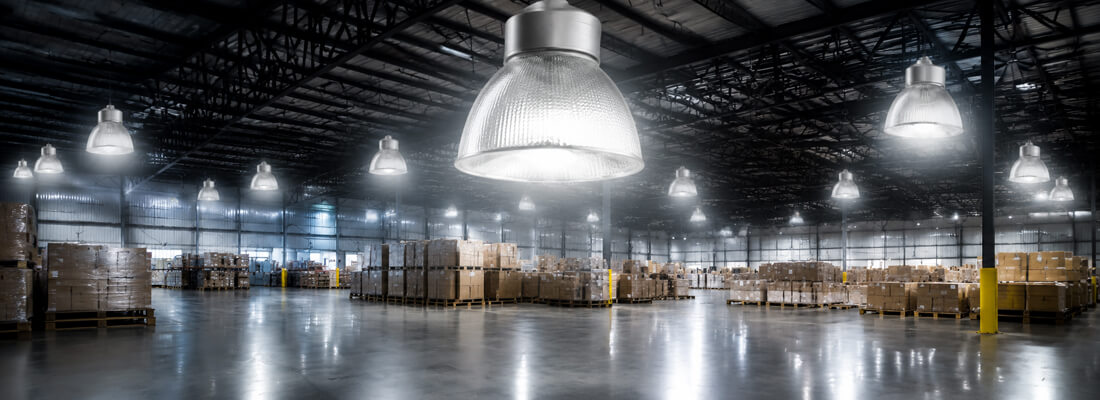
HID bulbs, also known as High Intensity Discharge bulbs, are a type of high-output lighting solution that produces light by creating an electrical arc between electrodes inside a gas-filled tube.
Unlike traditional incandescent bulbs that generate light through a heated filament, HID bulbs use gas discharge technology to create a much stronger light output. As a result, HID bulbs are especially suitable for environments that require powerful illumination over large areas.
Because of their high brightness and reliable performance, HID bulbs have been commonly used in:
Therefore, for buyers looking for strong and wide-area lighting, HID bulbs remain a practical lighting option.
To understand whether HID bulbs are suitable for your application, it is helpful to know how they operate.
Inside every HID bulb, there is a small arc tube filled with gases and metal elements. When electrical energy passes through the tube, it creates an arc between two electrodes. This arc produces intense light with much higher output than many traditional lamps.
However, HID bulbs cannot usually operate directly from standard power supplies. Instead, they require a ballast, which controls the electrical current and provides the correct starting voltage.
A complete HID lighting system normally includes:
The HID bulb is the main light source. Different materials inside the bulb determine brightness, colour temperature, and performance.
The ballast regulates power and ensures stable operation. Therefore, when replacing HID bulbs, buyers should always check ballast compatibility.
The fixture protects the HID bulb and helps distribute light efficiently across the target area.
For this reason, selecting the correct HID bulb is not only about wattage but also about matching the existing lighting system.
There are several types of HID bulbs available on the market. Each type has different characteristics, making them suitable for different applications.
Metal halide HID bulbs are popular because they provide bright white light with relatively good colour rendering.
Because of their balanced colour appearance, they are commonly used in:
In addition, metal halide HID bulbs are often chosen where accurate colour visibility is important.
High pressure sodium (HPS) HID bulbs are well known for their excellent efficiency and long service life.
Compared with other HID bulbs, HPS bulbs produce a warm yellow-orange light. Therefore, they are commonly used for outdoor applications where brightness and energy efficiency are the main priorities.
Typical applications include:
Mercury vapour HID bulbs were one of the earliest types of HID lighting technology.
Although they can still provide strong illumination, their efficiency is lower compared with modern lighting solutions. As a result, many users are gradually replacing older mercury vapour systems with more energy-efficient options.
For many buyers, HID bulbs remain attractive because of their proven performance and powerful lighting capability.
One of the biggest advantages of HID bulbs is their impressive brightness.
Because HID bulbs can produce large amounts of light, they are ideal for illuminating large spaces where standard bulbs may not provide enough coverage.
For example, warehouses and outdoor facilities often require high-output lighting, making HID bulbs a suitable choice.
Unlike small residential bulbs designed for limited spaces, HID bulbs are specifically developed for applications requiring wide-area illumination.
Therefore, they are frequently used in:
Another advantage of HID bulbs is their long history of successful use.
For decades, businesses and industries have relied on HID lighting because of its durability and stable performance. As a result, many existing lighting systems still use HID bulbs today.
Although HID bulbs offer excellent brightness, buyers should also understand their limitations before purchasing.
Unlike LED bulbs that turn on instantly, HID bulbs usually require several minutes to reach full brightness.
Therefore, HID bulbs may not be the best choice for applications where instant lighting is required.
Most HID bulbs require a ballast to operate correctly.
Because of this, buyers need to confirm:
Choosing an incompatible HID bulb may result in poor performance or reduced lifespan.
Over time, HID bulbs gradually lose brightness and eventually need replacement.
Therefore, businesses using multiple HID bulbs should consider maintenance costs and replacement schedules.
When upgrading lighting systems, many buyers compare HID bulbs and LED bulbs.
| Feature | HID Bulbs | LED Bulbs |
|---|---|---|
| Brightness | Very high output | High output with modern efficiency |
| Start-up time | Requires warm-up | Instant on |
| Energy efficiency | Good | Usually higher |
| Maintenance | Requires periodic replacement | Longer lifespan |
| Installation | Often requires ballast | Usually easier |
Generally speaking, HID bulbs are still a practical option for existing systems that require high brightness.
However, for new lighting installations, many buyers choose LED solutions because they offer lower energy consumption, longer lifespan, and easier maintenance.
Because of their powerful illumination, HID bulbs are widely used in professional environments.
Factories and warehouses often use HID bulbs because they can effectively illuminate large spaces with high ceilings.
HID bulbs are commonly installed in:
Sports fields and large public venues require strong and consistent lighting. Therefore, HID bulbs remain a reliable solution for these environments.
Before purchasing HID bulbs, buyers should consider several important factors.
First, check whether your fixture requires:
Using the correct type ensures better performance and safety.
Secondly, always select HID bulbs with the correct wattage and voltage.
A bulb with incorrect specifications may cause poor lighting performance or damage the system.
Different HID bulbs provide different lighting colours.
For example:
Therefore, choosing the right colour temperature helps create the ideal lighting environment.
Finally, buyers should consider availability, maintenance requirements, and long-term operating costs before selecting HID bulbs.
A reliable HID bulb supplier can help ensure consistent product quality and easier replacement.
Yes. Although LED lighting is growing quickly, HID bulbs are still widely used in industrial, outdoor, and commercial applications where high brightness is required.
HID bulbs are more efficient than many older lighting technologies. However, modern LED bulbs generally provide better energy savings.
In many cases, HID systems can be upgraded to LED. However, compatibility depends on the fixture, wiring, and ballast system.
The lifespan of HID bulbs depends on the bulb type, operating conditions, and maintenance. Proper installation can help extend their service life.
Overall, HID bulbs remain a powerful lighting solution for large-scale applications. Thanks to their high brightness, wide coverage, and reliable performance, HID bulbs continue to serve industries, commercial spaces, and outdoor environments.
However, before purchasing HID bulbs, buyers should carefully consider their lighting requirements, existing fixtures, maintenance costs, and future energy-saving goals.
For existing HID lighting systems, choosing the correct replacement HID bulbs can provide a cost-effective solution. Meanwhile, for new projects, comparing HID bulbs with modern LED alternatives can help you make a smarter long-term lighting decision.
Quick customized solution,and it takes 3-10 days after confirming detail.
If you like our lights, one free sample can be provided for reference.
We focus on high quality lights only. Your interiors need high quality.
Top quality lights has very high value. We protect it well for shipment.
Our team is available 24/7, and you can expect a response to your inquiries within 2 hours.
We are ready to answer right now! Sign up for a free consultation.
I consent to the processing of personal data and agree with the user agreement and privacy policy
