 English
 العربية
 Français
 Deutsch
 Italiano
 Polski
 Português
 Русский
 Español
 Українська


Prohibición de bombillas CFL
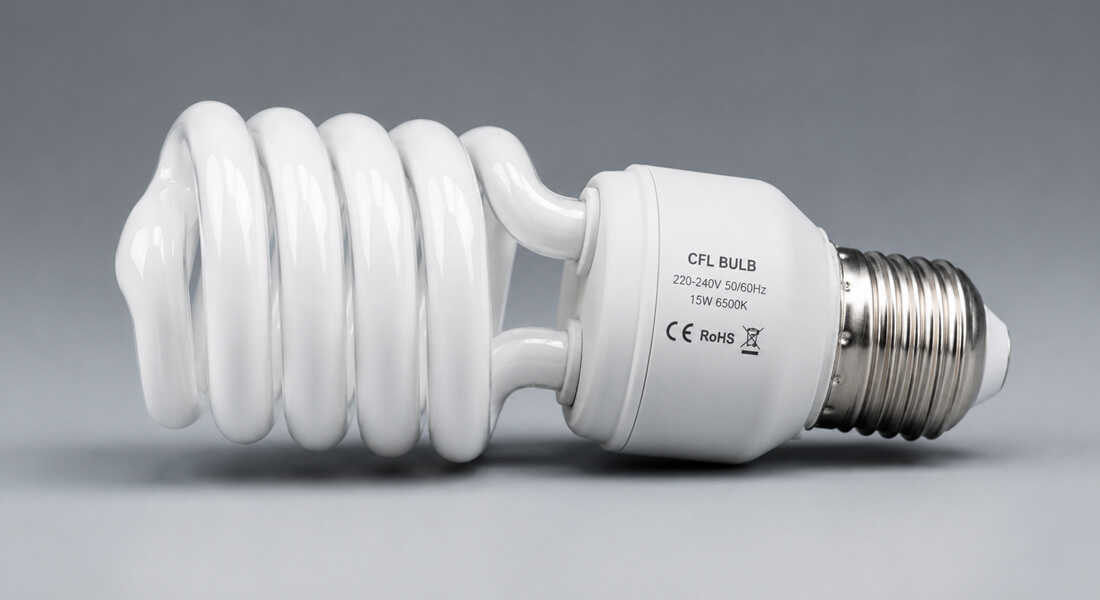
Durante muchos años, bombillas CFL (Lámparas fluorescentes compactas) fueron una de las soluciones de iluminación de ahorro de energía más populares para hogares y empresas. Sin embargo, La tecnología de iluminación ha seguido evolucionando., y bombillas CFL ahora están desapareciendo gradualmente del mercado.
Aunque puedes seguir usando los existentes bombillas CFL, Los fabricantes han puesto fin a la producción en muchas regiones., lo que significa que las bombillas de repuesto serán cada vez más difíciles de encontrar. Por lo tanto, entender por qué bombillas CFL se están eliminando gradualmente y qué alternativas están disponibles es más importante que nunca.
En esta guía, aprenderás por qué bombillas CFL están siendo prohibidos, si todavía están disponibles, cómo reciclarlos de forma segura, y por qué las bombillas LED se han convertido en el sustituto preferido.
¿Qué es exactamente una bombilla CFL??
A Lámpara fluorescente compacta (bombilla CFL) Es una bombilla de bajo consumo que produce luz utilizando una pequeña cantidad de vapor de mercurio..
A diferencia de las bombillas incandescentes tradicionales, bombillas CFL Generar luz a través de una reacción química en lugar de un filamento brillante.. Dentro de cada bombilla CFL, La electricidad pasa a través del mercurio y el gas argón., creando ultravioleta invisible (ultravioleta) luz. Luego, la luz ultravioleta reacciona con la capa de fósforo dentro del tubo de vidrio., produciendo la luz blanca visible que vemos.
Como resultado, bombillas CFL requieren un breve período de calentamiento antes de alcanzar el brillo máximo. Su distintivo diseño en espiral o tubo plegado también permite bombillas CFL Se adapta a accesorios de iluminación domésticos estándar y ocupa mucho menos espacio que los tubos fluorescentes tradicionales..
Las características clave de las bombillas CFL incluyen:
- Utiliza mucha menos electricidad que las bombillas incandescentes.
- Duran mucho más que las bombillas de filamento tradicionales.
- Disponible en múltiples potencias y temperaturas de color.
- Compatible con bases de lámparas comunes como E26, E27, E14, y B22
¿Por qué utilizamos bombillas fluorescentes compactas??
Antes de que la tecnología LED se generalizara, bombillas CFL representó un gran avance en la iluminación energéticamente eficiente.
En comparación con las lámparas incandescentes, bombillas CFL típicamente:
- Consumir alrededor 70–80% menos electricidad
- Último 6–10 veces más
- Produce menos calor
- Ofrece una amplia gama de niveles de brillo y temperaturas de color.
Debido a estas ventajas, bombillas CFL Rápidamente se convirtió en la opción estándar para iluminación residencial y comercial..
Por ejemplo, bombillas CFL han sido ampliamente utilizados en:
- Viviendas
- Oficinas
- Hoteles
- Escuelas
- Tiendas minoristas
- Accesorios de techo
- Lámparas de mesa
- Pasillos
- Iluminación del baño
- Iluminación decorativa para estantes y espejos.
Sin embargo, Los avances en la tecnología LED han ido reemplazando gradualmente bombillas CFL en la mayoría de las aplicaciones. Hoy, Las bombillas LED proporcionan una eficiencia aún mayor y eliminan la necesidad de mercurio..
¿Por qué se prohíben las bombillas CFL??
La eliminación gradual de bombillas CFL está impulsado principalmente por la legislación ambiental.
Específicamente, el Directiva RoHS (Restricción de sustancias peligrosas) limita el uso de materiales peligrosos en productos eléctricos y electrónicos. Desde bombillas CFL contener mercurio, ha expirado la exención que permitía a los fabricantes producir muchas lámparas fluorescentes.
Como consecuencia, Se ha detenido la producción de varios productos de iluminación fluorescente..
Las fechas clave de eliminación incluyen:
- Lámparas fluorescentes compactas (bombillas CFL): 1 Febrero 2024
- Tubos fluorescentes T5 y T8: 1 Febrero 2024
- Lámparas fluorescentes circulares T9: 24 Febrero 2025
En tono rimbombante, la legislación sólo afecta a la fabricación y venta de productos nuevos bombillas CFL. Existente bombillas CFL Todavía se pueden utilizar hasta que lleguen al final de su vida útil..
Mientras tanto, Varias aplicaciones de iluminación especializadas siguen estando exentas., incluido:
- Iluminación de emergencia
- Equipo medico
- Iluminación con pilas
- Cierta iluminación industrial
- Algunas aplicaciones artísticas y científicas
Al final, El objetivo es reducir la contaminación por mercurio y al mismo tiempo alentar a los consumidores a cambiar de bombillas CFL a más seguro, Iluminación LED más eficiente energéticamente.
¿Todavía están disponibles las bombillas CFL??
Sí, pero solo mientras el stock actual esté disponible.
Aunque los fabricantes han dejado de producir muchos bombillas CFL, Los minoristas pueden continuar vendiendo el inventario existente hasta que se agoten los suministros..
Por lo tanto, si actualmente usas bombillas CFL, puedes seguir usándolos sin restricciones. Sin embargo, reemplazo fallido bombillas CFL será cada vez más difícil a medida que desaparezcan las existencias.
Por esta razón, Muchos propietarios de viviendas y empresas ya se están actualizando desde bombillas CFL a bombillas LED.
¿Son peligrosas las bombillas CFL??
En condiciones normales, bombillas CFL se consideran seguros.
Cada bombilla CFL contiene sólo una cantidad muy pequeña de mercurio, que permanece sellado dentro del tubo de vidrio durante el uso normal. Como consecuencia, intacto bombillas CFL prácticamente no representan ningún riesgo para la salud.
Sin embargo, si un bombilla CFL se rompe, se puede liberar una pequeña cantidad de vapor de mercurio. Afortunadamente, el contenido de mercurio es extremadamente bajo, y seguir los procedimientos de limpieza adecuados minimiza cualquier riesgo potencial..
¿Qué debo hacer si se rompe una CFL??
si un bombilla CFL se rompe, Mantén la calma y sigue estos sencillos pasos de seguridad.:
- Primero, mantener a personas y mascotas alejadas del área.
- Próximo, abra las ventanas y ventile la habitación durante al menos 10 a 15 minutos.
- Entonces, Apague cualquier sistema de calefacción o aire acondicionado que haga circular aire..
- Use guantes desechables antes de manipular piezas rotas..
- Recoja con cuidado fragmentos grandes utilizando papel rígido o cartón..
- Después, use cinta adhesiva para quitar pedazos de vidrio más pequeños y polvo de fósforo.
- Evite usar una aspiradora inmediatamente, ya que esto puede propagar partículas de mercurio.
- Finalmente, Selle todos los desechos dentro de una bolsa de plástico o un recipiente hermético antes de desecharlos de acuerdo con las regulaciones de reciclaje locales..
Siguiendo estas precauciones, roto bombillas CFL Se puede limpiar de forma segura y responsable..
¿Cómo funciona el reciclaje de bombillas CFL??
Porque bombillas CFL contener mercurio, Las bombillas CFL nunca deben tirarse a los contenedores de basura domésticos.
En cambio, bombillas CFL debe llevarse a instalaciones de reciclaje aprobadas donde el vidrio, metal, plástico, y el mercurio se pueden recuperar de forma segura.
Dependiendo de donde vivas, Reciclaje de bombillas CFL puede estar disponible a través de:
- Centros de reciclaje domésticos
- Programas de devolución al por menor
- Sitios de recolección de residuos peligrosos
- Planes de reciclaje de RAEE
El reciclaje adecuado ayuda a prevenir la contaminación por mercurio y al mismo tiempo conserva materiales valiosos para la fabricación futura..
¿Cuál es la alternativa a las CFL??
Hoy, Las bombillas LED son ampliamente reconocidas como el mejor reemplazo para las bombillas CFL..
comparado con bombillas CFL, Las bombillas LED modernas ofrecen un mejor rendimiento en casi todas las categorías.. Además, Las bombillas LED consumen menos electricidad, duran mucho más, y no contienen mercurio.
| Característica | Bombillas CFL | Bombillas LED |
|---|---|---|
| Eficiencia Energética | Alto | muy alto |
| Esperanza de vida | 8,000–15.000 horas | 25,000–50.000 horas |
| Mercurio | Sí | No |
| Encendido instantáneo | No | Sí |
| Cambio frecuente | Justo | Excelente |
| Opciones regulables | Limitado | Ampliamente disponible |
| Impacto ambiental | Moderado | Bajo |
Antes de reemplazar bombillas CFL, Asegúrate de elegir el correcto.:
- Pie de lámpara (E26, E27, E14, B22, etc.)
- Forma de bombilla
- Brillo (lúmenes)
- Temperatura de color
- Versión regulable o no regulable
Como resultado, cambiando de bombillas CFL Las bombillas LED pueden reducir los costos de energía., menores gastos de mantenimiento, y mejorar la calidad de la iluminación. En nuestro sitio web, Puedes encontrar tipos de bombillas LED para diferentes funciones.. Para más artículos, por favor verifique Iluminación Huiyee.
Preguntas frecuentes
¿Puedo seguir usando mis bombillas CFL existentes??
Sí. Existente bombillas CFL Su uso sigue siendo completamente legal hasta que dejen de funcionar de forma natural..
¿Por qué se están eliminando las bombillas CFL??
Porque bombillas CFL contener mercurio, Las regulaciones ambientales como la Directiva RoHS han puesto fin a las exenciones que anteriormente permitían su fabricación..
¿Puedo tirar las bombillas CFL a la basura??
No. Porque bombillas CFL contener mercurio, siempre deben reciclarse a través de programas aprobados de reciclaje o recolección de desechos peligrosos..
¿Las bombillas LED son más brillantes que las bombillas CFL??
No necesariamente. El brillo depende de lúmenes, no tecnología de bombillas. Sin embargo, Las bombillas LED producen el mismo brillo y consumen menos electricidad que bombillas CFL.
¿Son mejores las bombillas LED que las CFL??
Sí. En general, Las bombillas LED superan bombillas CFL ofreciendo una vida útil más larga, mayor eficiencia energética, iluminación instantánea, menor mantenimiento, y funcionamiento sin mercurio.
Conclusión
En general, bombillas CFL Desempeñó un papel importante en la mejora de la eficiencia energética y la reducción del consumo de electricidad durante muchos años.. Sin embargo, porque bombillas CFL contienen mercurio y ahora hay disponibles nuevas tecnologías de iluminación, Los gobiernos de todo el mundo los están eliminando gradualmente..
Afortunadamente, moderno bombillas LED ofrecer una forma más segura, más eficiente, alternativa más duradera. Si estás reemplazando el viejo bombillas CFL, Elegir bombillas LED de alta calidad es la mejor manera de reducir los costos de energía mientras disfruta de un mejor rendimiento de iluminación en los años venideros..