 English
 العربية
 Français
 Deutsch
 Italiano
 Polski
 Português
 Русский
 Español
 Українська


Die Leistung eines LED-Chips verstehen
Einführung
Da LED-Beleuchtung weiterhin herkömmliche Glüh- und Kompaktleuchtstofflampen ersetzt, Immer mehr Käufer achten auf eine kleine, aber entscheidende Komponente – die LED-Chip. Ob Sie LED-Lampen kaufen, Glühlampen, kommerzielle Beleuchtung, oder dekorative Einrichtungsgegenstände, Die Qualität des LED-Chips bestimmt direkt die Helligkeit, Effizienz, Lebensdauer, und Gesamtleistung des Produkts.
Zunächst einmal, Wenn Sie wissen, wie ein LED-Chip funktioniert, können Sie Beleuchtungsprodukte besser vergleichen. Anstatt sich nur auf den Preis zu konzentrieren, Sie können die Energieeffizienz bewerten, Zuverlässigkeit, und langfristiger Wert.
Also, Was genau ist ein LED-Chip?? Noch wichtiger, Warum sollten sich Käufer für die Art des LED-Chips interessieren, der in einer Glühbirne verwendet wird??
Lassen Sie uns alles erkunden, was Sie aus Käufersicht wissen müssen.
Das Herzstück der LED-Beleuchtung
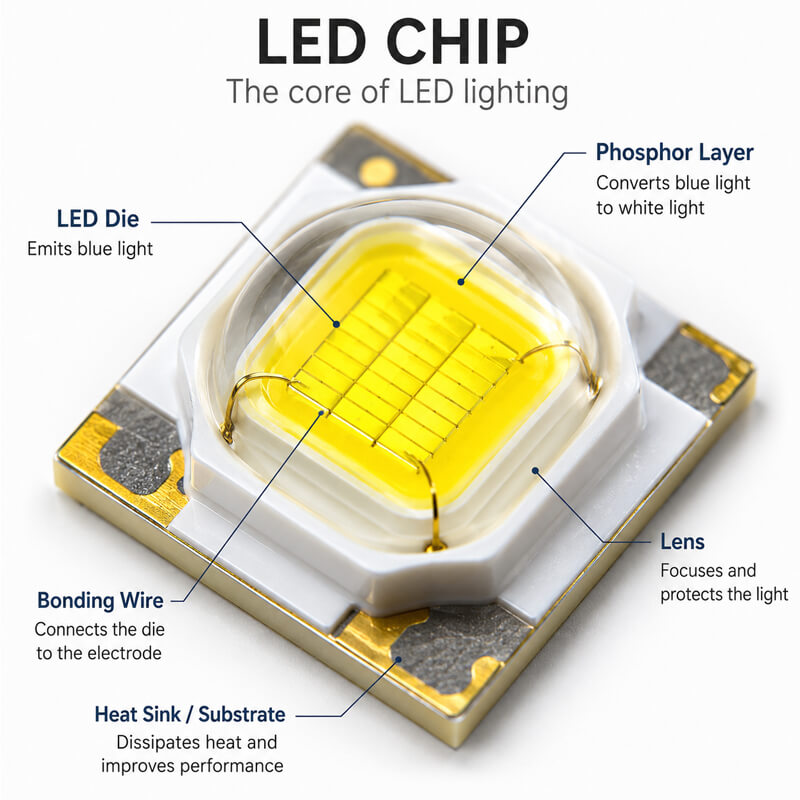
Im Kern, ein LED-Chip (Leuchtdiodenchip) ist die lichterzeugende Komponente im Inneren jeder LED-Lampe. Es handelt sich um einen winzigen Halbleiter, der elektrische Energie durch einen Prozess, der als bekannt ist, direkt in sichtbares Licht umwandelt Elektrolumineszenz.
Im Gegensatz zu traditionelle Glühbirnen, die durch Erhitzen eines Wolframfadens Licht erzeugen, LED-Chips erzeugen Licht weitaus effizienter und erzeugen dabei sehr wenig Wärme.
Infolge, LED-Beleuchtung bietet mehrere wesentliche Vorteile, einschließlich:
- Geringerer Energieverbrauch
- Höhere Helligkeit
- Längere Lebensdauer
- Weniger Wärmeentwicklung
- Reduzierte Wartungskosten
- Umweltfreundliche Leistung
Aufgrund dieser Vorteile, LED-Chips sind zur Grundlage moderner Lichttechnik geworden. Ganz gleich, ob Sie Haushaltslampen oder gewerbliche Beleuchtungskörper kaufen, Die Qualität des LED-Chips hat direkten Einfluss auf die Gesamtleistung.
Ein Einblick in die Komposition
Obwohl ein LED-Chip unglaublich klein ist, Es besteht aus mehreren präzise konstruierten Schichten, die zusammenarbeiten, um eine zuverlässige Lichtleistung zu liefern.
Typischerweise, ein LED-Chip beinhaltet:
- Halbleitermaterial (normalerweise Galliumnitrid oder Galliumarsenid)
- Leitfähige Elektroden
- Wärmeleitendes Substrat
- Schutzkapselung
- Optische Linse oder Phosphorbeschichtung
Unter diesen Komponenten, Eine besonders wichtige Rolle spielt dabei der wärmeleitende Untergrund. Denn übermäßige Hitze kann sowohl die Helligkeit als auch die Lebensdauer verringern, Ein effizientes Wärmemanagement ist unerlässlich.
Zusätzlich, Viele Premium-LED-Hersteller verwenden hochwertige Materialien wie z:
- Keramiksubstrate
- Kupferplatinen
- Kühlkörper aus Aluminium
- Hochdurchlässige Silikonlinsen
Folglich, Diese Materialien verbessern die Wärmeableitung, Dadurch können LED-Chips Zehntausende von Stunden lang eine stabile Helligkeit aufrechterhalten und effizient arbeiten.
Für Käufer, Fragen zum thermischen Design sind ebenso wichtig wie die Überprüfung der Wattzahl oder des Lichtstroms.
Das Wunder der Miniaturisierung
Eine der bemerkenswertesten Eigenschaften der LED-Technologie ist ihre kompakte Größe.
Tatsächlich, Moderne LED-Chips haben nur wenige Millimeter Durchmesser. Trotz ihrer winzigen Abmessungen, Sie können eine beeindruckende Menge Licht erzeugen.
Abhängig von der Beleuchtungsanwendung, Ein Produkt kann enthalten:
- Ein Hochleistungs-LED-Chip
- Mehrere SMD-LED-Chips
- COB-LED-Module
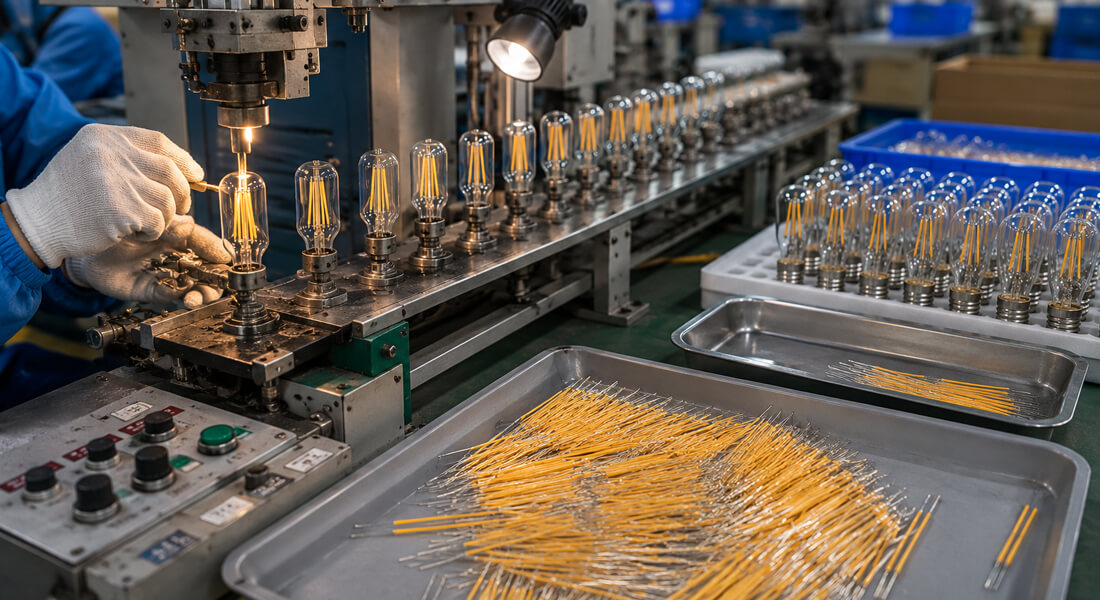
- Hunderte LED-Filament-Chips
Dank dieser Miniaturisierung, Hersteller können schlanker konstruieren, leichter, und attraktivere Beleuchtungskörper ohne Kompromisse bei der Helligkeit.
Heute, LED-Chips werden häufig verwendet:
- LED-Lampen
- LED-Glühlampen
- Pendelleuchten
- Kronleuchter
- Wandleuchten
- Flutlichter
- Gartenbeleuchtung
- Straßenbeleuchtung
- Automobilbeleuchtung
- Kommerzielle Beleuchtung
daher, Die LED-Technologie bietet Designern mehr Flexibilität und erfüllt gleichzeitig die wachsende Nachfrage nach modernen Beleuchtungslösungen.
Heller, Kleiner, Länger haltbar
Im letzten Jahrzehnt, Die LED-Chip-Technologie hat sich rasant weiterentwickelt.
Da die Technologie immer weiter voranschreitet, Hersteller produzieren LED-Chips, die es sind:
- Heller
- Kleiner
- Energieeffizienter
- Bessere Wärmeableitung
- Länger haltbar
Heute, Viele Premium-LED-Chips liefern überragende Wirkungsgrade 150 Lumen pro Watt, während fortschrittliche kommerzielle Produkte mehr erreichen können 200 Lumen pro Watt unter idealen Bedingungen.
Für Käufer, Dies bedeutet geringere Betriebskosten und eine bessere Lichtleistung.
Höhere Helligkeit
Moderne LED-Chips erzeugen deutlich mehr Lumen und verbrauchen gleichzeitig weniger Strom.
Zum Beispiel:
- Herkömmliche 60-W-Glühbirne → ungefähr 800 Lumen
- Moderne 8W LED-Glühbirne → ca 800 Lumen
Infolge, Benutzer genießen die gleiche Helligkeit und reduzieren gleichzeitig den Stromverbrauch um bis zu 85%.
Längere Lebensdauer
Ein weiterer großer Vorteil ist die Haltbarkeit.
Hochwertige LED-Chips halten in der Regel lange:
- 25,000 Std.
- 35,000 Std.
- 50,000 Stunden oder mehr
Folglich, Unternehmen und Hausbesitzer geben weniger für Ersatzlampen und Wartung aus.
Bessere Farbqualität
Außerdem, Premium-LED-Chips sorgen für eine hervorragende Farbwiedergabe.
Für die meisten Anwendungen, Käufer sollten darüber nachdenken:
- CRI 80+ für Wohnraumbeleuchtung
- CRI 90+ für den Einzelhandel, Gastfreundschaft, Galerien, und Premium-Interieur
Das heisst Farben wirken natürlicher, lebendig, und angenehm für das menschliche Auge.
Verbesserte Zuverlässigkeit
Ebenso wichtig, fortschrittliche Fertigungstechnologie minimiert:
- Lichtverfall
- Farbverschiebung
- Flackern
- Frühzeitiger Chipausfall
daher, Die Beleuchtung bleibt während ihrer gesamten Lebensdauer stabil und konstant.
Die Zukunft ist rosig
Die LED-Chip-Technologie entwickelt sich jedes Jahr weiter.
Blick nach vorn, Mehrere wichtige Trends prägen die Zukunft der Beleuchtungsindustrie.
Höhere Energieeffizienz
Hersteller entwickeln LED-Chips, die mehr Licht erzeugen und dabei noch weniger Strom verbrauchen.
Infolge, Unternehmen können ihre Betriebskosten erheblich senken und den CO2-Ausstoß reduzieren.
Intelligente Beleuchtungsintegration
In der Zwischenzeit, LED-Chips werden zunehmend kompatibel mit intelligenten Beleuchtungssystemen.
Die heutigen intelligenten Beleuchtungslösungen unterstützen:
- Wi-Fi-Steuerung
- Bluetooth-Konnektivität
- Sprachassistenten
- Bewegungssensoren
- Automatisches Dimmen
- Einstellbare Farbtemperaturen
Folglich, Benutzer genießen mehr Komfort, Komfort, und Energieeinsparungen.
Menschenzentrierte Beleuchtung
Zusätzlich, Abstimmbare weiße LED-Chips sorgen dafür, dass die Beleuchtung den ganzen Tag über natürliches Tageslicht nachahmt.
Dies trägt zur Verbesserung des Komforts bei, Konzentration, und das allgemeine Wohlbefinden in den Häusern, Büros, Schulen, und Gesundheitsumgebungen.
Nachhaltige Herstellung
Gleichzeitig, Hersteller führen umweltfreundlichere Produktionsmethoden ein, indem sie gefährliche Materialien reduzieren, Verbesserung des Recyclings, und Steigerung der Fertigungseffizienz.
daher, Die LED-Chip-Technologie unterstützt weiterhin globale Nachhaltigkeitsziele.
Ergreifen Sie die LED-Revolution
Obwohl der LED-Chip einer der kleinsten Bestandteile eines Beleuchtungsprodukts ist, Es hat den größten Einfluss auf die Gesamtleistung.
Letztlich, Die Qualität des LED-Chips bestimmt, wie hell, effizient, zuverlässig, und langlebig wird ein LED-Licht sein.
Beim Vergleich von LED-Beleuchtungsprodukten, Käufer sollten mehr als nur den Preis bewerten.
Stattdessen, Achten Sie auf Faktoren wie:
- Chipqualität und Marke
- Lumenleistung
- Lichtausbeute (lm/W)
- Farbwiedergabeindex (CRI)
- Farbtemperatur (CCt)
- Wärmeableitungsdesign
- Bewertete Lebensdauer
- Herstellergarantie
Durch die Berücksichtigung dieser Faktoren, Käufer können Beleuchtungsprodukte auswählen, die eine bessere Leistung bieten, geringere Wartungskosten, und größerer langfristiger Wert.
Zusammenfassend, Wer in hochwertige LED-Chip-Technologie investiert, investiert in eine hellere Beleuchtung, niedrigere Energierechnungen, und eine nachhaltigere Zukunft. Egal, ob Sie Beleuchtung für Ihr Zuhause beschaffen, Hotels, Büros, Einzelhandelsflächen, oder kommerzielle Projekte, Die Wahl von Produkten mit zuverlässigen LED-Chips ist eine kluge Entscheidung, die sich auch in den kommenden Jahren auszahlen wird.