 English
 العربية
 Français
 Deutsch
 Italiano
 Polski
 Português
 Русский
 Español
 Українська


Was sind Beleuchtungszubehör??
Im Kern, Ein Lampenfassungszubehör ist die unverzichtbare Brücke zwischen Ihrer Stromquelle und Ihrer Lichtquelle, Gewährleistung der Sicherheit, effizient, und sicheren Betrieb. Diese Komponenten umfassen eine breite Palette von Artikeln, die speziell für Beleuchtungskörper entwickelt wurden: flexible Leitungen mit Schaltersteckern, langlebige Netzkabel, und präzisionsgefertigte Fassungsteile wie E26, E27, E14, oder E12-Fassungen. Von einfachen Schraubensätzen für schnelle Reparaturen bis hin zu fertig montierten Stromleitungen für den sofortigen Einsatz, Lampenfassungszubehör ist modular aufgebaut, anpassungsfähig, und unverzichtbar für alles, von tragbaren Schreibtischlampen bis hin zu festen Deckenhalterungen.
Betrachten Sie sie als die “Nervensystem” Ihres Beleuchtungsaufbaus. Sie stützen die Glühbirne mechanisch, erleichtern die elektrische Leitfähigkeit, und umfassen Schutzmaßnahmen wie isolierte Gehäuse und Erdungsmechanismen, um Stöße oder Brände zu verhindern. Ohne diese, selbst das fortschrittlichste LED-Array würde dunkel bleiben. Historisch, Ihre Entwicklung markierte einen entscheidenden Moment in der Elektrifizierung. Thomas Edisons 1881 Patent für die Edison-Schraube (ES) Die Fassung verwandelte Ad-hoc-Glühlampenanschlüsse in einen standardisierten, benutzerfreundliches System, dominierend 70% des Marktes durch 1890. Frühe Versionen verwendeten Holzgehäuse mit Kupferstreifen, aber in den 1890er Jahren, Materialien wie Porzellan und Bakelit wurden für eine bessere Hitzebeständigkeit entwickelt.
Heute, Dieses Zubehör entspricht strengen internationalen Standards. In den Vereinigten Staaten, Ul 496 Die Zertifizierung regelt Lampenfassungen, Prüfung der Widerstandsfähigkeit gegen Hitze, Feuchtigkeit, und mechanischer Beanspruchung – so dass sie bis zu 660 W Lasten ohne Ausfall standhalten. Die europäische CE-Kennzeichnung bestätigt die elektromagnetische Verträglichkeit und Niederspannungssicherheit, während Chinas GB 7000.5 Der Standard konzentriert sich zwar auf Straßen- und Straßenleuchten, erweitert aber die Prinzipien der Schlagfestigkeit und thermischen Stabilität auf allgemeine Leuchten. Ein typisches Zubehörset könnte über einen thermoplastischen Sockel verfügen (für leichte Haltbarkeit), ein SPT-2-Parallelkabel (doppelt isoliert für Flexibilität), und einen geerdeten Stecker, um Polaritätsprobleme zu vermeiden.
Ihre “Zubehör” Der Status liegt in ihrer Tragbarkeit und Vielseitigkeit. Im Gegensatz zur permanenten Gebäudeverkabelung, Diese sind für einen einfachen Umzug oder Upgrades konzipiert. In einem modernen Kontext, Sie gehen klug vor: Integrierte Dimmer, Bewegungssensoren, oder WLAN-Module ermöglichen die Sprachsteuerung über Alexa oder Google Home. Nachhaltigkeit ist ein weiterer Schritt – viele verwenden mittlerweile recyceltes PVC und sind RoHS-konform (bleifrei) Materialien, Ausrichtung an globalen Umweltzielen.
Stellen Sie sich ein reales Szenario vor: Neuverkabelung einer antiken Messing-Tischlampe. Eine UL-zertifizierte E26-Fassung ersetzt das Original, Verhinderung von Lichtbögen durch beschädigte Kontakte. Oder, in gewerblichen Räumen wie Cafés, Schnell austauschbares E27-Zubehör minimiert Ausfallzeiten während der Stoßzeiten. Aber warum sollte man der Qualität Priorität einräumen?? Unterdurchschnittliche Entscheidungen tragen zu elektrischen Bränden bei; Die NFPA berichtet, dass Verkabelungsfehler jedes Jahr Tausende von Vorfällen auslösen.
Im Wesentlichen, Lampenfassungszubehör ist weit mehr als nur Gebrauchsteile – es ist die Verschmelzung der Geschichte, Maschinenbau, und Innovation. Beim Übergang zu Typen, Denken Sie über Ihre Beleuchtungsbedürfnisse nach: Sehnen Sie sich nach Portabilität?, Dauerhaftigkeit, oder Anpassung? Die richtige Wahl erhellt den Weg nach vorne.

Arten von Beleuchtungszubehör
Die Schönheit des Beleuchtungszubehörs liegt in seiner Vielfalt, Wir decken jede erdenkliche Einrichtung ab, von minimalistischen Nachttischlampen bis hin zu Flutlichtern in Industriequalität. Sie lassen sich im Allgemeinen in vier Kategorien einteilen: einzelne lose Teile, Komplett zusammengebaute Sets, Halbmontierte Einheiten, und eigenständige Komponenten. Jeder Typ gleicht die Kosten aus, Bequemlichkeit, und Anpassung, oft rund um die Edison-Schraubenfamilie gebaut – E26 für mittlere Sockel (26mm Durchmesser, Nordamerikanischer Standard), E27 für europäische 27-mm-Varianten, E14 für kompakte 14-mm-Kerzenleuchter, und E12 für kleine 12-mm-Kronleuchter. E26 und E27 sind aufgrund ihres nahezu identischen Gewindes in vielen Fällen austauschbar, Überprüfen Sie jedoch immer die Spannungskompatibilität, um Fehlanpassungen zu vermeiden.
1. Einzelne lose Teile: Modulare Grundlagen für die Anpassung
Das sind die elementaren Bausteine – isolierte Steckdosen ohne Kabel oder Extras, Perfekt für Bastler und Profis, die von Grund auf zusammenbauen. Gängige Beispiele sind E26 (Vielseitig einsetzbar für Haushaltslampen bis 100W), E27 (robust für 240V-EU-Systeme), E14 (Ideal für kleine dekorative Stellen), und E12 (für kunstvolle Armaturen wie Wandleuchten).
Hergestellt aus hitzebeständigem Porzellan oder schlagfestem Phenolharz, Diese Steckdosen verfügen über Schraubengehäuse aus Messing für optimale Leitfähigkeit. Vorteile: Unendliche Flexibilität – kombinieren Sie eine E14 mit einem Dimmermodul für eine Vintage-Waschtischleuchte. Nachteile: Erfordert Lötkenntnisse und Werkzeuge; nicht anfängerfreundlich. Bei Restaurierungsprojekten, als würde man eine Art-Déco-Lampe aus den 1920er Jahren aufarbeiten, Ein loses E26 ermöglicht eine präzise Integration, ohne die ursprüngliche Ästhetik zu verändern.
Die Staffelpreise liegen bei $0.50-$1 pro Einheit für MOQs von 1,000, Dies macht sie für Hersteller in Hubs wie Guangdong wirtschaftlich, China. Sicherheit geht vor: Stellen Sie sicher, dass die Schutzart IP20 für die Verwendung in Innenräumen gewährleistet ist, und testen Sie die Kontinuität nach der Installation.
2. Komplett zusammengebaute Sets: Plug-and-Play-Effizienz
Für diejenigen, die Einfachheit suchen, Diese vorkonfigurierten Kits enthalten einen Sockel, Kabel, Stecker, und wechseln Sie in ein einsatzbereites Paket. Die Optionen reichen von 1–2 m langen, mit Stoff ummantelten Kabeln mit Drehschaltern für ästhetische Tischlampen bis hin zu robusten Kabeln, geerdete Versionen für Stehleuchten.
Nehmen Sie ein E27-Montageset: CE-zertifiziert für Europa, Es verarbeitet problemlos 250 V/10 A, mit Inline-Schaltern für mühelose Steuerung. Die Vorteile sind zahlreich – keine Sekundärverkabelung bedeutet eine schnellere Einrichtung beweglicher Teile wie verstellbarer Leselampen oder tragbarer Studioleuchten. Individualisierung glänzt: Wählen Sie eine Silikonisolierung für LEDs mit hoher Hitze oder geflochtene Textilien für einen unkonventionellen Charme.
Im Homeoffice, Ein E14-Komplettsatz versorgt eine aufsteckbare Arbeitsleuchte mit Strom, Reduzierung der Augenbelastung bei nächtlicher Arbeit. Marktdaten zeigen, dass diese losen Teile um mehr verkauft werden 3:1 auf Plattformen wie Amazon, dank ihrer Benutzerfreundlichkeit. Nachteil: Feste Längen schränken extreme Anpassungen ein, aber Erweiterungen sind verfügbar.
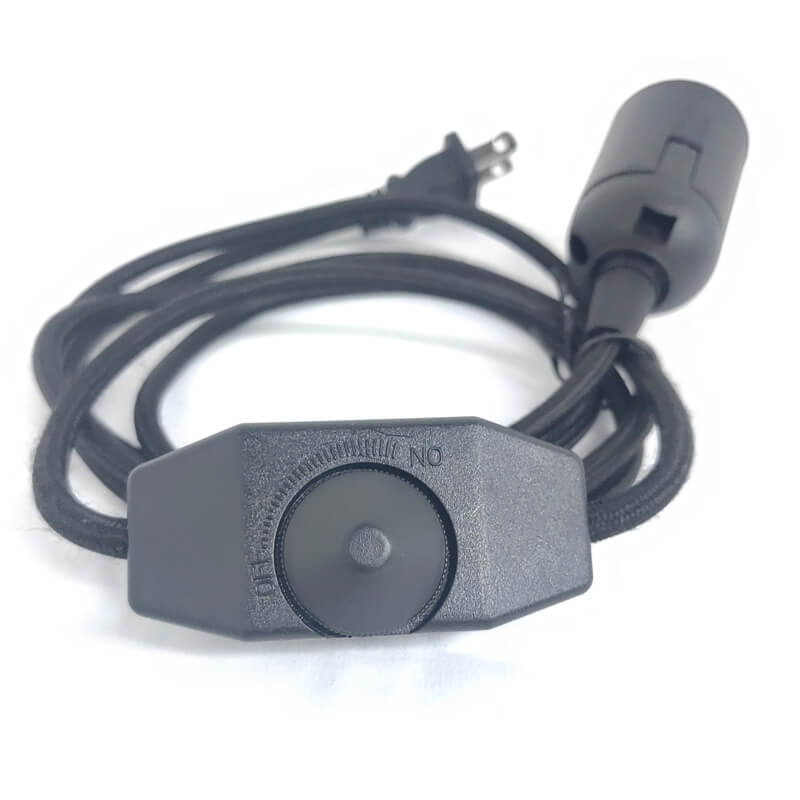
3. Halbmontierte Einheiten: Maßgeschneidert für dauerhafte Installationen
Ohne Stecker für direkte Festverdrahtung, Dazu gehören nur die Steckdose und der Schalter mit einem kurzen Kabel – geeignet für feste Anwendungen wie Deckeneinbau oder Einbauregale. Eine E27-Halbeinheit verfügt möglicherweise über einen Zugschnurmechanismus, Einhaltung von GB 7000.5 für vibrationsanfällige Umgebungen wie Flure.
Vorteile: Sauber, berufliche Integration; Arbeitsersparnis bei Renovierungen. Nachteile: Erfordert lizenzierte Elektriker, um Verstöße gegen die Vorschriften zu vermeiden. Stellen Sie sich eine Küchenrenovierung vor: E14-Halbbaugruppen unter Schränken bieten schattenfreien Vorbereitungsraum, für Vielseitigkeit mit einem Dimmer verkabelt.
4. Eigenständige Teile: Skalierbare Essentials für Profis
Diese isolierten Elemente – Steckdosen, Schalter, Stecker, oder Terminals – überzeugen in der Großserienproduktion. Mit Nylon isolierte Schalter oder Messingstecker werden flach geliefert, Senkung der Transportkosten (z.B., 10,000 Einheiten in einem einzigen Karton).
Erschwinglich bei $0.10-$0.30 jeweils für große MOQs, Sie sind Grundnahrungsmittel für OEMs, die Flatpacks im IKEA-Stil zusammenstellen. Beispiel: Große E12-Teile für eine Kronleuchterlinie, ermöglicht ein schnelles Prototyping.
Visualisieren:
| Typ | Schlüsselkomponenten | Ideale Anwendungen | Vorteile | Nachteile | Massenpreisschätzung |
|---|---|---|---|---|---|
| Lose Teile | Buchse (E26/E27/E14/E12) | Benutzerdefinierte/DIY-Builds | Hohe Flexibilität | Erfordert Montage/Werkzeug | $0.50/Einheit |
| Zusammengebaute Sets | Kabel + Stecker + Schalten + Buchse | Tragbare Lampen | Sofortiger Einsatz, Fehlersicher | Begrenzte Längenoptionen | $2-5/Satz |
| Halbmontiert | Schalten + Buchse + Kurzes Kabel | Feste/kabelgebundene Installationen | Nahtlose Integration | Pro-Installation erforderlich | $1.50/Einheit |
| Eigenständige Teile | Einzelner Schalter/Stecker/Klemme | Herstellung/Reparaturen | Niedrige Kosten, Kompakter Versand | Hohe Mindestbestellmenge, Montagezeit | $0.40/Teil |
Auswahl des richtigen Typs? Bewerten Sie die Mobilität: Tragbare Geschenke zusammengebaut; permanente Neigung halb. Im DIY-Boom 2025, Zusammengebaute Sets erfreuen sich aufgrund ihrer Balance aus Einfachheit und Stil immer größerer Beliebtheit.
Hauptmerkmale und Anwendungsbereiche
Hochwertiges Zubehör für Lampenfassungen zeichnet sich durch technische Merkmale aus, die die Benutzerfreundlichkeit verbessern, Langlebigkeit, und Sicherheit in unzähligen Umgebungen. Von biegsamen Materialien bis hin zu zertifizierter Leistung, Diese Eigenschaften ermöglichen Anwendungen von intimen Innenräumen bis hin zu rauen Außenbereichen.
1. Flexibilität und Haltbarkeit: Tragbare Wunder antreiben
Weich, knickfeste Drähte (oft 18-20 AWG) mit abriebfesten Ummantelungen eignen sich ideal für dynamische Vorrichtungen. Für Tischlampen eignet sich eine E27-Fassung mit flexiblem Kabel (fokussierte Lesestrahlen), Stehlampen (einstellbare Bögen), und sogar Campinglaternen (Robuste Tragbarkeit mit IP44-Spritzwasserschutz).
Die Haltbarkeit glänzt im täglichen Gebrauch: UV-stabilisierte Hüllen verhindern Rissbildung durch Sonneneinstrahlung in tragbaren Gartenleuchten. Szenario: Ein nomadischer Künstler verwendet auf Reisen eine langlebige E14-Befestigung für eine Klemmlampe – sie lässt sich biegen, ohne zu brechen, dauert Jahreszeiten.
2. Anpassbarkeit, Ästhetik, und Zertifizierungen: Erhöhendes Dekor
Längen von 0,3 m bis 5 m, mit 0,5–0,75 mm² Querschnitten für schlanke Eleganz, Passt perfekt zu dekorativen Lampen wie mehrarmigen Kronleuchtern (E14-Cluster für Glanz), Kristallanhänger (gebrochenes Leuchten), oder LED-Ambientestreifen (dezente Farbtöne). Zertifizierungen schaffen Vertrauen: CE für elektromagnetische Sicherheit in der EU, UL für thermische Tests in den USA – beides von renommierten Lieferanten.
Ästhetisches Flair? E27 mit Goldakzent für opulente Esszimmer oder mit Samt umwickelte Kabel für eine moderne Mid-Century-Atmosphäre. In Luxushotels, Benutzerdefinierte 0,75 mm² E26-Leitungen verarbeiten 60-W-LEDs einwandfrei, Minimierung von Spannungsabfällen für eine gleichmäßige Beleuchtung.
3. Niederspannungsanpassungen: Nischeninnovationen
Spezialisierte 12V/24V-Halterungen (z.B., GU5.3-Sockel) eignen sich für energiefressende Konfigurationen wie Landschaftswege (solarbetriebene Wege) oder Automobilinnenräume (dimmbare Stimmungsbeleuchtung in Elektrofahrzeugen). Abwärtstransformatoren sorgen für geringe Wärmeentwicklung, sicherer Betrieb – entscheidend für batteriebetriebene Geräte.
Beispiel: A 2025 Dachterrasse mit 24-V-E12-Spots – umweltfreundlich, geringe Blendung für die Sternenbeobachtung, ohne die Nachbarn zu stören.
4. Wasserdichtigkeit und Umweltbeständigkeit: Outdoor-Bereitschaft
Die standardmäßige Schutzart IP44 schützt vor Spritzern, Bei vollständigem Untertauchen sind jedoch IP65-Upgrades mit Silikondichtungen und Ummantelungen in Marinequalität erforderlich. Für Terrassen, Erhöhen Sie die E27-Lichterkette, um die Stecker vor Regen zu schützen.
Umfangreichere Apps: In feuchten Badezimmern, IP44 E14-Fassungen verhindern Korrosion; Kombinieren Sie es mit FI-Schutzschaltern für zusätzlichen Schutz.
Diese Funktionen sind nicht statisch – sie entwickeln sich mit 2025 Trends wie biophiles Design, wo flexibel, Zertifizierte Accessoires integrieren natürliche Motive nahtlos.
Häufige Missverständnisse und Sicherheitsrisiken, die es zu vermeiden gilt
Die Verkabelung von Lampenfassungen ist ein direktes Einfallstor für elektrische Gefahren, Dennoch tappen Heimwerker oft in Fallen. Über die Kerndrei hinaus, Wir decken zusätzliche Fehler mit hohem Risiko ab, die sich aus Expertenwarnungen ergeben.
Missverständnis 1: Für den Lampengebrauch genügen herkömmliche Drähte
Der Austausch von Haushalts-BV-Kabeln ignoriert deren Steifheit, nicht flammhemmende Natur – führt zur Alterung, Risse, und undicht unter Hitze/Vibration. Mandat: GB 7000.5-Standleitungen mit V-0 PVC-Isolierung. Extra: Überprüfen Sie immer das Etikett auf “Lampentauglich’
Missverständnis 2: Die Erdung ist für nichtmetallische Vorrichtungen optional
Sogar Lampen mit Kunststoffgehäuse profitieren davon, aber solche aus Metall (z.B., Stehlampen aus Eisen) erfordern dreiadrige Kabel (live, neutral, gelbgrüner Grund) Fehler sicher zu überbrücken. Falle: Dies zu vergessen, löst Schock aus; Testgelände mit einem Stromkreisanalysator.
Missverständnis 3: Dickere Messgeräte garantieren eine bessere Leistung
Überdimensionierte Drähte erhöhen die Kosten, Biegung versteifen (problematisch für tragbare Geräte), und nicht übereinstimmende Anschlüsse – was zu lockeren Passungen führt. Regel: Zu ladende Größe, z.B., 18 AWG für 5A max.
Zusätzliche Fallstricke: Vernachlässigung der Stromversorgung und Fehlanpassung der Werkzeuge
Überspringen Sie niemals das Ausschalten der Leistungsschalter – Stöße sind tödlich. Die Verwendung einer Zange an spannungsführenden Leitungen oder Abisolierzangen mit der falschen Stärke beschädigen die Isolierung. Auch, Überlastung von Stromkreisen (z.B., Daisy-Chaining-Erweiterungen) lädt Feuer ein – beschränken Sie sich auf 80% Kapazität pro NEC.
Für einen Tipp: Dokumentieren Sie Schaltpläne für zukünftige Optimierungen. Vermeidung dieser Risiken durch 90%, pro Sicherheitsaudits.
Der Vier-Schritte-Rahmen zum Koppeln von Lampenfassungslinien
Optimieren Sie Ihre Auswahl mit diesem bewährten Produkt “vierstufiger Spaziergang,” Mathematik mischen, Kontext, und Compliance.
- Berechnen Sie den Strombedarf: Strom über I = P ermitteln / V. Für eine 60W-Glühbirne bei 120V: I = 0,5 A – auswählen 20 AWG (Bewältigt 5A sicher). Verwenden Sie Online-Rechner für Arrays mit mehreren Glühbirnen; Faktor 20% Spielraum für Überspannungen.
- Bewerten Sie das Szenario: Mobile? Wählen Sie weich, flammhemmendes PVC. Im Freien? Wasserdichtes Neopren. Feste Installationen? Gepanzert für Langlebigkeit. Berücksichtigen Sie das Ambiente: Dekorativ erfordert ästhetische Hüllen.
- Bestätigen Sie Konformität und Qualität: Auf 250-V-Nennwerte prüfen, “FR” (schwer entflammbar) Briefmarken, reine Kupferkerne, und Standards wie UL 496. Vermeiden Sie Fälschungen – kaufen Sie bei zertifizierten Anbietern.
- Integrieren Sie praktische Spielräume: Fügen Sie für Anpassungen oder zur Zukunftssicherheit 10–15 cm zusätzliche Länge hinzu. Testen Sie nach der Installation: Kontinuität, Polarität, und Lastsimulation.
Fallstudie: 100Schreibtischlampe W aus Metall – dreiadrig 18 AWG, 1.5m mit 15cm Ersatz. Dieses Setup gewährleistet einen coolen Betrieb und einfache Optimierungen.
Neue Trends bei Beleuchtungszubehör für 2025
Da wir Mitte 2025 sind, Innovation beschleunigt sich. Intelligente Integrationen dominieren: Gewindekompatible E27-Fassungen mit Zigbee-Chips zur App-Steuerung, Synchronisierung mit heimischen Ökosystemen. Nachhaltigkeitsschübe – biologisch abbaubare Isolierungen aus pflanzlichen Polymeren reduzieren den Elektroschrott.
In Elektrofahrzeugen und Smart Cities herrscht Niederspannung: 24V-Zubehör für die Ambientebeleuchtung im Auto, Energieeinsparung durch 30%. Die Individualisierung boomt durch 3D-gedruckte Sockel, zugeschnitten auf einzigartige Designs.
Herausforderungen? Optimierungen der Lieferkette für seltenerdfreie Magnete in Schaltern. Zukunftssicher durch die Wahl modularer Typen – anpassbar an die LEDs von morgen.
FAQ: Antworten auf Ihre brennenden Fragen
Q: Kann ich eine E26-Glühbirne in einer E27-Fassung verwenden?? A: Ja, aufgrund ähnlicher Einfädelung, aber prüfen Sie die Spannung – E26 für 120 V, E27 für 240 V – um Überhitzung zu vermeiden.
Q: Woher weiß ich, ob mein Zubehör UL-zertifiziert ist?? A: Achten Sie auf das UL-Zeichen auf der Komponente; Es bestätigt die Prüfung gemäß UL 496.
Q: Wie hoch ist die Lebensdauer einer hochwertigen Lampenfassung?? A: 10-15 Jahre bei bestimmungsgemäßer Verwendung; Bei Rissen in der Isolierung austauschen.
Q: Gibt es drahtlose Alternativen?? A: Neue batteriebetriebene Halterungen für Ultraportables, Bei hoher Leistung bleibt die Verkabelung jedoch am sichersten.
Tipps zur Anpassung und Beschaffung
Maßgeschneidertes Beleuchtungszubehör wertet Projekte auf: Längen angeben, Farben, und Zertifizierungen für Ihre Vision. Lieferanten bieten Muster an – testen Sie die Passform vor dem Verpacken. Für Profis: Die MOQs für Prototypen beginnen niedrig.
Kontaktieren Sie Experten unter Sales@huiyeetech.com für individuelle Bearbeitung; Sie werden nahtlos Prototypen erstellen und die Produktion skalieren.
Abschluss
Beleuchtungszubehör ist kein bloßer Nebengedanke – es ist die erhellende Kraft hinter Safe, atemberaubende Beleuchtung. Von E27-Klassikern bis hin zu den smarten Weiterentwicklungen des Jahres 2025, ihre Typen beherrschen, Merkmale, und die sichere Verwendung ermöglicht es Ihnen, inspirierende Umgebungen zu schaffen. Umgehen Sie Fallstricke mit unserer Vier-Schritte-Anleitung, Trends annehmen, und mutig anpassen.
Bereit zum Leuchten? Teilen Sie Ihre Spezifikationen unter Sales@huiyeetech.com– Wir liefern Muster zur Genehmigung vor der vollständigen Auflage. Beleuchten Sie mit Bedacht; Ihr Raum erwartet Sie.