 English
 العربية
 Français
 Deutsch
 Italiano
 Polski
 Português
 Русский
 Español
 Українська


Warum die Wahl der richtigen Lampenfassung wichtig ist
Beim Austausch einer Glühbirne, Viele Menschen konzentrieren sich auf Helligkeit, Wattzahl, oder Farbtemperatur. Jedoch, bevor Sie einen dieser Faktoren berücksichtigen, Es ist unbedingt darauf zu achten, dass die Lampenfassung (Lampensockel) passt zu Ihrem Gerät.
Schließlich, Selbst die effizienteste LED-Lampe funktioniert nicht, wenn sie nicht physisch mit der Lampenfassung verbunden werden kann. daher, Die Identifizierung des richtigen Sockeltyps sollte immer Ihr erster Schritt sein.
Wichtig: Überprüfen Sie immer Ihre vorhandene Glühbirne oder Fassung, bevor Sie eine Ersatz kaufen. Eine E27-Glühbirne passt nicht in eine E14-Fassung, Und ein GU10-Strahler kann eine G9-Kapsellampe ohne entsprechenden Adapter nicht ersetzen.
Glücklicherweise, Sobald Sie Ihren Steckdosentyp kennen, Es wird viel einfacher, einen geeigneten LED-Ersatz zu finden.
Tipp: Passen Sie immer zuerst den Steckdosentyp an.
Überprüfen Sie die vorhandene Glühbirne oder das Lampenetikett. Ein Die E27-Glühbirne passt nicht in eine E14-Fassung, und a Eine GU10-Glühbirne passt nicht in eine G9-Fassung, auch wenn es sich bei beiden möglicherweise um LED-Lampen handelt.
Die beiden Hauptfamilien der Lampenfassungen verstehen
Allgemein gesprochen, Die meisten Wohn- und Gewerbebeleuchtungskörper verwenden eine von zwei Steckdosenkategorien: Edison-Schraubfassungen oder stiftbasierte Steckdosen.
| Socket-Familie | Häufige Typen | Installationsmethode | Typische Anwendungen |
|---|---|---|---|
| Edison-Schraube (E) | E27, E26, E14, E12 | Einschraubbar | Deckenleuchten, Tischlampen, Pendelleuchten, Kronleuchter |
| Pin-basiert (G/GU) | GU10, G9, G4, G5.3 | Steck- oder Drehverschluss | Scheinwerfer, Akzentbeleuchtung, und Unterschrankbeleuchtung |
Infolge, Wenn Sie herausfinden, zu welcher Familie Ihr Gerät gehört, werden Ihre Möglichkeiten sofort eingeschränkt.
Edison-Schraubfassungen
Ohne Zweifel, Edison-Schraubfassungen sind die weltweit am häufigsten verwendeten Lampensockel. Der Brief “E” steht für Edison, benannt nach Thomas Edison, während die Zahl den Durchmesser des Schraubengewindes in Millimetern angibt.
Gängige Edison-Sockeltypen
| Buchse | Durchmesser | Allgemeine Anwendungen |
|---|---|---|
| E27 | 27 mm | Standard-Haushaltsbeleuchtung |
| E14 | 14 mm | Dekorative Leuchten und Kronleuchter |
| E26 | 26 mm | Nordamerikanische Haushaltsbeleuchtung |
| E12 | 12 mm | Kandelaber- und Kronleuchterbirnen |
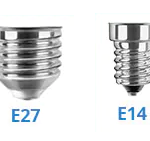
Zum Beispiel, wenn Sie einen dekorativen Kronleuchter haben, Es besteht eine gute Chance, dass E14- oder E12-Kerzenlampen verwendet werden. Auf der anderen Seite, Die meisten Pendelleuchten und Tischlampen verwenden E27- oder E26-Fassungen.
Warum die Sockelgröße wichtig ist
Obwohl einige Sockelgrößen ähnlich erscheinen, sie sind nicht austauschbar. daher, Sie sollten niemals davon ausgehen, dass eine E26-Glühbirne automatisch in eine E27-Leuchte passt oder dass eine E12-Glühbirne eine E14-Glühbirne ersetzen kann.
Zusätzlich, Die Spannungsanforderungen können je nach Region unterschiedlich sein, Dies macht die ordnungsgemäße Identifizierung noch wichtiger.
Bajonettfassungen
Während Edison-Fassungen viele Märkte dominieren, Bajonettfassungen erfreuen sich im Vereinigten Königreich nach wie vor großer Beliebtheit, Australien, und mehrere Commonwealth-Länder.
Im Gegensatz zu Schraubbasen, Bajonettlampen verfügen über zwei seitliche Stifte, die mit einer kurzen Drehung einrasten.
Gängige Bajonett-Steckschlüsseltypen
| Buchse | Allgemeiner Name | Typische Verwendung |
|---|---|---|
| B22 | Bajonettverschluss (Chr) | Allgemeine Haushaltsbeleuchtung |
| B15 | Kleiner Bajonettverschluss (SBC) | Dekorative Einrichtungsgegenstände |
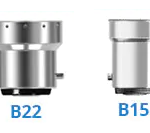
So installieren Sie eine Bajonettlampe, Stecken Sie einfach die Stifte in die Buchse, sanft drücken, und ca. drehen 180 Grad, bis es sicher einrastet.
Folglich, Bajonettfassungen bieten eine zuverlässige Verbindung und ermöglichen gleichzeitig einen schnellen Lampenwechsel.
Pin-Buchsen
In der Zwischenzeit, Viele moderne Beleuchtungskörper verwenden Stiftsockel anstelle von Schraub- oder Bajonettsockel.
Besonders verbreitet sind diese Steckdosentypen in:
- Einbaustrahler
- Küchenbeleuchtung
- Displaybeleuchtung
- Unterschrankbeleuchtung
- Dekorative Wandleuchten
Die gebräuchlichsten Pin-Buchsentypen
| Buchse | Installationsmethode | Allgemeine Anwendungen |
|---|---|---|
| GU10 | Drücken und drehen | Deckenstrahler |
| G9 | Einsteckbar | Dekorative Einrichtungsgegenstände |
| G4 | Einsteckbar | Schrankbeleuchtung |
| G5.3 / MR16 | Einsteckbar | Niedervoltstrahler |
Außerdem, die Zahl nach dem “G” bezieht sich typischerweise auf den Abstand zwischen den Stiften, gemessen in Millimetern.
Zum Beispiel:
- G4 = 4 mm Stiftabstand
- G5.3 = 5.3 mm Stiftabstand
- G9= 9 mm Stiftabstand
Aufgrund dieser Unterschiede, Selbst kleine Abweichungen im Stiftabstand können eine ordnungsgemäße Installation verhindern.
GU10-Fassungen
Unter allen stiftbasierten Steckdosen, GU10 ist wohl am häufigsten.
Wenn Ihre Küche, Flur, Badezimmer, oder das Wohnzimmer verfügt über Einbaustrahler, Es besteht eine hohe Wahrscheinlichkeit, dass sie GU10-Glühbirnen verwenden.
So funktionieren GU10-Glühbirnen
Im Gegensatz zu Standard-Stiftsockel, GU10-Leuchtmittel verfügen über Sicherungsstifte.
Zu installieren:
- Setzen Sie die Glühbirne in die Fassung ein.
- Vorsichtig nach oben drücken.
- Im Uhrzeigersinn drehen.
- Sicher einrasten.
Infolge, GU10-Leuchtmittel sorgen für eine stabile Verbindung und lösen sich mit der Zeit weniger leicht.
Zusätzlich, Moderne GU10-LED-Leuchtmittel bieten erhebliche Energieeinsparungen im Vergleich zu herkömmlichen Halogenstrahlern.
So identifizieren Sie Ihre Lampenfassung in wenigen Minuten
Wenn Sie nicht sicher sind, welchen Steckdosentyp Ihr Gerät verwendet, Mach dir keine Sorgen. Der Identifizierungsprozess ist normalerweise unkompliziert.
Schritt 1: Entfernen Sie die vorhandene Glühbirne
Erste, Schalten Sie den Strom aus und lassen Sie die Glühbirne vollständig abkühlen.
Schritt 2: Untersuche die Basis
Nächste, Schauen Sie sich den Lampensockel genau an:
✔ Metallsockel mit Gewinde → Edison-Fassung (E27, E14, E26, E12)
✔ Zwei seitliche Stifte → Bajonettsockel (B22, B15)
✔ Zwei gerade Stifte → Stiftbuchse (G4, G9, G5.3)
✔ Twist-Lock-Stifte → GU10
Schritt 3: Auf Markierungen prüfen
Die meisten Glühbirnen und Leuchten sind mit Kennzeichnungen versehen, z. B:
- E27
- E14
- B22
- GU10
- G9
daher, Ein Blick auf das Etikett liefert oft die schnellste Antwort.
Schritt 4: Messen Sie den Sockel
Wenn keine Markierungen sichtbar sind, Durch Messen des Sockels kann die Kompatibilität bestätigt werden.
Zum Beispiel:
- E27= 27 mm Gewindedurchmesser
- E14 = 14 mm Gewindedurchmesser
- G4 = 4 mm Stiftabstand
Folglich, Ein einfaches Lineal kann oft Rätselraten verhindern.
So wählen Sie den richtigen LED-Ersatz aus
Sobald Sie den Sockeltyp identifiziert haben, Der nächste Schritt ist die Auswahl der passenden LED-Lampe.
Jedoch, Socket-Kompatibilität ist nur ein Teil der Gleichung.
Sie sollten auch darüber nachdenken:
| Faktor | Warum es wichtig ist |
|---|---|
| Sockeltyp | Muss körperlich fit sein |
| Stromspannung | Muss den Anforderungen der Vorrichtung entsprechen |
| Lumen | Bestimmt die Helligkeit |
| Farbtemperatur | Beeinflusst das Ambiente |
| Abstrahlwinkel | Beeinflusst die Lichtverteilung |
| Dimmbarkeit | Erforderlich für Dimmschalter |
daher, Bei der Auswahl der richtigen LED sind sowohl mechanische als auch leistungsbezogene Aspekte zu berücksichtigen.
Vergessen Sie nicht die Dimmerkompatibilität
Ein weiterer wichtiger Aspekt ist die Dimmleistung.
Wenn Ihr Gerät einen Dimmerschalter verwendet, Sie sollten immer a wählen dimmbare LED-Glühbirne.
Ansonsten, Sie können erleben:
- Flackern
- Summende Geräusche
- Reduzierter Dimmbereich
- Vorzeitiger Lampenausfall
Darüber hinaus, Einige ältere Dimmerschalter sind nicht vollständig mit modernen LEDs kompatibel. daher, Das Überprüfen der Kompatibilitätsempfehlungen des Herstellers kann Zeit und Frust sparen.
Können Sie Steckdosenadapter verwenden??
Manchmal finden Sie vielleicht die perfekte LED-Glühbirne, Nur um festzustellen, dass der Steckdosentyp nicht zu Ihrem Gerät passt.
Glücklicherweise, Steckdosenadapter können eine praktische Lösung sein.
Zum Beispiel:
- E14-auf-E27-Adapter
- E27-auf-B22-Adapter
- E26-auf-E27-Adapter
Jedoch, bevor Sie einen Adapter verwenden, stellen Sie sicher:
✔ Spannungsanforderungen stimmen überein
✔ Wattgrenzen werden eingehalten
✔ Die Glühbirne passt in die Fassung
✔ Für eine ausreichende Belüftung ist gesorgt
Obwohl Adapter praktisch sind, Die Wahl des richtigen Lampensockels ist im Allgemeinen die sicherste und professionellste Lösung. Bei Bedarf, Bitte Kontaktieren Sie uns direkt, Wir stellen die Adapter und anderes zur Verfügung Beleuchtungszubehör.
Häufige Fehler, die es zu vermeiden gilt
Um ein erfolgreiches LED-Upgrade sicherzustellen, Vermeiden Sie diese häufigen Fehler:
❌ Eine Glühbirne nur aufgrund ihres Aussehens kaufen
❌ E27 mit E26 verwechseln
❌ Verwechslung von E14 mit E12
❌ Installation einer nicht dimmbaren Glühbirne in einem Dimmerkreis
❌ Spannungsanforderungen ignorieren
❌ Verwendung übergroßer Glühbirnen in geschlossenen Leuchten
Indem wir diese Fehler vermeiden, Sie können die Sicherheit verbessern, verlängern die Lebensdauer der Glühbirne, und die Energieeffizienz maximieren.
Letzte Gedanken
Letztlich, Die Wahl der richtigen Lampenfassung ist viel einfacher als die meisten denken. Erste, Identifizieren Sie den Socket-Typ. Nächste, Spannungskompatibilität bestätigen. Dann, Wählen Sie die gewünschte Helligkeit, Farbtemperatur, und Dimmbarkeit.
Ob Sie eine benötigen E27 LED-Glühbirne, E14-Kerzenbirne, GU10 Strahler, G9-Kapselbirne, oder B22 Bajonettbirne, Wenn Sie sich ein paar Minuten Zeit nehmen, um die Kompatibilität zu überprüfen, können Sie kostspielige Fehler vermeiden und eine optimale Beleuchtungsleistung gewährleisten.
Zusamenfassend, Die richtige Steckdose ist die Grundlage jeder erfolgreichen Beleuchtungsmodernisierung. Sobald Sie das richtig verstanden haben, Die Suche nach dem perfekten LED-Ersatz wird zu einem unkomplizierten Prozess.