 English
 العربية
 Français
 Deutsch
 Italiano
 Polski
 Português
 Русский
 Español
 Українська


Vollständiger Leitfaden zu den Spezifikationen der E14-Glühbirne, Kompatible Geräte, and Applications
Der E14 screw base is one of the most commonly used small screw lamp bases in the lighting industry. Its thread diameter is the key factor that determines fixture compatibility and is also one of the most frequently asked questions when purchasing E14 bulbs.
This article provides a comprehensive answer to “What is the diameter of an E14 screw base?” and explains everything you need to know about E14 bulbs, including measurement methods, international standards, compatible fixtures and wattages, application scenarios, common lamp base comparisons, and practical purchasing tips. It serves as a complete reference for home renovation, fixture replacement, and lighting selection.
1. Core Parameters of the E14 Screw Base: Measurement, Standards, and Dimensions
1.1 So messen Sie den E14-Gewindedurchmesser
Zur genauen Messung des Durchmessers eines E14-Schraubsockels, benutze a digitaler Messschieber oder Messschieber.
Wichtige Messpunkte:
-
Messen Sie die Hauptdurchmesser (der Außendurchmesser, der durch die Spitzen der Gewinde gebildet wird).
-
Platzieren Sie die Messbacken an der breitesten Stelle des Gewindes.
-
Behalten Sie den Bremssattel senkrecht zur Lampenachse um Winkelfehler zu vermeiden.
-
Für gebrauchte Glühbirnen, Vermeiden Sie abgenutzte Bereiche und messen Sie mehrere Punkte, Nehmen Sie dann den Durchschnitt für die Genauigkeit.
1.2 Standardklassifizierung: Ein auf Europa basierender internationaler Standard
Der E14-Schraubsockel gehört dazu Edison-Schraube (E) Serie, Ursprünglich in Europa entwickelt und später von der EU standardisiert Internationale Elektrotechnische Kommission (IEC). Es handelt sich mittlerweile um einen weltweit anerkannten Standard für kleine Schraubenbasen.
⚠️ Wichtiger Unterschied:
Verwechseln Sie E14 nicht mit E12-Basis, which is a North American standard with a 12 mm diameter. These two standards are not interchangeable due to size differences.
1.3 Exact Dimensions of the E14 Screw Base
-
Nominal (major) diameter: 14 mm
-
Thread pitch: 1.25 mm
-
Thread length: etwa 12 mm (may vary slightly by manufacturer)
The “14” in E14 directly refers to the 14 mm thread diameter. This size clearly differentiates it from larger bases such as E27 (27 mm) and smaller bases like E12 (12 mm).
2. Compatible Fixtures and Typical Wattages for E14 Bulbs
Thanks to its compact size, the E14 base is widely used in small fixtures, decorative lighting, and specialized functional lamps. It supports LED, CFL, and incandescent light sources.
2.1 Common Compatible Bulb Types
-
LED-Lampen:
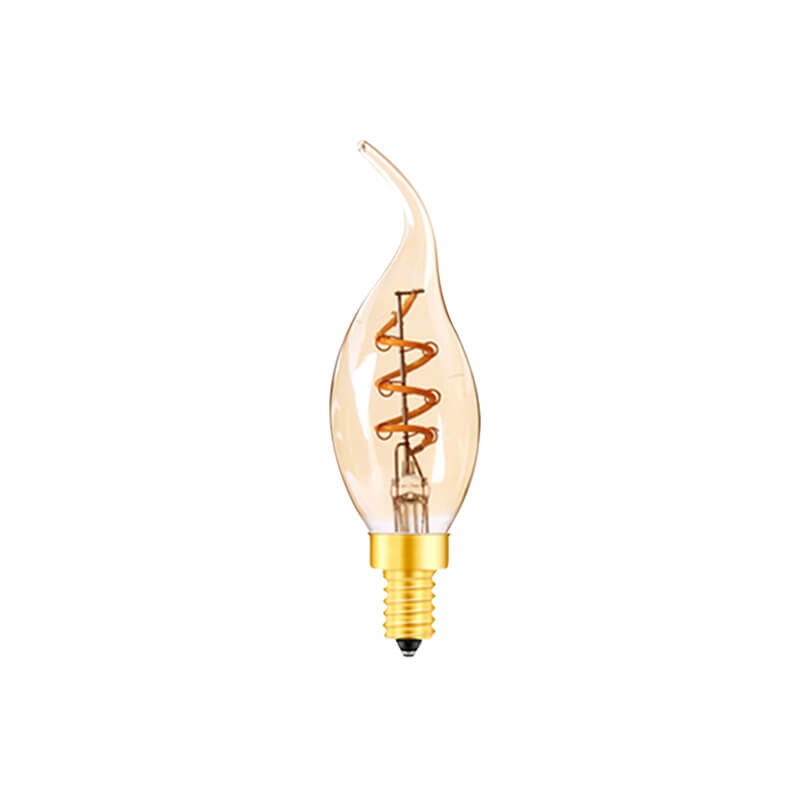
Candle bulbs (C35, C45), flame-tip bulbs, tail bulbs, corn bulbs, mini globe bulbs, and vintage filament bulbs. These are the most common E14 options today, offering energy efficiency, lange Lebensdauer, and decorative appeal. -
Energy-saving bulbs (CFL):
U-shaped and spiral compact fluorescent lamps are suitable for small pendant lights and desk lamps that require higher brightness. -
Special-purpose bulbs:
Refrigerator bulbs, range hood bulbs, salt lamp bulbs, and microwave bulbs. These are designed with heat resistance and vibration protection for harsh environments. -
Vintage bulbs:
Mini Edison-style filament bulbs are commonly used in retro pendants and wall sconces to create a warm, nostalgic atmosphere.
2.2 Typical Wattage Ranges
E14 bulb wattage varies by application, generally ranging from 1.5 W to 24 W:
-
Low wattage (1.5 W–5 W):
Dekorative Beleuchtung (crystal chandeliers, Wandlampen), Geräte (refrigerators, microwaves). Produces soft, Umgebungslicht. -
Medium wattage (5 W–12 W):
Auxiliary household lighting (dining pendants, Nachttischlampen) and commercial decorative lighting (Cafés, hotel corridors). -
Higher wattage (12 W–24 W):
Kleine Leuchten mit hoher Helligkeit, z. B. Hängeleuchten für die Küche oder Beleuchtung für Verkaufsauslagen. Einige E14-Maiszwiebeln erreichen 20–24 W.
💡 Notiz:
Traditionelle E14-Glühbirnen (15 W–25 W) wurden größtenteils durch LED-Leuchtmittel ersetzt. LEDs verbrauchen nur 20–30 % der Energie bei gleicher Helligkeit und deutlich höherer Lebensdauer, Das macht sie heute zur bevorzugten Wahl.
3. E14-Glühbirnenanwendungen und empfohlene Produkttypen
3.1 Hauptanwendungsszenarien
Das kompakte Design des E14-Sockels macht ihn ideal für raumbegrenzte oder dekorativ fokussierte Beleuchtung, einschließlich:
-
Dekorative Beleuchtung für zu Hause:
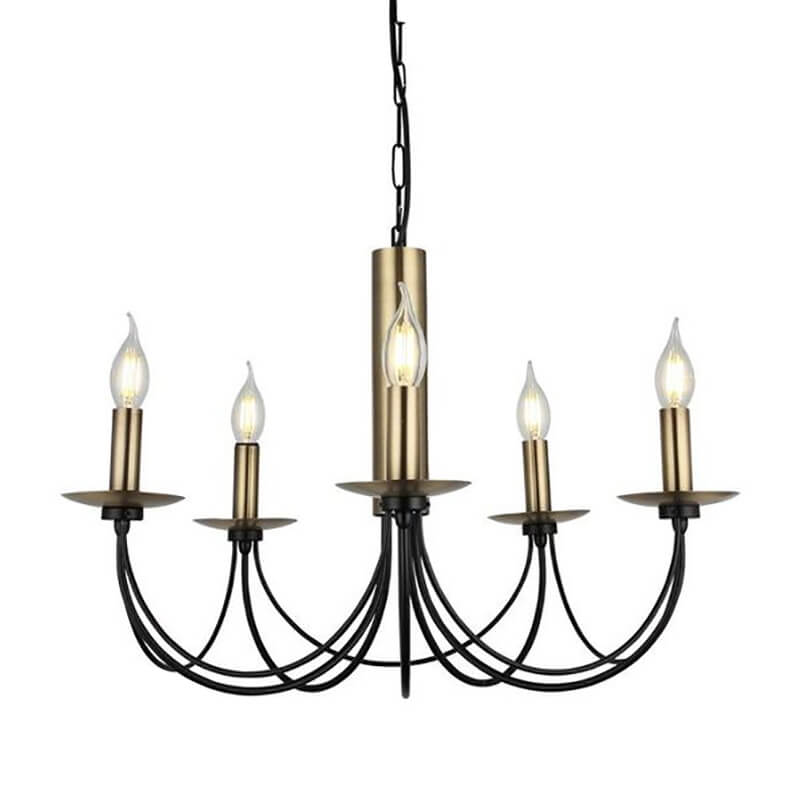
Kristallleuchter, Hängelampen für Schlafzimmer und Esszimmer, Wandlampen, Vintage-Tischlampen, und kleine Stehlampen – besonders geeignet für Innenräume im europäischen und französischen Stil. -
Gerätebeleuchtung:
Kühlschränke, microwaves, und Dunstabzugshauben erfordern Hitzebeständigkeit, und stabile Verbindungen sind unerlässlich. -
Commercial and specialty lighting:
Cafés, boutique hotels, museums, exhibition lighting, salt lamps, and aroma lamps. -
Auxiliary lighting:
Corridor lights, stairway sensor lights, and night lights. Low-wattage E14 bulbs offer soft, glare-free guidance lighting.
3.2 Recommended E14 Bulb Types by Application
| Recommended Category | Bulb Model | Wattzahl | Hauptmerkmale | Anwendung |
|---|---|---|---|---|
| Decorative Choice | LED 3-Color Candle Bulb (E14) | 7 W | Warm/neutral/white switchable, high CRI (Ra80+), elegant flame shape | Wohnzimmer & dining crystal chandeliers |
| Energy-Efficient | LED Corn Bulb (E14) | 12 W | 360° light output, IP44 moisture resistance | Küchen, Korridore |
| Appliance-Specific | High-Temperature E14 Bulb | 15 W | Heat resistant up to 200 °C, shock-proof | Kühlschränke, range hoods |
| Vintage Style | Edison Filament Bulb (E14) | 4 W | 3000 K warm glow, tungsten-style filament | Retro wall lamps, homestays |
| Low-Power Auxiliary | LED Flame-Tip Bulb (E14) | 1.5 W | Soft warm light, over 10,000-hour lifespan | Night lights, motion-sensor lights |
4. Common Lamp Base Types Beyond E14
E14 is a European-based international standard—not a North American one. Below is a clear overview of other common lamp bases to avoid confusion during purchasing.
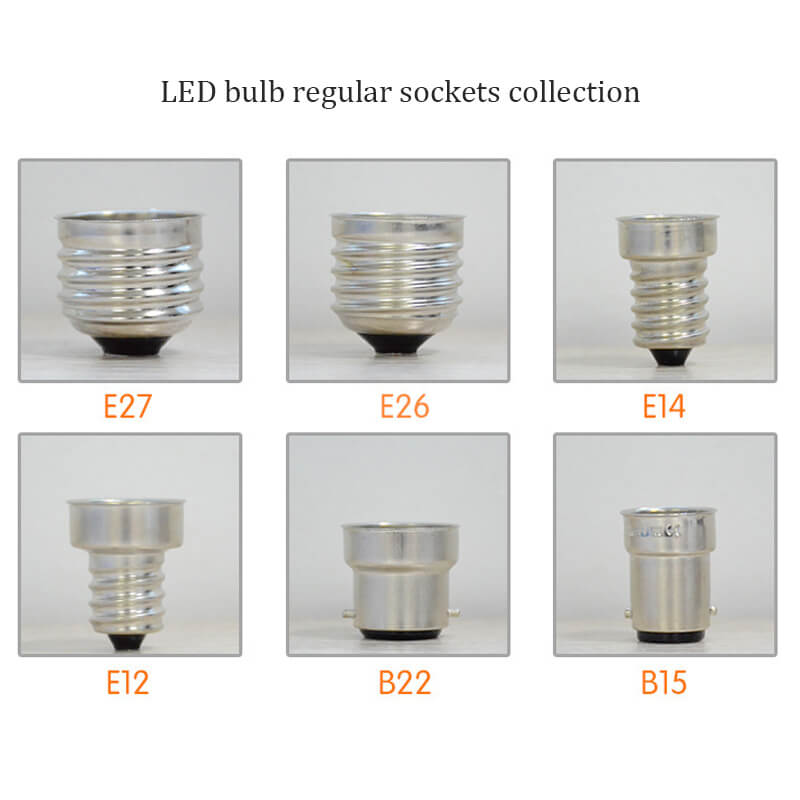
4.1 Screw Bases (E Series)
-
E27:
27 mm diameter is the most common household base worldwide.
⚠️ Do not confuse with E26 (26 mm), which is the North American standard—similar but not interchangeable. -
E12:
12 mm diameter, North American small screw base, often used in decorative lamps. -
E40:
40 mm diameter, industrial-grade base for streetlights and factory lighting.
4.2 Bayonet Bases (B Series)
-
B22:
22 mm diameter, twist-lock bayonet design with two pins. Stable and vibration-resistant, commonly used in the UK and some traditional fixtures.
4.3 Pin Bases (G & MR Series)
-
G9:
9 mm pin spacing, plug-in design, used in wall lamps and vanity lights. -
GU5.3 / MR16:
5.3 mm pin spacing, 12 V low-voltage spotlight (requires transformer). -
G4:
4 mm pin spacing, very compact, low-voltage decorative lighting. -
GU10:
Twist-lock pin base, 220–240 V direct mains connection, commonly used in spotlights and track lights.
4.4 Lamp Base Size Comparison Table
| Basistyp | Diameter / Pin Spacing (mm) | Standard | Hauptmerkmale |
|---|---|---|---|
| E14 | 14 | European / International | Small screw base, dekorativ & appliance lighting |
| E27 | 27 | European / International | Main household lighting |
| E26 | 26 | North American | Similar to E27 but not compatible |
| E12 | 12 | North American | Small decorative lighting |
| E40 | 40 | Industrial | High-power lighting |
| B22 | 22 | Vereinigtes Königreich / Partial CN | Bayonet, vibration-resistant |
| G9 | 9 (pins) | Universal | Plug-in decorative lighting |
| GU5.3 (MR16) | 5.3 (pins) | Universal | Low-voltage spotlight |
| G4 | 4 (pins) | Universal | Miniature low-voltage lighting |
| GU10 | 10 (pins) | Universal | Mains-voltage spotlight |
5. Frequently Asked Questions About E14 Screw Bases
5.1 Can E14 bulbs be used with E12 or E27 sockets?
E14 (14 mm), E12 (12 mm), and E27 (27 mm) have different diameters. Mixing them can cause poor contact, instability, failure to light, or even safety hazards such as overheating or short circuits.
5.2 What voltage options are available for E14 bulbs?
-
220–240 V: Standard household voltage (most common).
-
12 V: Low-voltage versions requiring a transformer.
For typical home use, wählen 220–240 V unless the fixture specifically requires low voltage.
5.3 How can I confirm whether a fixture uses an E14 base?
-
Check the fixture label or manual—“E14” is usually marked.
-
Measure the socket’s inner diameter; etwa 14 mm indicates an E14 base.
5.4 What materials are used for E14 lamp bases?
-
Kupfer: Best conductivity, excellent heat dissipation, corrosion-resistant.
-
Aluminum alloy: Lightweight, kostengünstig, good heat performance.
-
Steel (iron): Lower cost, but reduced conductivity and oxidation resistance.
Copper bases are preferred for premium E14 bulbs.
5.5 What is the typical lifespan of an E14 LED bulb?
High-quality E14 LED bulbs typically last between 10,000 Und 30,000 Std..
With average household use (3–5 hours per day), this equals 6–15 Jahre, far exceeding incandescent bulbs while consuming much less energy.
Abschluss
Der E14 screw base has a standard diameter of 14 mm, making it a compact, versatile solution for decorative lighting, Geräte, and specialized applications. By understanding its dimensions, standards, compatible fixtures, and proper usage, you can confidently choose the right E14 bulb for any lighting project—ensuring safety, Effizienz, und optimale Leistung.
FAQ
Q1: What is the diameter of an E14 screw base?
A: The E14 screw base measures 14 mm in diameter at the widest point of its threads.
Q2: Is E14 the same as E12?
A: E14 and E12 use different standards. E14 has a 14 mm diameter and follows European/international standards, während E12 measures 12 mm and follows North American standards, so they do not fit the same sockets.
Q3: What fixtures use E14 bulbs?
A: Manufacturers commonly use E14 bulbs in Kronleuchter, Wandleuchten, table lamps, refrigerators, range hoods, and decorative light fixtures.
Q4: What wattage is typical for E14 LED bulbs?
A: Most E14 LED bulbs Betrieb zwischen 1,5 W und 12 W, während Hochleistungsversionen erreichen bis zu 20–24W für hellere Anwendungen.
F5: Können E14-Glühbirnen mit 220 V Strom verwendet werden??
A: Die meisten E14-Glühbirnen Betrieb mit 220–240 V Haushaltsstrom, obwohl Hersteller auch produzieren 12V-Niederspannungsmodelle für spezielle Beleuchtungssysteme.
Auf der Suche nach E14-Glühbirnen oder maßgeschneiderten Beleuchtungslösungen?
Wir bieten eine große Auswahl an E14-LED-Lampen für dekorative Zwecke an, Gerät, und kommerzielle Beleuchtung.
Kontaktieren Sie uns für Staffelpreise, OEM-Optionen, und schnelle Lieferung. Das Video zeigt den Produktionsprozess der LED-E27-Glühbirne.