 English
 العربية
 Français
 Deutsch
 Italiano
 Polski
 Português
 Русский
 Español
 Українська


Nachteile der Verwendung von Glühbirnen: Warum immer mehr Hausbesitzer auf umsteigen LED-Lampen
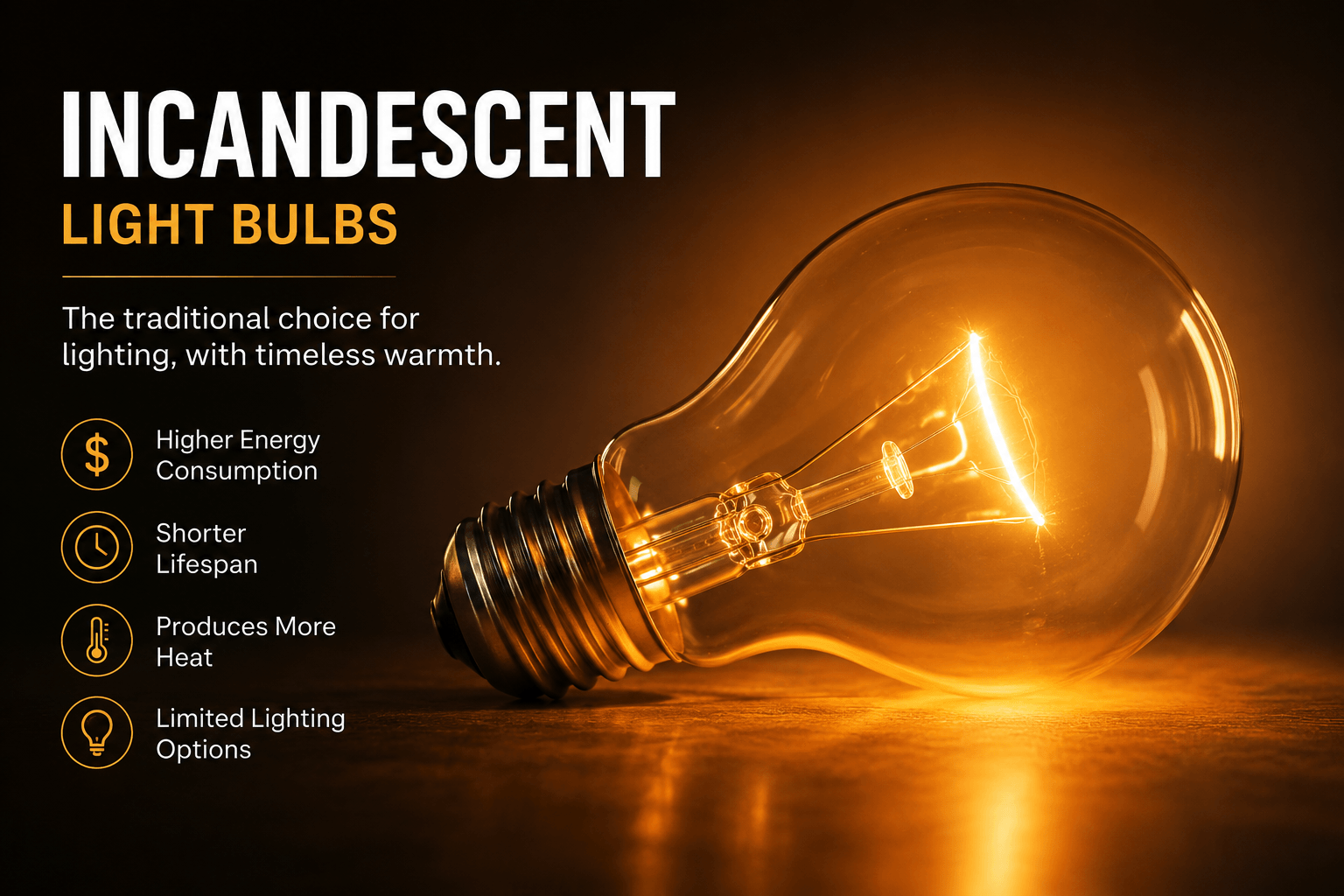
Wenn Ihre Stromrechnung jedes Jahr zu steigen scheint, während Ihre Freunde weniger für die Beleuchtung ausgeben, Du bildest es dir nicht ein.
Der Unterschied liegt oft in einem einfachen Upgrade: Glühlampen durch LED-Lampen ersetzen.
Obwohl Glühlampen seit mehr als einem Jahrhundert Häuser erhellen, Sie gehören mittlerweile zu den am wenigsten effizienten verfügbaren Beleuchtungsoptionen. Modern LED-Lampen liefern das gleiche – oder sogar hellere – Licht und verbrauchen dabei nur einen Bruchteil des Stroms, viel länger haltbar, und erzeugt deutlich weniger Wärme.
Also, Lohnt es sich heute noch, Glühbirnen zu verwenden??
Um Ihnen bei der Entscheidung zu helfen, Lassen Sie uns das Größte erkunden Nachteile von Glühbirnen und vergleichen Sie sie mit den heutigen energieeffizienten LED-Alternativen.
Nachteile der Verwendung von Glühbirnen
1. Hohe laufende Kosten
In erster Linie, der größte nachteil von Glühbirnen ist ihre schlechte Energieeffizienz.
Im Gegensatz zu LED-Lampen, die den Großteil ihrer Elektrizität in Licht umwandeln, Glühbirnen verschwenden fast 90% ihrer Energie als Wärme. Infolge, Nur ein kleiner Teil des Stroms, den Sie bezahlen, erzeugt tatsächlich nützliche Beleuchtung.
Zum Beispiel:
- A 60W-Glühbirne kann in der Regel durch ein ersetzt werden 8W–10W LED-Glühbirne.
- Beide erzeugen ungefähr die gleiche Helligkeit.
- Jedoch, die LED verwendet bis zu 90% weniger Strom.
Folglich, wenn Ihr Zuhause 20–30 Glühbirnen enthält, Ihre jährlichen Stromkosten können dramatisch steigen, allein weil Sie veraltete Beleuchtungstechnik verwenden.
Obwohl LED-Lampen kann im Voraus etwas mehr kosten, Sie amortisieren sich schnell durch niedrigere Stromrechnungen. Im Laufe ihres Lebens, Viele Haushalte sparen durch den Wechsel Hunderte von Dollar.
Schlüssel zum Mitnehmen: Ein geringerer Energieverbrauch bedeutet niedrigere Stromrechnungen und größere langfristige Einsparungen.
2. Eine kurze Lebensdauer bedeutet einen häufigeren Austausch
Zusätzlich zum höheren Stromverbrauch, Glühbirnen haben auch eine sehr kurze Lebensdauer.
So vergleichen sie sich:
| Glühbirnentyp | Durchschnittliche Lebensdauer |
|---|---|
| Glühbirne | 750–1.200 Stunden |
| Halogen Bulb | 2,000–4.000 Stunden |
| LED -Glühbirne | 15,000–50.000 Stunden |
Mit anderen Worten, Sie können eine Glühbirne ersetzen 15 Zu 25 mal bevor Sie eine einzelne hochwertige LED-Glühbirne austauschen.
Darüber hinaus, Häufiger Austausch wird insbesondere an Orten wie z. B. unpraktisch:
- Hohe Decken
- Treppenhäuser
- Außenanlagen
- Gewerbebauten
- Schwer zugängliche Beleuchtung
Ersatzbirnen kosten nicht nur Geld, Sie erfordern aber auch zusätzlichen Zeit- und Wartungsaufwand.
Schlüssel zum Mitnehmen: Länger haltbar LED-Lampen Reduzieren Sie die Wartungskosten und sorgen Sie für mehr Komfort.
3. Größere Auswirkungen auf die Umwelt
Abgesehen von höheren Stromrechnungen, Glühbirnen haben auch einen viel größeren ökologischen Fußabdruck.
Denn weltweit wird der größte Teil des Stroms immer noch aus fossilen Brennstoffen erzeugt, Jedes zusätzliche Watt Strom trägt zu einem erhöhten CO2-Ausstoß bei.
daher, wechseln zu energieeffiziente LED-Leuchtmittel hilft dir:
- Reduzieren Sie den Stromverbrauch
- Geringere Treibhausgasemissionen
- Reduzieren Sie den CO2-Fußabdruck Ihres Haushalts
- Unterstützen Sie eine nachhaltigere Umwelt
Auch wenn der Austausch einiger Glühbirnen wie ein kleiner Schritt erscheinen mag, Wenn Millionen von Haushalten die gleiche Entscheidung treffen, kann dies erhebliche positive Auswirkungen haben.
Schlüssel zum Mitnehmen: Benutzen LED-Beleuchtung kommt sowohl Ihrem Geldbeutel als auch dem Planeten zugute.
4. Begrenzte Farbtemperatur- und Beleuchtungsoptionen
Ein weiterer Nachteil ist die begrenzte Auswahl an Beleuchtungsmöglichkeiten bei Glühlampen.
Typischerweise, Glühbirnen erzeugen nur ungefähr eine Farbtemperatur 2700K warmweiß.
Im Vergleich, modern LED-Lampen sind in den unterschiedlichsten Beleuchtungsvarianten erhältlich, einschließlich:
- Warmweiß (2200K–3000K)
- Neutralweiß (3500K–4500K)
- Kühles Weiß (5000K–6500K)
- Tageslicht
- Abstimmbares Weiß
- RGB-Farbwechsel
- Intelligente Beleuchtung
Infolge, Sie können für jeden Raum die ideale Beleuchtung auswählen.
Zum Beispiel:
- Wohn- und Schlafzimmer Fühlen Sie sich wärmer und entspannter mit warmweißer Beleuchtung.
- Küchen und Badezimmer Profitieren Sie vom Kühler, hellere Beleuchtung für bessere Sicht.
- Heimbüros Bei tageslichtfarbener Beleuchtung, die die Konzentration fördert, funktionieren sie oft am besten.
Einfach gesagt, LED-Lampen bieten eine weitaus größere Flexibilität, als es Glühbirnen jemals könnten.
Schlüssel zum Mitnehmen: Mit der LED-Beleuchtung können Sie Helligkeit und Farbtemperatur für jeden Raum individuell anpassen.
5. Geringere Gesamtbeleuchtungsleistung
Viele Menschen glauben, dass Glühbirnen das natürlichste Licht erzeugen.
Es stimmt zwar, dass Glühbirnen eine haben Farbwiedergabeindex (CRI) in der Nähe 100, die heutige Prämie LED-Lampen häufig erreichen CRI 90–95+, liefert lebendige, Präzise Farben bei weitaus geringerem Stromverbrauch.
Tatsächlich, LED-Lampen mit hohem CRI werden mittlerweile häufig verwendet:
- Küchen
- Wohnzimmer
- Einzelhandelsgeschäfte
- Kunstateliers
- Schminkspiegel
- Restaurants
- Fotografie
daher, Hausbesitzer müssen nicht mehr auf Farbqualität verzichten, um Energie zu sparen.
Beim Kauf von Ersatzlampen, Auswahl eines CRI oben 90 wird für das beste Lichterlebnis empfohlen.
Schlüssel zum Mitnehmen: Hoher CRI LED-Lampen kombinieren hervorragende Farbgenauigkeit mit hervorragender Energieeffizienz.
6. Zerbrechliche Glaskonstruktion
Ein weiterer Nachteil ist die Haltbarkeit.
Im Gegensatz zu modernen LED-Lampen, Glühlampen enthalten einen empfindlichen Wolframfaden, der von dünnem Glas umgeben ist.
Infolge, Selbst eine kleine Vibration oder ein versehentlicher Stoß können zum Bruch des Filaments führen.
Dadurch sind Glühlampen weniger geeignet:
- Häuser mit Kindern
- Häuser mit Haustieren
- Garagen
- Workshops
- Außenanlagen
- Deckenventilatoren
Glücklicherweise, viele LED-Lampen Verwenden Sie stärkere Materialien und sind viel widerstandsfähiger gegen Vibrationen und versehentliche Stöße.
Schlüssel zum Mitnehmen: LED-Lampen sind langlebiger und müssen seltener ausgetauscht werden.
7. Übermäßige Hitze kann ein Sicherheitsrisiko darstellen
Endlich, Einer der offensichtlichsten Nachteile von Glühbirnen ist die Menge an Wärme, die sie erzeugen.
Denn der Großteil ihrer Energie wird nicht in Licht, sondern in Wärme umgewandelt, Glühlampen werden im Betrieb extrem heiß.
Folglich, sie können:
- Erhöhen Sie die Innentemperaturen im Sommer
- Erzwingen Sie, dass Klimaanlagen härter arbeiten
- Beim Austausch verbrennen Sie sich die Finger
- Beschädigen Sie Lampenschirme oder in der Nähe befindliche Materialien
- Schaffen Sie potenzielle Brandgefahren
- In geschlossenen Vorrichtungen verschleißen sie schneller
Im Gegensatz dazu, LED-Lampen bei viel niedrigeren Temperaturen arbeiten.
Dies erhöht nicht nur die Sicherheit, Es verlängert aber auch die Lebensdauer der Glühbirne und reduziert die Energieverschwendung.
Schlüssel zum Mitnehmen: Der kühlere Betrieb macht die LED-Beleuchtung sicherer, komfortabler, und effizienter.
Mit ihrem hohen Energieverbrauch, übermäßige Wärmeabgabe, kurze Lebensdauer, und zunehmende regulatorische Beschränkungen, weißglühend (tungsten filament) Glühbirnen gehören schnell der Vergangenheit an. Tatsächlich, Die Die Europäische Union hat im Rahmen ihrer Energieeffizienzinitiativen die meisten herkömmlichen Glühbirnen verboten, Förderung der LED-Beleuchtung als neuen Standard für Privathaushalte und Unternehmen. Wenn Sie immer noch Glühbirnen verwenden, Jetzt ist der perfekte Zeitpunkt für den Wechsel. Moderne LED-Lampen mit hohem CRI liefern die gleiche Wärme, angenehmes Leuchten bei einer Anwendung von bis zu 90% weniger Energie, Dauert bis zu 25 mal länger, Und Sie tragen dazu bei, sowohl Ihre Stromrechnungen als auch Ihren CO2-Fußabdruck zu reduzieren.
Sollten Sie Glühlampen durch LED-Lampen ersetzen??
Nach dem Vergleich der beiden Technologien, Die Antwort ist für die meisten Hausbesitzer klar.
LED-Lampen übertreffen Glühlampen in fast jeder Kategorie.
Sie bieten:
- Bis zu 90% geringerer Energieverbrauch
- 15–25-mal längere Lebensdauer
- Geringere Wartungskosten
- Kühlerbetrieb
- Verbesserte Sicherheit
- Mehrere Farbtemperaturoptionen
- Kompatibilität mit intelligenter Beleuchtung
- Bessere Umweltleistung
In der Zwischenzeit, wenn Sie immer noch das klassische warme Licht traditioneller Glühbirnen lieben, modern LED-Glühlampen reproduzieren das Vintage-Erscheinungsbild genau und bieten gleichzeitig alle Vorteile der LED-Technologie.
Für die besten Ergebnisse, Wählen Sie hochwertige LED-Lampen mit einem CRI von 90 oder höher. Sie liefern wunderschöne Ergebnisse, Natürlich aussehendes Licht bei gleichzeitiger Maximierung der Energieeinsparung und langfristigen Zuverlässigkeit.
Häufig gestellte Fragen
Was sind die Nachteile von Glühbirnen??
Gegenüber LED-Lampen, Glühbirnen verbrauchen weitaus mehr Strom, haben eine viel kürzere Lebensdauer, übermäßige Hitze erzeugen, brechen leichter, und bieten weniger Beleuchtungsmöglichkeiten. Im Laufe der Zeit, Außerdem sind die Betriebs- und Wartungskosten deutlich höher.
Was ist heißer – Glühlampe oder Halogen??
Allgemein, halogen bulbs arbeiten bei noch höheren Temperaturen als herkömmliche Glühbirnen. Beide werden im Betrieb extrem heiß, Halogenlampen können jedoch fast die doppelte Betriebstemperatur erreichen, Dadurch sind sie noch weniger berührungssicher.
Sind LED-Glühbirnen sicher??
Ja. Hochwertig LED-Lampen arbeiten bei viel niedrigeren Temperaturen als Glüh- oder Halogenlampen. Sie geben im normalen Haushaltsgebrauch keine schädliche UV-Strahlung ab und gelten weithin als eine der sichersten und energieeffizientesten Beleuchtungstechnologien, die heute verfügbar sind.
Sind Halogenlampen heller als LED-Lampen??
Nicht unbedingt. Helligkeit hängt davon ab Lumen, nicht die Lichttechnik selbst. Modern LED-Lampen können die gleiche oder sogar eine höhere Helligkeit als Halogenlampen erzeugen und dabei deutlich weniger Strom verbrauchen, Dies macht sie zur effizienteren Wahl.
Letzte Gedanken
Gesamt, Glühlampen sind nicht mehr die praktischste Wahl für moderne Häuser. Obwohl sie einen vertrauten warmen Glanz bieten, sie verbrauchen deutlich mehr Strom, übermäßige Hitze erzeugen, erfordern einen häufigen Austausch, und bieten begrenzte Beleuchtungsmöglichkeiten.
Im Gegensatz, LED-Lampen sorgen für herausragende Energieeffizienz, längere Lebensdauer, hervorragende Farbqualität, und höchste Sicherheit. Besser noch, heute LED-Lampen mit hohem CRI (CRI 90+) reproduzieren das warme Erscheinungsbild von Glühlampenlicht und reduzieren gleichzeitig den Energieverbrauch um bis zu 90%.
Wenn Sie Ihre Stromrechnungen senken möchten, den Wartungsaufwand reduzieren, und genießen Sie eine bessere Beleuchtung in Ihrem gesamten Zuhause, Die Umrüstung auf hochwertige LED-Lampen ist eine der intelligentesten Investitionen, die Sie tätigen können. Bitte Überprüfen Sie hier für unsere hochwertigen LED-Leuchtmittel.