 English
 العربية
 Français
 Deutsch
 Italiano
 Polski
 Português
 Русский
 Español
 Українська


Carbon Filament vs Tungsten Filament
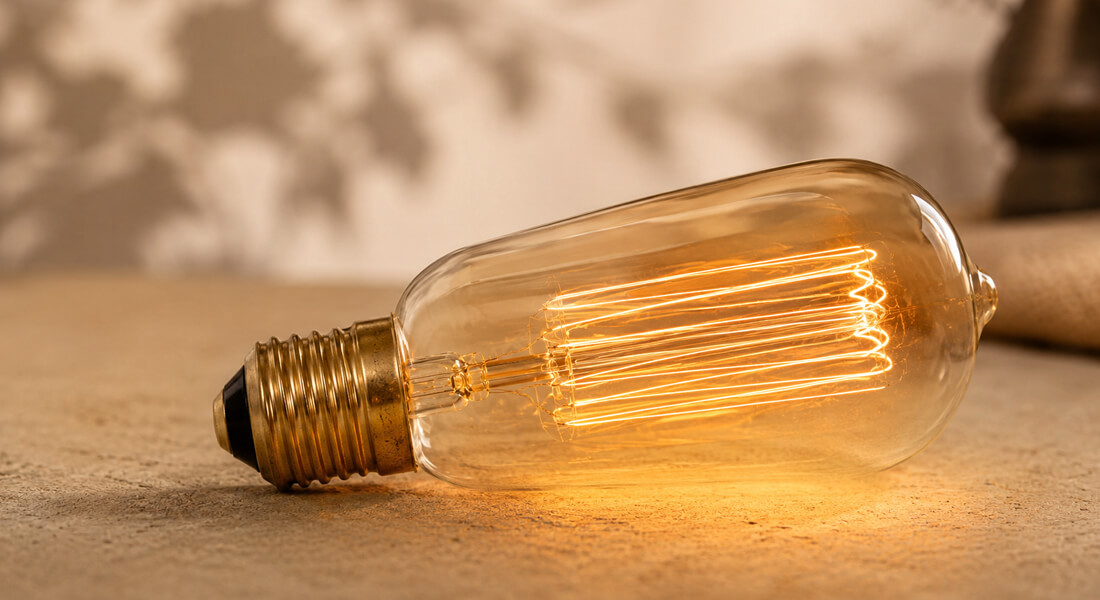
Vintage filament bulbs are valued for their warm glow, exposed filaments, and timeless appeal. Whether used in homes, cafés, restaurants, or hotels, they create a cozy atmosphere that modern lighting often can’t match.
When shopping for vintage bulbs, you’ll typically find two filament types: carbon filament and tungsten filament. Although they share a similar appearance, they differ in brightness, efficiency, lifespan, and overall performance.
This guide explains the key differences to help you choose the right bulb.
The History of Carbon and Tungsten Filaments
The earliest incandescent bulbs experimented with several filament materials, including platinum. However, it wasn’t until Thomas Edison introduced the carbon filament bulb that electric lighting became commercially practical.
Later, manufacturers adopted tungsten because of its extremely high melting point. As a result, tungsten filaments could operate at higher temperatures, producing more light while lasting much longer than carbon filaments.
Furthermore, replacing the vacuum inside the bulb with inert gases such as argon helped reduce glass blackening and further extended bulb life. Today, tungsten remains the standard material for traditional incandescent and vintage-style bulbs.
Why Vintage Filament Bulbs Remain Popular
Although LED technology dominates today’s lighting market, vintage filament bulbs continue to be a favorite for decorative lighting.
This is because they offer:
- Warm amber light (2200K–2700K)
- Decorative exposed filaments
- Classic Edison-style designs
- Soft, relaxing illumination
Consequently, they’re widely used in pendant lights, chandeliers, wall sconces, table lamps, cafés, restaurants, hotels, and retail spaces where atmosphere matters most.
Carbon Filament vs Tungsten Filament
While both bulbs belong to the incandescent family, their performance differs considerably.
| Feature | Carbon Filament | Tungsten Filament |
|---|---|---|
| Filament Material | Carbon | Tungsten |
| Brightness | Lower | Higher |
| Energy Efficiency | Lower | Higher |
| Lifespan | Shorter | Longer |
| Light Color | Very warm amber | Warm white to amber |
| Cost | Usually higher | More affordable |
| Best Use | Decorative and restoration projects | Decorative and everyday use |
Overall, tungsten filament bulbs provide better brightness, longer life, and greater value.
Brightness and Energy Efficiency
One of the biggest differences is light output.
Because tungsten operates at a higher temperature, it produces significantly more light using the same amount of electricity.
For example:
| Bulb Type | Wattage | Approximate Brightness |
|---|---|---|
| Carbon Filament | 60W | 350–400 lumens |
| Tungsten Filament | 60W | 700–800 lumens |
Therefore, tungsten bulbs are the better choice when you need decorative lighting with practical brightness.
Lifespan and Durability
Carbon filaments wear out more quickly over time, resulting in a shorter lifespan.
By comparison, tungsten filaments are stronger and more heat-resistant. Combined with inert gas filling, they last longer and maintain a clearer glass appearance.
Typical lifespan:
- Carbon filament: 1,000–2,000 hours
- Tungsten filament: 2,000–3,000 hours or more
As a result, tungsten bulbs offer lower long-term replacement costs.
Can Both Types Be Dimmed?
Yes. Both carbon and tungsten filament bulbs work with compatible incandescent dimmer switches.
When dimmed, they produce:
- A warmer glow
- Improved ambiance
- Extended bulb life
- Lower energy consumption
For this reason, they’re popular in bedrooms, dining rooms, restaurants, and hospitality settings.
Are Vintage Filament Bulbs Bright Enough?
Traditional vintage bulbs are designed for atmosphere rather than maximum brightness.
For comparison:
| Bulb Type | Wattage | Brightness |
|---|---|---|
| Vintage Incandescent Filament | 60W | Around 400 lumens |
| Standard Incandescent | 60W | Around 800 lumens |
| LED Filament Bulb | 6–8W | Around 800 lumens |
Therefore, vintage incandescent bulbs are best suited for accent and decorative lighting, while LED filament bulbs provide similar aesthetics with much higher efficiency.
Best Applications for Tungsten Filament Bulbs
Thanks to their balance of style and performance, tungsten filament bulbs are ideal for:
- Chandeliers
- Pendant lights
- Wall sconces
- Table lamps
- Open fixtures
- Cafés and restaurants
- Hotels
- Farmhouse and industrial interiors
Their visible glowing filament adds warmth and character to any space.
The Iconic Steampunk “Squirrel Cage” Bulb
Among vintage designs, the Steampunk Squirrel Cage bulb is one of the most recognizable.
Its elongated glass shape and decorative cage-style filament make it a popular choice for exposed fixtures, vintage chandeliers, loft apartments, cafés, and restaurants.
Even when turned off, it serves as an attractive decorative feature.
Which Filament Should You Choose?
Your choice depends on your needs.
Choose carbon filament bulbs if you:
- Prefer authentic vintage lighting
- Restore antique fixtures
- Want the warmest amber glow
Choose tungsten filament bulbs if you:
- Need brighter illumination
- Want a longer-lasting bulb
- Prefer better energy efficiency
- Plan to use vintage bulbs regularly
For most decorative applications, tungsten filament bulbs offer the best balance of performance and classic style.
Conclusion
Both carbon and tungsten filament bulbs capture the charm of early electric lighting. However, they serve different purposes.
Carbon filament bulbs are ideal for historical authenticity and ultra-warm decorative lighting. In contrast, tungsten filament bulbs deliver greater brightness, longer lifespan, and better efficiency while preserving the classic Edison appearance.
If you’re looking for a practical vintage bulb for everyday use, tungsten is the better choice. Alternatively, if energy efficiency is your priority, LED filament bulbs provide the same nostalgic look with significantly lower power consumption and a much longer lifespan.
FAQs
Are carbon filament bulbs still available?
Yes. They are mainly used for antique restorations, museums, and decorative vintage lighting.
Which is brighter, carbon or tungsten filament?
Tungsten filament bulbs produce nearly twice the light output of carbon filament bulbs at the same wattage.
Which filament lasts longer?
Tungsten filaments generally last longer because they withstand higher operating temperatures and evaporate more slowly.
Are tungsten filament bulbs more energy efficient?
Yes. They produce more lumens per watt than carbon filament bulbs, making them the more efficient incandescent option.
Can both types be dimmed?
Yes. Both carbon and tungsten filament bulbs are dimmable when used with a compatible incandescent dimmer.
Is there a modern alternative?
Yes. LED filament bulbs replicate the classic Edison look while using up to 90% less energy and lasting up to 25 times longer than traditional incandescent filament bulbs.