 English
 العربية
 Français
 Deutsch
 Italiano
 Polski
 Português
 Русский
 Español
 Українська


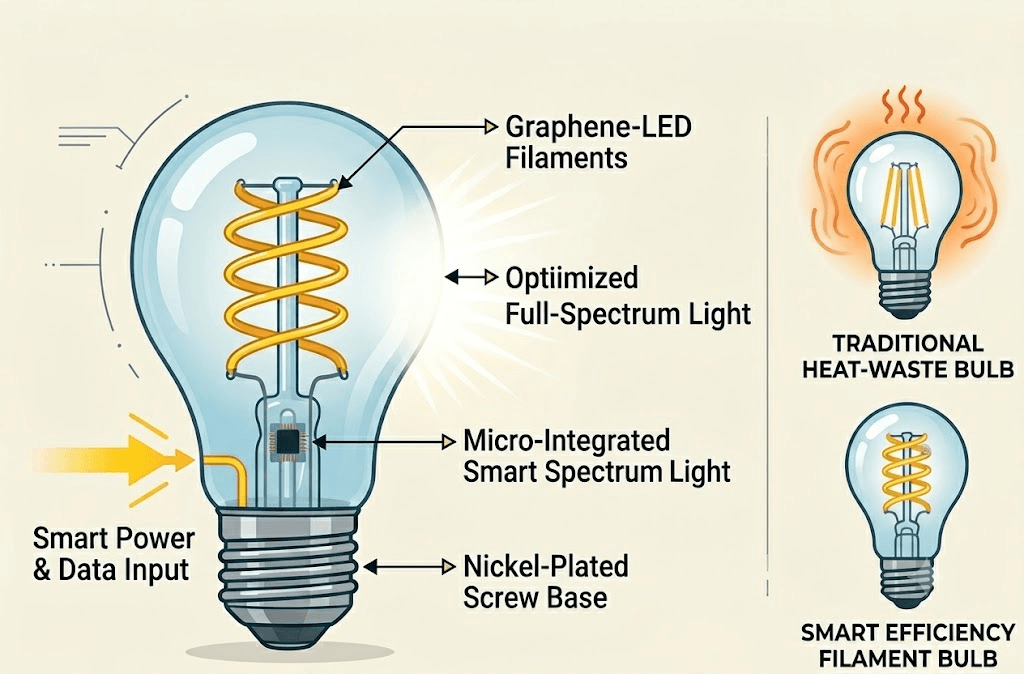
كيف تعمل إضاءة LED: العلم وراء المصابيح الكهربائية الحديثة الموفرة للطاقة
لقد غيرت إضاءة LED الطريقة التي نضيء بها منازلنا تمامًا, مكاتب, الفنادق, المطاعم, والمساحات التجارية. بالمقارنة مع المصابيح المتوهجة التقليدية ومصابيح CFL, توفر مصابيح LED كفاءة أفضل في استخدام الطاقة, عمر أطول, تحسين جودة الإضاءة, وانخفاض تكاليف الصيانة.
لكن, يستخدم العديد من الأشخاص مصابيح LED يوميًا دون معرفة ما يحدث بداخلها بالفعل. عند تشغيل ضوء LED, كيف تصبح الكهرباء مشرقة, إضاءة مريحة?
تكمن الإجابة في مكون صغير ولكنه قوي داخل المصباح: شريحة أشباه الموصلات.
عندما يمر التيار الكهربائي من خلال هذه الشريحة, فهو ينتج الضوء المرئي من خلال عملية تسمى تلألؤ كهربائي. على عكس المصابيح المتوهجة, التي تسخن الفتيل حتى يتوهج, تعمل تقنية LED على تحويل الكهرباء مباشرة إلى ضوء. نتيجة ل, يتم إهدار طاقة أقل بكثير على شكل حرارة.
بسبب هذا التحويل الفعال للطاقة, يمكن لمصابيح LED أن تقلل من استهلاك الكهرباء بنسبة تصل إلى 80% مقارنة مع الإضاءة التقليدية. فضلاً عن ذلك, يساعد عمر الخدمة الطويل على تقليل تكرار الاستبدال وتكاليف الصيانة.
اليوم, يتم استخدام تقنية LED في كل مكان — بدءًا من مصابيح Edison المزخرفة ومصابيح الشموع في الثريات وحتى مصابيح الإضاءة النازلة الغائرة, أنظمة الإضاءة الذكية, وحلول الإضاءة التجارية.
في هذا الدليل الكامل, سوف نشرح كيف تعمل إضاءة LED, ما هي المكونات الموجودة داخل لمبة LED, لماذا تعد مصابيح LED أكثر كفاءة في استخدام الطاقة من المصابيح التقليدية؟, وكيف عوامل مثل السطوع, درجة حرارة اللون, وCRI تؤثر على تجربة الإضاءة الخاصة بك. قد تساعدك الصورة أدناه في الحصول على فهم أفضل لكيفية عمل المصباح.
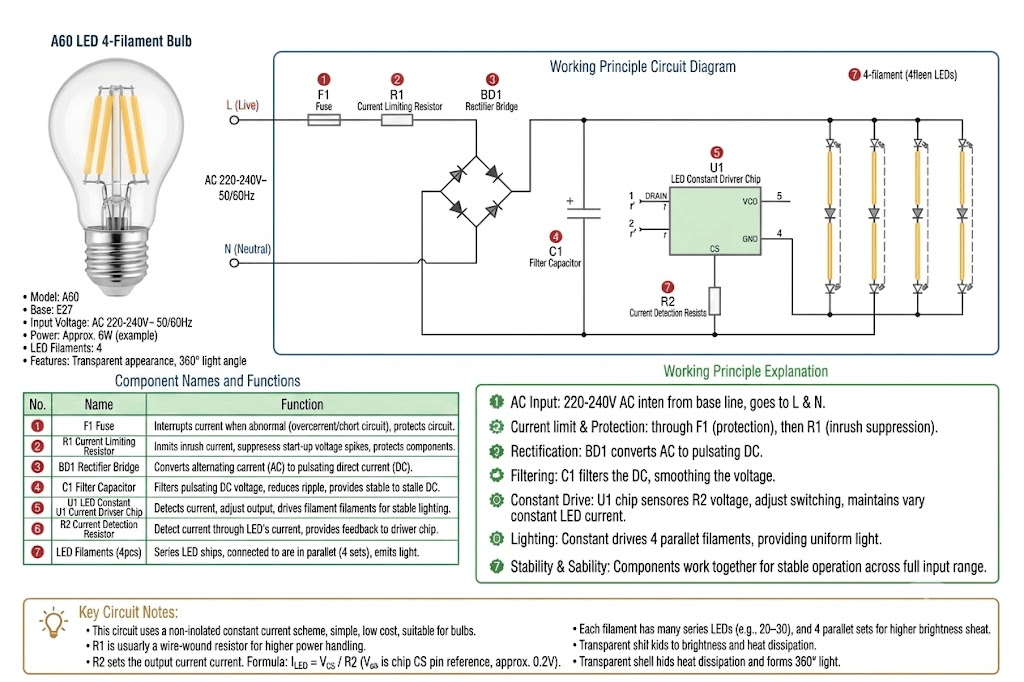
سواء كنت تستبدل لمبة واحدة, ترقية إضاءة منزلك, أو التخطيط لمشروع إضاءة تجاري, سيساعدك فهم تقنية LED على اختيار حل الإضاءة المناسب.
ما هو الصمام?
قبل استكشاف كيفية عمل إضاءة LED, من المهم أن نفهم ما يعنيه مصطلح "LED"..
LED لتقف على الصمام الثنائي الباعث للضوء. وهو جهاز شبه موصل يحول الطاقة الكهربائية إلى ضوء مرئي.
على عكس المصابيح المتوهجة, والتي تنتج الضوء عن طريق تسخين خيوط التنغستن, تنتج مصابيح LED الضوء من خلال عملية تسمى تلألؤ كهربائي.
وأوضح ببساطة:
تدخل الكهرباء ← تتحرك الإلكترونات داخل شبه الموصل ← تنطلق الطاقة على شكل ضوء
لأن مصابيح LED لا تحتاج إلى تسخين الفتيل, يستخدمون الطاقة بشكل أكثر كفاءة ويولدون حرارة أقل بكثير.
هذه التكنولوجيا البسيطة والمتقدمة هي السبب وراء ظهور مصابيح LED:
- أكثر كفاءة في استخدام الطاقة
- يدوم لفترة أطول
- برودة أثناء التشغيل
- أكثر مرونة في التصميم
- متوفر بالعديد من الألوان وأنماط الإضاءة
مع استمرار تقنية LED في التحسن, يمكن للمصنعين الآن إنشاء مصابيح ذات سطوع أفضل, دقة ألوان أعلى, وميزات تحكم أكثر ذكاءً.
تاريخ موجز لتكنولوجيا LED
على الرغم من أن إضاءة LED تعتبر تقنية حديثة, وقد استغرق تطويره سنوات عديدة.
لم تكن مصابيح LED الأولى مصممة للإضاءة المنزلية. بدلاً من, تم استخدامها بشكل أساسي كأضواء مؤشر صغيرة في الأجهزة الإلكترونية.
متأخر , بعد فوات الوقت, أدت التحسينات في مواد أشباه الموصلات إلى تحويل مصابيح LED إلى حلول الإضاءة المتقدمة اليوم.
1962 – أول LED عملي
نيك هولونياك جونيور. طورت أول LED أحمر مرئي عملي, خلق الأساس لتكنولوجيا LED المستقبلية.
1970من الثمانينيات إلى القرن العشرين – تم تطوير المزيد من ألوان LED
خلال هذه الفترة, قدم المصنعون اللون الأصفر, البرتقالي, والمصابيح الخضراء, توسيع تطبيقات LED إلى ما هو أبعد من المؤشرات البسيطة.
1990ق - أدى اللون الأزرق إلى تغيير صناعة الإضاءة
كان تطوير مصابيح LED الزرقاء عالية السطوع بمثابة إنجاز كبير. من خلال الجمع بين رقائق LED الزرقاء والمواد الفوسفورية, يمكن للمصنعين أخيرًا إنشاء إضاءة LED بيضاء فعالة.
2000ق - دخلت مصابيح LED إلى المنازل
مع انخفاض تكاليف الإنتاج وتحسن الأداء, أصبحت مصابيح LED بديلاً عمليًا للمصابيح المتوهجة ومصابيح CFL.
اليوم - تهيمن إضاءة LED على السوق
تستخدم الآن مصابيح LED الحديثة على نطاق واسع:
- الإضاءة السكنية
- المباني التجارية
- الفنادق والمطاعم
- إضاءة خارجية
- أنظمة الإضاءة الذكية
- التطبيقات الصناعية
الأهم من ذلك, أدى اختراع تقنية LED الزرقاء إلى جعل إضاءة LED البيضاء الحديثة ممكنة وغيرت صناعة الإضاءة العالمية تمامًا.
مصابيح LED مقابل المصابيح المتوهجة مقابل مصابيح CFL: أيهما أفضل?
لفهم سبب انتشار مصابيح LED بشكل أفضل, فهو يساعد على مقارنتها بتقنيات الإضاءة القديمة.
| ميزة | ساطع | CFL | قاد |
|---|---|---|---|
| مصدر الضوء | خيوط ساخنة | غاز الزئبق | شريحة أشباه الموصلات |
| كفاءة الطاقة | قليل | واسطة | عالي |
| الكفاءة النموذجية | حول 15 م/ث | حول 60 م/ث | 80–120 لومن/واط |
| عمر | عن 1,000 ساعات | عن 8,000 ساعات | 25,000-50,000+ ساعة |
| إخراج الحرارة | عالية جدا | معتدل | قليل |
| محتوى الزئبق | لا | نعم | لا |
| استهلاك الطاقة | الأعلى | واسطة | أدنى |
كما تظهر المقارنة, توفر مصابيح LED مزايا في كل فئة تقريبًا.
على سبيل المثال, يمكن أن يؤدي استبدال اللمبة المتوهجة التقليدية بقدرة 60 وات بمصباح LED بقدرة 9 وات إلى توفير سطوع مماثل مع استخدام كهرباء أقل بكثير.
لذلك, أصبحت مصابيح LED الآن الخيار المفضل لأصحاب المنازل, الشركات, ومحترفي الإضاءة حول العالم.
تشريح لمبة LED الحديثة
على الرغم من أن لمبة LED قد تبدو مشابهة للمصباح الكهربائي التقليدي من الخارج, هيكلها الداخلي أكثر تقدمًا.
داخل كل لمبة LED, تعمل العديد من المكونات الرئيسية معًا لإنشاء مستقر, فعال, وإضاءة عالية الجودة.
إن فهم هذه الأجزاء يفسر أيضًا سبب أداء بعض مصابيح LED بشكل أفضل من غيرها, حتى عندما يكون لديهم نفس القوة الكهربائية.
رقاقة الصمام: قلب اللمبة
تعد شريحة LED الجزء الأكثر أهمية في نظام الإضاءة بأكمله.
وهو العنصر الذي ينتج الضوء عندما تمر الكهرباء من خلاله.
عادة ما تكون رقائق LED الحديثة مصنوعة من مواد شبه موصلة مثل:
- نيتريد الغاليوم (الجاليوم)
- نيتريد الجاليوم الإنديوم (إنغان)
تعمل هذه المواد على تحويل الطاقة الكهربائية بكفاءة إلى ضوء مرئي.
اليوم, تتوفر شرائح LED عادة في ثلاثة أنواع رئيسية:
سمد LED (جهاز مثبت على السطح)
تستخدم مصابيح SMD LED على نطاق واسع في منتجات الإضاءة المنزلية.
المزايا:
- كفاءة عالية
- حتى توزيع الضوء
- أداء موثوق
- إنتاج فعال من حيث التكلفة
وهي موجودة عادة في مصابيح LED, لوحات, والمصابيح النازلة.
كوب LED (رقاقة على متن الطائرة)
تجمع مصابيح COB LED بين شرائح LED متعددة على لوحة واحدة.
تشمل الفوائد:
- سطوع أعلى
- إدارة حرارية أفضل
- أقوى إخراج الضوء
غالبًا ما يتم استخدامها في الإضاءة التجارية وتطبيقات الطاقة العالية.
رقاقة خيوط LED
تم تصميم تقنية خيوط LED لتقليد مظهر الخيوط المتوهجة التقليدية.
تحظى هذه المصابيح بشعبية خاصة:
- مصابيح اديسون
- إضاءة خمر
- الثريات الزخرفية
- أضواء قلادة
مع استمرار تكنولوجيا شرائح LED في التحسن, يمكن للمصنعين إنتاج حلول إضاءة أكثر سطوعًا مع استهلاك أقل للطاقة.
سائق الصمام: دماغ لمبة LED
في حين أن شريحة LED هي الجزء الذي يخلق الضوء, لا يمكن أن تعمل مباشرة مع الكهرباء من منزلك.
هذا هو المكان سائق الصمام يصبح ضروريا.
يعمل برنامج تشغيل LED كنظام صغير لإدارة الطاقة داخل المصباح. وظيفتها الرئيسية هي تحويل التيار المتردد عالي الجهد (تكييف) من النظام الكهربائي الخاص بك إلى التيار المباشر ذو الجهد المنخفض (العاصمة) التي تحتاجها شريحة LED.
بعبارات بسيطة:
كهرباء المنزل ← مشغل LED ← طاقة مستقرة ← شريحة LED تنتج الضوء
بالإضافة إلى تحويل الطاقة, كما يتحكم محرك LED عالي الجودة في تدفق التيار ويحمي المصباح من التقلبات الكهربائية.
يوفر برنامج تشغيل LED الجيد العديد من الوظائف المهمة:
- تحويل الطاقة من التيار المتردد إلى التيار المستمر
- التنظيم الحالي المستمر
- حماية الجهد
- حماية الطفرة
- تقليل الوميض
- التوافق يعتم
لذلك, جودة مشغل LED لها تأثير مباشر على أداء اللمبة, استقرار السطوع, وعمر.
على الجانب الآخر, قد تتسبب برامج تشغيل LED منخفضة الجودة في حدوث مشكلات شائعة مثل:
- وميض مرئي
- أصوات طنين
- انخفاض السطوع
- عمر أقصر
- ضعف أداء التعتيم
لهذا السبب, يعد اختيار مصابيح LED من الشركات المصنعة الموثوقة أمرًا مهمًا, خاصة بالنسبة للتطبيقات التي تكون فيها جودة الإضاءة مهمة, مثل المنازل, الفنادق, المطاعم, ومتاجر البيع بالتجزئة.
تقليل الحرارة: الحفاظ على مصابيح LED باردة وموثوقة
على الرغم من أن مصابيح LED تنتج حرارة أقل بكثير من المصابيح المتوهجة, فهي ليست خالية تمامًا من الحرارة.
أثناء العملية, لا تزال شريحة LED تولد كمية صغيرة من الحرارة. إذا لم تتمكن هذه الحرارة من الهروب بشكل صحيح, فقد يؤدي ذلك إلى تلف المكونات الداخلية وتقليل عمر المصباح.
لحل هذه المشكلة, تضيف الشركات المصنعة أ تقليل الحرارة لتصاميم لمبة LED.
يعمل المشتت الحراري عن طريق امتصاص الحرارة من شريحة LED ونقلها إلى البيئة المحيطة.
تشمل مواد المشتت الحراري الشائعة:
- الألومنيوم
- سيراميك
- المواد المركبة الجرافيت
ومن بين هذه المواد, يستخدم الألومنيوم على نطاق واسع لأنه يوفر تبديدًا ممتازًا للحرارة مع الحفاظ على وزنه الخفيف وبأسعار معقولة.
نتيجة ل, الإدارة الحرارية الفعالة تساعد مصابيح LED:
- الحفاظ على سطوع مستقر
- منع ارتفاع درجة الحرارة
- تحسين الموثوقية
- تحقيق العمر الافتراضي لها
وهذا أيضًا هو السبب في أن مصباحين LED بنفس القوة الكهربائية يمكن أن يكون لهما عمر افتراضي مختلف تمامًا. يُحدث التصميم الداخلي ونظام إدارة الحرارة فرقًا كبيرًا.
طلاء الفوسفور والناشر: خلق ضوء أبيض مريح
إحدى الحقائق المثيرة للاهتمام حول تقنية LED هي أن معظم شرائح LED لا تنتج الضوء الأبيض بشكل طبيعي.
بدلاً من, العديد من رقائق LED تنتج الضوء الأزرق.
فكيف يصنع المصنعون الإضاءة البيضاء الدافئة أو البيضاء الباردة التي نراها كل يوم?
الجواب مادة خاصة تسمى طلاء الفوسفور.
يتم تطبيق طبقة الفوسفور على شريحة LED. عندما يمر الضوء الأزرق من خلال هذا الطلاء, يتم تحويل جزء من الطاقة إلى أطوال موجية أخرى, بما في ذلك الأصفر, البرتقالي, والضوء الأحمر.
مزيج هذه الألوان يخلق مظهر الضوء الأبيض للعين البشرية.
تسمح هذه التقنية للمصنعين بإنتاج ألوان إضاءة مختلفة, مشتمل:
| درجة حرارة اللون | مظهر | التطبيقات المشتركة |
|---|---|---|
| 2700ك | أبيض دافئ | غرف نوم, غرف المعيشة |
| 3000ك | أبيض دافئ ناعم | الفنادق, المطاعم, مناطق تناول الطعام |
| 4000ك | أبيض محايد | مطابخ, الحمامات, مكاتب |
| 5000ك | أبيض بارد | مساحات العمل, المناطق التجارية |
| 6500ك | ضوء النهار الأبيض | الكراجات, ورش العمل |
فضلاً عن ذلك, تشتمل مصابيح LED عادةً على ناشر أو غطاء بصري.
الناشر يساعد:
- نشر الضوء بالتساوي
- تقليل الوهج
- القضاء على النقاط الساخنة القاسية
- خلق تجربة بصرية أكثر راحة
لذلك, لا تتعلق مصابيح LED عالية الجودة بالسطوع فحسب، بل تتعلق أيضًا بإنتاج إضاءة مريحة ومتوازنة.
قاعدة المصباح والإسكان: جعل مصابيح LED سهلة التركيب
بعد تجميع المكونات الداخلية, فهي محمية داخل مبيت المصباح ومتصلة بقاعدة المصباح.
القاعدة هي الجزء الذي يربط المصباح بالجهاز ويزوده بالطاقة الكهربائية.
تتضمن أنواع قاعدة مصابيح LED الشائعة ما يلي::
- إي 26
- E27
- ه12
- E14
- GU10
- السيد16
- ب22
يعد اختيار قاعدة المصباح الصحيحة أمرًا ضروريًا لأن القاعدة غير المتوافقة قد تمنع التثبيت أو تؤثر على السلامة.
على سبيل المثال:
- يتم استخدام E26 وE27 على نطاق واسع في المقابس اللولبية المنزلية
- يستخدم E12 بشكل شائع لمصابيح الشموع والثريات المزخرفة
- غالبًا ما يوجد GU10 في الأضواء الكاشفة والإضاءة المريحة
من خلال فهم قواعد اللمبة, يمكنك بسرعة اختيار لمبة LED البديلة المناسبة لجهازك.
العلم وراء إضاءة LED: كيف تصبح الكهرباء خفيفة
الآن بعد أن فهمنا الأجزاء الرئيسية داخل لمبة LED, دعونا نلقي نظرة أعمق على العلم الفعلي وراء كيفية إنشاء مصابيح LED للضوء.
على الرغم من أن العملية تحدث على المستوى المجهري, الفكرة الأساسية بسيطة بشكل مدهش.
تقاطع P-N: حيث يتم توليد الضوء
يوجد داخل كل شريحة LED هيكل خاص يسمى أ تقاطع P-N.
يحتوي على طبقتين من أشباه الموصلات:
أشباه الموصلات من النوع N
تحتوي هذه الطبقة على إلكترونات إضافية.
أشباه الموصلات من النوع P
تحتوي هذه الطبقة على مناطق تسمى "الثقوب".,"وهي مساحات يمكن أن تتحرك فيها الإلكترونات.
عندما تتدفق الكهرباء من خلال الصمام, تنتقل الإلكترونات من الطبقة من النوع N إلى الطبقة من النوع P.
عندما تتحد الإلكترونات مع الثقوب, يتم تحرير الطاقة.
هذه العملية تسمى إعادة تركيب ثقب الإلكترون.
تظهر الطاقة المنطلقة على شكل جزيئات صغيرة من الضوء تسمى الفوتونات.
بعبارات بسيطة:
الكهرباء ← حركة الإلكترون ← إطلاق الفوتون ← الضوء المرئي
على عكس المصابيح المتوهجة, لا تحتاج مصابيح LED إلى تسخين أي شيء لتوليد الضوء.
بسبب هذا, المزيد من الطاقة الكهربائية تصبح إضاءة مفيدة بدلاً من الحرارة المهدرة.
لماذا تنتج مصابيح LED ألوانًا مختلفة؟
يعتمد لون LED على المواد شبه الموصلة المستخدمة داخل الشريحة.
المواد المختلفة لها مستويات طاقة مختلفة, المعروف أيضا باسم فجوات الفرقة.
يحدد فرق الطاقة الطول الموجي للضوء الناتج.
على سبيل المثال:
| لون | الطول الموجي التقريبي |
|---|---|
| أحمر | 620-750 نانومتر |
| أخضر | 520-560 نانومتر |
| أزرق | 460-495 نانومتر |
| البنفسجي | 400-420 نانومتر |
عن طريق ضبط مواد أشباه الموصلات, يمكن للمصنعين إنشاء ألوان LED مختلفة لمختلف التطبيقات.
تستخدم هذه التقنية في:
- الإضاءة الزخرفية
- لمبات RGB الذكية
- شاشات العرض
- الإضاءة المعمارية
كيف تنتج المصابيح البيضاء الضوء الأبيض
ومن المثير للاهتمام, معظم مصابيح LED البيضاء لا تنتج الضوء الأبيض مباشرة.
بدلاً من, يستخدمون مزيجًا من:
- شريحة LED زرقاء
- طلاء الفوسفور
ينتج مصباح LED الأزرق ضوءًا أزرقًا, بينما يحول طلاء الفوسفور جزءًا من هذا الضوء إلى ألوان أخرى.
عندما تمتزج هذه الألوان, ترى أعيننا النتيجة على أنها ضوء أبيض.
توفر هذه الطريقة:
- كفاءة عالية
- تناسق أفضل للألوان
- عمر طويل
- انخفاض تكلفة الإنتاج
بسبب هذه المزايا, أصبحت مصابيح LED المحولة بالفوسفور هي التقنية القياسية لإضاءة LED البيضاء الحديثة.
لماذا تعتبر إضاءة LED موفرة للطاقة؟
أحد أكبر أسباب تحول الأشخاص إلى إضاءة LED هو توفير الطاقة.
لكن, الميزة الحقيقية لتقنية LED ليست ببساطة أنها تستخدم عددًا أقل من الواط. الفرق الرئيسي هو مدى كفاءة مصابيح LED في تحويل الكهرباء إلى ضوء صالح للاستخدام.
تعمل المصابيح المتوهجة التقليدية عن طريق تسخين خيط معدني حتى يصبح ساخنًا بدرجة كافية للتوهج. نتيجة ل, يتم إطلاق معظم الكهرباء على شكل حرارة بدلاً من الضوء.
بالمقارنة, تستخدم مصابيح LED تكنولوجيا أشباه الموصلات لتحويل الكهرباء مباشرة إلى ضوء.
هذا يعنى:
إهدار طاقة أقل ← تحويل المزيد من الطاقة إلى ضوء ← انخفاض تكاليف الكهرباء
بسبب هذا التصميم الفعال, يمكن أن توفر مصابيح LED نفس السطوع الذي توفره المصابيح التقليدية مع استخدام طاقة أقل بكثير.
لأصحاب المنازل, وهذا يعني انخفاض فواتير الكهرباء الشهرية.
للشركات, مثل الفنادق, المطاعم, مكاتب, ومتاجر البيع بالتجزئة, يمكن لإضاءة LED أن تقلل بشكل كبير من تكاليف التشغيل على المدى الطويل.
لومن مقابل واتس: فهم سطوع LED
عند شراء المصابيح التقليدية, استخدم العديد من الأشخاص الواط لتقدير السطوع.
لكن, مع تقنية LED, هذه الطريقة لم تعد دقيقة.
السبب بسيط:
واتس قياس استهلاك الطاقة, لا السطوع.
اللومن يقيس ناتج الضوء الفعلي.
على سبيل المثال:
| لمبة تقليدية | سطوع | ما يعادل الصمام |
|---|---|---|
| 25ث المتوهجة | حول 250 شمعة | 2– 3 واط LED |
| 40ث المتوهجة | حول 450 شمعة | 4– 6 واط LED |
| 60ث المتوهجة | حول 800 شمعة | 7-10 واط LED |
| 75ث المتوهجة | حول 1,100 شمعة | 10-13 واط LED |
| 100ث المتوهجة | حول 1,600 شمعة | 14-18 واط LED |
لذلك, عند اختيار لمبة LED, فمن الأفضل التركيز على اللومن بدلاً من الواط.
على سبيل المثال, إذا كنت تريد نفس السطوع مثل المصباح المتوهج القديم بقدرة 60 وات, ابحث عن لمبة LED حولها 800 شمعة.
هذا التغيير البسيط في عادات التسوق يمكن أن يساعدك على اختيار لمبة LED المناسبة بسهولة أكبر.
حرارة أقل تعني المزيد من الفوائد
ميزة أخرى مهمة لإضاءة LED هي تقليل إنتاج الحرارة.
تطلق المصابيح المتوهجة التقليدية كمية كبيرة من الطاقة على شكل حرارة. في الحقيقة, تقريبًا 90% من طاقتها يمكن أن تضيع كحرارة بدلاً من ضوء مفيد.
تعمل مصابيح LED بشكل مختلف.
لأنها تحول الكهرباء بكفاءة أكبر, أنها تنتج حرارة أقل بكثير.
نتيجة ل:
- تبقى الغرف أكثر برودة
- تعمل أنظمة تكييف الهواء بشكل أقل
- تظل التركيبات أكثر أمانًا
- المصابيح تدوم لفترة أطول
- يتم تقليل هدر الطاقة
وهذا مهم بشكل خاص في المناخات الدافئة, المباني التجارية, والتركيبات المغلقة حيث الحرارة الزائدة يمكن أن تؤثر على الأداء.
بالإضافة إلى, انخفاض استهلاك الطاقة يساعد على تقليل انبعاثات الكربون, مما يجعل إضاءة LED خيارًا أكثر صداقة للبيئة.
جودة اللون: لماذا الإضاءة الجيدة هي أكثر من السطوع؟
على الرغم من أن السطوع مهم, فهو ليس العامل الوحيد الذي يحدد جودة الإضاءة.
تعتمد بيئة الإضاءة المريحة أيضًا على ذلك:
- درجة حرارة اللون
- مؤشر تجسيد اللون (CRI)
- يعتم الأداء
- التحكم في الوميض
تؤثر هذه العوامل على شكل المساحة ومظهرها.
على سبيل المثال, قد يحتاج المطعم إلى الدفء, دعوة الضوء, بينما قد يتطلب المكتب أكثر إشراقا, إضاءة أكثر برودة لتحسين التركيز.
يساعدك فهم هذه التفاصيل على اختيار لمبات LED التي تتناسب مع غرض كل مساحة.
فهم درجة حرارة اللون (CCT)
تصف درجة حرارة اللون كيفية ظهور الضوء للعين البشرية.
يتم قياسه في كلفن (ك).
تؤدي قيم كلفن المنخفضة إلى خلق درجة حرارة أكثر دفئًا, المزيد من الضوء الأصفر, في حين أن قيم كلفن الأعلى تخلق برودة, مزيد من الضوء ذو اللون الأزرق.
| درجة حرارة اللون | مظهر | الاستخدام الموصى به |
|---|---|---|
| 2700ك | أبيض دافئ | غرف نوم, غرف المعيشة |
| 3000ك | أبيض ناعم | غرف طعام, الفنادق, المطاعم |
| 4000ك | أبيض محايد | مطابخ, الحمامات, مكاتب |
| 5000ك | أبيض بارد | مساحات العمل, المناطق التجارية |
| 6500ك | ضوء النهار | الكراجات, ورش العمل |
على سبيل المثال:
لمبة LED 2700K تخلق جوًا مريحًا, مما يجعلها مثالية لمناطق الاسترخاء.
في أثناء, توفر لمبة 4000K أو 5000K إضاءة أكثر وضوحًا وحيوية, الذي يعمل بشكل أفضل لبيئات العمل.
لذلك, إن اختيار درجة حرارة اللون الصحيحة لا يقل أهمية عن اختيار السطوع المناسب.
لماذا يهم CRI في إضاءة LED
هناك عامل مهم آخر يؤثر على جودة الإضاءة CRI, أو مؤشر تجسيد اللون.
يقيس CRI مدى دقة مصدر الضوء في إظهار الألوان الحقيقية للأشياء مقارنة بأشعة الشمس الطبيعية.
كلما ارتفعت قيمة CRI, كلما ظهرت الألوان الطبيعية. يمكنك رؤية الفرق بين تقييمات CRI المختلفة وفقًا للصورة أدناه.
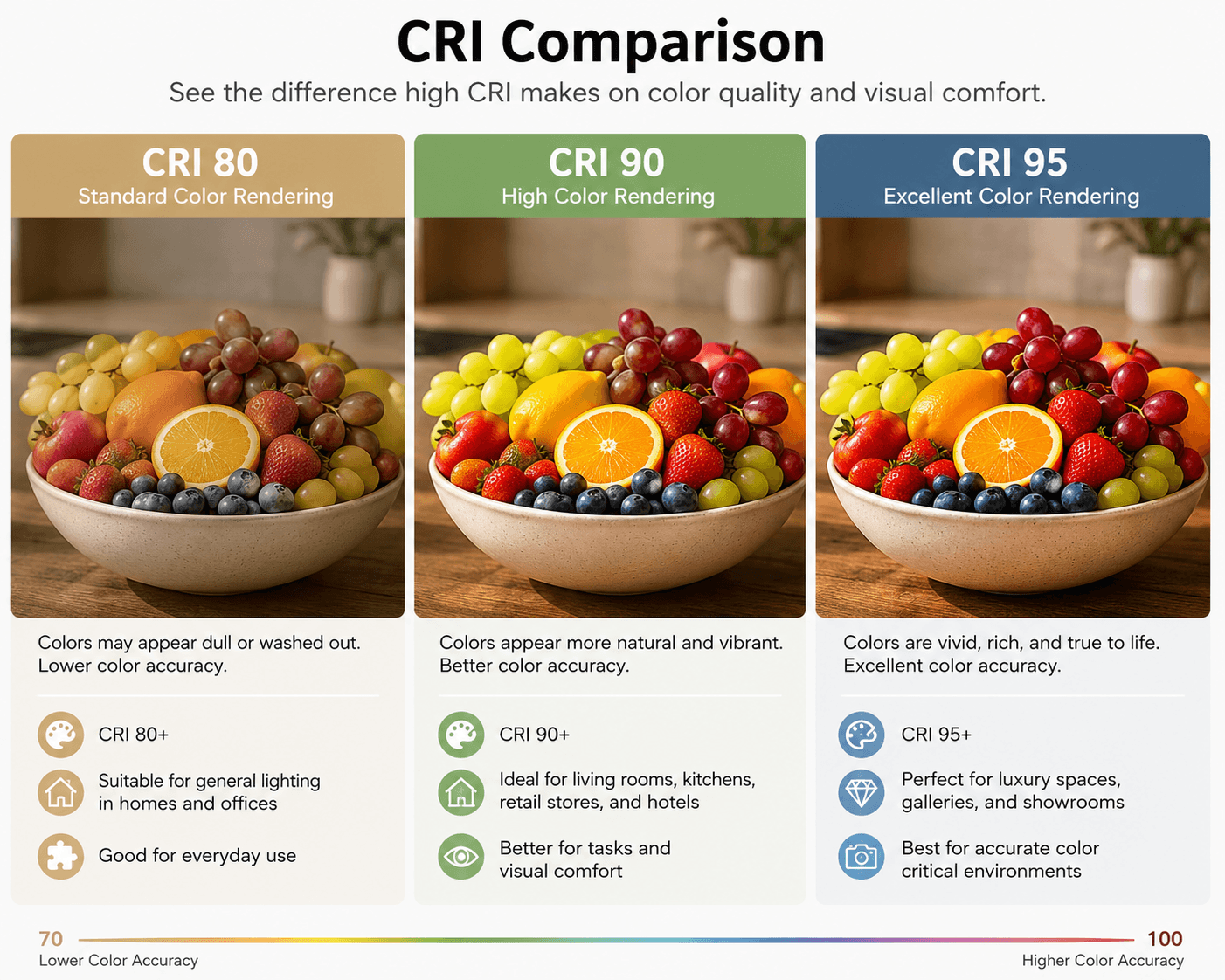
للإضاءة المنزلية اليومية, CRI 80+ عادة ما يكون مقبولا.
لكن, للمساحات التي يكون فيها مظهر اللون مهمًا, مثل:
- مطاعم
- متاجر الملابس
- المعارض الفنية
- الفنادق
- مناطق المكياج
CRI 90+ يوصى في كثير من الأحيان بمصابيح LED.
يمكن أن تصنع الإضاءة عالية CRI:
- الطعام يبدو طازجًا
- تبدو ألوان البشرة أكثر طبيعية
- تبدو الألوان الداخلية أكثر ثراءً
- تبدو المنتجات أكثر جاذبية
لذلك, السطوع وحده لا يحدد لمبة LED عالية الجودة.
تقنية تعتيم LED: خلق الجو المناسب
إحدى مزايا إضاءة LED الحديثة هي القدرة على ضبط السطوع.
لكن, تعمل مصابيح LED بشكل مختلف عن المصابيح المتوهجة التقليدية.
يمكن إطفاء المصابيح المتوهجة ببساطة عن طريق تقليل الطاقة الكهربائية.
تتطلب مصابيح LED أنظمة تحكم إلكترونية خاصة.
تشمل تقنيات تعتيم LED الشائعة:
تعتيم الحافة الرائدة
طريقة تعتيم تقليدية تُستخدم غالبًا مع الأنظمة القديمة.
تعتيم الحافة الخلفية
تقنية أحدث توفر عادةً تعتيم LED أكثر سلاسة وهدوءًا.
التعتيم الذكي
يسمح للمستخدمين بالتحكم في السطوع من خلاله:
- تطبيقات الجوال
- مساعدين صوتيين
- أنظمة المنزل الذكي
عند تركيب مصابيح LED القابلة للخفت, تحقق دائمًا من التوافق بين المصباح ومفتاح التعتيم.
قد يؤدي استخدام باهتة غير متوافقة إلى حدوث ذلك:
- الخفقان
- الأز
- نطاق يعتم محدود
- تقصير عمر المصباح
فهم وميض LED
على الرغم من أن مصابيح LED ذات كفاءة عالية, قد تتعرض المنتجات ذات الجودة الرديئة للوميض.
يحدث وميض LED عادةً عندما لا يتمكن السائق من توفير تيار كهربائي مستقر.
تشمل الأسباب الشائعة:
- برامج تشغيل منخفضة الجودة
- التوافق باهتة غير صحيحة
- تصميم الدوائر سيئة
وميض مرئي قد يؤدي إلى:
- عدم الراحة في العين
- الصداع
- مشاكل التسجيل بالكاميرا
- انخفاض الراحة البصرية
لحسن الحظ, يمكن لمصابيح LED عالية الجودة المزودة بمحركات موثوقة أن تقلل بشكل كبير من مشاكل الوميض أو تقضي عليها.
للمناطق التي يقضي فيها الناس ساعات طويلة, مثل المكاتب, غرف نوم, والمساحات التجارية, يعد اختيار إضاءة LED الخالية من الوميض أمرًا مهمًا بشكل خاص.
لماذا تدوم مصابيح LED لفترة طويلة؟
واحدة من المزايا الأكثر إثارة للإعجاب لتقنية LED هي عمرها الطويل للغاية.
على عكس المصابيح المتوهجة, والتي عادة ما تفشل فجأة عندما يحترق الفتيل, تعمل مصابيح LED بطريقة مختلفة تمامًا.
بدلا من التوقف فجأة, تفقد مصابيح LED سطوعها تدريجيًا بمرور الوقت. هذه العملية تسمى انخفاض قيمة التجويف.
بعبارة أخرى, لمبة LED عالية الجودة لا "تحترق" عادةً مثل المصابيح التقليدية. بدلاً من, يتناقص ناتج الضوء ببطء حتى يصل إلى نهاية عمره الإنتاجي.
تم تصنيف معظم مصابيح LED عالية الجودة:
- 15,000 ساعات
- 25,000 ساعات
- 35,000 ساعات
- 50,000+ ساعات
لأسرة متوسطة, يمكن أن تدوم لمبة LED لمدة 25000 ساعة لأكثر من 10 سنين, حسب الاستخدام اليومي.
لكن, يعتمد العمر الفعلي لمصباح LED على عدة عوامل مهمة:
إدارة الحرارة
يساعد التصميم الحراري الجيد على حماية شريحة LED والمكونات الإلكترونية من الحرارة الزائدة.
جودة السائق
يضمن المحرك الموثوق توصيل الطاقة بشكل مستقر ويقلل الضغط على الأجزاء الداخلية.
الاستقرار الكهربائي
يساعد الجهد المستقر على منع الضرر المبكر.
تهوية التركيبات
يسمح تدفق الهواء المناسب للحرارة بالهروب وتحسين الأداء على المدى الطويل.
لذلك, بينما تم تصميم تقنية LED نفسها لتدوم لسنوات عديدة, لا تزال جودة المنتج والتصميم الداخلي تلعب دورًا رئيسيًا.
التطبيقات الشائعة لإضاءة LED
لأن تقنية LED فعالة, دائم, ومرونة للغاية, يتم استخدامه الآن في كل أنواع تطبيقات الإضاءة تقريبًا.
من المصابيح المنزلية البسيطة إلى أنظمة الإضاءة الذكية المتقدمة, أصبحت مصابيح LED جزءًا أساسيًا من تصميم الإضاءة الحديثة.
إضاءة LED السكنية
في المنازل, تستخدم مصابيح LED بشكل شائع في:
- أضواء السقف
- أضواء قلادة
- الثريات
- مصابيح الطاولة
- مصابيح أرضية
- راحة النازل
- تجهيزات خارجية
على سبيل المثال, تحظى المصابيح الخيطية LED المزخرفة بشعبية كبيرة في غرف المعيشة, مناطق تناول الطعام, والمطاعم لأنها تجمع بين كفاءة استخدام الطاقة والمظهر الكلاسيكي العتيق.
في أثناء, توفر مصابيح LED النازلة وأضواء السقف سطوعًا, الإضاءة النظيفة للمطابخ, الحمامات, ومجالات العمل.
إضاءة LED للديكور
لقد غيرت تقنية LED أيضًا الإضاءة الزخرفية.
وتشمل منتجات LED الزخرفية الشعبية:
- لمبات اديسون LED
- لمبات LED شمعة
- لمبات خيوط خمر
- لمبات الكرة الأرضية
- لمبات RGB الذكية
تسمح هذه المنتجات للمصممين وأصحاب المنازل بخلق أجواء مختلفة مع الحفاظ على استهلاك منخفض للطاقة.
على سبيل المثال:
- تخلق مصابيح الشموع البيضاء الدافئة تأثيرًا أنيقًا للثريا
- تضيف مصابيح إديسون أسلوبًا صناعيًا عتيقًا
- تعمل مصابيح RGB الذكية على إنشاء ألوان وأمزجة قابلة للتخصيص
إضاءة LED التجارية
تختار الشركات بشكل متزايد إضاءة LED لأنها تقلل من تكاليف التشغيل وتحسن تجربة العملاء.
تشمل التطبيقات الشائعة:
- الفنادق
- مطاعم
- متاجر البيع بالتجزئة
- مكاتب
- المستودعات
- مراكز التسوق
في البيئات التجارية, جودة الإضاءة مهمة بشكل خاص لأنها تؤثر:
- راحة العملاء
- مظهر المنتج
- جو العلامة التجارية
- إنتاجية الموظف
نتيجة ل, تستخدم العديد من المشاريع التجارية الآن أنظمة LED عالية الجودة بدلاً من حلول الإضاءة التقليدية.
تطبيقات LED المتخصصة
أبعد من الإضاءة اليومية, تستخدم مصابيح LED أيضًا في مجالات متخصصة مثل:
- إنارة الشوارع
- الإضاءة المعمارية
- إضاءة المناظر الطبيعية
- الإضاءة البستانية
- تطبيقات الأشعة فوق البنفسجية
- إضاءة السيارات
لأن مصابيح LED صغيرة, فعال, وسهلة التحكم, يستمرون في خلق إمكانيات جديدة عبر الصناعات المختلفة.
كيفية اختيار أفضل لمبة LED
بعد أن تعلمت كيفية عمل إضاءة LED, يصبح اختيار لمبة LED المناسبة أسهل بكثير.
لكن, لا يزال العديد من المشترين يركزون فقط على القوة الكهربائية أو السعر. في الواقع, هناك عدة عوامل تحدد ما إذا كانت لمبة LED ستوفر السطوع المناسب, راحة, وعمر.
قبل الشراء, النظر في النقاط التالية.
1. تحقق من السطوع (شمعة)
الخطوة الأولى هي اختيار السطوع الصحيح.
يتذكر:
واط = استهلاك الطاقة
لومن = خرج الضوء
على سبيل المثال:
- 400–500 لومن ← مصابيح صغيرة وإضاءة مميزة
- 800 لومن → استبدال لمبة 60 واط التقليدية
- 1,100+ لومن → غرف أكبر أو مساحات أكثر إشراقا
إن اختيار مخرجات التجويف الصحيحة يمنع الغرف من أن تكون مظلمة للغاية أو مشرقة بشكل غير ضروري.
2. حدد درجة حرارة اللون المناسبة
تعتمد أفضل درجة حرارة اللون على الجو الذي ترغب في إنشائه.
لمساحات الاسترخاء:
يختار:
- 2700ك
- 3000ك
مناسبة ل:
- غرف نوم
- غرف المعيشة
- مطاعم
- الفنادق
لبيئات العمل:
يختار:
- 4000ك
- 5000ك
مناسبة ل:
- مكاتب
- مطابخ
- ورش العمل
يمكن أن تؤدي درجة حرارة اللون المناسبة إلى تحسين الراحة والتجربة البصرية بشكل كبير.
3. ضع في اعتبارك CRI للحصول على جودة أفضل للألوان
إذا كانت الألوان الدقيقة مهمة, اختر لمبة CRI LED أعلى.
للإضاءة العامة:
- CRI 80+ مقبول
للتطبيقات المتميزة:
- CRI 90+ يوصى به
تعتبر الإضاءة العالية CRI مفيدة بشكل خاص:
- مناطق تناول الطعام
- يعرض البيع بالتجزئة
- عمل فني
- مساحات مكياج
- مشاريع الضيافة
4. تأكيد نوع قاعدة اللمبة
تحقق دائمًا مما إذا كانت قاعدة اللمبة تتوافق مع تركيبتك.
تشمل الخيارات الشائعة:
- إي 26
- E27
- ه12
- E14
- GU10
- السيد16
- ب22
على سبيل المثال:
قواعد المسمار E26 و E27 تستخدم عادة في التركيبات المنزلية.
غالبًا ما يتم استخدام E12 و E14 في الثريات والثريات المزخرفة لمبات على شكل شمعة.
اختيار القاعدة الصحيحة يضمن سهولة التركيب والتشغيل الآمن.
5. تحقق من توافق التعتيم
إذا كنت تريد سطوع قابل للتعديل, تأكد من تسمية اللمبة بأنها قابلة للتعتيم.
تحقق من ذلك أيضًا:
- يدعم مفتاح التعتيم تقنية LED
- نطاق القوة الكهربائية متوافق
- تم تصميم اللمبة ومخفت الإضاءة للعمل معًا
خلاف ذلك, قد تواجه وميضًا أو ضعفًا في أداء التعتيم.
6. النظر في بيئة المباراة
ليست كل لمبة LED مناسبة لكل تركيبات.
على سبيل المثال:
- تحتاج التركيبات المغلقة إلى مصابيح مصممة للتحكم في الحرارة
- تتطلب التركيبات الخارجية تصميمات مقاومة للطقس
- تحتاج البيئات ذات درجات الحرارة المرتفعة إلى إدارة حرارية أقوى
يساعد اختيار لمبة LED المناسبة للبيئة على زيادة العمر والأداء إلى أقصى حد. تحقق هنا للحصول على المزيد من مصابيح LED عالية الجودة هوييتيك.
الأسئلة المتداولة حول إضاءة LED
كيف تعمل مصابيح LED بعبارات بسيطة?
تخلق مصابيح LED الإضاءة عندما تمر الكهرباء عبر شريحة شبه موصلة. تطلق حركة الإلكترونات طاقة على شكل فوتونات, الذي نراه كضوء مرئي.
على عكس المصابيح التقليدية, المصابيح لا تسخن الفتيل, لذلك يضيعون طاقة أقل بكثير.
هل يمكنني استبدال أي لمبة بلمبة LED؟?
في معظم الحالات, نعم.
لكن, يجب عليك التحقق:
- نوع قاعدة اللمبة
- الجهد االكهربى
- متطلبات السطوع
- التوافق يعتم
- قيود المباراة
يضمن اختيار لمبة LED متوافقة التركيب الآمن والأداء الموثوق.
لماذا تعتبر مصابيح LED أكثر تكلفة من المصابيح التقليدية؟?
عادةً ما تكون مصابيح LED أكثر تكلفة مقدمًا لأنها تحتوي على مكونات متقدمة مثل:
- رقائق أشباه الموصلات
- برامج تشغيل LED
- أنظمة إدارة الحرارة
- المكونات البصرية
لكن, عادة ما يتم موازنة التكلفة الأولية الأعلى من خلال:
- انخفاض استخدام الكهرباء
- عمر أطول
- بدائل أقل
متأخر , بعد فوات الوقت, غالبًا ما تصبح مصابيح LED الخيار الأكثر اقتصادا.
هل تستهلك مصابيح LED الكثير من الكهرباء؟?
لا.
تعد مصابيح LED من بين تقنيات الإضاءة الأكثر كفاءة في استخدام الطاقة المتاحة اليوم.
إنها توفر سطوعًا مماثلاً مع استخدام كهرباء أقل بكثير مقارنة بالمصابيح المتوهجة والمصابيح الفلورية المتضامة.
هل مصابيح LED أفضل من المصابيح المتوهجة؟?
بالنسبة لمعظم التطبيقات, نعم.
عروض لمبات LED:
- انخفاض استهلاك الطاقة
- عمر أطول
- حرارة أقل
- متانة أفضل
- المزيد من خيارات التصميم
ولهذا السبب أصبحت مصابيح LED هي البديل القياسي للإضاءة التقليدية.
الأفكار النهائية: لماذا تعتبر إضاءة LED هي المستقبل؟
لقد غيرت إضاءة LED الطريقة التي نستخدم بها الضوء ونفهمه تمامًا.
عن طريق تحويل الكهرباء مباشرة إلى ضوء مرئي, توفر مصابيح LED كفاءة مذهلة في استخدام الطاقة, عمر أطول, انخفاض تكاليف الصيانة, وأداء أفضل للإضاءة.
بالإضافة إلى, التحسينات المستمرة في تكنولوجيا أشباه الموصلات, برامج تشغيل LED, الإدارة الحرارية, جودة اللون, وتستمر عناصر التحكم الذكية في جعل إضاءة LED أكثر قوة وتنوعًا.
سواء كنت تستبدل لمبة منزلية واحدة, ترقية الفضاء التجاري, أو تصميم مشروع إضاءة كامل, يتيح لك فهم كيفية عمل إضاءة LED اتخاذ قرارات أفضل.
من توفير الطاقة إلى تحسين الراحة, توفر تقنية LED أكثر ذكاءً, نظافة, وطريقة أكثر استدامة لإلقاء الضوء على العالم.
مستقبل الإضاءة هو LED، وهذا المستقبل موجود بالفعل.