 English
 العربية
 Français
 Deutsch
 Italiano
 Polski
 Português
 Русский
 Español
 Українська


المشكلات الشائعة المتعلقة بمقابس المصابيح الكهربائية
تعتبر مقابس المصابيح الكهربائية أحد أهم الأجزاء في أي جهاز إضاءة. في حين يتم استبدال المصابيح في كثير من الأحيان, عادةً ما يتم نسيان المقبس نفسه حتى يحدث خطأ ما. يمكن أن يتسبب المقبس التالف أو البالي في وميض الأضواء, فشل المصباح المتكرر, أو حتى خلق خطر الحريق.
يشرح هذا الدليل مشاكل مقبس المصباح الكهربائي الأكثر شيوعًا, أسبابهم, طرق بسيطة لاستكشاف الأخطاء وإصلاحها, وعندما يحين وقت استبدال المقبس أو الاتصال بالكهربائي.
فهم مآخذ المصباح الكهربائي
قبل استكشاف الأخطاء وإصلاحها, من المفيد فهم أنواع المقابس المختلفة وكيفية عملها.
الأنواع الشائعة لمآخذ المصباح الكهربائي
تستخدم تركيبات الإضاءة المختلفة قواعد مقابس مختلفة.
- E26/E27 (اديسون المسمار): مقبس المصباح الكهربائي المنزلي القياسي المستخدم في معظم مصابيح السقف, مصابيح الطاولة, وتركيبات الحائط.
- ه12 (الشمعدانات): مآخذ أصغر تستخدم عادة في الثريات, شمعدانات الحائط, مصابيح زخرفية, وأضواء الليل.
- ب22 (حربة كاب): تستخدم على نطاق واسع في المملكة المتحدة, أستراليا, والعديد من دول الكومنولث.
- GU10 وG4 (ثنائي الدبوس): كثيرا ما توجد في الأضواء, إضاءة راحة, أضواء مجلس الوزراء, وإضاءة المسار.
- مآخذ أنبوب الفلورسنت: مصممة خصيصًا لأنابيب استبدال LED الفلورية والخطية.
إن معرفة نوع المقبس الخاص بك يجعل من السهل جدًا اختيار المصباح البديل الصحيح أو تشخيص المشكلة.
كيف يعمل مقبس المصباح الكهربائي
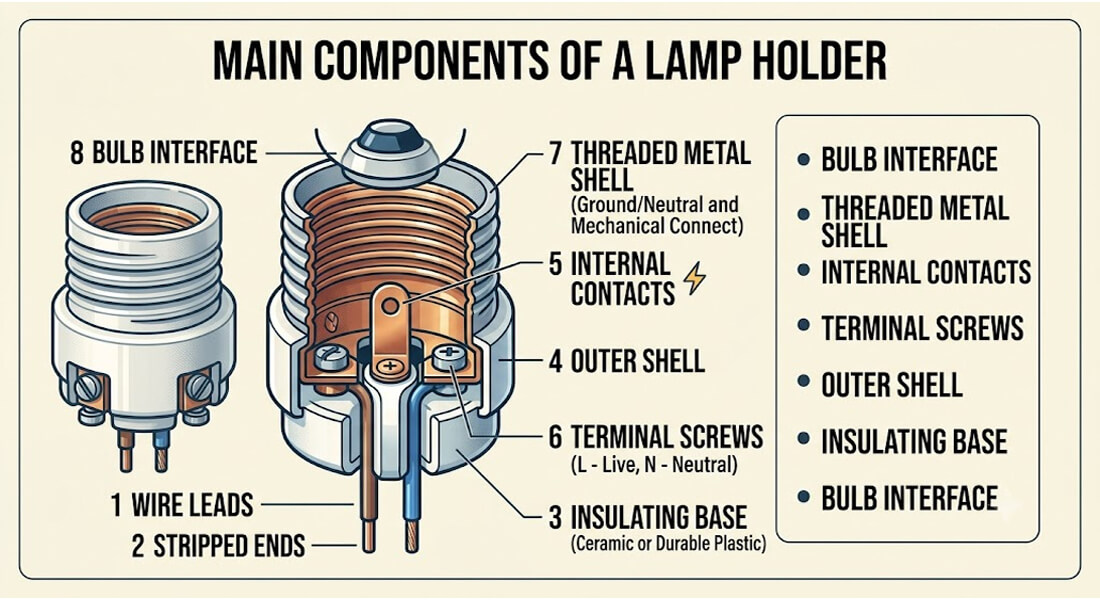
على الرغم من اختلاف التصاميم, تحتوي معظم مآخذ الإضاءة على أربعة مكونات أساسية:
- قذيفة المقبس - يحمل المصباح بشكل آمن.
- الاتصال بالمركز - ينقل الكهرباء إلى اللمبة.
- عازل – يفصل الاتصالات الكهربائية لمنع حدوث دوائر قصيرة.
- الاتصالات الطرفية - قم بتوصيل المقبس بأسلاك المنزل.
عندما يتم تثبيت المصباح, جهة الاتصال المركزية والقذيفة تكمل الدائرة الكهربائية, السماح للتيار بالتدفق والمصباح يضيء. إذا أصبح أي مكون فضفاضًا, تالف, أو متآكلة, قد يتوقف الضوء عن العمل بشكل صحيح.
المشكلات الشائعة المتعلقة بمقابس المصابيح الكهربائية
تتطور معظم مشكلات المقبس تدريجيًا. التعرف عليها مبكرًا يمكن أن يمنع حدوث مشكلات كهربائية أكبر.
أضواء وامضة: الأسباب والحلول السهلة
يعد الضوء الوامض أحد أكثر مشكلات الإضاءة شيوعًا.
الأسباب المحتملة
- لمبة فضفاضة
- اتصالات المقبس البالية أو السائبة
- اتصالات الأسلاك فضفاضة
- تقلبات الجهد
- التبديل المعيب أو باهتة
- الشيخوخة مقبس الضوء
حل DIY
ابدأ بأبسط الشيكات:
- أطفئ الطاقة.
- تشديد المصباح بشكل آمن.
- افحص المقبس بحثًا عن التآكل أو التلف.
- تحقق من توصيلات الأسلاك المرئية.
- اختبار الجهد مع المتعدد إذا لزم الأمر.
إذا استمر الخفقان بعد استبدال اللمبة, قد يحتاج المقبس إلى استبدال أو فحص احترافي.
المصابيح تحترق في كثير من الأحيان
إذا فشلت المصابيح في وقت أقرب بكثير مما كان متوقعا, قد يكون المقبس هو المشكلة الحقيقية.
الأسباب الشائعة
- تتجاوز القوة الكهربائية للمصباح تصنيف المقبس
- الاتصالات الكهربائية فضفاضة تسبب الانحناء
- ارتفاع درجة الحرارة داخل التركيبات المغلقة
- ارتفاع الجهد المنزلي
- الشيخوخة أو المقبس التالف
حل DIY
- استخدم دائمًا المصابيح ضمن الحد الأقصى من القوة الكهربائية للتركيب.
- التبديل إلى مصابيح LED, والتي تولد حرارة أقل بكثير.
- افحص المقبس للتأكد من عدم وجود جهات اتصال مفكوكة أو محترقة.
- استبدل المقابس البالية في حالة ظهور علامات ارتفاع درجة الحرارة.
إذا احترقت عدة مصابيح بشكل متكرر, قم بفحص الدائرة الكهربائية.
علامات الحروق, الشرر, أو الأصوات الطنانة
لا ينبغي أبدا تجاهل هذه العلامات التحذيرية.
علامات التحذير المشتركة
- شرارة عند تركيب المصباح
- أصوات طنين أو طقطقة
- علامات الحروق حول المقبس
- البلاستيك المذاب
- دخان أو رائحة غير عادية
- تغير اللون البني أو الأسود
تشير هذه الأعراض عادة إلى ارتفاع درجة الحرارة, التوصيلات الكهربائية فضفاضة, أو الانحناء الكهربائي.
حل DIY
- قم بإيقاف تشغيل الطاقة على الفور عند الكسارة.
- لا تستمر في استخدام التركيبة.
- استبدل المقابس التالفة قبل تركيب لمبة أخرى.
- إذا ظهرت الأسلاك محترقة أو ذائبة, اتصل بفني كهربائي مرخص على الفور.
استكشاف مشكلات مقبس الإضاءة وإصلاحها
يمكن تشخيص العديد من مشكلات المقبس البسيطة باستخدام بعض الأدوات الأساسية.
دليل استكشاف الأخطاء وإصلاحها خطوة بخطوة
خطوة 1: قم بإيقاف تشغيل الطاقة
قم دائمًا بإيقاف تشغيل قاطع الدائرة الكهربائية قبل العمل على أي جهاز إضاءة.
خطوة 2: قم بإزالة اللمبة
افحص المصباح بحثًا عن الزجاج المكسور, المواضيع التالفة, أو بقع سوداء.
خطوة 3: افحص المقبس
بحث:
- تآكل
- اتصال مركزي فضفاض
- علامات الحروق
- علامات تبويب معدنية عازمة
- العزل متصدع
خطوة 4: اختبر المقبس
استخدم مقياسًا متعددًا للتحقق:
- الجهد االكهربى
- الاستمرارية
- التوصيل الكهربائي المناسب
خطوة 5: إصلاح أو استبدال
اعتمادا على الضرر:
- تشديد الاتصالات فضفاضة.
- استبدال جهات الاتصال البالية.
- قم بتركيب مقبس جديد إذا كان الضرر شديدًا.
غالبًا ما يكون استبدال المقبس غير المكلف أكثر أمانًا من محاولة إجراء إصلاحات واسعة النطاق.
الأدوات التي ستحتاجها
لا يتطلب استكشاف الأخطاء وإصلاحها الأساسي سوى عدد قليل من الأدوات الشائعة:
- المتعدد
- مفكات معزولة
- متجرد الأسلاك
- كماشة الأنف الإبرة
- الشريط الكهربائي
- استبدال مقبس الضوء
- اختبار الجهد عدم الاتصال
إن استخدام الأدوات المناسبة يجعل المهمة أكثر أمانًا وسهولة.
متى تتصل بفني كهربائي محترف
تتجاوز بعض مشكلات الإضاءة مجرد إصلاحات بسيطة تقوم بها بنفسك.
علامات تحتاج إلى مساعدة متخصصة
اتصل بالكهربائي إذا لاحظت:
- الخفقان في جميع أنحاء غرف متعددة
- قواطع تنطلق مرارا وتكرارا
- الأسلاك الذائبة
- رائحة حرق مستمرة
- الصدمات الكهربائية عند لمس التركيبات
- أسلاك الألمنيوم أو الأنظمة الكهربائية القديمة
- أضرار المياه بالقرب من تركيبات الإضاءة
قد تشير هذه المشكلات إلى وجود مشكلة كهربائية أكبر وليس وجود خلل في المقبس وحده.
لماذا يهم السلامة الكهربائية
يمكن أن تكون الكهرباء خطيرة إذا تم التعامل معها بشكل غير صحيح.
يمكن لكهربائي مرخص:
- تشخيص مشاكل الأسلاك الخفية
- استبدال التركيبات التالفة بشكل آمن
- تأكد من أن التثبيت يتوافق مع القوانين الكهربائية المحلية
- تقليل مخاطر الحرائق الكهربائية
إذا كنت غير متأكد من أي وقت مضى, من الآمن دائمًا تعيين متخصص.
منع مشاكل مقبس الإضاءة في المستقبل
تساعد الصيانة الدورية على إطالة عمر كل من المقابس والمصابيح.
نصائح صيانة بسيطة
للحفاظ على مآخذ الإضاءة الخاصة بك تعمل بشكل صحيح:
- فحص التركيبات مرة أو مرتين في السنة.
- استبدل المقابس السائبة أو التالفة على الفور.
- استخدم المصابيح ذات القاعدة الصحيحة والقوة الكهربائية.
- حافظ على المقابس خالية من الغبار والرطوبة.
- قم بإيقاف تشغيل الطاقة قبل استبدال المصابيح.
- تجنب تشديد المصابيح, مما قد يؤدي إلى إتلاف جهات اتصال المقبس.
الصيانة الروتينية يمكن أن تمنع إجراء إصلاحات باهظة الثمن لاحقًا.
الترقية إلى مآخذ الإضاءة الحديثة
إذا كانت تجهيزاتك قديمة, يمكن أن تؤدي ترقية المقابس إلى تحسين السلامة والأداء.
تشمل الترقيات الشعبية:
- مآخذ السيراميك المقاومة للحرارة للتركيبات ذات درجات الحرارة العالية
- مآخذ متوافقة مع LED مصممة لمصابيح LED الحديثة
- مآخذ عكس الضوء للتحكم السلس في السطوع
- مآخذ الإضاءة الذكية مع التطبيق أو التحكم الصوتي
- مآخذ مقاومة للعوامل الجوية للإضاءة الخارجية
المقابس الحديثة أكثر متانة, موفرة للطاقة, ومتوافقة مع تكنولوجيا الإضاءة اليوم.
خاتمة
يمكن أن يتسبب مقبس المصباح الكهربائي الخاطئ في وميض الأضواء, المصابيح المحترقة, أداء ضعيف, وحتى المخاطر الكهربائية الخطيرة. لحسن الحظ, من السهل التعرف على العديد من المشكلات الشائعة من خلال فحص بسيط.
صيانة دورية, باستخدام المصابيح الصحيحة, واستبدال المقابس البالية عند الضرورة سوف يحافظ على نظام الإضاءة الخاص بك آمنًا وموثوقًا لسنوات قادمة.
إذا لاحظت علامات الحروق, أصوات طنين, فشل المصباح المتكرر, أو الأسلاك التالفة, توقف عن استخدام الجهاز وقم بفحصه بواسطة كهربائي مؤهل. إصلاح بسيط اليوم يمكن أن يمنع مشكلة أكبر بكثير غدًا.
الأسئلة المتداولة
لماذا لا يعمل مقبس المصباح الكهربائي الخاص بي ولكن المصباح جيد?
قد يكون للمقبس جهة اتصال مركزية فضفاضة, الأسلاك التالفة, تآكل, أو فشل التوصيل الكهربائي. اختبر المقبس بمقياس متعدد لتحديد المشكلة.
يمكن أن يسبب مقبس المصباح الكهربائي السيئ وميضًا?
نعم. اتصالات فضفاضة, المحطات البالية, أو التوصيلات الكهربائية الضعيفة داخل المقبس هي الأسباب الشائعة للأضواء الوامضة.
هل من الآمن استبدال مقبس المصباح الكهربائي بنفسك؟?
نعم, إذا قمت بإيقاف تشغيل الطاقة من قاطع الدائرة الكهربائية واتبعت إجراءات السلامة الكهربائية المناسبة. إذا كانت الأسلاك تالفة أو كنت غير متأكد, اتصل بفني كهربائي مرخص.
كم من الوقت يستمر مقبس المصباح الكهربائي?
تدوم معظم المقابس عالية الجودة ما بين 15 إلى 30 عامًا, اعتمادا على الاستخدام, التعرض للحرارة, والظروف البيئية.
متى يجب أن أستبدل مقبس المصباح الكهربائي؟?
استبدل المقبس إذا لاحظت علامات حرق, الشقوق, تآكل, البلاستيك المذاب, اتصالات فضفاضة, أصوات طنين, أو فشل المصباح المتكرر.
هل يمكن استخدام لمبات LED في مقابس الإضاءة القديمة؟?
في معظم الحالات, نعم. طالما أن النوع الأساسي (مثل E26 أو E27) يطابق المقبس والتركيب متوافق, تعتبر مصابيح LED بديلاً ممتازًا لأنها تنتج حرارة أقل وتستخدم طاقة أقل بكثير.