 English
 العربية
 Français
 Deutsch
 Italiano
 Polski
 Português
 Русский
 Español
 Українська


Introduction
Lighting plays a vital role in shaping both the functionality and atmosphere of an interior space. Among the many lighting options available today, pendant lights stand out because they combine practical illumination with strong decorative appeal. In practice, designers and homeowners use pendant lights as subtle accents or bold statement pieces to transform the look and feel of a room. To better understand their growing popularity, it is helpful to explore what a pendant light is, its origins, and how people utilize it in modern interiors.
I. Definition of a Pendant Light
To begin with, a pendant light refers to a lighting fixture that hangs from the ceiling using a chain, cord, or rigid rod. Its defining feature lies in its suspended design, which clearly distinguishes it from flush-mounted ceiling lights and wall-mounted sconces.
In addition to providing general illumination, pendant lights enhance visual depth by using vertical space effectively. By adjusting the hanging height, users can create layered lighting effects that move beyond flat, uniform lighting. As a result, pendant lights have become a widely used lighting solution that successfully balances functionality with decorative impact.
II. The Origin and Evolution of Pendant Lights
The history of pendant lights dates back to ancient civilizations. In early interior spaces, people suspended torches and oil lamps from ropes to reduce fire risks on the ground and distribute light more evenly. This simple solution formed the earliest version of pendant lighting.
As craftsmanship continued to advance, artisans gradually transformed pendant lights from purely functional tools into expressions of social status and aesthetic taste. For example, during the Middle Ages, European Gothic churches featured large wrought-iron pendant lights paired with stained glass. These elements filtered colorful light, creating a solemn and sacred atmosphere.
Meanwhile, in ancient China, palace lantern-style pendant lights gained popularity. Craftsmen used wooden frames wrapped in silk or fabric and illuminated them with candlelight, giving these fixtures strong cultural and artistic meaning.
In modern times, improvements in metal forging, glass cutting, and acrylic processing expanded pendant light designs far beyond classical styles. Today, manufacturers offer pendant lights in a wide range of forms to suit different spaces. At the same time, many modern designs integrate smart lighting technology, allowing users to adjust brightness and color temperature with ease.
III. Types and Shapes of Pendant Lights
Pendant lights come in a wide variety of styles, materials, and shapes. From a stylistic perspective, designers typically divide pendant lights into classical and modern categories.
European-style classical pendant lights often feature crystal elements, gold finishes, and intricate detailing. Because of this, they work particularly well in luxurious interiors. Traditional Chinese pendant lights, by contrast, draw inspiration from palace lanterns and rely on solid wood and fabric materials to convey elegance and cultural depth.
On the other hand, modern minimalist pendant lights emphasize clean lines and simple forms, often using metal and glass. Industrial-style pendant lights highlight exposed metal structures and vintage bulbs, which gives spaces a bold and contemporary character.
In terms of materials, manufacturers commonly use crystal, fabric, metal, rattan, and bamboo. Each material, in turn, delivers distinct visual effects and practical advantages.
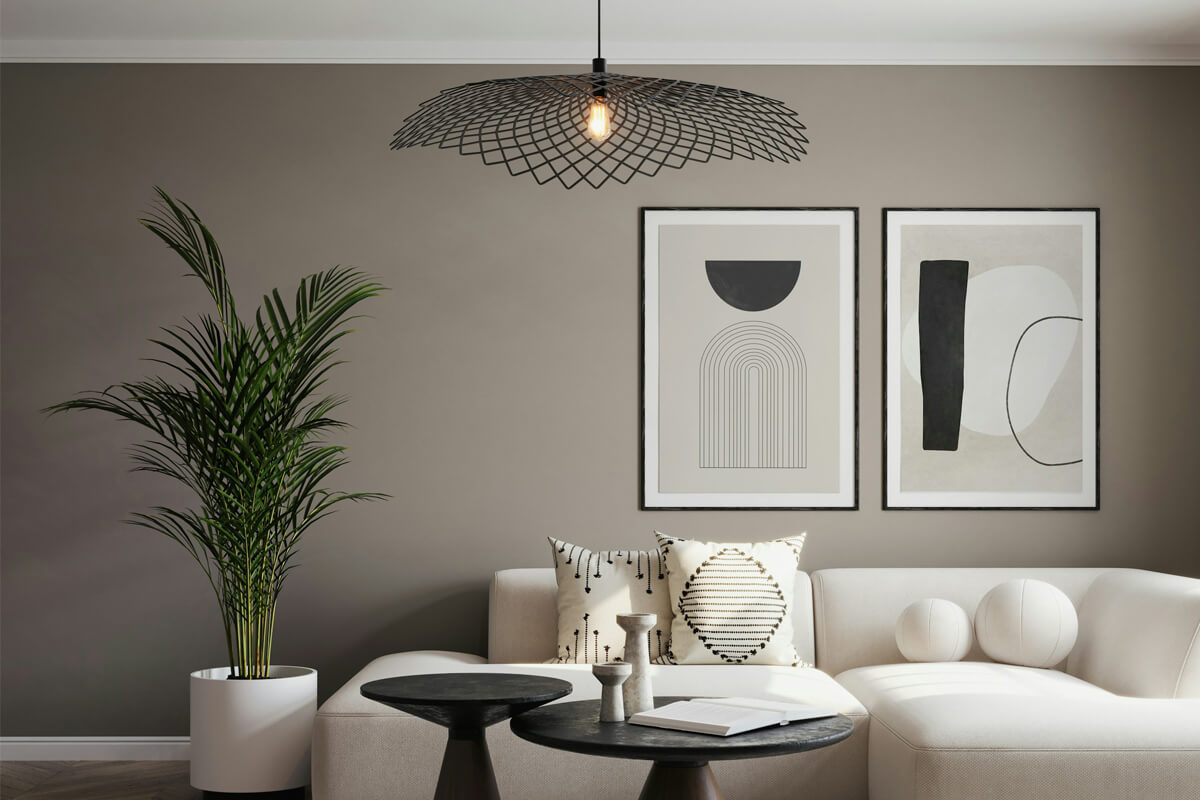
Shape also plays a key role in defining the decorative impact of a pendant light. For example, circular pendant lights feature soft lines and work well in living rooms and bedrooms to create a warm atmosphere. Square or rectangular pendant lights offer a structured and balanced look, making them suitable for dining rooms, studies, and offices.
Additionally, linear pendant lights stretch visually across long dining tables or hallways and help elongate the space. Nature-inspired pendant lights, often made from rattan or bamboo, introduce organic texture and a sense of calm. Finally, artistic pendant lights feature abstract or custom forms and frequently serve as statement pieces in cafés, galleries, and creative commercial spaces.
IV. Application Scenarios and Decorative Value
Thanks to their versatility, pendant lights appear in both residential and commercial environments. More importantly, they offer decorative value that goes far beyond basic illumination.
In residential spaces, homeowners often install large or uniquely designed pendant lights in living rooms to create a visual focal point and improve spatial balance. In dining rooms, pendant lights typically hang directly above the table. As a result, warm lighting enhances the dining atmosphere while highlighting food colors.
Similarly, bedrooms benefit from pendant lights with frosted shades, which diffuse light softly and reduce glare. In studies or home offices, height-adjustable pendant lights provide focused yet comfortable lighting for reading and work.
In commercial settings, hotels and banquet halls frequently use oversized crystal or custom pendant lights to convey luxury and sophistication. Meanwhile, cafés and trendy retail stores often choose industrial or rattan pendant lights to create distinctive, memorable environments that encourage customers to linger.
V. Installation and Placement Considerations
Proper installation and placement require careful attention to safety, functionality, and aesthetics. Before installation, installers must confirm the ceiling’s load-bearing capacity. Heavy pendant lights require secure anchoring to structural beams. In addition, electricians should reserve sufficient wiring length to allow height adjustments.
Placement should always reflect the room’s function. In living rooms, pendant lights should sit at the center and maintain visual harmony with the ceiling height and furniture layout. However, in spaces with ceilings lower than 2.7 meters (8.9 feet), lights should not hang too low, as this can make the room feel oppressive.
In dining areas, pendant lights should align with the center of the table and hang approximately 70–80 cm (27–31 inches) above the tabletop. In bedrooms, designers generally avoid installing pendant lights directly above the bed. Instead, they position them slightly off-center or toward the side to reduce safety risks. After installation, users should check stability and adjust lighting angles to ensure safe operation.
VI. Key Factors to Consider When Choosing a Pendant Light
When choosing a pendant light, buyers should consider space size, style compatibility, and functional needs. For instance, small rooms or low ceilings benefit from compact, height-adjustable designs. In contrast, large or double-height spaces can accommodate bold, oversized fixtures.
Style consistency also matters. Minimalist interiors pair best with simple designs, while traditional spaces may clash with industrial-style fixtures. From a functional perspective, buyers should evaluate the light source carefully. Living rooms and studies benefit from dimmable warm white light, while bedrooms work best with soft warm tones.
Furthermore, material selection should match environmental conditions. Humid areas require corrosion-resistant metal fixtures, whereas fabric or rattan materials suit dry spaces. Ultimately, choosing certified products from reputable brands ensures electrical safety and dependable after-sales support.
VII. Additional Tips and Maintenance
Regular cleaning and maintenance help pendant lights maintain both appearance and performance. For example, owners should wipe crystal pendant lights with a soft cloth to preserve their sparkle. Fabric shades can be removed, gently washed, and air-dried before reinstallation. Metal fixtures require periodic cleaning to prevent scratches and corrosion.
As smart home technology continues to grow, many pendant lights now support app-based or voice control. As a result, users can adjust lighting remotely and improve everyday convenience. In areas that need stronger illumination, designers often combine pendant lights with recessed or track lighting to create layered lighting effects.
Finally, if a pendant light malfunctions, users should always cut off the power first and avoid disassembling heavy fixtures themselves. In such cases, professional assistance remains the safest and most reliable solution.
For more information about the pendant lighting, pls check here!