 English
 العربية
 Français
 Deutsch
 Italiano
 Polski
 Português
 Русский
 Español
 Українська


Поширені проблеми з патронами лампочок
Патрони для лампочок є однією з найважливіших частин будь-якого освітлювального приладу. При цьому часто замінюють лампочки, про саму розетку зазвичай забувають, поки щось не піде не так. Пошкоджена або зношена розетка може спричинити мерехтіння світла, часті поломки лампочок, або навіть створити небезпеку пожежі.
Цей посібник пояснює найпоширеніші проблеми з патроном лампочки, їх причини, прості способи усунення несправностей, і коли прийде час замінити розетку або викликати електрика.
Розуміння патронів лампочок
Перед усуненням несправностей, корисно зрозуміти різні типи розеток і принцип їх роботи.
Поширені типи патронів для лампочок
У різних освітлювальних приладах використовуються різні цоколя.
- E26/E27 (Гвинт Едісона): Стандартний патрон побутової лампочки, який використовується в більшості стельових світильників, настільні лампи, і настінні світильники.
- E12 (Канделябри): Розетки меншого розміру зазвичай використовуються в люстрах, настінні бра, декоративні світильники, і нічні вогні.
- B22 (Багнетний ковпак): Широко використовується у Великобританії, Австралія, і кілька країн Співдружності.
- GU10 і G4 (Бі-пін): Часто зустрічається в прожекторах, вбудоване освітлення, світильники шафи, і доріжне освітлення.
- Розетки для люмінесцентних трубок: Розроблено спеціально для заміни люмінесцентних і лінійних світлодіодних ламп.
Знання типу патрона значно полегшує вибір правильної заміни лампи або діагностику проблеми.
Як працює розетка для лампочки
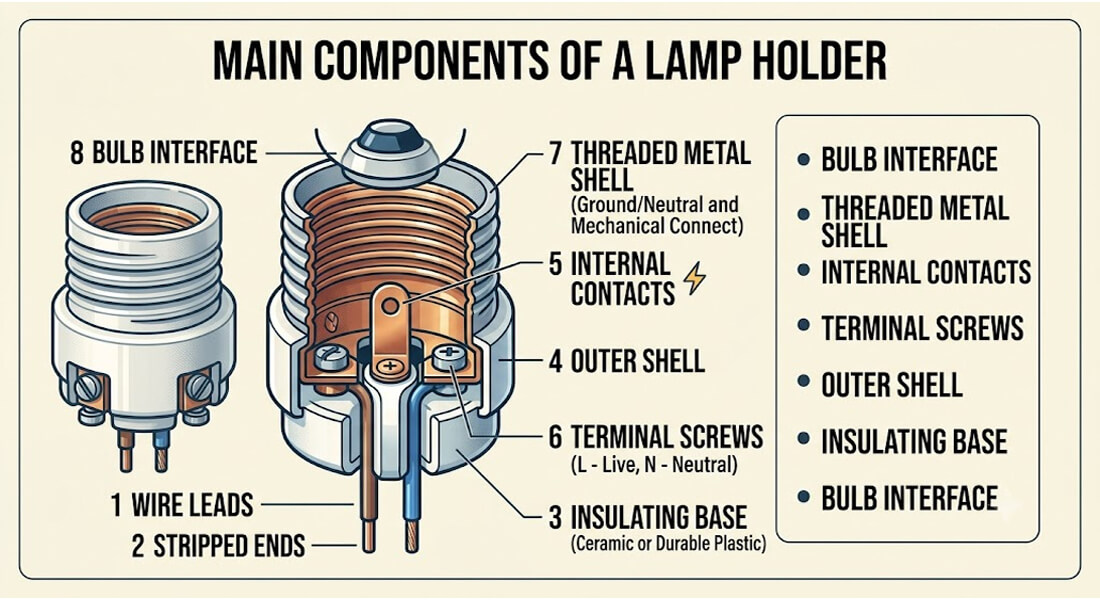
Хоча конструкції різні, більшість світлових розеток містять чотири основні компоненти:
- Оболонка розетки – Надійно тримає лампочку.
- Контакт центру – Передає електрику на лампочку.
- Ізолятор – Розділяє електричні контакти для запобігання короткого замикання.
- Клемні з'єднання – Підключіть розетку до домашньої електропроводки.
Коли лампочка встановлена, the center contact and shell complete the electrical circuit, allowing current to flow and the bulb to illuminate. If any component becomes loose, damaged, or corroded, the light may stop working properly.
Поширені проблеми з патронами лампочок
Most socket problems develop gradually. Identifying them early can prevent larger electrical issues.
Flickering Lights: Causes and Easy Fixes
A flickering light is one of the most common lighting problems.
Possible Causes
- Loose light bulb
- Worn or loose socket contacts
- Loose wiring connections
- Коливання напруги
- Defective switch or dimmer
- Aging light socket
DIY Solution
Start with the simplest checks:
- Вимкніть живлення.
- Tighten the bulb securely.
- Inspect the socket for corrosion or damage.
- Check visible wiring connections.
- Test voltage with a multimeter if needed.
If the flickering continues after replacing the bulb, the socket may need replacement or professional inspection.
Bulbs Burn Out Too Often
If bulbs fail much sooner than expected, the socket may be the real problem.
Common Causes
- Bulb wattage exceeds the socket rating
- Loose electrical contacts causing arcing
- Overheating inside enclosed fixtures
- High household voltage
- Aging or damaged socket
DIY Solution
- Always use bulbs within the fixture’s maximum wattage.
- Switch to LED bulbs, which generate much less heat.
- Inspect the socket for loose or burnt contacts.
- Replace worn sockets if signs of overheating appear.
If multiple bulbs burn out repeatedly, have the electrical circuit checked.
Burn Marks, Sparks, or Buzzing Sounds
These warning signs should never be ignored.
Common Warning Signs
- Sparks when installing a bulb
- Buzzing or crackling sounds
- Burn marks around the socket
- Melted plastic
- Smoke or unusual odor
- Brown or black discoloration
These symptoms usually indicate overheating, loose electrical connections, or electrical arcing.
DIY Solution
- Turn off power immediately at the breaker.
- Do not continue using the fixture.
- Replace damaged sockets before installing another bulb.
- If wiring appears burnt or melted, contact a licensed electrician immediately.
Troubleshooting Light Socket Problems
Many minor socket issues can be diagnosed with a few basic tools.
Step-by-Step Troubleshooting Guide
Крок 1: Turn Off the Power
Always switch off the circuit breaker before working on any light fixture.
Крок 2: Remove the Bulb
Inspect the bulb for broken glass, damaged threads, or black spots.
Крок 3: Inspect the Socket
Look for:
- Corrosion
- Loose center contact
- Burn marks
- Bent metal tabs
- Cracked insulation
Крок 4: Test the Socket
Use a multimeter to check:
- Напруга
- Continuity
- Proper electrical connection
Крок 5: Repair or Replace
Depending on the damage:
- Tighten loose connections.
- Replace worn contacts.
- Install a new socket if damage is severe.
Replacing an inexpensive socket is often safer than attempting extensive repairs.
Tools You’ll Need
Basic troubleshooting requires only a few common tools:
- Multimeter
- Insulated screwdrivers
- Wire stripper
- Гострогубці
- Electrical tape
- Replacement light socket
- Non-contact voltage tester
Using the proper tools makes the job both safer and easier.
Коли викликати професійного електрика
Some lighting problems go beyond simple DIY repairs.
Signs You Need Professional Help
Contact an electrician if you notice:
- Flickering throughout multiple rooms
- Breakers tripping repeatedly
- Melted wiring
- Persistent burning smell
- Electrical shocks when touching fixtures
- Aluminum wiring or outdated electrical systems
- Water damage near lighting fixtures
These issues may indicate a larger electrical problem rather than a faulty socket alone.
Why Electrical Safety Matters
Electricity can be dangerous if handled incorrectly.
A licensed electrician can:
- Diagnose hidden wiring problems
- Replace damaged fixtures safely
- Ensure the installation meets local electrical codes
- Reduce the risk of electrical fires
If you’re ever unsure, it’s always safer to hire a professional.
Preventing Future Light Socket Problems
Regular maintenance helps extend the life of both sockets and bulbs.
Simple Maintenance Tips
To keep your light sockets working properly:
- Inspect fixtures once or twice a year.
- Replace loose or damaged sockets promptly.
- Use bulbs with the correct base and wattage.
- Keep sockets free from dust and moisture.
- Turn off power before replacing bulbs.
- Avoid overtightening bulbs, which can damage socket contacts.
Routine maintenance can prevent expensive repairs later.
Upgrade to Modern Light Sockets
If your fixtures are old, upgrading the sockets can improve both safety and performance.
Popular upgrades include:
- Heat-resistant ceramic sockets for high-temperature fixtures
- LED-compatible sockets designed for modern LED bulbs
- Dimmable sockets for smooth brightness control
- Smart light sockets with app or voice control
- Weatherproof sockets for outdoor lighting
Modern sockets are more durable, енергозберігаючий, and compatible with today’s lighting technology.
Висновок
A faulty light bulb socket can cause flickering lights, burnt-out bulbs, poor performance, and even serious electrical hazards. На щастя, many common problems are easy to identify with a simple inspection.
Regular maintenance, using the correct bulbs, and replacing worn sockets when necessary will keep your lighting system safe and reliable for years to come.
If you notice burn marks, buzzing sounds, repeated bulb failures, or damaged wiring, stop using the fixture and have it inspected by a qualified electrician. A small repair today can prevent a much larger problem tomorrow.
Часті запитання
Why is my light bulb socket not working but the bulb is good?
The socket may have a loose center contact, damaged wiring, корозії, or a failed electrical connection. Test the socket with a multimeter to identify the problem.
Can a bad light bulb socket cause flickering?
так. Loose contacts, worn terminals, or poor electrical connections inside the socket are common causes of flickering lights.
Is it safe to replace a light bulb socket yourself?
так, if you turn off the power at the circuit breaker and follow proper electrical safety procedures. If wiring is damaged or you’re unsure, contact a licensed electrician.
How long does a light bulb socket last?
Most quality sockets last 15–30 years, depending on usage, heat exposure, and environmental conditions.
When should I replace a light bulb socket?
Replace the socket if you notice burn marks, cracks, корозії, melted plastic, loose contacts, buzzing sounds, or repeated bulb failures.
Can LED bulbs be used in old light sockets?
У більшості випадків, так. As long as the base type (such as E26 or E27) matches the socket and the fixture is compatible, LED bulbs are an excellent replacement because they produce less heat and use much less energy.