 English
 العربية
 Français
 Deutsch
 Italiano
 Polski
 Português
 Русский
 Español
 Українська


Comprender el poder de un chip LED
Introducción
A medida que la iluminación LED continúa reemplazando a las bombillas incandescentes y CFL tradicionales, Más compradores están prestando atención a un componente pequeño pero crítico: el chip LED. Ya sea que esté comprando bombillas LED, bombillas de filamento, iluminación comercial, o accesorios decorativos, la calidad del chip LED determina directamente el brillo, eficiencia, esperanza de vida, y el rendimiento general del producto.
Para empezar, Comprender cómo funciona un chip LED puede ayudarle a comparar productos de iluminación de forma más eficaz.. En lugar de centrarse sólo en el precio, Podrás evaluar la eficiencia energética., fiabilidad, y valor a largo plazo.
Entonces, ¿Qué es exactamente un chip LED?? Más importante aún, ¿Por qué los compradores deberían preocuparse por el tipo de chip LED utilizado en una bombilla??
Exploremos todo lo que necesita saber desde la perspectiva del comprador..
El corazón de la iluminación LED
En su núcleo, un chip LED (Chip de diodo emisor de luz) es el componente que produce luz dentro de cada lámpara LED. Es un pequeño semiconductor que convierte la energía eléctrica directamente en luz visible mediante un proceso conocido como electroluminiscencia.
A diferencia de bombillas incandescentes tradicionales, que generan luz calentando un filamento de tungsteno, Los chips LED producen luz de manera mucho más eficiente y generan muy poco calor..
Como resultado, La iluminación LED ofrece varias ventajas importantes, incluido:
- Menor consumo de energía
- Mayor brillo
- Vida útil más larga
- Menos generación de calor
- Costos de mantenimiento reducidos
- Rendimiento respetuoso con el medio ambiente
Debido a estos beneficios, Los chips LED se han convertido en la base de la tecnología de iluminación moderna.. Ya sea que esté comprando bombillas domésticas o accesorios de iluminación comercial, La calidad del chip LED influirá directamente en el rendimiento general..
Un vistazo a la composición
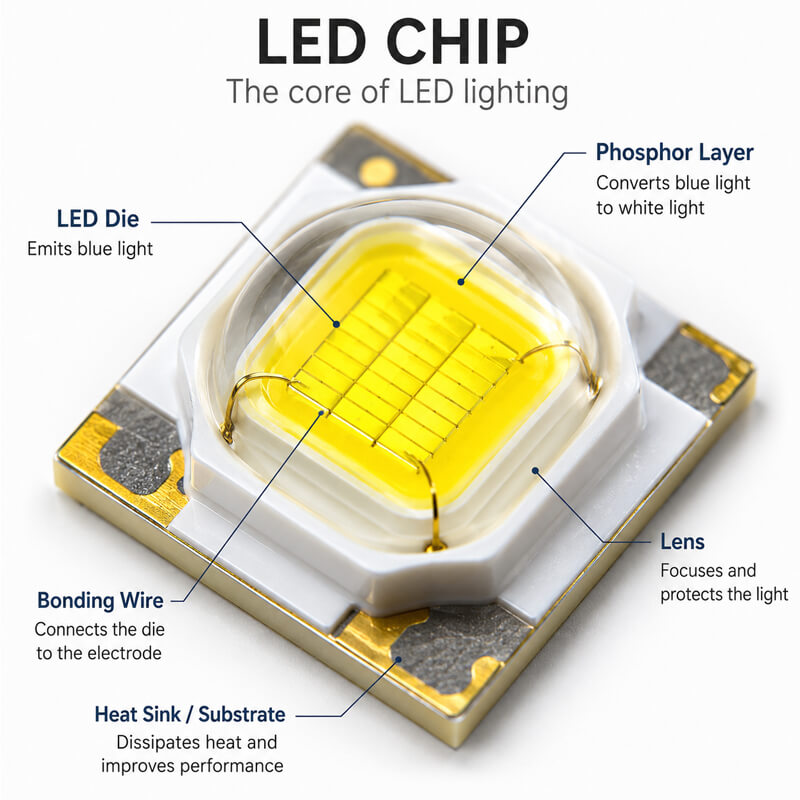
Aunque un chip LED es increíblemente pequeño, consta de varias capas diseñadas con precisión que trabajan juntas para ofrecer un rendimiento de iluminación confiable.
Típicamente, un chip LED incluye:
- Material semiconductor (generalmente nitruro de galio o arseniuro de galio)
- Electrodos conductores
- Sustrato conductor de calor
- Encapsulación protectora
- Lente óptica o recubrimiento de fósforo.
Entre estos componentes, el sustrato conductor de calor juega un papel particularmente importante. Dado que el calor excesivo puede reducir tanto el brillo como la vida útil, La gestión térmica eficiente es esencial.
Además, Muchos fabricantes de LED premium utilizan materiales de alta calidad como:
- Sustratos cerámicos
- Placas de circuito de cobre
- Disipadores de calor de aluminio
- Lentes de silicona de alta transmitancia
Como consecuencia, estos materiales mejoran la disipación del calor, permitiendo que los chips LED mantengan un brillo estable y funcionen de manera eficiente durante decenas de miles de horas.
Para compradores, Preguntar sobre el diseño térmico es tan importante como comprobar la potencia o la salida de lúmenes..
La maravilla de la miniaturización
Una de las características más destacables de la tecnología LED es su tamaño compacto.
De hecho, Los chips LED modernos miden sólo unos pocos milímetros de ancho.. A pesar de sus diminutas dimensiones, pueden generar una cantidad impresionante de luz.
Dependiendo de la aplicación de iluminación, un producto puede contener:
- Un chip LED de alta potencia
- Múltiples chips LED SMD
- Módulos LED COB
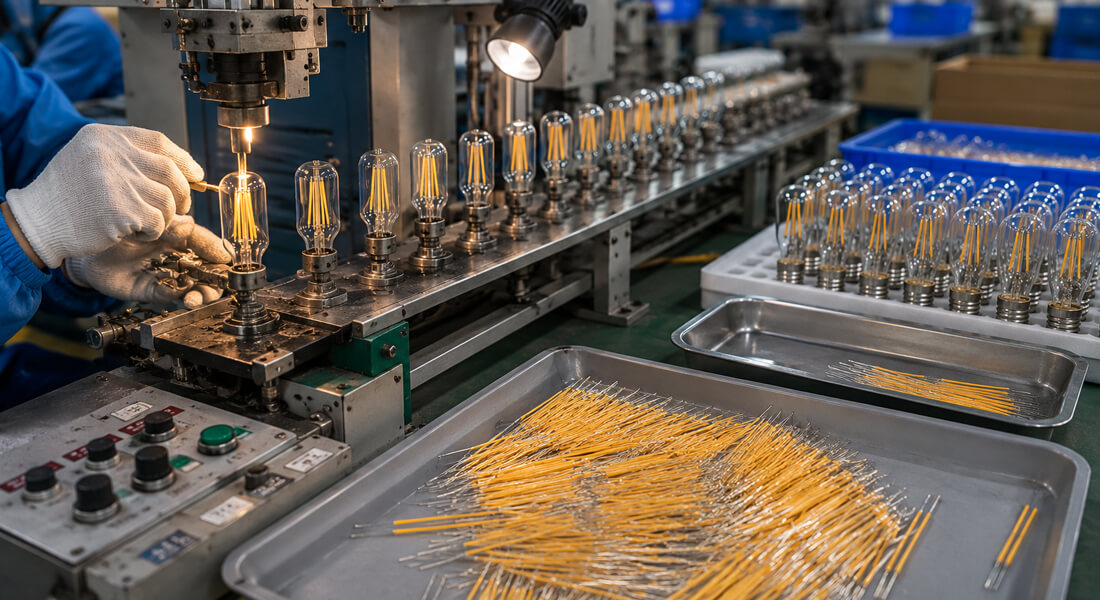
- Cientos de chips de filamento LED
Gracias a esta miniaturización, Los fabricantes pueden diseñar más delgados., encendedor, y accesorios de iluminación más atractivos sin comprometer el brillo.
Hoy, Los chips LED se utilizan ampliamente en:
- bombillas LED
- bombillas de filamento LED
- Luces colgantes
- Candelabros
- Luces de pared
- Luces de inundación
- Iluminación de jardín
- alumbrado público
- Iluminación automotriz
- iluminación comercial
Por lo tanto, La tecnología LED proporciona a los diseñadores una mayor flexibilidad y al mismo tiempo satisface la creciente demanda de soluciones de iluminación modernas..
Más brillante, Menor, Más duradero
Durante la última década, La tecnología de chips LED ha evolucionado rápidamente.
A medida que la tecnología continúa avanzando, Los fabricantes están produciendo chips LED que son:
- Más brillante
- Menor
- Más eficiente energéticamente
- Mejor para disipar el calor
- Más duradero
Hoy, Muchos chips LED premium ofrecen eficiencias que superan 150 lúmenes por vatio, mientras que los productos comerciales avanzados pueden lograr más 200 lúmenes por vatio en condiciones ideales.
Para compradores, Esto significa menores costos operativos y mejor rendimiento de iluminación..
Mayor brillo
Los chips LED modernos producen muchos más lúmenes y consumen menos electricidad..
Por ejemplo:
- Bombilla incandescente tradicional de 60W → aproximadamente 800 lúmenes
- Bombilla LED moderna de 8W → aproximadamente 800 lúmenes
Como resultado, Los usuarios disfrutan del mismo brillo mientras reducen el consumo de electricidad hasta en 85%.
Vida útil más larga
Otra gran ventaja es la durabilidad..
Los chips LED de alta calidad suelen durar:
- 25,000 horas
- 35,000 horas
- 50,000 horas o más
Como consecuencia, Las empresas y los propietarios gastan menos en bombillas de repuesto y mantenimiento..
Mejor calidad de color
Además, Los chips LED premium proporcionan una excelente reproducción cromática..
Para la mayoría de las aplicaciones, los compradores deben considerar:
- CRI 80+ para iluminación residencial
- CRI 90+ para venta minorista, hospitalidad, galerías, e interiores premium
Esto significa los colores parecen más naturales, vibrante, y cómodo para el ojo humano.
Fiabilidad mejorada
Igualmente importante, La tecnología de fabricación avanzada minimiza:
- Decaimiento de luz
- cambio de color
- Parpadeo
- Fallo temprano del chip
Por lo tanto, La iluminación permanece estable y consistente durante toda su vida útil..
El futuro es brillante
La tecnología de chips LED continúa evolucionando cada año.
Mirando hacia adelante, Varias tendencias importantes están dando forma al futuro de la industria de la iluminación..
Mayor eficiencia energética
Los fabricantes están desarrollando chips LED que producen más luz y consumen incluso menos electricidad..
Como resultado, Las empresas pueden reducir significativamente los costos operativos y reducir las emisiones de carbono..
Integración de iluminación inteligente
Mientras tanto, Los chips LED son cada vez más compatibles con los sistemas de iluminación inteligentes.
Las soluciones de iluminación inteligentes actuales respaldan:
- control wifi
- Conectividad Bluetooth
- Asistentes de voz
- Sensores de movimiento
- Atenuación automática
- Temperaturas de color ajustables
Como consecuencia, los usuarios disfrutan de una mayor comodidad, comodidad, y ahorro de energía.
Iluminación centrada en el ser humano
Además, Los chips LED blancos ajustables permiten que la iluminación imite la luz natural durante todo el día..
Esto ayuda a mejorar la comodidad., concentración, y bienestar general en los hogares, oficinas, escuelas, y entornos sanitarios.
Fabricación sostenible
Al mismo tiempo, Los fabricantes están adoptando métodos de producción más ecológicos al reducir los materiales peligrosos., mejorando el reciclaje, y aumentar la eficiencia de fabricación.
Por lo tanto, La tecnología de chips LED continúa apoyando los objetivos globales de sostenibilidad.
Adopte la revolución LED
Aunque el chip LED es uno de los componentes más pequeños dentro de un producto de iluminación, Tiene el mayor impacto en el rendimiento general..
Al final, La calidad del chip LED determina el brillo., eficiente, confiable, y duradera será una luz LED.
Al comparar productos de iluminación LED, Los compradores deben evaluar algo más que el precio..
En cambio, prestar atención a factores como:
- Calidad y marca del chip
- Salida de lúmenes
- Eficacia luminosa (lm/W)
- Índice de reproducción cromática (CRI)
- Temperatura de color (CCT)
- Diseño de disipación de calor.
- Vida útil nominal
- Garantía del fabricante
Al considerar estos factores, Los compradores pueden seleccionar productos de iluminación que ofrezcan un mejor rendimiento., menores costos de mantenimiento, y mayor valor a largo plazo.
En resumen, Invertir en tecnología de chips LED de alta calidad significa invertir en una iluminación más brillante., facturas de energía más bajas, y un futuro más sostenible. Ya sea que esté buscando iluminación para el hogar, hoteles, oficinas, espacios comerciales, o proyectos comerciales, Elegir productos fabricados con chips LED confiables es una decisión inteligente que seguirá dando sus frutos en los años venideros..