 English
 العربية
 Français
 Deutsch
 Italiano
 Polski
 Português
 Русский
 Español
 Українська


La historia de los estilos de iluminación vintage: Una guía completa para el diseño de iluminación clásico
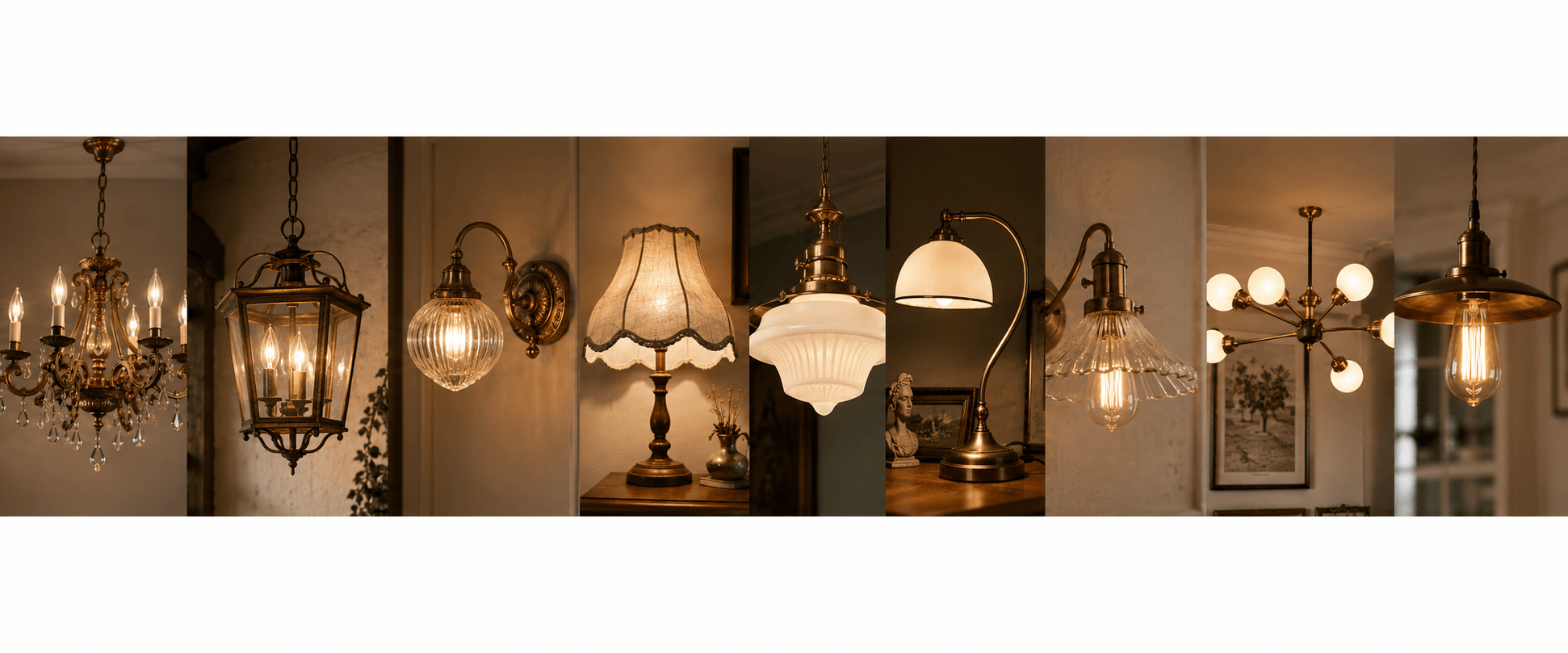
Comprar iluminación online a veces puede resultar abrumador. Términos como provincial francés, Art Déco, Moderno de mediados de siglo, y Minimalismo aparecer en todas partes, pero ¿qué significan realmente?? Más importante aún, ¿Qué estilo de iluminación vintage se adapta mejor a tu hogar??
Afortunadamente, comprender estos movimientos de diseño es mucho más fácil de lo que parece. Cada estilo refleja un período histórico único., completo con sus propios materiales, artesanía, y filosofía del diseño. Incluso hoy, Estos estilos de iluminación atemporales siguen siendo populares porque combinan sin esfuerzo la estética clásica con la vida moderna..
En esta guía, Exploraremos la historia detrás de cuatro de los estilos de iluminación vintage más influyentes., explicar sus características definitorias, recomendar los mejores materiales, y ayudarte a decidir cuál se adapta a tu espacio.
Iluminación provincial francesa (17Siglo XVIII-XVIII)
La iluminación provincial francesa se originó en la Francia rural durante los siglos XVII y XVIII.. En el momento, Las familias adineradas que vivían fuera de París admiraban los lujosos muebles de las residencias reales, pero querían alternativas más prácticas y asequibles.. Los hábiles artesanos locales respondieron creando muebles e iluminación elegantes inspirados en los diseños palaciegos y al mismo tiempo simplificaron la elaborada ornamentación..
Hoy, La iluminación provincial francesa se ha convertido en la favorita de los propietarios que aprecian la elegancia atemporal.. Es cálido, La apariencia acogedora combina maravillosamente con la casa de campo., cabaña, rústico, e interiores tradicionales.
Características clave
La iluminación provincial francesa es conocida por su belleza refinada pero discreta.. En lugar de ser demasiado decorativo, se centra en la artesanía y los detalles elegantes.
Las características comunes incluyen:
- Curvas suaves y siluetas fluidas.
- Acabados envejecidos o antiguos.
- volutas decorativas
- Brazos estilo vela
- Diseños inspirados en linternas o jaulas.
- Tonos de lino o tela.
- Cálidos detalles en latón o hierro forjado
Materiales recomendados
Para lograr un auténtico look provincial francés, Considere materiales como:
- Nuez
- Roble
- Madera de cerezo
- Haya
- hierro forjado
- Latón
- Lino
- Vidrio transparente o sin semillas
Colgantes de linterna, candelabros rústicos, y los apliques de pared con pantalla de tela complementan este estilo excepcionalmente bien.. La clave es elegir piezas que se sientan elegantes sin que parezcan demasiado ornamentadas..
Lo mejor para
Si quieres crear un ambiente acogedor., acogedora casa llena de encanto tradicional, La iluminación provincial francesa es una excelente opción. Funciona especialmente bien en cocinas de granja., comedor, entradas, dormitorios, y casas de campo, donde los cálidos acabados de madera y la iluminación suave ayudan a crear un ambiente relajado, ambiente acogedor.
Iluminación Art Déco (1920década de 1930)
Cuando el diseño entró en los locos años veinte, Los gustos cambiaron dramáticamente.. En lugar de centrarse únicamente en la artesanía tradicional, El Art Déco abrazó el lujo, innovación, y fabricación moderna. Los accesorios de iluminación se convirtieron en obras de arte decorativas en lugar de simplemente proporcionar iluminación..
Como consecuencia, La iluminación Art Deco sigue siendo uno de los estilos vintage más reconocibles en la actualidad..
Características clave
La iluminación Art Deco es famosa por su geometría atrevida y acabados glamorosos..
Los elementos de diseño típicos incluyen:
- Patrones simétricos
- formas geométricas
- Siluetas estilizadas
- Globos de vidrio blanco o esmerilado
- Acabados en cromo y latón pulido.
- Iluminación en capas
- Detalles metálicos decorativos
- Acentos dorados
Muchos accesorios auténticos Art Deco cuentan con pantallas en forma de globo suspendidas de elegantes brazos de latón o cromo., creando una combinación sofisticada de forma y función.
Materiales recomendados
La iluminación Art Déco más auténtica suele incorporar:
- Latón
- Cromo
- Aluminio
- vidrio esmerilado
- Cristal
- Acero decorativo
- metales pulidos
Estos materiales de primera calidad dan a los accesorios Art Deco su aspecto lujoso característico y, al mismo tiempo, siguen siendo lo suficientemente duraderos para los hogares modernos..
Lo mejor para
Si su objetivo es hacer una declaración de diseño audaz, La iluminación Art Deco ofrece una sofisticación atemporal. Luce particularmente impresionante en los comedores., sala de estar, pasillos, hoteles boutique, apartamentos de lujo, y bares en casa, donde los acabados metálicos y las formas geométricas elevan instantáneamente el espacio general.
Iluminación minimalista (Finales de la década de 1910 hasta el presente)
Mientras tanto, Otro movimiento de diseño tomó una dirección completamente diferente.. El minimalismo surgió a principios del siglo XX con una filosofía simple.: menos es más.
En lugar de depender de la decoración, la iluminación minimalista enfatiza la funcionalidad, sencillez, y espacios cuidadosamente equilibrados. Su atractivo atemporal explica por qué sigue siendo uno de los estilos de diseño de interiores más populares en la actualidad..
Características clave
La iluminación minimalista se centra en la simplicidad sin sacrificar el rendimiento..
Las características comunes incluyen:
- Líneas limpias
- Perfiles delgados
- Paletas de colores neutros
- Fuentes de luz ocultas o integradas
- Formas geométricas simples
- Abierto, espacios despejados
- Diseño funcional
En lugar de llamar la atención sobre sí mismo, La iluminación minimalista mejora silenciosamente la habitación a través de una iluminación equilibrada..
Materiales recomendados
Los accesorios minimalistas suelen presentar materiales modernos., incluido:
- Acero
- Aluminio
- Concreto
- Vaso
- Acabados en negro mate
- madera natural
Muchos accesorios minimalistas contemporáneos también se inspiran en diseños antiguos., Combinando formas clásicas con la tecnología LED de bajo consumo actual..
Lo mejor para
La iluminación minimalista es perfecta para propietarios que aprecian la arquitectura limpia y los interiores ordenados.. Complementa naturalmente los hogares escandinavos., apartamentos contemporáneos, oficinas en casa, cocinas, y espacios habitables compactos al proporcionar una iluminación funcional sin abrumar el diseño general.
Iluminación moderna de mediados de siglo (Mediados de la década de 1930-1965)
Aunque el nombre sugiere la década de 1950, Mid-Century Modern en realidad comenzó a desarrollarse a mediados de la década de 1930 antes de florecer a lo largo de la década de 1940., 1950s, y principios de la década de 1960.
Influenciado por diseñadores de Dinamarca., Escandinavia, Brasil, y los estados unidos, Este movimiento enfatizó la vida práctica mientras celebraba el hermoso diseño industrial.. Debido a estas influencias escandinavas, Mid-Century Modern continúa combinando naturalmente con los interiores nórdicos.
Características clave
La iluminación moderna de mediados de siglo equilibra el diseño artístico con la funcionalidad cotidiana.
Entre sus características definitorias se encuentran:
- Curvas orgánicas
- Líneas geométricas limpias
- ornamentación mínima
- Formas escultóricas
- Sombras de globo
- Candelabros de múltiples luces
- Brazos cónicos
- Materiales contrastantes
Estas luminarias a menudo se convierten en puntos focales elegantes y al mismo tiempo mantienen una funcionalidad excepcional..
Materiales recomendados
La iluminación moderna de mediados de siglo abarca una amplia gama de materiales, incluido:
- Nuez
- Teca
- madera maciza
- Latón
- Vaso
- Acero
- Aluminio
- Plástico moldeado
Esta combinación de materiales naturales e industriales le da a la iluminación moderna de mediados de siglo su distintivo atractivo retro..
Lo mejor para
Para propietarios que disfrutan de interiores de inspiración retro con un toque contemporáneo, La iluminación moderna de mediados de siglo es una excelente opción. Queda muy bien en salones, comedores, dormitorios, rincones de lectura, y casas de concepto abierto, donde sus formas esculturales y cálidos tonos de madera crean interés visual y practicidad cotidiana..
Cómo elegir el estilo de iluminación vintage adecuado
Ahora que comprendes las características de cada movimiento de diseño., elegir la iluminación vintage adecuada se vuelve mucho más fácil.
Si prefieres cálido, elegancia rustica, Provincial francés es una opción ideal. Por otro lado, si te atraen los interiores glamorosos y los patrones geométricos, El Art Déco puede encajar mejor. Para propietarios que aprecian las líneas limpias y los espacios ordenados, El minimalismo ofrece una versatilidad atemporal. Mientras tanto, Mid-Century Modern logra un excelente equilibrio entre el encanto vintage y la funcionalidad contemporánea..
Si planeas mezclar estilos, Intente mantener sus acabados y paleta de colores consistentes.. Por ejemplo, Mid-Century Modern complementa naturalmente los interiores escandinavos, mientras que French Provincial combina a la perfección con la popular estética moderna de las granjas de hoy..
Por qué las bombillas LED son la combinación perfecta para la iluminación vintage
Aunque la iluminación vintage celebra el diseño clásico, no hay razón para utilizar tecnología de iluminación obsoleta. Afortunadamente, Las modernas bombillas de filamento LED reproducen fielmente el cálido brillo de las bombillas incandescentes tradicionales y, al mismo tiempo, ofrecen un rendimiento significativamente mejor..
En comparación con las bombillas incandescentes, Las bombillas LED ofrecen varias ventajas:
- Arriba a 90% menor consumo de energía
- Vida útil de 15.000 a 50.000 horas
- Temperaturas de funcionamiento más bajas
- Menos mantenimiento
- Excelente consistencia de color
- IRC alto (90+) para una reproducción cromática natural
- Opciones de color blanco cálido que se parecen mucho a las bombillas Edison antiguas
Para la apariencia vintage más auténtica, Elija bombillas de filamento LED con 2200Temperatura de color K–2700K y un IRC de 90 o superior. Conservan el ambiente nostálgico al tiempo que brindan todos los beneficios de eficiencia de la tecnología LED moderna..
Conclusión
La iluminación vintage ha seguido siendo popular durante generaciones porque el diseño excepcional nunca pasa de moda.. Ya sea que se sienta inspirado por la elegancia rústica del provinciano francés, la lujosa geometría del Art Déco, la simplicidad del minimalismo, o las formas icónicas del estilo moderno de mediados de siglo., cada estilo ofrece una forma distintiva de agregar personalidad y carácter a su hogar.
Mejor aún, Ya no tendrás que elegir entre la estética clásica y el rendimiento moderno.. Combinando luminarias de inspiración vintage con bombillas de filamento LED de alta calidad, podrás disfrutar de un auténtico estilo de época, facturas de energía más bajas, iluminación más duradera, y una calidad de luz excepcional.
Para obtener los mejores resultados, Elija bombillas de filamento LED de color blanco cálido con temperatura de color de 2200K–2700K y un IRC arriba 90. Recrean fielmente el brillo clásico de la iluminación antigua al mismo tiempo que brindan la eficiencia, fiabilidad, y longevidad que se espera en los hogares de hoy. Esta combinación le permite disfrutar de un estilo atemporal sin comprometer el confort moderno..
Artículos relacionados: Ilumina tu hogar con una iluminación vintage en blanco cálido.