 English
 العربية
 Français
 Deutsch
 Italiano
 Polski
 Português
 Русский
 Español
 Українська


Por qué es importante elegir el casquillo de bombilla adecuado
Al reemplazar una bombilla, Mucha gente se centra en el brillo., potencia, o temperatura de color. Sin embargo, antes de considerar cualquiera de esos factores, es esencial garantizar que la portalámparas (base de lámpara) coincide con tu accesorio.
Después de todo, Incluso la bombilla LED más eficiente no funcionará si no se puede conectar físicamente al portalámparas.. Por lo tanto, identificar el tipo de enchufe correcto siempre debe ser el primer paso.
Importante: Siempre revise su bombilla o accesorio existente antes de comprar un reemplazo. Una bombilla E27 no cabe en un casquillo E14, y un foco GU10 no puede sustituir a una bombilla de cápsula G9 sin un adaptador adecuado.
Afortunadamente, una vez que sepa su tipo de enchufe, encontrar un reemplazo de LED adecuado se vuelve mucho más fácil.
Consejo: Siempre haga coincidir primero el tipo de enchufe.
Verifique la bombilla existente o la etiqueta del dispositivo.. Un La bombilla E27 no encaja en un casquillo E14, y un La bombilla GU10 no encaja en un casquillo G9, aunque ambas pueden ser bombillas LED.
Comprensión de las dos familias de casquillos de bombillas principales
En términos generales, la mayoría de los accesorios de iluminación residencial y comercial utilizan una de dos categorías de enchufes: Casquillos de tornillo Edison o enchufes basados en pines.
| Familia de enchufes | Tipos comunes | Método de instalación | Aplicaciones típicas |
|---|---|---|---|
| Tornillo Edison (mi) | E27, E26, E14, E12 | Atornillado | Luces de techo, lámparas de mesa, luces colgantes, candelabros |
| Basado en pines (G/GU) | GU10, G9, G4, G5.3 | Bloqueo a presión o por giro | Focos, iluminación de acento, e iluminación debajo del gabinete |
Como resultado, Identificar a qué familia pertenece su dispositivo reducirá inmediatamente sus opciones.
Casquillos de tornillo Edison
Sin duda, Los casquillos de rosca Edison son las bases de bombillas más utilizadas en todo el mundo.. la carta “mi” representa edison, lleva el nombre de Thomas Edison, mientras que el número indica el diámetro de la rosca del tornillo en milímetros.
Tipos comunes de enchufes Edison
| Enchufe | Diámetro | Aplicaciones comunes |
|---|---|---|
| E27 | 27 milímetros | Iluminación doméstica estándar |
| E14 | 14 milímetros | Accesorios decorativos y candelabros. |
| E26 | 26 milímetros | Iluminación doméstica norteamericana |
| E12 | 12 milímetros | Candelabros y bombillas para lámparas de araña. |
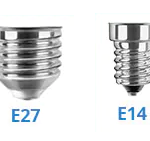
Por ejemplo, si tienes una lámpara decorativa, Es muy probable que utilice bombillas de vela E14 o E12.. Por otro lado, la mayoría de las luces colgantes y lámparas de mesa utilizan casquillos E27 o E26.
Por qué es importante el tamaño del casquillo
Aunque algunos tamaños de encaje parecen similares, no son intercambiables. Por lo tanto, Nunca debes asumir que una bombilla E26 se adaptará automáticamente a una luminaria E27 o que una bombilla E12 puede reemplazar una bombilla E14..
Además, Los requisitos de voltaje pueden variar según su región., haciendo que la identificación adecuada sea aún más importante.
Zócalos de bayoneta
Mientras que los enchufes Edison dominan muchos mercados, Los casquillos de bayoneta siguen siendo muy populares en el Reino Unido, Australia, y varios países de la Commonwealth.
A diferencia de las bases de tornillos, Las bombillas de bayoneta cuentan con dos pasadores laterales que se bloquean en su lugar con un giro corto..
Tipos comunes de casquillos de bayoneta
| Enchufe | Nombre común | Uso típico |
|---|---|---|
| B22 | Gorro de bayoneta (ANTES DE CRISTO) | Iluminación general del hogar. |
| B15 | Casquillo de bayoneta pequeño (SBC) | Accesorios decorativos |
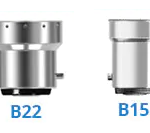
Para instalar una bombilla de bayoneta, simplemente inserte los pines en el zócalo, empujar suavemente, y girar aproximadamente 180 grados hasta que encaje firmemente.
Como consecuencia, Los casquillos de bayoneta ofrecen una conexión confiable y al mismo tiempo permiten un reemplazo rápido de las bombillas..
Conectores de pines
Mientras tanto, Muchos accesorios de iluminación modernos utilizan casquillos con clavijas en lugar de bases de tornillo o de bayoneta..
Estos tipos de enchufes son particularmente comunes en:
- Focos empotrables
- Iluminación de cocina
- Iluminación de la pantalla
- Iluminación debajo del gabinete
- Accesorios decorativos de pared
Tipos de enchufes de clavija más comunes
| Enchufe | Método de instalación | Aplicaciones comunes |
|---|---|---|
| GU10 | Empujar y girar | Focos de techo |
| G9 | push-in | Accesorios decorativos |
| G4 | push-in | Iluminación del gabinete |
| G5.3 / MR16 | push-in | Focos de bajo voltaje |
Además, el número que sigue al “GRAMO” normalmente se refiere a la distancia entre los pasadores medida en milímetros.
Por ejemplo:
- G4 = 4 mm espaciado entre pasadores
- G5.3 = 5.3 mm espaciado entre pasadores
- G9= 9 mm espaciado entre pasadores
Debido a estas diferencias, Incluso pequeñas variaciones en el espacio entre pasadores pueden impedir una instalación adecuada..
Enchufes GU10
Entre todos los enchufes basados en pines, GU10 es posiblemente el más común.
si tu cocina, pasillo, baño, o el salón cuenta con focos empotrados, existe una gran posibilidad de que utilicen bombillas GU10.
Cómo funcionan las bombillas GU10
A diferencia de los enchufes estándar, Las bombillas GU10 cuentan con pasadores de bloqueo..
Para instalar:
- Inserte la bombilla en el casquillo.
- Empuje suavemente hacia arriba.
- Girar en el sentido de las agujas del reloj.
- Bloquear de forma segura en su lugar.
Como resultado, Las bombillas GU10 proporcionan una conexión estable y es menos probable que se aflojen con el tiempo..
Además, Las modernas bombillas LED GU10 ofrecen importantes ahorros de energía en comparación con los focos halógenos tradicionales..
Cómo identificar el casquillo de su bombilla en minutos
Si no está seguro de qué tipo de enchufe utiliza su dispositivo, no te preocupes. El proceso de identificación suele ser sencillo..
Paso 1: Retire la bombilla existente
Primero, apague la alimentación y deje que la bombilla se enfríe por completo.
Paso 2: Examinar la base
Próximo, Mire atentamente la base de la bombilla.:
✔ Base metálica roscada → Enchufe Edison (E27, E14, E26, E12)
✔ Dos pasadores laterales → Casquillo de bayoneta (B22, B15)
✔ Dos pines rectos → Conector de pines (G4, G9, G5.3)
✔ Pasadores de bloqueo por torsión → GU10
Paso 3: Verifique las marcas
La mayoría de las bombillas y accesorios incluyen marcas de identificación como:
- E27
- E14
- B22
- GU10
- G9
Por lo tanto, comprobar la etiqueta suele proporcionar la respuesta más rápida.
Paso 4: Mida el zócalo
Si no hay marcas visibles, medir el enchufe puede ayudar a confirmar la compatibilidad.
Por ejemplo:
- E27= 27 mm de diámetro de rosca
- E14 = 14 mm de diámetro de rosca
- G4 = 4 mm espaciado entre pasadores
Como consecuencia, una simple regla a menudo puede eliminar las conjeturas.
Cómo elegir el reemplazo de LED adecuado
Una vez que haya identificado el tipo de enchufe, el siguiente paso es seleccionar la bombilla LED adecuada.
Sin embargo, la compatibilidad de enchufes es sólo una parte de la ecuación.
También deberías considerar:
| Factor | Por qué es importante |
|---|---|
| Tipo de enchufe | Debe estar físicamente en forma |
| Voltaje | Debe coincidir con los requisitos del accesorio. |
| Lúmenes | Determina el brillo |
| Temperatura del color | Influye en el ambiente |
| Ángulo de haz | Afecta la distribución de la luz. |
| Regulabilidad | Requerido para interruptores de atenuación |
Por lo tanto, Elegir el LED correcto implica consideraciones tanto mecánicas como de rendimiento..
No se olvide de la compatibilidad con atenuadores
Otra consideración crítica es el rendimiento de la atenuación..
Si su dispositivo utiliza un interruptor de atenuación, siempre debes elegir un bombilla LED regulable.
De lo contrario, puedes experimentar:
- Parpadeo
- Ruidos de zumbido
- Rango de atenuación reducido
- Fallo prematuro de la bombilla
Además, Algunos reguladores de intensidad antiguos no son totalmente compatibles con los LED modernos.. Por lo tanto, Verificar las recomendaciones de compatibilidad del fabricante puede ahorrar tiempo y frustración..
¿Puedes utilizar adaptadores de enchufe??
A veces puedes encontrar la bombilla LED perfecta, sólo para descubrir que el tipo de enchufe no coincide con su dispositivo.
Afortunadamente, Los adaptadores de enchufe pueden proporcionar una solución práctica..
Por ejemplo:
- Adaptador E14 a E27
- Adaptador E27 a B22
- Adaptador E26 a E27
Sin embargo, antes de usar un adaptador, Cerciorarse:
✔ Los requisitos de voltaje coinciden
✔ Se respetan los límites de potencia
✔ La bombilla encaja dentro de la luminaria.
✔ Se mantiene una ventilación adecuada
Aunque los adaptadores son convenientes, elegir la base de bombilla correcta es generalmente la solución más segura y profesional. Si es necesario, por favor contáctanos directamente, proporcionamos los adaptadores y otros accesorios de iluminación.
Errores comunes a evitar
Para garantizar una actualización LED exitosa, Evite estos errores comunes:
❌ Comprar una bombilla basándose únicamente en la apariencia
❌ Confundir E27 con E26
❌ Confundir E14 con E12
❌ Instalación de una bombilla no regulable en un circuito de atenuación
❌ Ignorar los requisitos de voltaje
❌ Usar bombillas de gran tamaño en accesorios cerrados
Evitando estos errores, puedes mejorar la seguridad, extender la vida útil de la bombilla, y maximizar la eficiencia energética.
Pensamientos finales
Al final, Elegir el casquillo de bombilla adecuado es mucho más fácil de lo que la mayoría de la gente piensa. Primero, identificar el tipo de enchufe. Próximo, confirmar la compatibilidad de voltaje. Entonces, seleccione el brillo deseado, temperatura de color, y capacidad de atenuación.
Si necesita un bombilla LED E27, bombilla de vela E14, Foco GU10, Bombilla de cápsula G9, o Bombilla de bayoneta B22, tomarse unos minutos para verificar la compatibilidad puede ayudarlo a evitar errores costosos y garantizar un rendimiento de iluminación óptimo.
En breve, el enchufe correcto es la base de cualquier mejora de iluminación exitosa. Una vez que lo hagas bien, encontrar el reemplazo de LED perfecto se convierte en un proceso sencillo.